“Why didn’t the Christian God ever explicitly and clearly condemn slavery?” This was John Loftus’ question in his book, Why I Became an Atheist: A Former Preacher Rejects Christianity. He posed it after sharing the following chilling account of slavery as practiced in the antebellum American south, He took her into the kitchen, and stripped […]
Entries Tagged as 'History'
Contra Mundum: Slavery and the Old Testament
April 3rd, 2010 33 Comments
Tags: Contra Mundum · Investigate Magazine · John Loftus · Old Testament Ethics · Slavery · Theology
Can State Expropriation of Minerals be Justified? Part II
March 9th, 2010 6 Comments
In Can State Expropriation of Minerals be Justified? Part I, I set out a common law property rights argument drawing from the writings of jurists Blackstone and Locke as well as contemporary philosopher Ed Feser. I looked at what circumstances, if any, might justify the state taking of real property, looking specifically at minerals from […]
Tags: Case of Mines · Crown Minerals Act 1991 · Edward Feser · James Parcell · John Locke · Kevin Counsell · Lewis Evans · Neil Quigley · Property Rights · Rights and Freedoms · Sub-Soil Land Rights · Takings · William Blackstone
Can State Expropriation of Minerals be Justified? Part I
March 5th, 2010 22 Comments
New Zealand, like many nations, has a long history of the state taking real property, often without compensation. In this two part series I examine one sub-set of takings, minerals from the sub-soil of privately held property (although the argument herein could apply with equal force to any state taking). Drawing from common law, the […]
Tags: Crown Minerals Act 1991 · Edward Feser · John Locke · Property Rights · Rights and Freedoms · Sub-Soil Land Rights · Takings · William Blackstone
Property Rights: Blackstone, Locke and the Legislative Scheme Part II
February 19th, 2010 8 Comments
This two part series looks at the state of property rights under the current legislative scheme in New Zealand. Particularly I address attempts to suggest that the passage of Acts such as the Crown Minerals Act and the Resource Management Act have not significantly altered the common law concept of property rights and the claim […]
Tags: Crown Minerals Act 1991 · Property Rights · Resource Management Act 1991 · Rights and Freedoms · Sub-Soil Land Rights · William Blackstone
Freedom, Science and Christianity: A Response to James Valliant Part II
February 18th, 2010 2 Comments
Recently Peter Cresswell published a guest post by James Valliant, which originally appeared on SOLO. In Freedom, Science and Christianity: A Response to James Valliant Part I, I addressed Valliant’s claims that science and freedom of religion were unanimously opposed by Christians and the success of science and freedom of religion in Europe was solely […]
Tags: Aristotle · Christian History · Dark Ages · Enlightenment · Founding Fathers · James Valliant · Libertarianism · Liberty · Mark Murphy · Nicholas Wolterstorff · Peter Cresswell · Regine Pernoud · Rodney Stark · Science and Religion · SOLO · W.E.H. Lecky
Property Rights: Blackstone, Locke and the Legislative Scheme Part I
February 17th, 2010 10 Comments
This two part series looks at the state of property rights under the current legislative scheme in New Zealand. Particularly I address attempts to suggest that the passage of Acts such as the Crown Minerals Act and the Resource Management Act have not significantly altered the common law concept of property rights and the claim […]
Tags: Crown Minerals Act 1991 · Edward Feser · John Locke · Property Rights · Resource Management Act 1991 · Rights and Freedoms · Sub-Soil Land Rights · William Blackstone
The Theological Foundations of the Enlightenment Philosophers
February 14th, 2010 7 Comments
In my previous post, Freedom, Science and Christianity: A Response to James Valliant Part I, I criticised a recent post by James Valliant. I plan to put Part II of this critique online later this week (after Madeleine is clear of her exam on Tuesday to edit it). Here, I simply want to pick up […]
Tags: James Madison · James Valliant · John Locke · Lactantius · Lindsay Perigo · Pierre Bayle · Tertullian · Thomas Aquinas
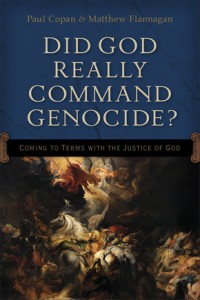 A common objection to belief in the God of the Bible is that a good, kind, and loving deity would never command the wholesale slaughter of nations. In the tradition of his popular Is God a Moral Monster?, Paul Copan teams up with Matthew Flannagan to tackle some of the most confusing and uncomfortable passages of Scripture. Together they help the Christian and nonbeliever alike understand the biblical, theological, philosophical, and ethical implications of Old Testament warfare passages.