Coming to a bookstore near you in November 2014: Did God Really Command Genocide? Coming to Terms with the Justice of God by: Paul Copan and Matthew Flannagan From Baker Publishing Group’s page: “Reconciling a violent Old Testament God with a loving Jesus Would a good, kind, and loving deity ever command the wholesale slaughter of nations? […]
Entries Tagged as 'Divine Command Theory'
Did God Really Command Genocide? A new book by Copan and Flannagan
September 27th, 2014 13 Comments
Tags: Canaanites · Did God Really Command Genocide? · Divine Command Theory · God and Morality · Is God a Moral Monster? · Old Testament Ethics · Paul Copan
Richard Carrier and the Arbitrariness Objection
September 5th, 2014 5 Comments
In, “Is ethical naturalism more plausible than Supernaturalism“, I criticised Walter Sinnott-Armstrong’s objection that a divine command theory (DCT) makes morality arbitrary. Armstrong argued: “Let’s assume that God commanded us not to rape. Did God have any reason to command this? If not, his command was arbitrary, and then it can’t make anything morally wrong. On […]
Tags: Divine Command Theory · God and Morality · Publication · Richard Carrier
Video: “Discussing Divine Command Theory” Special Guest: Matthew Flannagan
September 1st, 2014 7 Comments
Last week I was invited to be part of a discussion on divine command ethics in Google hangouts. The full discussion is now on-line as episode 22 of Ode to Dialogue: “Discussing Divine Command Theory.” Enjoy.
Tags: Divine Command Theory · God and Morality · MandM on Video
Ethical Supernaturalism is still more Plausible than Naturalism: Carrier’s Preliminary Objections
August 20th, 2014 5 Comments
Last year I had an article Is Ethical Naturalism more plausible than Supernaturalism: A reply to Walter Sinnott Armstrong published in the journal Philo. In the comments section a reader asked me to comment on a response to that article published by classical historian Richard Carrier. This post will be the first of several where I do so. In, Is […]
Tags: Divine Command Theory · God and Morality · Publications · Richard Carrier
Dialogue with Randal Rauser
March 13th, 2014 1 Comment
When I was in Baltimore last November I caught up with fellow theologian and blogger Randal Rauser. Randal is professor of Theology at Taylor Seminary in Edmonton Canada. Randal and I have had some spirited but cordial exchanges in the past, including a panel discussion at the Society of Biblical Literature in 2010.While we do not […]
Tags: Baltimore · Canaanites · Divine Command Theory · Old Testament Ethics · Randal Rauser
Matt to speak at the EPS Apologetics Conference in Baltimore on Morality and God’s Commands
November 12th, 2013 Comments Off on Matt to speak at the EPS Apologetics Conference in Baltimore on Morality and God’s Commands
This blog’s Matthew Flannagan has been invited to speak at the 12th Annual Apologetics Conference of the Evangelical Philosophical Society in Baltimore, USA. The theme of this year’s conference is Reasonable Faith in an Uncertain World. Matt’s talk is titled “Morality and God’s Commands: Answering Common Objections.” The blurb for Matt’s talk is as follows: “It is […]
Tags: Apologetics · Baltimore · Divine Command Theory · EPS Apologetics Conference · God and Morality
Is a Divine Command Theory Psychotic? Sam Harris on Divine Commands Part III
November 5th, 2013 2 Comments
In Sam Harris on Divine Commands Part I I criticised Harris’ characterisation of divine command meta-ethics. I refuted Harris’ contention a divine command theory is pscyopathic in Is a Divine Command Theory Pscyopathic? Sam Harris on Divine Commands: Part II. In this last post in this series, I will address Harris’s contention that a divine command theory reflects […]
Tags: Debates · Divine Command Theory · God and Morality · Is the Foundation of Morality Natural or Supernatural? · Religion and Violence · Sam Harris · William Lane Craig

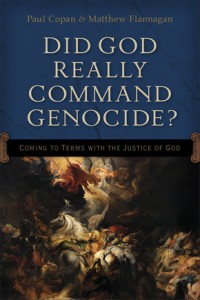 A common objection to belief in the God of the Bible is that a good, kind, and loving deity would never command the wholesale slaughter of nations. In the tradition of his popular Is God a Moral Monster?, Paul Copan teams up with Matthew Flannagan to tackle some of the most confusing and uncomfortable passages of Scripture. Together they help the Christian and nonbeliever alike understand the biblical, theological, philosophical, and ethical implications of Old Testament warfare passages.