This blog’s Matthew Flannagan has had his paper “Divine Commands and Biblical Authority: The Problem of Gen 22” accepted for the National Annual Meeting of the Evangelical Philosophical Society (“EPS”). The abstract for Matt’s paper is as follows: “One perennial objection to divine command meta-ethics is the possibility that God might command something abhorrent. Divine command theorists have responded that […]
Entries Tagged as 'Divine Command Theory'
Matt to speak at the 2013 Evangelical Philosophical Society in Baltimore on Divine Commands re Abraham and Isaac
September 20th, 2013 9 Comments
Tags: Abraham and Isaac · Baltimore · Divine Command Theory · EPS · Evangelical Philosophical Society · Genesis 22 · Richard Swinburne
Published in Philo: Is Ethical Naturalism more Plausible than Supernaturalism? A Reply to Walter Sinnott-Armstrong
July 11th, 2013 13 Comments
Jeffery Jay Lowder has informed me that my article “Is Ethical Naturalism more Plausible than Supernaturalism? A Reply to Walter Sinnott-Armstrong” was published in the Spring/Summer 2012 issue of Philo. The abstract is below: “In many of his addresses and debates, William Lane Craig has defended a Divine Command Theory of moral obligation (DCT). In a […]
Tags: Divine Command Theory · God and Morality · Publications · Walter Sinnott-Armstrong · William Lane Craig
Is a Divine Command Theory Pscyopathic? Sam Harris on Divine Commands: Part II
June 25th, 2013 11 Comments
In my last post, Sam Harris on Divine Commands: Part I, I criticised Sam Harris’ characterisation of divine command meta-ethics. In this post I want to turn to his second line of criticism of a Divine Command Theory. In Harris’ debate with William Lane Craig at Notre Dame, transcript here, Harris stated: “I’m glad he raised the […]
Tags: Debates · Divine Command Theory · God and Morality · Is the Foundation of Morality Natural or Supernatural? · Religion and Violence · Sam Harris · William Lane Craig
Sam Harris on Divine Commands: Part I
May 24th, 2013 7 Comments
In a previous post, Divine Commands and Pyschopathic Tendancies, I said I would look in more detail at Sam Harris’ charge that Divine Command Theories (“DCT”) of meta-ethics are psychopathic. In this, and in several forthcoming posts, I will attempt to deliver on that promise. In Harris’ debate with William Lane Craig at Notre Dame, transcript […]
Tags: Debates · Divine Command Theory · God and Morality · Is the Foundation of Morality Natural or Supernatural? · Religion and Violence · Sam Harris · William Lane Craig
Divine Commands and Psychopathic Tendencies
February 2nd, 2013 214 Comments
There has been some interesting debate in the blogosphere over Sam Harris’ contention that a divine command theory of ethics manifests “a psychopathic and psychotic moral attitude.” Randal Rauser responded to Harris’ contention noting that “if you read through the twenty traits on the Psychopath Checklist you’ll find qualities like callousness, shallow effect, grandiose sense of […]
Tags: Christopher Hallquist · Divine Command Theory · Randal Rauser · Sam Harris
Mark Murphy Reviews Walter Sinnott-Armstrong.
April 30th, 2012 3 Comments
Those who have followed my recent discussions of Walter Sinnott-Armstrong’s writings on God and Morality. Might be interested in this review of Armstrong’s book “Morality without God” by Mark Murphy in Notre Dame Philosophical Reviews. Mark is a lecturer in moral philosophy at Georgetown University. He is is one of the leading critics of divine command ethics […]
Tags: Divine Command Theory · God and Morality · Mark Murphy · Walter Sinnott-Armstrong
Is Ethical Naturalism More Plausible than Supernaturalism? A Reply to Walter Sinnott-Armstrong: Part II
April 26th, 2012 7 Comments
This is the second part of the paper I presented to the Naturalisms in Ethics Conference at Auckland University last year. In my previous post, I noted that Robert Adams has argued that if God exists, then divine commands “best fill the role assigned to wrongness by the concept”.[1] He argues that if moral obligations are […]
Tags: Divine Command Theory · John Hare · Robert Adams · Stephen Layman · Walter Sinnott-Armstrong · William Lane Craig

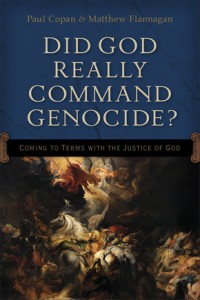 A common objection to belief in the God of the Bible is that a good, kind, and loving deity would never command the wholesale slaughter of nations. In the tradition of his popular Is God a Moral Monster?, Paul Copan teams up with Matthew Flannagan to tackle some of the most confusing and uncomfortable passages of Scripture. Together they help the Christian and nonbeliever alike understand the biblical, theological, philosophical, and ethical implications of Old Testament warfare passages.