Implicit, if not overtly explicit, in much historic Christian moral reflection on feticide is a simple three-premise position. Firstly, that there is a divine law prohibiting homicide, the killing of a human being without adequate justification; secondly, a formed conceptus, a fetus, is a human being; and thirdly, that in all or most cases of […]
Entries Tagged as 'Theology'
The Foundations of the Alexandrian Argument against Feticide Part I
April 8th, 2009 2 Comments
Tags: Abortion · Ethics · Feticide · Philosophy of Religion · The Alexandrian Argument · Theology
Christian Philosophy as Necromancy
March 9th, 2009 Comments Off on Christian Philosophy as Necromancy
I believe my vocation as a Christian Philosopher and Theologian is to provoke people to wrestle with the existential questions they face regarding themselves and God and to challenge them to take Christian answers to these questions seriously. I was thinking about metaphors for the conversation my vocation requires me to engage in and I […]
Tags: Philosophy of Religion · Theology
Capital Punishment in the Old Testament: 2
January 27th, 2009 20 Comments
In Capital Punishment in the Old Testament: 1 I suggested that the capital sanctions found in The Torah in most cases were not intended to be carried out, that instead there operated an implicit assumption that a person who committed a serious crime had forfeited their life and hence was to pay a ransom as […]
Tags: Capital Punishment · David Brink · David Instone Brewer · Ethics · Gordon Wenham · Hermeneutics · Old Testament Ethics · Theology
Capital Punishment in the Old Testament: 1
January 25th, 2009 9 Comments
In “The Autonomy of Ethics,” David Brink writes that a literal reading of the Old Testament, [Y]ields problematic moral claims, such as Deuteronomy’s claims that parents can and should stone to death rebellious children (21:18-21) and that the community can and should stone to death any wife whose husband discovers that she was not a […]
Tags: Capital Punishment · David Brink · Ethics · Hermeneutics · Old Testament Ethics · Theology
Faith and Logic
October 19th, 2008 3 Comments
Recently, Patrick left the following comment in response Madeleine’s post on the Role of the State. “[L]ogic and reason are secular, even humanistic processes. Faith is neither ofthose. Logic and faith can be in conflict, I think. From a humanist viewpointthere is nothing particularly logical about believing in an invisible God.” Apologies to Patrick for […]
Tags: Apologetics · Faith and Reason · Theology
Theology, Morality and Reason
March 1st, 2008 Comments Off on Theology, Morality and Reason
In my previous post I mediated on the morality of lying. I suggested that a divine command theorist: a person who believes that the property of moral wrongness is the property of being contrary to God’s commands does not need to affirm that lying is wrong in any and all circumstances. In updating the post […]
Tags: Divine Command Theory · Ethics · Faith and Reason · Peter Cresswell · Theology
Permissible Lies
February 19th, 2008 2 Comments
In wake of the return of the stolen victoria crosses and the Police claiming they are “honour bound” to pay the thieves the promised reward not PC argues that it is permissible to lie to an agressor. The standard example in the literature (which PC utilises) goes something like this: You are hiding someone fleeing […]
Tags: Divine Command Theory · Ethics · Lucia Maria · Peter Cresswell · Theology

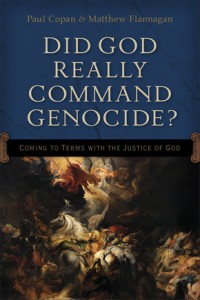 A common objection to belief in the God of the Bible is that a good, kind, and loving deity would never command the wholesale slaughter of nations. In the tradition of his popular Is God a Moral Monster?, Paul Copan teams up with Matthew Flannagan to tackle some of the most confusing and uncomfortable passages of Scripture. Together they help the Christian and nonbeliever alike understand the biblical, theological, philosophical, and ethical implications of Old Testament warfare passages.