Category: Jurists

  • PART THREE: FETICIDE IN CHRISTIAN MORAL THOUGHT (Part three) : The Medieval Period

    I teach NCEA Religious Studies, at level three, one standard is to “Analyse the response of a religious tradition to a contemporary ethical issue”. Officially students have to describe the response a religious tradition has made to a moral issue. Our school like a lot of schools looks at Christian responses to abortion. Because I did my PhD thesis on this very subject in the last year I have been going through my dissertation and simplifying, summarising and rewriting it into short sections I can use with my classes. Because there is some interest in this, I have decided to post some of these on MandM. I welcome any feedback or comments.

    In our last  post we looked at how Christian theologians who wrote during the Patristic period, the period from 90AD to 475 AD, addressed the question of abortion. Our survey suggested they adopted essentially the same position we saw earlier in Alexandrian Judaism and which is found in the Septuagint. In this next section, we will look at the medieval period. Historians date the medieval period from 500 AD -1500. AD, during this period Christian Theologians adopted pretty much the same stance they did during the Patristic period.

    I. Canon Law
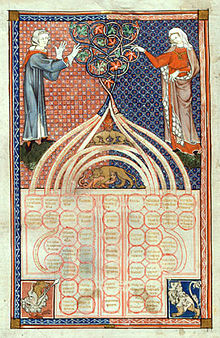
    The period from 500-1000 AD is known as the early middle ages. During this time the church in Europe developed what is called Canon law. Canon law is a set of laws developed by church authorities to govern the church and its members. One thing that Canon law had to deal with was penance; suppose someone commits a seriously immoral action, how should the church respond, what penalties practices of confession and repentance, should be in place to deal with this such practices are known in Catholicism as penance.

    During the early middle ages, manuals about how penance should be applied were developed. Many of these manuals addressed abortion. Here are some examples:

    • Manual Canones Hibernenses (675 A.D.) refers to abortion as a sin but draws a distinction between an unformed embryo and a formed, fetus. While both incur a penalty, The latter is punished more severely.[1]
    • The Bigotian Penitential (8th Century AD) draws a distinction between an embryo in liquid form and a fetus with flesh and spirit. Both abortions are punished, but the latter is punished more severely. [2]
    • The Anglo-Saxon Penitentials (668-690 A.D.) associated with the then the Archbishop of Canterbury Theodore drew a distinction between an abortion before and after 40 days. Penances are imposed for both periods; however, the penance after 40 days is stricter.[3] 
    • The Penitentiale Discupulus Umbrensium, states that if abortion takes place before an embryo has a soul the penance will be a year or three forty-day periods [4]

    In 1000 AD Pope Leo began reforming canon law and attempted and get a consistent practice. A Bishop called Ivo de Chartres collected together various manuals which became the standard rules for the church. Ivo dealt with abortion under the heading of “Homicide” he cited various Patristic writers we mentioned in our last lesson such as Jerome and Augustine and argued that a formed embryo or fetus is a human being and hence killing is a form of homicide[5] Ivo’s position became the standard position in Medieval Canon law. Ivo’s position was adopted by Gratian (1160) and Gratian’s work on Concordia became the dominant text of Canon law until the nineteenth century.

    1. II. Medieval Theology

    Alongside Canon law, we can also examine what Theologians or Philosophers who taught at Universities wrote.

    1.Peter Lombard

    One of the most important Theologians of the middle ages was Peter Lombard. Lombard lived from 1095-1160 A.D. He is important because he wrote The Sentences which was the most widely used textbook in Medieval universities.  When discussing feticide, Lombard repeated the texts cited by Gratian and Patristic writers such as Augustine, Jerome and also quote from the Septuagint.[6]
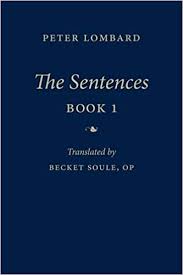
    Because Lombard’s book was such a widely used , other scholars of the period wrote commentaries on it.

    • In his commentaries, Albert the Great (1206-1280) accepted Lombard’s position that killing a formed conceptus was homicide.[7]
    • In his commentary Bonaventure (1221-1274) also accepted Lombard’s position that killing a fetus was homicide.[8]

    2.Thomas Aquinas

    The most famous Theologian and philosopher of the middle ages was Thomas Aquinas (1225-1275). In his commentary the Sentences he accepted Lombard’s basic position.80 Later, in the Summa Theologiae, Aquinas quotes Exodus 21:22-25:

    He that strikes a woman with child does something unlawful: wherefore if there results the death either of the woman or of the animated fetus, he will not be excused from homicide, especially seeing that death is the natural result of such a blow.[9]

    3.John of Naples

    A final theologian to note is fifteenth-century theologian John of Naples.  John wrote a book called Quodlibeta; in which he addressed the question “is it acceptable to give medical treatment to a pregnant woman if doing so will cause an abortion?”  John’s answer. If the drugs are provided for the purpose of destroying the embryo or fetus, then this is forbidden. On the other hand, if the drugs are provided to save the woman’s life from a fatal illness, then one can provide this treatment to her provided the fetus is not formed at the time.

    John was the first Theologian since Tertullian to explicitly address the question of whether abortion was acceptable to save a woman’s life. His position was taken up by later theologians and lead to a debate about under what circumstances abortion was acceptable if it saved a pregnant woman’s life.

    III. Medieval Law

    We will close our examination of the medieval period by looking at the law.

    1. Roman Law
    During the medieval period, Europeans followed Roman law. Roman law regarding abortion had developed as follows:

    • Roman dictator Sulla (81 BC) passed the Lex Cornelia a general law against selling and distributing poison.
    • Roman legal scholar Iulius Paulus applied the Lex Cornelia to cover drugs that cause an abortion:

    If anyone gives another a love potion or an abortion potion, even without an evil intention, since it is a source of bad example, he will be condemned to work in the mines if he belongs to the lower classes. If he belongs to the upper classes, he will be exiled and part of his property confiscated. But if the man dies, he will be punished with a capital sentence.[10]

    This became known as the Qui Abortionis law. The phrase “but if a man dies” probably referred to the death of the mother. However, during the medieval period, European lawyers began interpreting Roman law in accord with both the Septuagint and canon law. As a result, the reference to killing a man in the Qui Abortion was understood to include the killing of a fetus, 40 days after conception.

    2.English Common Law

    Canon law and medieval European law had an influence on English common law:  English common law is that part of English law which is based on custom.

    • Henry Bracton, (1210 – 1268 AD ) recorded English common law as stating: “If there is anyone who strikes a pregnant woman or gives her a poison which produces an abortion if the foetus be already formed or animated, and especially if it be animated, he commits homicide.” [11]
    • In 1290 an anonymous royal official wrote a book called Fleta according to this book:

    One is rightly a homicide who has pressed on a pregnant woman or has given her a poison or struck her to produce an abortion … if the foetus was already formed and ensouled… A woman also commits homicide if, by a potion or the like, she destroy the ensouled child in her womb. 89

    Bracton and Fleta tell us that killing a fetus was considered homicide in English common law.

    3.The Quickening rule

    The courts had difficulty applying these laws in practice. In English law, a person cannot be prosecuted for murder unless it is proven beyond a reasonable doubt that they deliberately killed a human being. I was hard to do this in medieval times. Miscarriage sometimes happens naturally, and it is difficult to determine how long a woman has been pregnant and whether or not the child in her womb had died of natural causes. Two prominent legal cases in the middle ages   resulted in an acquittal because of an inability to prove

    These difficulties lead to the development of what is called the “quickening rule”. Quickening refers to the time when a woman first feels the fetus move inside her. English law treated any action which caused the death of a fetus after quickening a serious criminal offence.  But refused to treat it as murder unless the fetus was born alive and died from wounds which were obviously caused while the woman was pregnant. This way of applying the law was followed by the famous English judge Edward Coke (1552 –1634) and is recorded as the law of England by the judge William Blackstone 1723 – 1780) This remained the English law till the mid-19th century.


    [1] Canones Hibernenses,1 Canons 6-8.

     [2] Penitentiale Bigotianum, 4.2, 2-4.

    [3] Penitentiale, 14, 24 also 27.

    [4] Penitentiale, 14, 24 also 27.

    [5] Ivo of Chartres, Decretum, 10 55-58.

    [6] Peter Lombard, Libri Sententiarium, Lib 4 d.31.

    [7] Albert, Commentarium, in L IV d. 31 a18.

    [8] Bonaventure, Commentarium in Librum IV Sententiarium, d 31 dub 4. 80 Thomas Aquinas, Commentarium in Librum IV Sententiarium, d 31.

    [9] Thomas Aquinas, Summa Theologiae II II Q64 Article 8. 82 Connery, Abortion:, 112.

    [10] Justinian, Digest 48. 19. 38. 5.

    [11] Henry Bracton, On the Laws and Customs of England, 2: 341.

  • Why Defamatory Speech is not Free Speech

    The following is a representation of the standard argument as to why a remedy requiring the removal of defamatory speech from a publication is not a violation of the right to free speech:

    1. The right to Freedom of Expression is protected by s14 of the Bill of Rights Act 1990 (“BORA”).
    2. The operational provisions of the BORA provide in section 5 that a reasonable limit to Freedom of Expression can be justified in a free and democratic society where that limit is prescribed by law.
    3. Section 5 is subject to section 4, which states in mandatory terms that no court can decline to apply any provision of an enactment on the sole grounds that the provision is inconsistent with the BORA.
    4. Notwithstanding this, section 6 requires the court rule in a manner as consistent as possible with Bill of Rights.
    5. If a Respondent’s actions constitute a breach of s4 of the Defamation Act 1992 therefore the remedy sought, removal of the defamatory material from the publication, does not violate the Respondent’s right to Freedom of Expression.

    Freedom of SpeechWhile this is the standard argument it has always felt wrong to me. There is something unsatisfactory about appealing to a mechanism in the law that, as argued, feels like it is shearing off a part of an important right and freedom, even if the law says that it is ok.

    I find this argument unsettling and lacking something; at the same time defamatory speech is insidious, causes harm, hurts; intuitively it just feels wrong to say that one is morally justified in spreading harmful falsehoods about a person and is not required to account for the wrongs done, because of their right to free speech.

    After discussions with Matt about this I have decided that I prefer the following argument:

    1. Freedom of Expression exists to allow people to freely express their opinions and impart information without fear of legal penalty.
    2. Defamation is expression imparted to another that lowers the standing of a person in the eyes of their peers and is not true and is not honest opinion which is genuinely held.(I am ignoring the third defence, privilege).
    3. A person who expresses defamation is not engaging in Freedom of Expression as where there is no truth or honest opinion then a person is neither attempting to inform another or attempting to express their opinion.
    4. The basis for this is that to attempt to inform someone is to attempt to increase that person’s repertoire of true beliefs’ and to impart an opinion is to express what one honestly believes to be the case.
    5. Therefore, the freedom that the right to Freedom of Expression protects is all speech that is true or honestly held to be true by the speaker.

    That is much better.

    Defamatory speech is not free speech therefore legal sanctions against it are entirely appropriate in both legal and moral senses.

    Context:
    Two blogs have recently been found to have published defamation of me, the nature of which was described as “extremely serious” by a Court of Law. The above demonstrates why I feel I was perfectly justified in seeking the removal of the defamatory material, one by Court Order, one by private request. John Stuart Mill, the UN Charter, Milton, Common Law, to point to a few, have agreed for centuries that defining Freedom of Speech to be all speech that is not Defamation is just in all mediums. Defamatory speech being restricted or punished by law, offline or online, poses no threat to anyone.

  • Yet Another Lawyer Agrees: Marriage Amendment Act Bill is an Affront to Freedom of Religion and Belief

    Barrister Ian Bassett has given another opinion describing the risks to freedom of religion and belief of Louisa Wall’s Marriage Amendment Act Bill if it is enacted in its presently proposed form, which would include this amendment:

    “Without limiting the generality of subsection (1), no celebrant who is a minister of religion recognised by a religious body enumerated in Schedule 1, and no celebrant who is a person nominated to solemnize marriages by an approved organisation, is obliged to solemnize a marriage if solemnizing that marriage would contravene the religious beliefs of the religious body or the religious beliefs or philosophical or humanitarian convictions of the approved organisation.”

    It is clear that any marriage celebrant exercising their public function who is not covered by the amendment risks being in breach of the New Zealand Bill of Rights Act 1990 and the Human Rights Act 1993 if they refuse to perform their public function as marriage celebrants because it is a same sex couple seeking to be married.

    Injustice

    Church ministers, marriage celebrants, court registrars, church elders, leaders, photographers and caterers and any other person or entity supplying services to the public risks being in breach of the Human Rights Act 1993 if they refuse to supply services to a couple seeking to be married because the couple are same sex. For some this could also mean risking their employment.

    Service providers to the public risk being in breach of the Human Rights Act 1993 if they refuse to supply services to a married couple because the couple are same sex.

    The New Zealand Law Society’s Law Reform Committee headed by Professor Paul Rishworth LLB (Hons) M Jur highlighted the risk to freedom of religion and belief in the Bill in its submission to Parliament:

    “The proposer of the Bill said that the Bill was not intended to compel marriage celebrants to perform marriages contrary to their religious beliefs. However, in the Law Society’s view, Professor Rishworth says it is arguable that marriage celebrants who refuse to perform same-sex marriages will be acting unlawfully under the Human Rights Act 1993, the New Zealand Bill of Rights Act 1990, or both.

    “We want to highlight arguable conclusions which seem to be at odds with the settled intentions of the Bill’s drafters. Whatever the position, the Law Society believes it makes sense to put the matter beyond doubt,” Professor Rishworth says.

    The only thing that the amended Bill puts beyond doubt is that the critics of those raising fears about the Bill’s threat to freedom of religion and belief were wrong. By recommending an amendment the Select Committee are agreeing that a risk existed, as the likes of Ian Bassett, Grant Illingworth have argued, contra to The Human Rights Commission’s claim that all “…religious officials and leaders are free to refuse to perform marriages that are not in accordance with their religious beliefs.”

    Bassett, Illingworth and Rishworth are not alone with their concerns among the legal fraternity.

    Graeme Edgeler, a Wellington Barrister has been quoted in the Herald saying:

    … if an independent celebrant declined to marry a same-sex couple, the couple could then complain to the Human Rights Commission.

    “It’s not about [celebrants] being forced, it’s about people getting in trouble afterwards if they didn’t,” he told APNZ.

    “They’re not breaking any rule in the Marriage Act, but rules in other acts. The main one would be the Human Rights Act, which says you can’t discriminate on the basis on sexual orientation or gender.”

    Auckland Barrister Rachel Wong has raised issues against the Bill.

    This blog’s Madeleine Flannagan LLB, Associate Barrister and Solicitor at Coast Legal, adds her voice:

    “The Bill, in its present form, fails to protect individual freedom of religion and belief (belief being a comprehensive viewpoint not based on religion). The proposed amendment only protects group religious rights, which is little protection at all for most religious celebrants as few denominations hold formal views on marriage, many practitioners of religion do not belong to a group and for those that do they might hold a different personal view on this topic to the group view. The amendment then fails to protect the religious freedom of most religious celebrants just as it utterly fails to protect the freedom of belief of non-religious celebrants who have no group to appeal to to protect their freedom.”

    Ian Bassett’s latest opinion thoroughly analyses the legal effects of the amended Bill, a summary as to whose freedom of religion and belief it protects and whose it does not follows: (more…)

  • A Godless Public Square: Do ‘Private’ Christian Beliefs Have a Place in Public Life? Part III Madeleine Flannagan – Law

    A Godless Public Square: Do ‘Private’ Christian Beliefs Have a Place in Public Life? A few weeks ago, as part of Jesus Week at the University of Auckland, Thinking Matters and Evangelical Union hosted an event entitled A Godless Public Square: Do ‘Private’ Christian Beliefs Have a Place in Public Life? This event was a conversation between Theology, Philosophy and Law and featured Matthew Flannagan – Analytic Theologian, Glenn Peoples – Philosopher and Madeleine Flannagan – Legal Scholar. The video is still being edited and will be available soon but for now, this 3-part series comprises the written speeches of each speaker.

    Madeleine Flannagan – Law

    Glenn and Matt dealt with moral restraint; the idea prevalent in our society that those of us with religious convictions ought to keep them to ourselves when we participate in public life.

    Often people contend or try to imply that this obligation is required by law. We’ve all heard politicians, people in the media, leaders in our communities, lecturers at university assert that we are a secular nation and that our commitment to freedom of religion requires a secular public square.[1]

    And they are not wrong to a degree. It is evident that something like this ‘obligation’ advanced by the likes of Rawls, Audi, Gaus, et al is present in western jurisprudence – most obviously in that coming out of the United States; you do not need to have studied law to be aware of this, you will have picked up on it if you have watched any American TV.

    Separation of Church and State or Separationism?

    Most people are aware that the US Supreme Court has interpreted America’s Religious Freedom and Free Exercise laws to mean that religious instruction, prayer, references to God, displays of the 10 commandments, nativity scenes — even where participation is totally voluntary — are banned from public institutions.

    This “separationist” reading of the 1st amendment is drawn from US Founding Father Thomas Jefferson’s “Wall of separation Letter” to the Danbury Baptists Association in 1802. But it is unlikely that this reading is what Jefferson meant. At the time he was writing in early nineteenth century America, the common perception of the relationship between church and state reflected a long-standing European tradition.

    Legal scholar Steven Smith wrote in “Separation and the Secular: Reconstructing the Disestablishment Decision” that,

    … At least since the middle ages, scholars and polemicists of all stripes had argued-on both religious and political grounds-that the church should exercise control over the state or-again on both religious and political grounds-that the state should control the church. The common view for centuries had been that an established church was essential to political and social stability.[2]

    He added,

    … In medieval Europe, for example, kings had claimed, and had exercised, the power to appoint bishops and popes. After the Reformation, the British monarch became the official head of the Church of England, and British government assumed control over both the selection of ecclesiastical officials and the formulation of religious doctrine.[3]

    In fact, the Book of Common Prayer, including the 39 Articles, was commissioned and approved by the Crown.

    Smith goes on,

    … medieval popes regularly crowned earthly emperors and kings, and they claimed (and frequently purported to exercise) the authority not merely to excommunicate but actually to depose those kings. Popes sometimes asserted jurisdiction to adjudicate what were essentially political or property disputes. In England, the Church enjoyed-and still enjoys-official representation in Parliament. Immigrants later imported established churches in some form into most of the American colonies.[4]

    The church-state relationship that was familiar to an eighteenth century American was that “governments controlled or directly intervened in the internal affairs of churches, and churches claimed and were formally endowed with governmental powers.”

    At the time Jefferson was writing, many US States had established churches; so when the United States Congress promised to “… make no law respecting an establishment of religion, or prohibiting the free exercise thereof…”[5] they more likely had in mind that Separation of Church and State is simply the idea that the church should not be formally endowed with governmental powers and the state should not try to intervene in or control the church.

    Separation of church and state is not separation of religious beliefs from public life (perhaps this confusion arises because both concepts have the word “separation” in them). The idea that Congress meant something more than mere Separation of Church and State when it passed the first amendment – that Congress meant Separationism — was birthed in the mid to late 20th century – some 200 years later – by the US Supreme Court when it began to hear cases about prayer in schools and the funding of Catholic schools.

    Separationism and Separation of Church and State, as we have seen, are different ideas and one doe not entail the other.

    Comparitive Jurisdictions

    This is not just about the US. Separationist understandings of freedom of religion can be seen in Western jurisprudence elsewhere. There are European cases that exhibit it – even in places like the UK that do have an established church. Many of you will have heard the cases in the media of workers being sent home from their jobs after refusing to follow an instructions from their employers to remove religious jewellery[6] – normal jewellery was fine, just not anything that symbolised God.

    The “Liberty Intervening” case is another UK example; a state-Celebrant refused to perform civil partnerships between members of the same sex. Because of her views on marriage, she was found to have discriminated against those couples. She could not appeal to freedom of religion as the court held that her employer’s requirement she perform same sex civil partnerships did not interfere with her ability to worship.[7]

    Then there is this case, the summary from the head note explains (more…)

  • “Confronting the Challenge of Secularism” Madeleine to Speak at the Notre Dame Center for Ethics and Culture

    The Notre Dame Center for Ethics and CultureNot too long ago I wrote a post entitled We’re Going to San Francisco! In it I announced that in November 2011 Madeleine and I will jointly be giving a paper to the Society of Biblical Literature Annual Meeting, and that I will be giving a paper to the Evangelical Philosophical Association Annual Meeting and also to the Evangelical Philosophical Association’s Annual Apologetics Conference. Well, now we are also going to South Bend, Indiana.

    The Notre Dame Center for Ethics and Culture recently advertised a call for papers for its 2011 Flagship Fall Conference, “Radical Emancipation:  Confronting the Challenge of Secularism.” The stated aim of the conference is:

    “… to bring together a large number of respected scholars representing all the main academic fields, from Catholic, Christian, and secular institutions, to engage in a spirited discussion of this theme from the perspectives of philosophy, theology and religious studies, law, history, the social sciences, literature and the arts, as well as other fields of intellectual inquiry and endeavor.”

    Given that the conference will be held only a few days before the San Francisco cluster of conferences, given that both Madeleine and I work in religion in public life from within our separate disciplines of philosophy of law and analytic theology and both of us draw from the writings of Notre Dame scholars, we decided to both put in papers. It seems that a lot of other people had the same idea as an announcement appeared on the website “Record number of conference abstracts submitted!” This is not surprising given the reputation and calibre of the Notre Dame Center for Ethics and Culture so when we saw this we thought neither of us stood a chance.

    So, you can imagine our delight, and how proud I was of my wife, when she received the following email notification yesterday,

    “I am pleased to accept your paper proposal for presentation at the conference to be held at the University of Notre Dame from November 10-12, 2011. Congratulations! … This year, we turned down an unprecedented number of worthy paper proposals: well over 200 individuals submitted abstracts for consideration.”

    My paper was not successful but I have been invited to chair a session 🙂

    Madeleine wrote a very good abstract:

    “No Privileges, No Penalties” and the De-Privileging of Secularism

    Madeleine Flannagan – University of Auckland, New Zealand

    The dominant Establishment Clause jurisprudence reflects a separationist reading of the First Amendment that advances and protects the hegemony of secular perspectives in public life. Each test, Lemon, Endorsement and Coercion, requires the State to place a restraint on the exercise of religion in public life that effectively privatizes religion and contributes to the radical emancipation of man from God.[1]

    I will argue that the requirement of public conformity to secular perspectives exceeds the traditional understanding of separation of church and state by privileging secular perspectives over religious ones. A clear asymmetry in the way religious beliefs are treated by the State is visible in the requirement that religious believers bracket beliefs they hold as true, important and relevant when they participate in public life while secular citizens are free to utilize the beliefs central to their perspective.

    Vincent Phillip Muñoz has argued for a move away from Separationist jurisprudence and towards a test found in the writings of Founding Father James Madison, a “no privileges, no penalties” test.[2] I will argue that a “no privileges, no penalties” test could uphold freedom of religion and separation of church and state by permitting religion to have a place in public life as long as those who engage in public religious conduct do not gain a privilege for doing so and those who do not wish to participate are both free to opt out and are not penalized for doing so. The adoption of a “no privileges, no penalties” test would ensure that those seeking to bring balance to our secularized culture would not be restrained by the State from doing so.


    [1] The Lemon Test insists that public policy have a valid secular purpose; that a non-religious rationale be offered for all state actions. The Endorsement Test prohibits the state from “endorsing” religion over irreligion. The Coercion Test provides that the state must not coerce religious practice; not only must it not be required, but in Lee v Weisman the application was shifted to what Justice Scalia, in his dissent, termed a “test of psychological coercion”. The Supreme Court held that being one of few (or the only one) to opt out of a religious practice in a public setting is a form of state coercion by peer pressure. (Notably it did not hold that the same is true in reverse.)

    [2] Vincent Phillip Muñoz documents in God and the Founders: Madison, Washington and Jefferson (Cambridge University Press, Ney York, 2009) 33  that when Madison was editing the religious freedom amendment to Virginia’s Declaration of Rights, Madison proposed the following revision: “That Religion or the duty we owe to our Creator, and the manner of discharging it, being under the direction of reason and conviction only, not violence or compulsion, all men are equally entitled to the full and free exercise of it accord[in]g to the dictates of Conscience; and therefore that no man or class of men ought, on account of religion to be invested with peculiar emoluments or privileges, nor subjected to any penalties or disabilities …” [Emphasis mine]

    If you would like to make a donation to assist Madeleine and I in getting to the US for all of the above conferences this November please visit our “Support page” or see our “Donate” button in the side-bar.

    If you would like to book either of us to speak whilst we are in the US please let us know asap as we will be purchasing flight tickets very shortly.

  • The New Zealand Association of Rationalist Humanists and the Privileging of Secularism

    The New Zealand Association of Rationalist Humanists (“NZARH”) has a statement of aspirational ideals for the New Zealand state on their website. Entitled “The Tolerant Secular State” it is anything but.

    The first two sentences of the document exhibit a confusion which is inherent throughout (and commonly found in discussions of church and state):

    Lord Voldemort

    “The NZARH strongly believes that government should be secular; that is dealing with the issues of this world rather than following a religious agenda. Our law should not give one set of beliefs privilege over another and the state should treat religious organisations the same as any other organisation.”

    An equivocation on the meaning of the word “secular” in the very first sentence is immediately apparent.

    Stephen Smith notes that the word secular has two distinct meanings. Etymologically, “secular” refers to things pertaining to this world and life as opposed to the next. In this sense of the word “secular” is not opposed to religion; many religious beliefs and values pertain to life in this world, beliefs about: marriage, sex, human life, killing,  justice for the poor, what one’s duties are in this life, what God’s purposes are in this life and so on are all secular beliefs in this sense. The second and more common meaning of “secular” is to say it excludes, is in opposition to beliefs and values that are religious in nature; this is usually the first definition one will find in a dictionary.

    The NZARH use both meanings in the first sentence of their “Tolerant Secular State” document (more…)

  • The Separation of Church and Self: Rethinking Separationism

    Is it just for a pluralistic society to ground its public policy on religious premises? What role should religion play in such a society? Debate over questions like these has figured in theology, philosophy, political science, jurisprudence and popular culture for centuries. In contemporary Western pluralistic society the debate continues. Even for those unfamiliar with its nuances at the higher levels the effect of the standard view, as described by Stephen Carter, is immediately familiar:

    “One good way to end a conversation – or start an argument – is to tell a group of well educated professionals that you hold a political position (preferably a controversial one such as being against abortion or pornography) because it is required by your understanding of God’s will. In the unlikely event that anyone hangs around to talk with you about it, chances are that you will be challenged on the ground that you are intent on imposing your religious beliefs on other people. And in contemporary political and legal culture, nothing is worse.”[1]

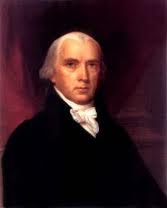
    James Madison

    Carter is referring to the separationist understanding of religion and public life, the idea that in a contemporary pluralistic society significant restraint must be put on the political role of religious reasons. This restraint is negative; when a functionary deliberates over a proposed policy it is not justified for that functionary to decide to support or oppose that policy on grounds derived from religion. A corollary of this is that citizens should not try to influence public policy by appealing to religious reasons. Separationists argue that the public policy of a pluralistic society must be able to be justified by a plausible secular justification in order for it to be just to all. Religious beliefs, while utilised and followed in private, should be kept separate from public policy debates, the administration of public institutions and the deliberation of public functionaries. (more…)