Mon 1- Friday 5 August marks Jesus Week. A number of events will be held on the University of Auckland campus of which we are part of including this one brought to you by the Evangelical Union and Thinking Matters: A Godless Public Square: Do ‘Private’ Christian Beliefs Have a Place in Public Life? A Jesus […]
Entries Tagged as 'Philosophy of Religion'
A Godless Public Square: Do ‘Private’ Christian Beliefs Have a Place in Public Life? @ Auckland Uni
July 12th, 2011 8 Comments
Tags: Evangelical Union · Glenn Peoples · Jesus Week · Religion in Public Life · Thinking Matters
Ethics: What Does God have to do with it? @ Auckland University
July 11th, 2011 4 Comments
World class Ethicists John Hare (Yale Divinity) and Mark Murphy (Georgetown Philosophy) are in town for the Naturalisms in Ethics Conference and the Meeting of the Australasian Philosophy of Religion Association at the University of Auckland where they will be speaking along with New Zealand’s top Ethicists. We leaped on the opportunity to organise the following […]
Tags: Glenn Pettigrove · John Hare · Mark Murphy · Thinking Matters
The Australasian Philosophy of Religion Association Conference @ Auckland University
July 11th, 2011 4 Comments
The Australasian Philosophy of Religion Association (APRA) conference will be running at the University of Auckland from 16-17 July and will feature this blog’s own Matthew Flannagan and our good friend Glenn Peoples. The APRA conference is an annual event usually taking place over two days in mid July. Speakers include: John Bishop (University of Auckland) Trent Dougherty (Baylor […]
Naturalisms in Ethics Conference @ Auckland Uni
July 10th, 2011 10 Comments
The Naturalisms in Ethics conference will be running at the University of Auckland from 14-15 July and will feature this blog’s own Matthew Flannagan. Here is the blurb from organiser Chris Tucker’s page (which includes registration information – see also the Facebook Event page): ‘Naturalism’ is a multiply ambiguous term—hence the title Naturalisms in Ethics— but it is […]
Guest Post: Paul Copan Replies to Hector Avalos – Deuteronomy 25:11-12, an Eye for an Eye, and Raymond Westbrook
July 9th, 2011 57 Comments
My book review of John Loftus’s The Christian Delusion: Why Faith Fails prompted several responses from Hector Avalos, one of the book’s contributors. Avalos has offered critiques of not just my arguments but also those of my good friend Paul Copan. This Guest Post, written by Paul Copan, responds to some of Avalos’s charges. Paul […]
Tags: Bruce Wells · Hector Avalos · John Loftus · Lex Talionis · Old Testament Ethics · Paul Copan · Raymond Westbrook
Hector Avalos and Careful, Non-Selective Citation of Sources
June 30th, 2011 163 Comments
On Debunking Christianity, Hector Avalos has posted a response to my critique of his post A Reply to Hector Avalos’ “Why Flannagan Fails History”. His latest post is entitled Flannagan Versus Westbrook: Understanding the Problem; it pretty much repeats points I have addressed in my critique, basically Avalos pretends I did not answer them. In […]
Tags: Hector Avalos · Is God a Moral Monster? · John Loftus · Paul Copan · The Christian Delusion: Why Faith Fails
A Reply to Hector Avalos’ “Why Flannagan Fails History”
June 28th, 2011 49 Comments
It seems my recent Philosophia Christi review of John W. Loftus’ The Christian Delusion: Why Faith Fails has hit something of a nerve. Professor Hector Avalos, who wrote “Yahweh is a Moral Monster” in The Christian Delusion, has written a response entitled “Why Dr. Flannagan Fails History, Dr. Hector Avalos Responds”. Avalos raises several points which I cannot […]
Tags: Hector Avalos · John Loftus · Paul Copan · Raymond Westbrook · The Christian Delusion: Why Faith Fails · Yahweh is a Moral Monster

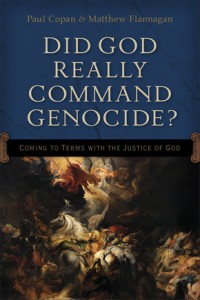 A common objection to belief in the God of the Bible is that a good, kind, and loving deity would never command the wholesale slaughter of nations. In the tradition of his popular Is God a Moral Monster?, Paul Copan teams up with Matthew Flannagan to tackle some of the most confusing and uncomfortable passages of Scripture. Together they help the Christian and nonbeliever alike understand the biblical, theological, philosophical, and ethical implications of Old Testament warfare passages.