On the list of blurbs just inside the cover of The Christian Delusion: Why Faith Fails, edited by John W. Loftus (Amherst, NY: Prometheus Books) 2010, the following appears: As a result of being published on the blurb of the book, the current edition of Philosphia Christi, Vol. 13, no. 1 – Summer 2011, shows the following […]
Entries Tagged as 'Philosophy of Religion'
The Christian Delusion: Why Faith Fails – A Philosophia Christi Review of John Loftus’ Book
June 25th, 2011 305 Comments
Tags: Book Review · David Eller · Edward Babinski · Hector Avalos · Jason Long · John Loftus · Outsider Test for Faith · Paul Tobin · Philosophia Christi · Richard Carrier · Richard Price · The Christian Delusion: Why Faith Fails · Vallerie Tarico
Stark Wars
June 23rd, 2011 29 Comments
Thom Stark has written a lengthy response (304 pages!) to Paul Copan’s book Is God a Moral Monster? which he has published on his blog, Religion at the Margins; it is entitled Is God a Moral. Compromiser? A Critical Review of Paul Copan’s. “Is God a Moral Monster?” In it, alongside his criticisms of Copan, Stark makes […]
Tags: Is God a Moral Monster? · Paul Copan · Richard Hess · Thom Stark
Lawful Authority and Just Wars
June 16th, 2011 66 Comments
A reader pointed me to this interesting post on Pacifism and Just War Theory from Baylor University Philosophy Professor, Alexander Pruss. Interestingly Pruss offers an argument similar to the one I presented at a panel discussion on the ethics of war recently. In this discussion I suggested that traditional Christian Just War Theory follows from […]
Tags: Alexander Pruss · Just War · Pacifism · War Ethics
In Defense of Reasonable Disagreement
May 30th, 2011 39 Comments
At the close of his 1967 book “God and Other Minds”, Alvin Plantinga argues that if theistic belief is to be dismissed as “irrational”, or in some sense “epistemically sub-par” on the basis that it lacks a rationally compelling argument, then likewise we should also reject belief in other minds, since the best argument for […]
Tags: Alvin Plantinga · Analogical argument · Disagreement · God and Other Minds · Rationality · Reformed Epistemology · Religious Epistemology · Richard Feldman · Theism · Theists
I’m so Objective about how You’re so Subjective
May 25th, 2011 19 Comments
One general objection to theistic arguments for God is that no such argument could be based on the subjective experience of one’s own cognitive processes, and that therefore it suggests delusions of grandeur to think that one can get from such a basis to God necessarily existing. But to deny that a sound argument could […]
Tags: Atheism · Faith and Reason · Objectivism · Subjectivism · Theism
Guest Post: One Less God
May 18th, 2011 92 Comments
Bethyada from True Paradigm writes: I have read a few posts on the ‘one less god’ proposition. Stephen F Roberts originally put it, “I contend we are both atheists, I just believe in one fewer god than you do. When you understand why you dismiss all the other possible gods, you will understand why I […]
Tags: Bethyada · Douglas Wilson · Guest Post · One Less God · Pluralism · Sam Harris · Stephen Roberts
Guest Post: Tim McGrew defends “The Argument from Miracles: A Cumulative Case for the Resurrection of Jesus of Nazareth”
May 9th, 2011 50 Comments
A little while back we published a post linking to some talks by Tim McGrew on Undesigned Coincidences in the Gospels. For some bizarre reason this post of ours prompted fellow kiwi blogger Deane Galbraith to write a post on the Bulletin for the Study of Religion, linking to our post, on the separate topic of Tim […]
Tags: Bayesian Probability · Deane Galbraith · Guest Post · Lydia McGrew · Probability of the Resurrection · Resurrection · Tim McGrew

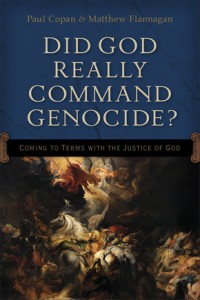 A common objection to belief in the God of the Bible is that a good, kind, and loving deity would never command the wholesale slaughter of nations. In the tradition of his popular Is God a Moral Monster?, Paul Copan teams up with Matthew Flannagan to tackle some of the most confusing and uncomfortable passages of Scripture. Together they help the Christian and nonbeliever alike understand the biblical, theological, philosophical, and ethical implications of Old Testament warfare passages.