In my last post “Response to William Lane Craig’s Question 225: “The ‘Slaughter’ of the Canaanites Re-visited” Part I” I discussed William Lane Craig’s position on the Canaanite Conquest account (in light of the fact that Craig referred to my argument in his question of the week: “Question 225: The “Slaughter” of the Canaanites Re-visited”). I […]
Entries Tagged as 'Philosophy of Religion'
Response to William Lane Craig’s Question 225: “The ‘Slaughter’ of the Canaanites Re-visited” Part II
August 12th, 2011 158 Comments
Tags: Atlanta · Canaanites · Evangelical Philosophical Society · Genocide · Nicholas Wolterstorff · Old Testament Ethics · Paul Copan · Question of the Week · Society of Biblical Literature · William Lane Craig
“Confronting the Challenge of Secularism” Madeleine to Speak at the Notre Dame Center for Ethics and Culture
August 11th, 2011 13 Comments
Not too long ago I wrote a post entitled We’re Going to San Francisco! In it I announced that in November 2011 Madeleine and I will jointly be giving a paper to the Society of Biblical Literature Annual Meeting, and that I will be giving a paper to the Evangelical Philosophical Association Annual Meeting and also […]
Tags: Notre Dame · Notre Dame Center for Ethics and Culture · Religion in Public Life · San Francisco · South Bend · Vincent Phillip Muñoz
Response to William Lane Craig’s Question 225: “The ‘Slaughter’ of the Canaanites Re-visited” Part I
August 11th, 2011 6 Comments
Every week William Lane Craig answers a question on his website; this week’s question of the week is entitled “The “Slaughter” of the Canaanites Re-visited”. The questioner asked what Craig thinks of the Canaanite Conquest account. I got a mention in Craig’s reply: “The topic of God’s command to destroy the Canaanites was the subject […]
Tags: Atlanta · Canaanites · Evangelical Philosophical Society · Genocide · Nicholas Wolterstorff · Old Testament Ethics · Paul Copan · Question of the Week · Society of Biblical Literature · William Lane Craig
This Wednesday @ Auckland Uni: A Godless Public Square – Do ‘Private’ Christian Beliefs Have a Place in Public Life?
August 1st, 2011 11 Comments
A common slogan in western liberal societies is that religion is a private matter; it has no place in public discussions of law, economics, public policy, education, social ethics, culture and so on. This “separationist” view is often attributed to US Founding Father, Thomas Jefferson “Wall of Separation Letter” and has become the orthodox view in liberal thought receiving important advocacy by philosophers such as John […]
Tags: Evangelical Union · Glenn Peoples · Jesus Week · Religion in Public Life · Thinking Matters
Jesus: The Cold Case a Guest Post by Glenn Peoples
July 27th, 2011 18 Comments
Glenn Peoples shares his thoughts on TV One’s recent episode Jesus: The Cold Case. Like a number of others tonight I have just watched Jesus: The Cold Case on TV One, presented by Bryan Bruce. Here are my thoughts on what I have seen. First off, who is Bryan Bruce? Bryan Bruce is an award winning producer, […]
Tags: Glenn Peoples · Guest Post · Historical Apologetics · Historical Ignorance · Jesus The Cold Case · TV One
Does Moral Commitment Presuppose Belief in Providence?
July 21st, 2011 36 Comments
Last week I had the privilege of hearing Professor John Hare, of Yale Divinity school, speak on God and morality at the Naturalisms in Ethics and APRA conferences. One idea Hare proposes, which fascinates me, is that commitment to morality presupposes belief in what he calls “strong providence” the position that “the world is so […]
Tags: God and Morality · Happiness · John Hare

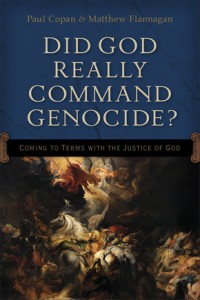 A common objection to belief in the God of the Bible is that a good, kind, and loving deity would never command the wholesale slaughter of nations. In the tradition of his popular Is God a Moral Monster?, Paul Copan teams up with Matthew Flannagan to tackle some of the most confusing and uncomfortable passages of Scripture. Together they help the Christian and nonbeliever alike understand the biblical, theological, philosophical, and ethical implications of Old Testament warfare passages.