Category: Philosophy of Religion

  • Chai Feldblum: “We Should not Tolerate Private Beliefs”

    In “Diatribe: To All Da Haters” (originally entitled “Queers and Destiny: Who Hates Who”) an article published a few years ago in Critic (the student magazine of Otago University) I wrote the following:

    … If teaching that homosexual conduct is wrong is akin to racism or propagation of apartheid, then the aforementioned religious organisations are the moral equivalent of the Ku Klux Klan. Those who propagate such arguments need to reflect on the implications of what they affirm. Imagine a society where the local synagogue or Mosque is treated as though it were the local Klan headquarters. Or where Muslim students are perceived and treated the way we currently relate to white supremacists. It is not difficult to see that the widespread dissemination and acceptance of this argument would lead to an atmosphere of pervasive religious intolerance – such intolerance is the very antithesis to what many of those protesters ostensibly claim to stand for.

    The solution to intolerance is tolerance. Tolerance of those ideas you may fervently disagree with and recognition of another’s right to freely hold and express them. Tolerance requires one to respond to disagreement with rational persuasion, not vilification. This cuts both ways.

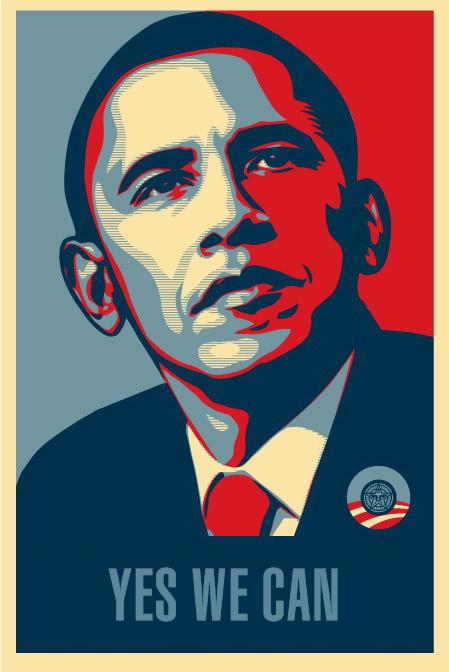
    I was widely vilified and ridiculed for my comments and denounced as hate filled and bigoted. It is interesting to compare what I said with the comments of Chai Feldblum, the Georgetown University law professor nominated by Obama to serve on the Equal Employment Opportunity Commission.

    Just as wYes we can!e do not tolerate private racial beliefs that adversely affect African-Americans in the commercial arena, even if such beliefs are based on religious views, we should similarly not tolerate private beliefs about sexual orientation and gender identity that adversely affect LGBT [lesbian, gay, bisexual, and transgender] people,” the Georgetown law professor argued…
    For those who believe that a homosexual or bisexual orientation is not morally neutral, and that an individual who acts on his or her homosexual orientation is acting in a sinful or harmful manner (to himself or herself and to others), it is problematic when the government passes a law that gives such individuals equal access to all societal institutions.

    Of course those religions that believe homosexual conduct is sinful include Roman Catholicism, Eastern Orthodoxy, evangelical Protestantism, many neo-orthodox Protestants, Islam, Orthodox Jews, Mormons, Jehovah’s Witness’s, Seventh Day Adventists and so on. So presumably, if we are to take Feldblum at her word, none of these groups should be tolerated in Obama’s society and all should be denied equal access to societal institutions.

  • John Loftus’ The Christian Delusion: Why Faith Fails

    John Loftus will soon release his new book The Christian Delusion: Why Faith Fails. As many readers will be aware John Loftus and the authors of this blog are not strangers to one another so it may not be much of a surprise to discover that the blurbs page of Loftus’ new book features very short reviews from a range of international scholars including Matt:

    Dr. Matthew Flannagan, Christian philosopher and Adjunct Lecturer in Philosophy for Laidlaw College and Bethlehem Tertiary Institute.

    The Christian Delusion is a comprehensive and representative presentation of contemporary skeptical thought. Anyone who wants to understand the position of contemporary free thinkers could not do much better than to read this book.

    Matt intends to write a more thorough review which we will submit for publication both nationally and internationally.

  • Sunday Study: Inerrancy and Biblical Authority

    Recently Glenn Peoples and Dominic Bnonn Tennant had an interesting exchange over the issue of biblical inerrancy, the doctrine, that the bible contains no errors. In his post, Errantly Assuming Inerrancy in History, Peoples makes this interesting comment,

    While there has always been a clear expression of the view that what Scripture teaches is correct, this has certainly not always been seen in terms of the notion of “inerrancy.” After all, the very disagreement that exists between evangelicals who affirm inerrancy and those who do not is whether or not the idea that the Bible is authoritative and truthful in what it teaches us should (or need not) give rise to the further claim that the Bible is also inerrant.

    Peoples here distinguishes between two theses; the first is that bible contains no errors, the second is that whatever the bible teaches is true. In his article Peoples argues that the first of these theses is false, he argues that there are numerous factual errors in scripture. On the other hand Peoples maintains that the second thesis is true, none of the errors he mentions call into question the authority of scripture because they do not affect the truth or falsity of what scripture teaches. Hence, one can affirm the authority of the bible, even the claim that it is infallible in what it teaches, without affirming that it is inerrant, in the sense of containing no errors.

    In A response to Glenn Peoples’s ‘No, I am not an inerrantist’ Bnonn argues that Peoples is attacking a straw-man. The doctrine that the bible is inerrant does not mean to deny that the kind of discrepancies Peoples points to do not exist; rather, supporters of the position Peoples attacked have in mind a different account of what constitutes an error to what Peoples’ critique suggests. Here, I do not want to discuss whether Bnonn is correct or incorrect here because whether he is or not, I think Peoples is onto an important distinction here and he offers an important critique of one way of understanding biblical authority which is often assumed by sceptics.

    A couple of examples may illustrate this point. In Does God Exist Michael Tooley, for example, suggests that those who hold that Genesis is the revealed word of God run into trouble because in Genesis God decided to “drown all men, women, and children in a great flood” and suggests that this means they must believe that God has engaged in genocide of the human race.[1] David Brink similarly argues that the Genesis story of Adam and Eve is contradicted by contemporary geological evidence and evolutionary biology so, hence, is unreliable.[2] Fales notes “then, there is the generally mythical character of Genesis, and the fact that many of the themes in the first eleven chapters are borrowed from, or influenced by, the myths of other ancient Near Eastern cultures”[3] and considers this to undercut the authority and reliability of the book of Genesis. Some sceptics contend that primitive scientific understandings of the world are presupposed in various biblical passages. In Matt 15:18-19 Jesus states “But the things that come out of the mouth come from the heart, and these things make a man unclean. For out of the heart comes evil thoughts, murder, adultery, sexual immorality, theft, false testimony, slander” Some sceptics argue that this passage reflects a primitive ancient understanding of human anatomy that held that the heart was literally the seat of the emotions, will and intellect.

    Now some evangelical scholars would contest each of these claims by questioning the existence of such underlying cultural beliefs, the geological evidence and so on, however, here, for the sake of argument, I will assume these basic contentions are correct. I think an important question to ask is, so what? Because even if the sceptic’s claims are true it is far from clear that this actually calls into question biblical authority, the distinction Peoples raised gives us some insight into why. The examples might show that the text contains errors in some sense of that term but it is not clear that they actually show that what the bible teaches is false.

    Interestingly something like this distinction occurs in the characterisation of inerrancy offered by two leading, contemporary, Christian philosophers. Alvin Plantinga states, “Scripture is inerrant: the Lord makes no mistakes; what he proposes for our belief is what we ought to believe”. Here Plantinga defines inerrancy not in terms of the bible containing no errors at all, but rather that what God proposes to teach with scripture is not mistaken. William Lane Craig articulates a similar account:

    Nobody thinks that when Jesus says that the mustard seed is the smallest of all seeds (Mark 4.31) this is an error, even though there are smaller seeds than mustard seeds.  Why?  Because Jesus is not teaching botany; he is trying to teach a lesson about the Kingdom of God, and the illustration is incidental to this lesson. Defenders of inerrancy claim that the Bible is authoritative and inerrant in all that it teaches or all that it means to affirm.  This raises the huge question as to what the authors of Scripture intend to affirm or teach.[4]

    Craig’s point here is that Jesus’s comment taken literally contains a falsehood, that the mustard seed is the smallest of all seeds. I myself am inclined to see hyperbole here and so do not think that Jesus did literally say the mustard seed is the smallest of seeds, suppose however he did, then his statement would be false. Nether the less Craig notes, and I think correctly, that this is irrelevant because even if Christ said this about mustard seeds, this passage is not supposed to teach us about Botany. It’s a teaching about the growth of the kingdom of God. The saying about the mustard seed is simply a way of illustrating the point Jesus is trying to teach. And it’s the truth or falsity of this teaching, not the details of the illustration that is what is at stake in the question of biblical authority.  I think Craig is correct here, God uses texts written by human beings to teach people certain truths about himself and the world. What is authoritative is what is taught not the details of how it is expressed. This distinction between what the text teaches and what it contains then is I think illuminating, it also I think casts some light on cases of error that Peoples refers to the difference between the gospel of John and the synoptic gospels in terms of the cleansing of the temple:

    Scholars have come to see that the genre to which the Gospels most closely conform is ancient biography.  This is important for our question because ancient biography does not have the intention of providing a chronological account of the hero’s life from the cradle to the grave.  Rather ancient biography relates anecdotes that serve to illustrate the hero’s character qualities.  What one might consider an error in a modern biography need not at all count as an error in an ancient biography.  To illustrate, at one time in my Christian life I believed that Jesus actually cleansed the Temple in Jerusalem twice, once near the beginning of his ministry as John relates, and once near the end of his life, as we read in the Synoptic Gospels.  But an understanding of the Gospels as ancient biographies relieves us of such a supposition, for an ancient biographer can relate incidents in a non-chronological way.

    Craig’s point can be seen this way. John records the cleansing of the temple near the beginning of his ministry, whereas the synoptic gospels record it occurring near the end of his ministry. Hence, these accounts contain contradictory records of the same event. This, however, does not call into question the accuracy of what is being taught because once one understands the genre being employed, the genre of ancient biography, it is evident the authors did not intend to teach that every event they recorded actually happened in the precise way they narrate. The authors are not teaching that Christ actually cleansed the temple at a particular time and place in history, they are trying, rather, to provide a faithful account of who Christ was, what he was like, what he taught, the major things he did and said. These records are accurate if they faithfully reflect a correct answer to these questions. They, like other biographers of the time, drew on accounts or traditions that highlighted the point they were trying to make without necessarily accepting that every account they refer to actually happened precisely how it is stated. The authors, in relaying the story of the cleansing of the temple, are teaching not that the event actually happened as they narrated it but that Christ was opposed to the kind of actions that were taking place in the temple; he was so opposed to it that given the opportunity, whether late in his ministry or early, he would respond in the way the Gospels portray and take the kind of stance he is portrayed as taking. The text teaches truth if it is true that Christ was like this and false if he was not. If Christ had no problem with money changers in the temple, and considered this activity to be a perfectly appropriate way to make money, then what this text asserts would be false.

    I think many of the cases cited by sceptics of the Hebrew and Greek scriptures are unpersuasive because they fail to distinguish between what is contained in the text and what the text teaches. Given this they fail to really challenge biblical authority as this has, according to Peoples, been traditionally understood.

    Suppose, as Fales suggests, the evidence supports the contention that Genesis is not an historical account of origins but a rewritten legend or myth, it does not follow that what this myth teaches is false. Myths are used to teach theological and ethical points and the question of whether these points are true or false or not is whether the genre that expresses them is mythic.

    Similar points can be made about the other examples. The fact that Genesis contains a story about God drowning the human race in a flood does not entail that the text teaches that God committed genocide. For this latter conclusion to follow one would need to establish that the genre of Genesis is on par with the genre of modern histography and hence intends to teach the events recorded actually happened. This may or may not be the case but it requires argument. Merely citing a passage does not do this.

    Similarly, Brinks’ argument assumes that the text not only contains stories about Adam and Eve but also teaches the story occurred as historical fact. This involves important questions of genre that Brink ignores. It is possible that these stories are included by the author to teach certain theological and moral truths about human beings, sin and God; of course they might not be either, but merely pointing out that a story contains error if taken as literal historical fact does not substantiate this.

    Finally, even if Christ’s statement presupposes or reflects a mistaken ancient view of human anatomy it is clear that in the passage in question he is not teaching that this anatomy is true. He is teaching about human sin and its relationship to the Torah. He might use a primitive understanding of anatomy to illustrate or make the point but that is not the point he is imparting.

    Here, as elsewhere, sceptics show themselves up as fundamentalists working with an excessively pedantic understanding of inerrancy; a conception that Peoples correctly rejects and also argues, again correctly, is largely irrelevant to the question of biblical authority. Moreover, if Bnonn is correct, most inerrantists do not assume this understanding of biblical authority either, which means that such arguments are simply attacks on straw men, often by people who should know better.


    [1] Michael Tooley “Does God Exist?” in The Knowledge of God eds Michael Tooley and Alvin Plantinga (Malden, M A: Blackwell Publishers, 2008) 75.
    [2]
    David O Brink “The Autonomy of Ethics” The Cambridge Companion to Atheism ed Michael Martin (Cambridge: Cambridge University Press, 2007) 159.
    [3] Evan Fales “Plantinga’s Case against Naturalistic Epistemology” 63 Philosophy of Science 1996, 447-448.
    [4]
    William Lane Craig “What Price Biblical Errancy?” Reasonable Faith Q&A.

    RELATED POSTS:
    Sunday Study: Two Forms of Inerrancy

  • Christian Blog Carnival CCCX

    The Christian Carnival CCCX is out now at Parableman. There are a number of articles on a range of topics, including some handpicked by the host, philosopher Jeremy Pierce – see the heading “ringers” for those.

    Matt’s post, Sunday Study: Joshua and the Genocide of the Canaanites Part II, was featured.

    If you wish to submit a blog post to the next Christian carnival use the Christian Carnival Submission Form and take note of the guidelines here. (Note that this blog will be bringing the Christian Carnival CCCXII downunder on 27 Jan 2010.)

  • John Loftus on Calvin, Matthew Flannagan and Psalm 14

    John Loftus from Debunking Christianity is at it again. In his recent post, When Psalm 14:1 Says Atheists Are “Fools” This Can Be Easily Refuted, he suggests he can easily refute the idea of biblical inerrancy and cites me to assist him in doing so! Unfortunately he makes several straight-forward mistakes. Given that he has decided to devote a blog post to elaborating these claims, I will devote one in response.

    Loftus states his thesis clearly, “I claim Psalm 14:1 is about morality, that it claims an atheist is an immoral person, not an insane one. And I reject that was well. I also claim this correct interpretation is easily proven false.”

    To demonstrate this thesis he cites my discussion with him on the meaning of the word “fool” and my Sunday Study Sunday Study: Christ on The Prohibition on Homicide Part II. In that post I cited Psalm 14 and stated “A fool here is not someone who is imprudent but someone who is positively wicked. The text speaks of those who commit “abominable deeds;” the idea is that such a person is morally corrupt, someone who rejects doing good, someone who is committed to evil.”

    Loftus’ response is as follows:

    Thanks so much Matt.

    You wrote:

    “A fool here is not someone who is imprudent but someone who is positively wicked. The text speaks of those who commit “abominable deeds;” the idea is that such a person is morally corrupt, someone who rejects doing good, someone who is committed to evil.”

    It’s about deeds is it not? It’s about immoral behavior.

    …Then we’re agreed, Matt. Jim West is ignorant, and so was Calvin!

    As to the immoral charge, do you think that’s true of atheists? You see, this is not about having a basis for morality. It’s a charge against the behavior of people who do not believe in God. It claims that we are in fact immoral people; that we do not live according to moral “wisdom.” This is about our behavior not beliefs.

    I would think this discussion alone should end any pretensions about an inerrant Bible. One lone ethical atheist destroys such a notion, even if he does not believe, or even if he is inconsistent in his behavior, as you might want to claim….

    …All it takes is one lone ethical atheist to upset the cart, correct?  I’ll put my behavior up to most Christian theists, okay?

    Agreed?

    Unfortunately John has made straight-forward errors here. I’ll make a few brief points in response.

    1. Loftus thinks my discussion of the meaning of the word fool somehow provides a refutation of biblical inerrancy: he writes,

    As to the immoral charge, do you think that’s true of atheists? You see, this is not about having a basis for morality. It’s a charge against the behavior of people who do not believe in God. It claims that we are in fact immoral people; that we do not live according to moral “wisdom.” This is about our behavior not beliefs.

    I would think this discussion alone should end any pretensions about an inerrant Bible. One lone ethical atheist destroys such a notion, even if he does not believe, or even if he is inconsistent in his behavior, as you might want to claim.”

    Three things here. First, as I said in to Loftus, I am not sure that the passage talks about atheists in the modern sense of the term. The NIV translates Psalm 14:1 as follows, “The fool says in his heart, “There is no God.” They are corrupt, their deeds are vile; there is no one who does good.” In English this appears to be talking about people who profess atheism, the philosophical position that God does not exist. However, as I noted in correspondence with Loftus, the words “there is” are not in the original Hebrew. They are rather an interpretation of the Hebrew added by many modern English bibles. The original Hebrew simply states “the fool says in his heart no God”. Many commentators interpret the phrase “no God” to mean “there is no God”, however, as I pointed out to Loftus, there is an alternative way of interpreting the phrase as someone who says no to God; someone who is aware of God’s existence and his commands and yet chooses to reject them.

    It is worth noting that even commentators who interpret the phrase as “there is no God” do not think it refers to atheism as we understand the term today. There are several reasons for this. The first is that the phrase “no God” is used in Psalm 10:4. Here it refers to a person who “curses and renounces God”, acts as though God will not hold him or her accountable for his or her actions. The point is not that the person does not believe in God but that the person rejects God’s requirements to do what is right and does not consider him or herself to be accountable or responsible for what they do.

    The second is that Psalm 14, in context, applies its criticism not to atheists per se but to all human beings, the majority of whom historically and today do believe in a deity of some sort. Note the second half of the verse,

    The fool says in his heart, “There is no God.” They are corrupt, their deeds are vile; there is no one who does good.

    The next verse states,

    The LORD looks down from heaven on the sons of men to see if there are any who understand, any who seek God. All have turned aside, they have together become corrupt; there is no one who does good, not even one.

    This brings me to the third reason for doubting that the psalm refers to atheists as Loftus and I mean the term – someone who affirms that God does not exist – as the New Testament applies the judgment in this psalm to theists. In the opening chapters of Romans (verses 1-3) Paul identifies two groups specifically who fail under the criticism of this psalm; the first are Greeks who for the most past believe a deity exists, know what his requirements are and yet still reject them. The second are Jews who know that God exists, know what his requirements are in the Torah and yet refuse to follow them.

    In Romans 3:12 Paul cites this Psalm to summarise the point he has made that both groups, who are theists, have rejected God. Clearly these groups are not atheists in the sense that Loftus and I use the term. The person who says “no God” is not the person who does not believe in God, rather, it is the person who rejects the demands that God places on their lives.

    2. Suppose the passage does refer to the intellectual position of atheism and says “the fool says in his heart there is no God” Loftus seems to think that this means that all atheists are immoral. But this does not follow. The claim that fools are atheists does not entail that all atheists are fools, any more than the claim that all Buicks are cars entails that all cars are Buicks. This would commit the fallacy of affirming the consequent.

    3. Suppose the text did affirm that all atheists are immoral. Loftus seems to think that this means that the text affirms that all theists are more moral than atheists. His response, “I’ll put my behavior up to most Christian theists, okay?”, implies that if one atheist is more moral than most theists then the Psalmists claim is refuted.

    Now I could express my scepticism that Loftus knows enough about the character of most theists in the world to make this claim, not to mention the hubristic self-righteousness this comment displays, but these issues can be put aside because even if Loftus is a shining paragon of virtue, the claim that all atheists are immoral does not entail that all atheists are more immoral than all theists. It is possible that both atheists and theists could be immoral to a degree and that the degrees of each differ on an individual by individual basis.

    4. John seems to believe that his citation of me, writing on the meaning of the word “fool” in Psalm 14, is in disagreement with Calvin’s exposition of the psalm. Further, that this commits me to saying that Calvin was ignorant. This is mistaken.

    First, if one examines Calvin’s commentary on Psalm 14 it is not clear that he does disagree with what I have said. On the meaning of the word fool he states,

    As the Hebrew word נבל, nabal, signifies not only a fool, but also a perverse, vile, and contemptible person, it would not have been unsuitable to have translated it so in this place; yet I am content to follow the more generally received interpretation, which is, that all profane persons, who have cast off all fear of God and abandoned themselves to iniquity, are convicted of madness. David does not bring against his enemies the charge of common foolishness, but rather inveighs against the folly and insane hardihood of those whom the world accounts eminent for their wisdom. We commonly see that those who, in the estimation both of themselves and of others, highly excel in sagacity and wisdom, employ their cunning in laying snares, and exercise the ingenuity of their minds in despising and mocking God. It is therefore important for us, in the first place, to know, that however much the world applaud these crafty and scoffing characters, who allow themselves to indulge to any extent in wickedness, yet the Holy Spirit condemns them as being fools; for there is no stupidity more brutish than forgetfulness of God. We ought, however, at the same time, carefully to mark the evidence on which the Psalmist comes to the conclusion that they have cast off all sense of religion, and it is this: that they have overthrown all order, so that they no longer make any distinction between right and wrong, and have no regard for honesty, nor love of humanity.[1]

    It is clear that Calvin agrees with my point here; the word fool refers to a person of low moral character and not an intellectually sub-par person. Moreover, it also seems clear that Calvin’s reading of the use of the phrase “there is no God” in psalm 14, it is not a reference to people who profess the philosophical position of atheism. On the meaning of the phrase “there is not God” Calvin states,

    Not that they maintain, by drawn out arguments or formal syllogisms, as they term them, that there is no God, (for to render them so much the more inexcusable, God from time to time causes even the most wicked of men to feel secret pangs of conscience, that they may be compelled to acknowledge his majesty and sovereign power;) but whatever right knowledge God instils into them they partly stifle it by their malice against him, and partly corrupt it, until religion in them becomes torpid, and at last dead. They may not plainly deny the existence of a God, but they imagine him to be shut up in heaven, and divested of his righteousness and power; and this is just to fashion an idol in the room of God. As if the time would never come when they will have to appear before him in judgment, they endeavor, in all the transactions and concerns of their life, to remove him to the greatest distance, and to efface from their minds all apprehension of his majesty. And when God is dragged from his throne, and divested of his character as judge, impiety has come to its utmost height; and, therefore, we must conclude that David has most certainly spoken according to truth, in declaring that those who give themselves liberty to commit all manner of wickedness, in the flattering hope of escaping with impunity, deny in their heart that there is a God.[2] [Emphasis added]

    Here Calvin states that the issue is not so much the intellectual disbelief in God but rather the living of one’s life in a manner that rejects God’s laws and one’s own responsibility for following them.

    5. Putting aside Loftus’ apparent misunderstanding of Calvin’s position (he did, afterall, confess to not having read Calvin after he wrote the post in question) let’s assume for the sake of argument that I did come to a conclusion different from Calvin, does it follow, as Loftus suggests, that Calvin was ignorant? I think this is a non-sequitur, if Loftus has Calvin correct (which he does not) and Calvin contends that a fool is someone who is intellectually or mentally sub-par, not a person with a bad character, then I would disagree with him – but it does not follow from this that Calvin is ignorant. I think it is quite possible (and common) for educated, informed people to disagree on a particular issue. The suggestion that unless someone agrees with me on everything then they are an ignoramus seems to me to make to big a leap.

    Given points 1-5, I do not accept John Loftus’ claim that my comments on Psalm 14 force me, or anyone else, to conclude that Biblical inerrancy is false or that one of history’s greatest Biblical expositors and theologians was an ignoramus. Loftus’ claims to the contrary seem to be based on reading a comment I made, failing to grasp the issues in interpreting a Psalm, misunderstanding the position of Calvin and then making a series of unwarranted jumps in logic (all, I deduce, in an attempt to make me side with him in his attack on Jim West, whom I had not heard of until a few days and whose writings on the subject are no longer online).


    [1] John Calvin Commentary on Psalms Psalm 14:1.
    [2] Ibid.

    RELATED POSTS:
    Sunday Study: Christ on The Prohibition on Homicide Part II
    Sunday Study: Christ on The Prohibition on Homicide Part I
    John Loftus Tag

  • Sunday Study: Joshua and the Genocide of the Canaanites Part II

    In my previous post, Joshua and the Genocide of the Canaanites Part I, I mentioned the position suggested by Alvin Plantinga and endorsed by Nicholas Wolterstorff that the passages in Joshua that appear to record the carrying out of genocide at God’s command, such as, “putting all the people to the sword”, “leaving no survivors”, “totally destroying”, “striking all the inhabitants with the edge of the sword” are not intended to be taken literally but rather as hyperbole.

    Plantinga suggests that such phrases should “be understood more like a person who in the context of a boxing match states, “knock his block off, hand him his head” or in a football or baseball game where it is stated that the team should “kill the opposition” or that “we totally slaughtered them.”[1] In reading Joshua, Wolterstorff defends the thesis that the relevant passages are hyperbolic. He argues essentially that:

    (a) the picture of total conquest and annihilation of populations is incompatible with what is said elsewhere in Joshua and Judges;
    (b) this is obvious to anyone who reads the narrative straight through without artificially dividing the text into chapter divisions and verses;
    (c) the redactors or authors would not have been so mindless as to accidentally put obviously contradictory accounts into one narrative;
    (d) the annihilation language appears stereotyped and formulaic whereas the other passages read like more down-to-earth history.[2]

    On the basis of these points Wolterstorff argues that texts are hyperboles, similar to a football player who says “we slaughtered the opposition just like Coach told us to”[3]

    In my previous post I addressed (a); I argued, in some detail, that the picture of Joshua conquering all southern and northern Canaan, killing every inhabitant of the relevant cities and regions and leaving no survivors, if taken literally, contradicts what is affirmed in the rest of the book of Joshua and what is affirmed in Judges. I also agree with Wolterstorff about (b); to any person who reads the text straight through, not breaking it artificially into chapters and verses, and who then reads the book of Judges, these contradictions are fairly obvious. These two points alongside (c) make it improbable that the text should be read in a literal fashion.

    I think Wolterstorff understates (c). If, as Wolterstorff believes, the primary author of scripture is God then obviously the author of the text is an intelligent person who is unlikely to have deliberately (or accidentally) authored an obviously contradictory narrative.

    Now it may be contended that an appeal to divine authorship in this way begs the question, however, I think this is mistaken. As I understand the objection, the sceptic who claims that God commanded genocide is offering a reductio ad absurdium; he or she starts by assuming that whatever God commands is right and that scripture is the word of God and then derives from these assumptions the absurd conclusion that genocide is not wrong. The question then is whether, granting these assumptions, such a conclusion does, in fact, follow.

    Taken together, (a),(b),(c) and (d) do make a hyperbolic reading probable. If the text cannot sensibly be taken literally, and if there is some evidence of formulaic, ritualistic language in the text, then that would suggest some kind of non-literal reading and a hyperbolic one certainly makes sense of the data.

    Wolterstorff’s case has some merit, however, I think it can be considerably strengthened. Wolterstorff limits his case to what I call internal evidence, evidence from within the text itself. I think, however, there is some interesting external evidence, evidence from how particular terms and language is used in other ancient near eastern histories of conquests and battles, which could be added to Wolterstorff’s argument to make it significantly more plausible. Here I will cite three lines of such evidence.

    The first is that rhetoric of total conquest, complete annihilation and destruction of the enemy, killing everyone, leaving no survivors, etc, is a common hyperbolic way of describing a victory in ancient near eastern histories of the same period. Kenneth Kitchen notes,

    [T]he type of rhetoric in question was a regular feature of military reports in the second and first millennia, as others have made very clear. … In the later fifteenth century Tuthmosis III could boast “the numerous army of Mitanni, was overthrown within the hour, annihilated totally, like those (now) non-existent” –- whereas, in fact, the forces of Mitanni lived to fight many another day, in the fifteenth and fourteenth centuries. Some centuries later, about 840/830, Mesha king of Moab could boast that “Israel has utterly perished for always” – a rather premature judgment at that date, by over a century! And so on, ad libitum. It is in this frame of reference that the Joshua rhetoric must also be understood.[4]

    In a comprehensive comparative study of ancient near eastern conquest accounts K Lawson Younger documents stylistic and literary similarities between Joshua and reports of wars written by the Hittites, Egyptians and Assyrians including this kind of hyperbole. Merenptah’s Stele describes a skirmish with Israel as follows, “Yanoam is nonexistent; Israel is wasted, his seed is not.”[5] Here a skirmish in which Egypt prevailed is described hyperbolically in terms of the total annihilation of Israel. Sennacherib uses similar hyperbole, “The soldiers of Hirimme, dangerous enemies, I cut down with the sword; and not one escaped.”[6] Mursilli II records making “Mt. Asharpaya empty (of humanity)” and the “mountains of Tarikarimu empty (of humanity).”[7] Mesha (whom Kitchen cited as stating “Israel has utterly perished for always”) describes victories in terms of him fighting against a town, taking it and then killing all the inhabitants of the town.[8] Similarly, The Bulletin of Ramses II, an historical narrative of Egyptian military campaigns into Syria, narrates Egypt’s considerably less than decisive victory at the battle of Kadesh with the following rhetoric,

    His majesty slew the entire force of the wretched foe from Hatti, together with his great chiefs and all his brothers, as well as all the chiefs of all the countries that had come with him, their infantry and their chariotry falling on their faces one upon the other. His majesty slaughtered and slew them in their places; … He took no note of the millions of foreigners; he regarded them as chaff.[9] [Emphasis original]

    The hyperbolic use of language similar to that in Joshua is strikingly evident.

    Second, comparisons between the book of Joshua, and other ancient near eastern conquest accounts from the same period, demonstrate some important stylistic parallels. Commenting on the structure of the campaigns mentioned in Joshua 9-12, Kitchen notes;

    This kind of report profile is familiar to readers of ancient Near Eastern military reports, not least in the second millennium. Most striking is the example of the campaign annals of Tuthmosis III of Egypt in his years 22-42 (ca. 1458-1438). … the pharaoh there gives a very full account of his initial victory at Megiddo, by contrast with the far more summary and stylized reports of the ensuing sixteen subsequent campaigns. Just like Joshua against up to seven kings in south Canaan and four-plus up north.[10] [Emphasis added]

    Kitchen adds,

    The Ten Year Annals of the Hittite king Mursil II (later fourteenth century) are also instructive. Exactly like the “prefaces” in the two Joshua war reports (10:1-4; 11:1-5), detailing hostility by a number of foreign rulers against Joshua and Israel as the reason for the wars, so in his annals Mursil II gives us a long “preface” on the hostility of neighbouring rulers and people groups that lead to his campaigns.[11] [Emphasis added]

    Kitchen adds other examples. He observes that the same formulaic style found in Joshua is also used in the Amarna letters EA 185 and EA 186.[12] Similarly, before his major campaigns, “Joshua is commissioned by YHWH not to fear (cf. 5:13-15; 10:8; 11:6). So also by Ptah and Amun were Merenptah in Egypt, and Tuthmosis IV long before him: and likewise Mursil II of the Hittites by his gods (10T-Year Annals, etc.), all in the second millennium besides such kings as Assurbanipal of Assyria down to the seventh century.”[13]

    Younger notes similarities in the preface, structure and even the way the treaty with the Gibeonites is recorded between Joshua and various ancient near eastern accounts.[14] Like Joshua, The 10 Year Annals of Mursilli and Sargon’s Letter to the God record a divine intervention where the God sends hailstones on the enemy.[15] Tuthmosis III has a similar story regarding a meteor.[16] Joshua follows ancient near eastern convention in describing numerous battles occurring in a single day or within a single campaign.[17] Ancient near eastern accounts also, like Joshua, repeatedly make reference to the enemy “melting with fear.”[18] Even the way post-battle pursuits are set out and described shows similarities with similar pursuits in ancient near eastern literature.[19] I could mention more examples; the point is that “when the composition and rhetoric of the Joshua narratives in chapters 9-12 are compared to the the conventions of writing about conquests in Egyptian, Hittite, Akkadian, Moabite, and Aramaic texts, they are revealed to be very similar”.[20]

    Finally, both Kitchen and Younger note that such hyperbolic language is used in several places within the book of Joshua itself. In Joshua 10:20, for example, we are told that Joshua and the sons of Israel had “finished destroying” and “completely destroyed” their enemies. Immediately, however, the text, affirms that the “survivors went to fortified cities.” In this context, the language of total destruction is clearly hyperbolic.

    When these lines of external evidence are conjoined with the internal evidence that Wolterstorff proposes (and that which I elaborated on in my previous post) seven things are evident:

    (a) the picture of total conquest and annihilation of populations is incompatible with what is said elsewhere in Joshua and Judges;
    (b) this is obvious to anyone who reads the narrative straight through without artificially dividing the text into chapter divisions and verses;
    (c) the redactors or authors would not have been so mindless as to accidentally put obviously contradictory accounts into one narrative;
    (d) the annihilation language appears stereotyped and formulaic whereas the other passages read like more down-to-earth history;
    (e) the kind of formulaic language used in Joshua is a common form of rhetorical hyperbole for describing a victory in ancient near eastern accounts;
    (f) Joshua is written in accord with the literary and rhetorical conventions typical of such ancient near eastern accounts;
    (e) the rhetorical use of “finished destroying” and “completely destroyed” is attested to elsewhere in the book of Joshua.

    In light of these seven lines of evidence, I am inclined to think that the case for the reading that Wolterstorff defends is compelling.

    While space prevents me exploring all the implications of this conclusion, it is worthwhile commenting on one. Wolterstorff argues,

    On the assumption that Deuteronomy and Joshua are part of the same sequence of books then I submit that this interpretation of Joshua forces a back interpretation of Deuteronomy. If ‘struck down all the inhabitants with the edge of the sword is a literary convention when used to describe Joshua’s exploits then it must, likewise, be a literary convention when used by Moses in his instructions to Israel in general and to Joshua in particular. Remember this is one sequence edited just before the end of captivity.[21]

    I think Wolterstorff is correct here. The same point can be seen from the text of Joshua itself,

    So Joshua subdued the whole region, including the hill country, the Negev, the western foothills and the mountain slopes, together with all their kings. He left no survivors. He totally destroyed all who breathed, just as the LORD, the God of Israel, had commanded. (Joshua 10:40 NIV) [Emphasis added]

    Similarly we see,

    Everyone in it they put to the sword. They totally destroyed them, not sparing anything that breathed, and he burned up Hazor itself. Joshua took all these royal cities and their kings and put them to the sword. He totally destroyed them, as Moses the servant of the LORD had commanded.” (Joshua 11:11-12 NIV) [Emphasis added]

    Also,

    So that he might destroy them totally, exterminating them without mercy, as the LORD had commanded Moses (Joshua 11:20b NIV) [Emphasis added]

    As the LORD commanded his servant Moses, so Moses commanded Joshua, and Joshua did it; he left nothing undone of all that the LORD commanded Moses. (Joshua 11:15 NIV) [Emphasis added]

    The text of Joshua clearly and explicitly states that what Joshua did fulfilled the command that Moses had given regarding the Canaanites in Deuteronomy. If the language of “putting all the people to the sword”, “leaving no survivors”, “totally destroying”, “striking all the inhabitants with the edge of the sword”, and so on, is hyperbolic (as the evidence suggests it is) then the command cannot have been intended to be taken literally.


    [1] Alvin Plantinga “Comments on Evan Fales’ Satanic Versus: Moral Chaos in Holy Writ” a paper presented to My Ways Are Not Your Ways: The Character of the God of the Hebrew Bible Conference at the centre for Philosophy of Religion, University of Notre Dame, Friday 11 September 2009.
    [2] Nicholas Wolterstorff “Reading Joshua” a paper presented to My Ways Are Not Your Ways: The Character of the God of the Hebrew Bible Conference at the centre for Philosophy of Religion, University of Notre Dame, Saturday 12 September 2009.
    [3] Ibid.
    [4]
    Kenneth Kitchen On the Reliability of the Old Testament (Grand Rapids MI: Erdmans Publishing Co, 2003) 174.
    [5] K Lawson Younger Jr Ancient Conquest Accounts: A Study in Ancient Near Eastern and Biblical History Writing (Sheffield: Sheffield Academic Press, 1990) 227.
    [6]
    Ibid 228.
    [7] Ibid.
    [8]
    Ibid, 227.
    [9]
    Ibid, 245.
    [10]
    Kitchen, note 4, 170.
    [11] Ibid, 170.
    [12]
    Ibid, 172.
    [13] Ibid, 174-175.
    [14]
    Younger, note 5, 200-204.
    [15] Ibid, 208-211.
    [16] Ibid, 217.
    [17] Ibid, 216.
    [18] Ibid, 258-260.
    [19] Ibid, 220-225.
    [20] Ziony Zevit The Religions of Ancient Israel: A Synthesis of Parallactic Approaches (London and New York: Continuum, 2001) 114.
    [21]
    Wolterstorff, note 2.

    RELATED POSTS:
    Sunday Study: Joshua and the Genocide of the Canaanites Part I
    William Lane Craig, Raymond Bradley and the Problem of Hell Part One
    William Lane Craig, Raymond Bradley and the Problem of Hell Part Two

  • Van Inwagen, Divine Duties and the Deontological Argument from Evil

    In Tooley, Plantinga and the Deontological Argument from Evil Part I and Part II, I discussed Michael Tooley’s deontological argument from evil. In The Problem of Evil Peter Van Inwagen makes a reference to the type of argument I proposed. In this post I intend to make some critical commentary on Van Inwagen’s comments.

    Tooley states, “most contemporary formulations of the argument from evil … are formulated in terms of axiological concepts – specifically, in terms of the goodness or badness, the desirability or undesirability, of states of affairs.”[1] [Emphasis original]

    Tooley then argues that axiological formulations of the argument from evil are problematic. Any attempt to argue that a perfectly good being would not fail to prevent some evil or undesirable state of affairs will rely on “controversial ethical claims” that are “within ethical theory, deeply controversial, and likely to be rejected by many theists, and others.”[2]

    In response to this problem Tooley proposes, instead, a deontological formulation of the argument from evil; “rather than employing concepts that focus upon the value or disvalue of states of affairs, one instead uses concepts that focus upon the rightness and wrongness of actions, and upon the–rightmaking or wrongmaking–properties that determine whether an action is one that ought to be performed or ought not to be performed.”[3]

    Tooley summarises, “the basic idea involved in a deontological formulation of the argument from evil” as follows,

    The basic idea involved in a deontological formulation of the argument from evil is then as follows. First, it is claimed that the world contains certain states of affairs such that any action of allowing any of those states of affairs to obtain would involve one or more known wrongmaking characteristics that would outweigh the sum total of known rightmaking characteristics that the action would have. If this is right, then any such action is prima facie wrong, relative to the total information that one presently has concerning the action’s rightmaking and wrongmaking characteristics. Secondly, the crucial question is then whether there is any sound inductive argument that will take one from the conclusion that such an action is prima facie wrong to the further conclusion that the action is probably wrong all things considered. If there is, one will then have an ‘inductively sound’ version of the evidential argument from evil.[4] [Emphasis original]

    What is crucial for my purposes is the claim that “any action of allowing any of those states of affairs [will possess] wrongmaking characteristics.” [Emphasis added] By “any action” Tooley means to include not just actions by human beings or other creatures sufficiently like human beings but also actions performed by God. Tooley’s argument then assumes that both human and divine actions can possess wrongmaking properties, and hence, both humans and God have duties.

    I argued in Tooley, Plantinga and the Deontological Argument Part II that this assumption is questionable. I noted that, on a divine command theory of ethics, “an action or kind of action is right or wrong if and only if and because it is commanded or forbidden by God.”[5] It follows then that God’s own actions can have wrongmaking properties only if God issues commands to himself to refrain from these actions and then violates his own commands. It is dubious that God would have the kind of weakness of the will this picture suggests, and hence, if a divine command theory is true it is dubious that any of God’s actions have wrongmaking properties or that God has duties.

    I also noted that many leading theists have offered sophisticated and rigorous defences of a divine command theory so it remains a serious option for theists in ethical theory. Tooley’s own deontological argument from evil relies on “controversial ethical claims” that are, “within ethical theory, deeply controversial, and likely to be rejected by many theists.” Given this, Tooley’s position is no better than the axiological formulation that he rejects.

    In The Problem of Evil Peter Van Inwagen makes some comments in a footnote that address this line of argument. In formulating the problem of evil Van Inwagen states, “I’m going to assume that there is an objective moral standard, that this standard applies to both God and to creatures.”[6] By objective standard here I will assume that Van Inwagen is referring to the existence of duties, and hence, is contending that God has deontological obligations to act in certain ways. Van Inwagen is aware that some theists “resist the idea that there is an objective moral standard that ‘applies to God’.”[7] In response to this position he offers two important responses, which I will address in turn under the headings God and Moral Perfection and Non-Deontological Arguments from Evil.

    God and Moral Perfection

    Van Inwagen suggest the idea that if God has no duties then “presumably, there is no such property or attribute as “moral perfection”. … If there is no such attribute as moral perfection, the aliquid quo nihil maius cogitari possit will not be morally perfect–and not because it will be morally imperfect, but because there will not be any such thing for it to be.”[8]

    Van Inwagen seems to hold that unless there is “an objective moral standard, that … applies to both God and to creatures” it follows that God cannot have the property of being morally perfect. On the face of it, it is unclear why Van Inwagen thinks this. Earlier in the same book he defines moral perfection as follows:

    God has no moral defect whatever. It follows that he is in no way a subject of possible moral criticism. If someone says something of the form, ‘God did x and it was wrong of God to do x‘, that person must be mistaken: either God did not in fact do x or it was not wrong of God to do x.”[9]

    It is unclear why the absence of divine duties entails, according to this definition of moral perfection, that God would not be morally perfect. If there is no “moral standard that applies to God” then God will not display any moral defect by disobeying such a standard as one cannot disobey a standard that does not exist. Similarly, if God has no duties then it is impossible for him to act contrary to these duties, and hence, impossible for God to do wrong. On the face of it then, the absence of divine duties is compatible with Van Inwagen’s definition of moral perfection.

    That said, I think Van Inwagen means to assert something a bit different here. He is proposing is that a person can be morally perfect, in the sense he defines these terms, only if there is an objective moral standard that applies to that person and if they perfectly conform to that standard. This is what he means when he says, “God has no moral defect whatsoever,” God never goes against the standard of right and wrong that applies to him;  God has duties and acts in accord with them. Similarly, when he affirms, “If someone says something of the form, ‘God did x and it was wrong of God to do x‘, that person must be mistaken: either God did not in fact do x or it was not wrong of God to do x”,9 he is suggesting that God has duties and never, in any possible world, acts contrary to them. If moral perfection is understood in this deontological fashion, it follows that if God has no duties he cannot be morally perfect. Of course he cannot be morally imperfect either; to be morally imperfect there would have to be a moral standard that applies to God that God acts contrary to. On the deontological conception of moral perfection, the property of moral perfection simply does not apply to God.

    Van Inwagen is correct that, according to the deontological conception of moral perfection he sketches, the denial of divine duties entails that God is not morally perfect. However, divine command theorists have contended that this really does not amount to much of a criticism because there seems no reason as to why God’s moral perfection has to be spelled out deontologically. If God does not have duties, it does not follow that he does not or cannot have certain character traits such as being loving, truthful, benevolent, compassionate, long-suffering, just, that he cannot possess hatred of actions that are, in fact, unjust and various other attributes that are traditionally attributed to God. Van Inwagen is aware of this point,

    But no doubt anyone who felt compelled to remove “moral perfection” from the list of properties a “something” must have if it is to be something than which a greater cannot be conceived (having been convinced by some argument or other that there was no objective moral standard) would want to “replace” it with some attribute whose existence did not presuppose an objective moral standard: “benevolent in the highest possible degree”, perhaps, or “exhibiting perfect love toward all creatures.[10]

    If God is not “morally perfect” in the deontological sense that Van Inwagen defines this term, this does not preclude attributing goodness in some non-deontological sense to God in a meaningful way, hence, in the absence of any argument as to why God’s goodness must be construed in a deontological sense, it is hard to see any cogent objection here.

    Non-Deontological Arguments from Evil

    Van Inwagen’s second response to those who “resist the idea” that God has duties is to note that denying divine duties does not provide an answer to all versions of the argument from evil. Suppose that one adopts a non-deontological account of God’s goodness, such as those mentioned above, and understands God’s goodness not in terms of fulfilment of duties but in terms of certain character traits then non-deontological versions of the argument from evil are still available that do not rely on the assumption that God has duties. He states,

    No doubt, the existence of vast amounts of truly horrible evil raises problems for those who believe in an omnipotent being who is benevolent in the highest possible degree (or whose love for all creatures is perfect) that are essentially the same as the problems it raises for those who believe in an omnipotent and morally perfect being.10

    On this point Van Inwagen is correct. Denying that God has duties does not constitute a rebuttal to all forms of the argument from evil. It does, however, offer a rebuttal to the specifically deontological formulations of the argument, such as those proposed by Michael Tooley, and this is an important conclusion. Tooley formulated a deontological version precisely because he believed that other more axiological formulations of the argument are problematic. He believed that formulating it in deontological terms improved the argument and made it more plausible. If a divine command theory of ethics is a correct or defensible theistic account of obligation then this particular attempt to improve the argument fails.


    [1] Michael Tooley “Does God Exist?” in The Knowledge of God eds Michael Tooley and Alvin Plantinga (Malden, M A: Blackwell Publishers, 2008) 70-147, 105.

    [2] Ibid.

    [3] Ibid 106.

    [4] Ibid 116.

    [5] W K Frankena Ethics 2nd edn (Englewood Cliffs, NJ: Prentice-Hall, 1973) 28.

    [6] Peter Van Inwagen The Problem of Evil: The Gifford Lectures Delivered in the University of St Andrews in 2003 (New York: Oxford University Press, 2006) 161.

    [7] Ibid.

    [8] Ibid, aliquid quo nihil maius cogitari possit is Latin for “something greater than which nothing can be conceived” referring to Anselm’s famous definition of God in the Proslogion.

    [9] Inwagen, supra n 6, 26-27.

    [10] Ibid, 161.

    RELATED POSTS:

    Tooley, Plantinga and the Deontological Argument from Evil Part I

    Tooley, Plantinga and the Deontological Argument Part II