Category: Philosophers

  • Sam Harris v William Lane Craig Debate @ Notre Dame – UPDATE MP3 Online

    The debate between Sam Harris and William Lane Craig at The University of Notre Dame on the topic “Is the Foundation of Morality Natural or Supernatural?” will be streamed free and live on Notre Dame TV at 7:00pm EST on 7 April 2011 [11:00am NZ time on 8 April 2011].

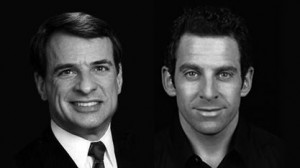
    William Lane Craig v Sam Harris

    Hat tip: The Apologist

    UPDATE: The audio is now available as an MP3 over at Apologetics 315.

    RELATED POSTS: Matt has written a few posts here on MandM defending Divine Command Theory for those interested in reading a little more on the position William Lane Craig defended.

    Also see Matt’s:
    Debate Review: Sam Harris and William Lane Craig on Divine Command Theory Part I

  • Thom Stark on Wolterstorff and Hagiographic Hyperbole

    Earlier this year I finished a forthcoming article in which I defended Nicholas Wolterstorff’s take on the Canaanite massacre recorded in the book of Joshua. Wolterstorff argues that the Book of Joshua is a highly figurative, hagiographic and hyperbolic account of Israel’s early skirmishes and it is not intended to be taken literally in its details.[1] The accounts of killing everything that breathes function something like the boast of a high school student who describes winning a football game in terms of totally slaughtering the opposition.[2]

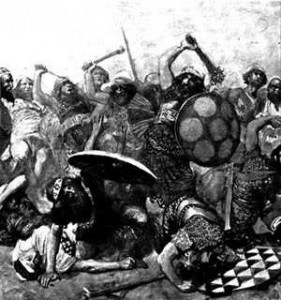
    Joshua Slaughters the CanaanitesMy article was a revised version of a paper I presented in Atlanta in November last year (my God and the Genocide of the Canaanites series gives a good overview of my position). Around the same time I presented this paper, Thom Stark, posted a critical review of Douglas S. Earl’s book The Joshua Delusion? Rethinking Genocide in the Bible. As a review, much of it was addressed to the specifics of Earl’s book. However, in the introduction Stark offered a critique of Wolterstorff’s position and made reference to my defence of it.

    He offered three lines of argument; two against the conclusion Wolterstorff and I offered and one against Wolterstorff’s argument itself. Since then several people have asked me my thoughts on his critique. In this post I will look at his critique of Wolterstorff’s argument, which I defended and adapted in my article.

    Before one can criticise an argument it is important to be clear as to what it is. As I note in my forthcoming article (and in the post I linked to above) Wolterstorff’s argument consists of three points and a basic assumption. The assumption is that “Joshua as we have it today was intended as a component in the larger sequence consisting of Deuteronomy, Joshua, Judges, I and II Samuel, and I and II Kings”.[3] On the basis of this assumption Wolterstorff contends “…  I propose that we interpret the Book of Joshua as a component within this larger sequence – in particular, that we interpret it as preceded by Deuteronomy and succeeded by Judges.”[4] In taking this approach, Wolterstorff engages in a more canonical approach to the text; he focuses on the meaning of the final form as part of a canonical sequence.

    The three premises are as follows. First, the so called genocide accounts in Joshua 1-11 are part of a broader context which includes both the rest of Joshua but also other canonical books, such as the book of Judges. When one reads the whole sequence one observes that while early passages in Joshua describe Israel exterminating the inhabitants, later passages in Joshua and Judges proceed on the assumption this never literally happened.[5] Taken literally these accounts of the conquest contradict each other (more…)

  • Contra Mundum: Why Does God Allow Suffering?

    Christchurch's Cathedral after the earthquake22 February 2011 “may well be New Zealand’s darkest day”; these were the words of Prime Minister John Key in the aftermath of the earthquake which devastated the South Island’s largest city Christchurch. The death toll is expected to be over 200, many more have been injured, have lost property and now live in fear of the next big one. Inevitably a question is posed to those, like me, who have faith in God. Where was God that day? Of course the person who asks this is not literally asking where God physically was, he is asking, why did God not prevent this from happening? Why does God allow people to suffer? God clearly, as an all powerful being, can prevent suffering so why doesn’t he?

    The question is ambiguous. Taken one way it is simply a question which assumes that God exists and asks for God’s reasons for allowing a particular event. Taken the other way it is a rhetorical question which hides an unspoken argument that the existence of disasters, like the Christchurch earthquake, is evidence that God, most likely, does not exist. In “God, Evil and Suffering” Daniel Howard-Snyder notes,

    [T]he theoretical “problem” of evil is often expressed in the form of a pointed question. God is able to prevent evil and suffering and He would know about them before they happened, right? Moreover, since He is unsurpassably good, surely He would not permit them just for the fun of it. So why doesn’t He prevent them?

    The sceptic notes two things; first that God knows about and is able to prevent suffering. Second that God, being perfectly good, would prevent this suffering unless he had a good reason for allowing it, which Howard-Snyder defines as “a reason that was compatible with his never doing wrong and his being perfect in love”. This is the implicit background to the question.

    The rhetorical force of this argument is powerful and its emotional appeal has a strong pull, particularly on the back of an horrific disaster. Nevertheless, many philosophers have found that when examined rationally it has an important flaw. The argument establishes that if God exists then He must have a good reason for allowing suffering. The sceptic is asking for an account of these reasons. The assumption is that if a believer cannot give a precise account of God’s reasons then there probably are none. It is this assumption upon which the argument hangs or falls.

    The problem is that this assumption is questionable. Philosopher Alvin Plantinga illustrates,

    I look inside my tent: I don’t see a St. Bernard; it is then probable that there is no St. Bernard in my tent. That is because if there were one there, I would very likely have seen it; it’s not easy for a St. Bernard to avoid detection in a small tent. Again, I look inside my tent: I don’t see any noseeums (very small midges with a bite out of all proportion to their size); this time it is not particularly probable that there are no noseeums in my tent—at least it isn’t any more probable than before I looked. The reason, of course, is that even if there were noseeums there, I wouldn’t see ’em; they’re too small to see. And now the question is whether God’s reasons, if any, for permitting such evils as [the Christchurch earthquake] are more like St. Bernards or more like noseeums.

    In his book The Reason for God: Belief in an Age of Skepticism, Timothy Keller notes “we see lurking within supposedly hard-nosed skepticism an enormous faith in one’s own cognitive faculties. If our mind (more…)
  • Is there Evidence for God? William Lane Craig v Lawrence Krauss Streamed Live @ Auckland Uni

    On 30 March 2011 (US time) Dr Lawrence Krauss and Dr William Lane Craig will debate the moot Is there Evidence for God? at North Carolina State University. The debate will be moderated by His Honour Paul M Newby, Justice of the Supreme Court of North Carolina.

    Thinking Matters, Evangelical Union and the Reason and Science Society have arranged permission to stream the debate at the University of Auckland on Thursday 31 March 1-3 pm (NZ time). They have invited Matthew Flannagan to field Q&A from the audience arising from viewing the debate.

    Krauss v Craig

    Professor Krauss is a theoretical physicist and director of the Origins Project at Arizona State University. Books he has written include “the Physics of Star Trek”.

    Professor Craig is a Research Professor of Philosophy at Talbot School of Theology, Biola University. His books include a written form of his debate with Anthony Flew. For more info on their scholarly work, check out Wikipedia.

    Both of these speakers have visited the University of Auckland in recent years and both drew large audiences; Dr Craig debated Dr Bill Cooke in 2008 and Dr Krauss gave a public talk there in 2010.

    So diarise this event now:

    What: Is there Evidence for God? Krauss v Craig Debate Streamed Live (Q&A with Matthew Flannagan)
    When: Thursday 31 March 1-3 pm (New Zealand time)
    Where: University of Auckland, Room to be advised (watch this space)

    Check out the Facebook page, RSVP and invite others.

  • Hear all of John Lennox’s New Zealand Talks

    John Lennox recently toured New Zealand and most of his hosts recorded his talks. Here are all the MP3s of Lennox’s New Zealand talks handily in one post.

    John Lennox

    Hat Tip: Thinking Matters

  • Is God a Moral Monster? A Review of Paul Copan’s Book

    On 11 September 2001 Islamic terrorists flew two planes into the World Trade Centre, killing thousands of innocent people. Ostensibly they did this because they believed God commanded them to do so. This event has reinvigorated a fear that has been latent in Western psyche since the 17th century when religious wars tore Europe apart. The fear of religious fanaticism, of people willing to murder hundreds in the name of God, has been whipped up by the new atheists–Richard Dawkins, Sam Harris, Christopher Hitchens, et al.

    The phenomenon is not just limited to the popular atheological literature. These fears went centre stage recently at a conference entitled “My Ways Are Not Your Ways” which was put on by the Centre for Philosophy of Religion at the University of Notre Dame. Sceptics presenting at the conference argued passionately that the God of the Bible issues commands which are at odds with modern understandings of morality; adultery is punished with death, God is portrayed as commanding the killing of non-combatants in “holy wars” against the Canaanites, God commanded Abraham to sacrifice his son, the Bible appears to approve of slavery and polygamy, and so forth.

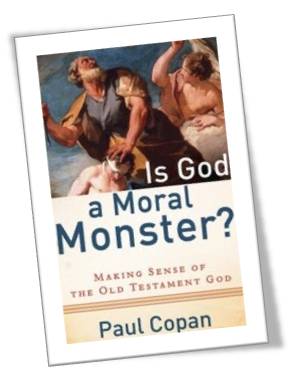
    Is God a Moral Monster?In Is God a Moral Monster? Paul Copan attempts to address some of these concerns. What’s novel about Copan’s approach is that, unlike many standard philosophical responses to the above problems, Copan draws on recent conservative Old Testament scholarship by people like Gordon Wenham, Tremper Longman, Christopher Wright, Walter Kaiser, Richard Hess and numerous others. This is novel as much of what has been going on in evangelical discussions of Old Testament ethics for decades has been done almost in isolation from contemporary philosophy of religion and vice versa. Copan, who has degrees both in Philosophy and in Biblical Studies, brings this material together in an accessible manner.

    There is no point in hiding the fact that I am a fan of Copan’s book. In a few places Copan cites my own writings as sources of ideas and in other places the overlap with my own thoughts on these issues is considerable. I have recommended it to my son who intends to read it as soon as he has finished William Lane Craig’s On Guard. However, this review will not simply be an exercise in cheer-leading; I will attempt to both summarise Copan’s work and add critical comments.

    The Review
    Is God a Moral Monster? opens with a discussion on the new atheism in general. In chapters 3 and 4 Copan addresses the charge that God in the Old-Testament is both jealous and egocentrically demands worship. Then in chapter 5 he turns to the binding of Isaac. I will touch briefly on this (more…)

  • On the God Topic: Responding with Reason and Precision

    For anyone for whom Houston, Texas is not too much of a trek to get to, Biola University and Reasonable Faith Houston are running an apologetics conference in April. Speakers include: JP Moreland, Craig Hazen, Mary Jo Sharp, Louis Markos, Micah Parker, Scott Swiggard and more.

    On the God Topic:

    Responding with Reason and Precision

    Details:

    1 – 2 April 2011
    Friday 7:00 pm – 9:30 pm
    Saturday 8:30 am – 4:30 pm

    Gloria Dei Lutheran Church
    18220 Upper Bay Road
    Houston, TX 77058

    Conference Sessions:

    Defending Your Faith Kickoff
    With JP Moreland, Craig Hazen, and more

    The A, B, Cs…Ds & Es of Defending the Gospels
    with Mike Licona

    Did Jesus Really Rise from the Dead?
    with Craig Hazen (more…)