Earlier this year I finished a forthcoming article in which I defended Nicholas Wolterstorff’s take on the Canaanite massacre recorded in the book of Joshua. Wolterstorff argues that the Book of Joshua is a highly figurative, hagiographic and hyperbolic account of Israel’s early skirmishes and it is not intended to be taken literally in its details.[1] […]
Entries Tagged as 'Joshua'
Thom Stark on Wolterstorff and Hagiographic Hyperbole
April 7th, 2011 36 Comments
Tags: Canaanites · Douglas S. Earl · Genocide · Hermeneutics · Joshua · Nicholas Wolterstorff · Old Testament Ethics · Thom Stark
God and the Genocide of the Canaanites Part III: Two Implications of the Hagiographic Hyperbolic Account
January 16th, 2011 21 Comments
This three-part blog series is a modified version of what I presented to the Evangelical Philosophical Society meeting in November 2010. In a recent Conference at Notre Dame Alvin Plantinga suggested that the commands to wipe out the Canaanites, recorded in the book of Deuteronomy, might be hyperbolic; they should be understood more like how […]
Tags: Alvin Plantinga · Canaanites · Christopher J H Wright · Genocide · Gordon Wenham · Hagiography · Hermeneutics · Hyperbole · J McConville · J P U Lilley · Joshua · Nicholas Wolterstorff · Old Testament Ethics · Paul Copan
God and the Genocide of the Canaanites Part II: Ancient Near Eastern Conquest Accounts
January 10th, 2011 14 Comments
This three-part blog series is a modified version of what I presented to the Evangelical Philosophical Society meeting in November 2010. In my previous post, God and the Genocide of the Canaanites Part I: Wolterstorff’s Argument for the Hagiographic Hyperbolic Interpretation, I expounded and adapted Nicholas Wolterstorff’s argument for a hagiographic hyperbolic reading of the book […]
Tags: Alvin Plantinga · Canaanites · Genocide · Hagiography · Hermeneutics · Hyperbole · J Van Seters · James K. Hoffmeier · John Goldingay · Joshua · K Lawson Younger · Kenneth Kitchen · Nicholas Wolterstorff · Old Testament Ethics · Richard Hess · Thomas Thompson · Ziony Zevit
God and the Genocide of the Canaanites Part I: Wolterstorff’s Argument for the Hagiographic Hyperbolic Interpretation
January 7th, 2011 42 Comments
Around this time last year I wrote two posts Joshua and the Genocide of the Canaanites I and Joshua and the Genocide of the Canaanites II. These posts attracted a fair amount of attention and debate. I got offers to publish my ideas in several upcoming books and present them before both the Evangelical Philosophical […]
Tags: Alvin Plantinga · Canaanites · Genocide · Hagiography · Hermeneutics · Hyperbole · Joshua · Kenneth Kitchen · Nicholas Wolterstorff · Old Testament Ethics · Selection
Bovine Faeces and the Sexual Proclivities of Rocks: We are all Selective Literalists
November 8th, 2010 15 Comments
Jónathan Mark Deundian sent us the following correspondence, You addressed the following paragraph to a blogger named RyogaM. This one and actually the one right above it was so common sensible but so completely profound. I read it to my wife and it was as if shutters fell from her eyes. Best thing since Molinism! lol […]
Tags: Canaanites · Hermeneutics · Joshua · Literalism · RyogaM
Sunday Study: Joshua and the Genocide of the Canaanites Part I
January 3rd, 2010 52 Comments
Critics of Christianity often claim that the book of Joshua teaches that God commanded genocide. Raymond Bradley for example states, In chapters 7 through 12, [the book of Joshua] treats us to a chilling chronicle of the 31 kingdoms, and all the cities therein, that fell victim to Joshua’s, and God’s, genocidal policies. Time and […]
Tags: Alvin Plantinga · Brevard Childs · Canaanites · Genocide · Hermeneutics · Joshua · Kenneth Kitchen · Nicholas Wolterstorff · Old Testament Ethics · Raymond Bradley · Sunday Study · Theology · Walter Sinnott-Armstrong

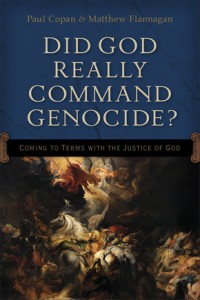 A common objection to belief in the God of the Bible is that a good, kind, and loving deity would never command the wholesale slaughter of nations. In the tradition of his popular Is God a Moral Monster?, Paul Copan teams up with Matthew Flannagan to tackle some of the most confusing and uncomfortable passages of Scripture. Together they help the Christian and nonbeliever alike understand the biblical, theological, philosophical, and ethical implications of Old Testament warfare passages.