In my last post, I expounded the Psychopath objection to divine command meta-ethics (DCM) that has recently been defended by Erik Wielenberg. To recap. Wielenberg suggests that my response to his earlier “reasonable unbeliever’s objection” relies on the following principle: R) God commands person S to do act A only if S is capable of […]
Entries Tagged as 'God and Morality'
The Psychopath Objection to Divine Command Theory: Another Response to Erik Wielenberg (Part two)
September 11th, 2019 Comments Off on The Psychopath Objection to Divine Command Theory: Another Response to Erik Wielenberg (Part two)
Tags: C Stephen Evans · Divine Command Theory · Erik Wielenberg · God and Morality · Wes Morriston
The Psychopath Objection to Divine Command Theory: Another Response to Erik Wielenberg (part one)
September 3rd, 2019 Comments Off on The Psychopath Objection to Divine Command Theory: Another Response to Erik Wielenberg (part one)
www.youtube.com/watch?v=6iVyVJAMiOY.
Recently, Erik Wielenberg has developed a novel objection to divine command meta-ethics (DCM). DCM “has the implausible implication that psychopaths have no moral obligations and hence their evil acts, no matter how evil, are morally permissible” (Wielenberg (2008), 1). Wielenberg develops this argument in response to some criticisms of his earlier work. One of the […]
Tags: C Stephen Evans · Divine Command Theory · Erik Wielenberg · God and Morality · Psychopathy · Robert Adams · William Lane Craig
Brad Hooker and Philip Quinn
January 10th, 2019 6 Comments
Most versions of Divine command meta-ethics (DCM) contend that the property of being morally required is informatively identical with the property of being commanded by God.[1] A common objection to divine command meta-ethics is the horrendous deeds objection. We can formalise this objection as follows: [P1] If DCM is true, then if God commands unjust […]
Tags: Brad Hooker · Divine Command Theory · God and Morality · Philip Quinn
God and Moral Grounding Power
October 6th, 2018 1 Comment
A common objection to divine command theories of ethics (DCT) is that they make morality arbitrary. There are several ways this objection can be cashed out. The most common is what is called the ‘Horrendous deeds objection’. The Horrendous deeds objection can be formalised as follows: (1) If the DCT is true, then if God commanded […]
Tags: Divine Command Theory · God and Morality · Jason Thibodeau
“Robust Ethics and the Autonomy Thesis” Now Online
April 3rd, 2018 Comments Off on “Robust Ethics and the Autonomy Thesis” Now Online
www.youtube.com/watch?v=6iVyVJAMiOY”>William
Recently, Philosophia Christi published Matt’s article “Robust Ethics and the Autonomy Thesis: A reply to Erik Wielenberg”. This article consisted of some critical commentary and responses to Erik Wielenberg’s book Robust Ethics: The Metaphysics and Epistemology of Godless Normative Realism. Since then Matt’s article has received a little bit of unexpected attention. One of my arguments […]
Tags: Autonomy Thesis · Divine Command Theory · Erik Wielenberg · God and Morality · Philosophia Christi · Publications · William Lane Craig
“Robust Ethics and the Autonomy Thesis” published in Philosophia Christi
February 3rd, 2018 Comments Off on “Robust Ethics and the Autonomy Thesis” published in Philosophia Christi
Matt’s article, “Robust Ethics and the Autonomy Thesis: A reply to Erik Wielenberg” has been published in the winter issue ( Vol 19 Num. 2 – Winter 2017) of Philosophia Christi. An overview of the contents of the full issue can be found here. The editor has given Matt permission to upload the article in […]
Tags: Divine Command Theory · Erik Wielenberg · God and Morality · Philosophia Christi
Divine Command Theory and Utilitarianism forgotten bedfellows? Paley’s Principles of Moral and Political Philosophy (part two)
January 18th, 2018 1 Comment
In my last post, I explained the position of Theological Utilitarianism as expounded in William Paley’s The Principles of Moral and Political Philosophy. I pointed out The Principles was first published in 1785, four years before Jeremy Bentham published An Introduction to the Principles of Morals and Legislation. In this post, I want to look at the influence Theological Utilitarianism had […]
Tags: Abraham Tucker · Christian History · Divine Command Theory · God and Morality · Jeremy Bentham · John Brown · John Gay · John Locke · John Stuart Mill · Utilitarianism · William Paley

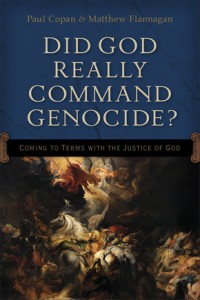 A common objection to belief in the God of the Bible is that a good, kind, and loving deity would never command the wholesale slaughter of nations. In the tradition of his popular Is God a Moral Monster?, Paul Copan teams up with Matthew Flannagan to tackle some of the most confusing and uncomfortable passages of Scripture. Together they help the Christian and nonbeliever alike understand the biblical, theological, philosophical, and ethical implications of Old Testament warfare passages.