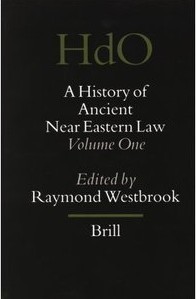
On Debunking Christianity, Hector Avalos has posted a response to my critique of his post A Reply to Hector Avalos’ “Why Flannagan Fails History”. His latest post is entitled Flannagan Versus Westbrook: Understanding the Problem; it pretty much repeats points I have addressed in my critique, basically Avalos pretends I did not answer them.
In the comments section, Avalos pretty much admits that Westbrook holds the view I maintained he does. When a questioner asks Avalos about the lex talionis he stated:
“This is a highly contested issue. Some think that the literal interpretation could still be held even in post-Christian Jewish texts (I cited some in my initial post). Westbrook believes that both the literal and monetary co-existed, each applied depending on circumstances, in the biblical period.”
Compare this with my comment to Max explaining my position:
“Westbrook argues that serious wrongs “gave rise to a dual right in the victim or his family, namely to take revenge on the culprit, or to make composition with the culprit and accept payment in lieu of revenge”. He goes on to note, “[t]his right was a legal right, determined and regulated by the court”. The courts could “fix the level of composition payment” making “revenge a contingent right, which was only revived if the culprit failed to pay”.
When talionic legal formulae occur in A.N.E. legal texts they merely express that the punishment be proportional to the crime. This could involve punishment in kind (which would be proportional to the crime) but in most cases it would probably involve monetary compensation.”
Avalos is aware of my dialogue with Max as he quotes from it in his post. Readers will note the position he now attributes to Westbrook. This is almost exactly the view I said Westbrook held in my response yet, oddly, this comment by Avalos occurs under a post he entitled “Flannagan versus Westbrook” where he continues to argue to Debunking Christianity’s readers that I misrepresented Westbrook’s position.
I am flat tack with mid-semester marking at the moment, in the coming month I have two conferences looming I am giving papers to, I am moderating a panel discussion and speaking in another so unfortunately I cannot respond to all of Avalos’ claims. However, I do want to address one objection he raised in Why Dr. Flannagan Fails History, Dr. Hector Avalos Responds, which was part of Avalos’ case that I engaged in “a very selective and uncritical reading of the sources” I cited to support my position:
“As it is, Flannagan might need to update his Copan readings. On page 121 of Is God A Moral Monster: Making Sense of the Old Testament (Grand Rapids, MI: Baker Books, 2011), Copan reluctantly admits that Deuteronomy 25:11-12 might be “the only biblical instance of punishment by mutilation.” So now Copan has gone from arguing that the Bible represented an advance over other cultures that practiced legal mutilation to making a case for the Bible’s superiority because it might have ONLY ONE case of mutilation for a poor woman helping to save her husband. What a magnificent improvement.”
 The conclusion people are supposed to draw from this is that I am unaware of Copan’s latest writings. However, as my readers know, I have read Copan’s book (Paul sent me an electronic copy before it was published because he wanted my feedback on the manuscript; he also sent me post publication electronic and hard copies as well). It is worth comparing Avalos’ citation, and summary with a copy and paste from the original, as it is revealing to do so. Here is what Copan actually says on page 121 (more…)