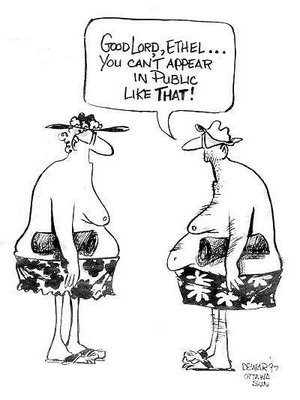
When a Christian says that all other religions are false, he is deemed narrow minded.
When an atheist says that all religions are false, she is deemed open minded.
When a Christian says that all other religions are false, he is deemed narrow minded.
When an atheist says that all religions are false, she is deemed open minded.
Modern analytic philosophy of religion, so it seems, is largely dominated by purely theoretical and evidential considerations. That is, the question of whether or not theistic belief is rational is decided purely on the balance of total available public evidence as opposed to existential and pragmatic considerations. The addition of the term “public” to the last sentence is significant in that it exactly specifies the brand of evidence focussed on in academic philosophy of religion. That is, evidence available to all people as opposed to that available only to some. Clearly this generalization of academic philosophy of religion is not universally true (sans Plantinga, Alston, Wolterstorff, Flannagan et al), nevertheless it remains largely true that the prevailing attitude within the philosophical academy is that the rationality of theistic belief is tied, almost exclusively, to the total public evidence a person has.
 However, I generally regard this perspective on religious epistemology as flawed. There doesn’t seem much reason to limit the question of whether or not theistic belief is rational to solely evidential considerations. Furthermore, it would employ demonstrably double standards in our reasoning to require that the rationality of theistic belief be determined by reference solely to evidential considerations while other rational beliefs remain immune to such scrutiny. Why, for example, should we subject the rationality of our belief in God to any greater scrutiny than we do to our belief that our cognitive faculties give us true ideas about reality?
With that in mind, we also need to ask why it is that we should exclude existential/pragmatic considerations from determining whether or not theistic belief is rational. It is this that my article principally concerns itself with, i.e. whether or not existential/pragmatic considerations can confer warrant or justification on our theistic belief. Can the question of “liveability”, by which I refer to our ability to live consistently and happily within that worldview, confer justification on that belief? Framed negatively, the question is “can the “unliveability” (by which I refer to a general inability to live consistently and happily within that worldview) of a worldview count against that system?”
It seems at least intuitively plausible that, aside from evidentiary considerations, the “liveability” of a possible worldview is a fairly major existential concern we have when deciding upon which to adopt. When I refer to “liveability”, I refer to our ability to live in such a way as to harmonize our worldview with other concerns in life such as happiness. Furthermore, it should seem at least intuitively plausible that where we lack determinate public evidence one way or the other, it is positively irrational to choose that worldview which is ultimately unliveable. For instance, suppose that on one worldview, if we live our lives consistently (that is to its logical consequences) then we can’t be happy. Suppose further, that in order to be happy on that worldview, we must delude ourselves and others. Suppose once again, that on another worldview we wouldn’t need to engage in such grand delusion in order to be happy. Suppose finally, that the total available public evidence between the two is ultimately (more…)
 He is not one to pull punches and true to form, in To a Louse, Ed Feser holds a mirror up to the kind of reasoning that is all too common amongst Dawkins and Myers fans with this fictional dialogue between a scientist and a science sceptic;
Skeptic: Science is BS. Physicists believe in these things called “quarks,” which are little flavored particles that spin around and work like magic charms. Their evidence is that they read about them in a James Joyce novel. Some of them think the universe is made up of tiny shoelaces tied together, though they admit that they have no evidence for this and have to take it on faith. Einstein said morality is all relative – which is why he stole his ideas from this guy who worked in a patent office, and why Richard Feynman stole atomic secrets during WWII. Meanwhile, the chemists contradict the physicists and believe instead in little colored balls held together by sticks. Biologists believe monkeys can give birth to human beings. What a bunch of crap! It’s child abuse to teach kids about this stuff in schools.
Scientist: Are you joking? If not, I suggest that you actually read some science before criticizing it.
Skeptic: I’ve already read a lot about it, in blog comboxes like this one. And why should I waste my time reading anything else? I already know it’s all BS! Didn’t you hear the examples I just gave?
Scientist: No, you’re missing my point. You’ve completely distorted what scientists actually say. It’s not remotely as silly as you think it is. In fact it’s not silly at all. But you need to actually read the stuff to see that.
Skeptic: So you deny that physicists believe in quarks? What flavor are your quarks, chocolate or vanilla? Do you deny that they think we came from monkeys? Which monkey was your mother?
Scientist: No one says that monkeys gave birth to humans. That’s a ridiculous caricature. And of course I don’t deny that physicists believe in quarks, but you’re badly misunderstanding what they mean when they attribute “flavor” to them. They don’t mean that literally…
Skeptic: Oh so it’s just empty verbiage, then. See, you’re just proving my point for me.
Scientist: No, it’s not empty verbiage. It’s technical terminology.
Skeptic: I see, like magic spells. That’s why (more…)
 Zeitgeist – The Movie is an internet phenomenon that has taken a lot of people in. I know several people who have seen it and have either been convinced by it or it has heavily rocked them. We’ve had commenters on this blog raising issues and asking questions which clearly have their roots in Zeitgeist. There is a global movement complete with a New Zealand chapter.
For me the claims in Zeitgeist are patently absurd, funny almost and I totally got what Glenn Peoples was on about when he said on Facebook “I swear, watching Zeitgeist is draining my IQ” but it is important to not dismiss the opportunity to take such a clearly influential phenomenon apart, examine the claims it makes and clearly demonstrate the flaws in it so that those who are rocked by it have a good resource to get their feet back on solid ground with. It also won’t hurt those of us immune to Zeitgeist’s charms to take the time to see how best to respond to it for the next time we encounter someone who has been swayed by its content.
For these reasons when Glenn asked for suggestions for his next podcast topic I suggested an analysis of Zeitgeist and for much the same reasons he leaped on it. Glenn has a PhD in Philosophy and a Masters and Bachelors in Theology. He is also a very lucid and clear thinker who makes the best podcasts which often have cool sound effects and original music. So grab a cuppa and sit back and listen to his podcast Episode 038: Zeitgeist (you’ll need a spare 55 minutes).
One of the accompanying links Glenn has with his podcast is a must-view. It is written by a non-Christian and it thoroughly examines the astrological claims made by Zeitgeist complete with astrological charts and diagrams. The author states:
“I prefer honesty in polemics. Some of the astronomical and astrological claims of Zeitgeist are simply wrong, and lead to a wrong impression of the origins of Jesus’ birth narrative. I hope to demonstrate scientifically why they’re wrong”.
The link to this is here: Zeitgeist Astronomy.
In this three-part series I will look at some different ways of adjudicating conflicts between apparent divine commands and moral beliefs starting with Immanuel Kant.
In “Commonsense Atheism and the Canaanite Massacre” I addressed a question put to me by Luke from Commonsense Atheism,
“If Matt did think these events happened literally as described in the Bible, would he then conclude that God was an evil monster to command them? Or would he, in the end, agree with Bill Craig that genocide is okay as long as God feels like it?”
In my response I pointed out Craig claims that killing non-combatants in war is permissible if a loving and just God commands it (which is an implication of a divine command theory). This conditional is arguably true. Either it is possible for a just and loving omniscient person to command genocide or it is not. If it is then genocide would only be commanded in situations where a just and loving person, aware of all the relevant facts, could endorse it; under these circumstances it is hard to see how genocide could be evil. On the other hand, if it is impossible for a just and loving omniscient person to ever command genocide then the situation Luke mentions is one with an impossible antecedent. On the standard accounts of counter-factual logic, conditionals with impossible antecedents are true. So far from being absurd there are reasons for thinking this conditional is true.
The question Luke asks is really a species of a larger and important question in theological ethics. In Finite and Infinite Goods Robert Adams notes “A convincing defense of a divine command theory of the nature of obligation must address our darkest fear about God’s commands–the fear that God may command something evil.” Philip Quinn makes a similar point,
“[I]t seems possible that a theist should have both good reasons for believing that God has commanded him to perform a certain action and good reasons for believing that it would be morally wrong for him to perform that action. Thus a theist can be confronted with moral dilemmas of a peculiar sort.”
I suspect Luke is really asking how a theist can rationally respond to a dilemma of this sort. While I do not know what Luke’s opinion on this issue is, a common view is that if a theist has good reasons for believing an action is wrong then any claim that God has commanded should be rejected. The locus classicus for this position is Immanuel Kant; in Reason within the Bounds of Religion, Kant stated:
“Abraham should have replied to this supposedly divine voice: “That I ought not kill my good son is quite certain. But that you, this apparition, are God — of that I am not certain, and never can be, not even is [read: if] this voice rings down to me from (visible) heaven.”
Similarly, in the Conflict on the Faculties he states he states,
“That to take a human being’s life because of his religious faith is wrong is certain, unless (to allow the most extreme possibility) a divine will, made known to the inquisitor in some extraordinary way, has decreed otherwise. But that God has ever manifested this awful will is a matter of historical documentation and never apodictically certain. After all, the revelation reached the inquisitor only through the intermediary of human beings and their interpretation, and even if it were to appear to him to have come from God himself (like the command issued to Abraham to slaughter his own son like a sheep), yet it is at least possible that on this point error has prevailed.”
Kant, here, is discussing the kind of dilemma Quinn refers to. The dilemma can be spelled out as follows, in certain situations a theist might find him or herself with reason to affirm the following three propositions,
[1] Whatever God commands is morally permissible;
[2] God commands X;
[3] It is wrong to do X.
These three claims cannot all be true, so a rational person must reject one of them; the question is which one? Kant’s answer is that when faced with a dilemma of this sort the theist should reject [2]. It is worth elaborating on his position a bit.
First, note that Kant accepts [1] he grants that if we knew that God commanded the killing of a particular human being, it would be permissible to kill that human being. Kant’s objection is that one cannot be rational in believing that God has, in fact, issued such a command. Philip Quinn notes that Kant’s argument involves an appeal to an epistemic principle: whenever two conflicting claims differ in epistemic status, the claim with the lower status is to be rejected. Kant contends that moral claims such as “it is wrong to kill innocent people” are certain. However, claims that God commands or forbids a certain action are not certain and never can be. From these points it follows that a rational person will accept [3] and reject [2].
Despite its appeal Kant’s argument is flawed for several reasons. Philip Quinn notes two problems. First, “Kant has an extremely optimistic view of our ability to attain epistemic certainty about principles of moral wrongness,” he thinks we can be certain of moral claims. This, however, is dubious. There are some moral claims of which I am fairly certain. I am certain, for example, that it is wrong to inflict as much pain on another as I can merely for my own entertainment. I am fairly certain that killing, assault, theft and lying are prima facie wrong and can only be justified if some overriding moral reason applies. However, many moral claims are highly controversial and are far from certain at all. Consider, for example, the debate over whether the bombing of Hiroshima was justified because it saved a huge number of lives by ending a war early. While I myself do not share this opinion, I would not say I am certain about it. Similarly, consider moral debates about capital punishment or euthanasia or affirmative action. While I believe there are defensible and justified answers to these questions, I doubt we can claim certainty about answers to these questions.
Second, Kant claims that we can never be certain that God has prohibited a certain action. Quinn notes, “It would thus seem to be well within God’s power to communicate to us a sign that confers on the claim that God commands some intolerant behavior, for example, issuing threats to heretics, a fairly high epistemic status.” If God were to do this then we would have certainty that he had commanded the action. So it is not clear that beliefs about what God wills are always less certain than moral beliefs.
I am inclined to push this criticism further. It seems to me that many sceptical worries that are raised about God and his commands apply with equal force to moral beliefs. Consider three common concerns sceptics raise about religion. One is the claim that the existence of God is not necessary to explain any empirical phenomena. The second is the concern that the claim God exists and has commanded a particular action cannot be empirically demonstrated or proven to exist. The third is the widespread pluralism with regard to both the existence of God and his nature. All three of these worries apply to moral beliefs. The existence of moral properties appears unnecessary to explain any empirical phenomena, almost any empirical phenomena can be explained equally well by accepting that moral beliefs are all false but that people think they are true. Attempts to prove that moral beliefs are true from non-moral premises alone are probably more controversial than any argument for the existence of God. And there is widespread pluralism over whether moral properties exist; nihilists and non-cognitivists deny such properties exist and amongst believers in the truth of moral beliefs, there is widespread disagreement over the nature of morality. Intuitionists contend it is a non-natural property, naturalists contend it is a natural property but disagree over what the natural property in question is, supernaturalists contend it is a divine command or a theological property and so on.
In fact, Kant’s own argument provides an example of this point. Kant argues in The Conflict in the Faculties that we can never be certain that God has commanded an action because,
“the revelation reached the inquisitor only through the intermediary of human beings and their interpretation, and even if it were to appear to him to have come from God himself (like the command issued to Abraham to slaughter his own son like a sheep), yet it is at least possible that on this point error has prevailed.”
But this is equally true of many moral beliefs, a good amount of what people believe with regards to morality comes to them through the intermediary of human beings and their interpretation. Most westerners belief’s in liberal ideals, such as, the equality of women, opposition to slavery and so are mediated through human beings. Moreover, even if we directly intuit moral properties, it is possible that we are mistaken. Human moral intuitions and judgements are fallible and can err. So in many instances I am inclined to think that the sceptical worries people raise to conclude that theological beliefs are uncertain apply also to moral beliefs. To appeal to these concerns, so as to claim that belief about God’s will is less certain than moral beliefs, is to engage in special pleading.
In my next post I will look at Robert Adams’ defence of Kant’s position and then I will look at Philip Quinn’s alternative.
RELATED POSTS:
God, Morality and Abhorrent Commands: Part II Robert Adams
God, Morality and Abhorrent Commands: Part III Philip Quinn
At the beginning of each semester my lecturers would remind students of the fire policy, “if the alarm sounds leave the lecture theatre immediately through the nearest exit and reassemble outside the Davis law library.” Now if during class one day my lecturer had said to me, “Madeleine, do not leave class today until you have spoken with me about your brilliant essay which simply must be included in my upcoming book” [what? it is a thought experiment ok? It could’ve happened…] but then half-way through class the fire alarm rang and the smell of smoke wafted into the lecture theatre – would anyone seriously expect me to remain in my seat? Should I be paralysed with confusion by the contradictions – did my lecturer mean me to be burned alive or overwhelmed by smoke inhalation because he told me to not leave class that day until I had spoken to him or should I follow his earlier instruction to exit the classroom on hearing a fire alarm and go to the area outside the Davis Law Library? What should I do? Oh the confusion! Perhaps I should simply conclude that due to the contradictions inherent in trying to read both sets of instructions together that my lecturer, in fact, does not exist.
Is anyone buying this? I mean, clearly what I should do is leave with the rest of the class and talk to my lecturer later. [Doh!]
Illustrations of this sort are often used in conflict of laws or legal interpretation classes to show that what prima facie appears to be a contradiction between two pieces of legislation actually is not. This is because imperatives occur in contexts where commonly accepted qualifications, riders, priorities, idioms, etc are assumed to be understood; implicit background beliefs are in play.
We can see this clearly in the example above. I know it is unlikely my lecturer wants his students to obey his instructions to the extent that they burn to death. I know this because I know something of his purposes and of his character. I know him to be fairly decent, humane and not one to issue arbitrary, irrational commands. I know also something of the weights involved in the issues. For example, I know the fire policy is university policy and it concerns the issue of safety – both the physical safety of students as well as its own, it does not want to be sued or prosecuted or subject to critical public scrutiny. I know that the lecturer’s authority is derived from university authority and so his instructions cannot contradict or override it. I also know that the reason he gave the instruction for me to stay behind in class was because he wanted to work with me in the future to ensure the sales of his book make the top 10 list. So from all of this I can safely conclude that he did not mean for me to follow his instructions on pain of death today.
Of course if I already believed my lecturer to be a petty, arbitrary, narcissistic, cruel bully, capable of anything who routinely issued commands with the purpose of harming, maiming and destroying students (and if I suspected he wanted to take my essay and publish it as his own so as to keep all the book royalties for himself) I might take a different approach as to how I read his instructions together. But it would be uncharitable of me in excelsis to adopt this assumption of his character as the default one to reason from.
Taking these contextual factors together, along with a basic grasp of the English language, its idioms and a dose of common sense it is not that hard to navigate apparently conflicting instructions.
I raise this because a site ironically called “Common Sense Atheism” recently put up a short post entitled 6 Questions with which to Stump Conservative Christians. I was extremely underwhelmed by the questions and was left wondering if the author had actually read any Christian works above Sunday School level on Christian ethics, biblical interpretation and so on (and clearly had not read very far into this blog) but I found one of the questions stood out en stupidus maximus (that’s a legal latin maxim meaning it was so stupid it had to be taken out). Question 4 asks,
“The Bible says to worship God (obviously) and to obey your mother and father, but what do you do if your parents tell you to worship other gods?”
Here, the atheist is trying to establish a contradiction in the commands God issues and from this contradiction we are presumably supposed to concede that Christians are irrational or that God does not exist or some such thing (and, of course, any Christian reading it is supposed to be “stumped”).
No Christian I know would be even momentarily stumped by this because the answer is obvious: in such a case you should disobey your parents and worship God; end of. I find it no more paralysing than the issue of whether I should leave class when the fire alarm sounds or stay to talk to my lecturer. In both cases, I understand that the command cannot sensibly be understood as an absolutely unqualified imperative. I doubt very much that God, out of allegiance to Him, wants us to give up allegiance to Him.
Of course if one wanted to make God look silly and arbitrary one could interpret it this way, just as you could attribute silly interpretations of what my lecturer meant such as intepreting his instructions as a command to wait for him even if I get burned alive in a fire or that my lecturer does not exist, but why would you?
If you think I am just picking on one unfortunate atheist’s example I beg to differ. When Matt was an undergrad at the University of Waikato a leader of the campus rationalist society confronted him with Isaiah 30:26,
The moon will shine like the sun, and the sunlight will be seven times brighter, like the light of seven full days, when the LORD binds up the bruises of his people and heals the wounds he inflicted.
The rationalist then informed Matt as to what the temperature of the sun was. He multiplied that number by seven and then noted that if it were to become that hot then world would burn to a crisp. He concluded that the Bible taught that heaven was hotter than hell. Matt’s initial inclination was to laugh and asked the guy if the exchange had “brightened up his day and warmed his heart.” It turned out that the example came from a highly regarded book by a scientist critiquing creationism, ironically entitled “Telling Lies for God: Reason vs Creationism” [scientists really really shouldn’t pontificate on theology]. The book had recieved endorsements from leading Australian Clergy. [I am reminded of Rob Muldoon’s position on Australians]
Then there was a discussion I had on Debunking Christianity’s “Madeleine Flannagan is Happy to be Treated as Women Were in the Bible!” where John Loftus pointed to Deuteronomy,
“Deuteronomy 22:23 If a man happens to meet in a town a virgin pledged to be married and he sleeps with her, 24 you shall take both of them to the gate of that town and stone them to death—the girl because she was in a town and did not scream for help, and the man because he violated another man’s wife. You must purge the evil from among you.
Deuteronomy 22:28 If a man happens to meet a virgin who is not pledged to be married and rapes her and they are discovered, 29 he shall pay the girl’s father fifty shekels of silver. [c] He must marry the girl, for he has violated her. He can never divorce her as long as he lives.”
Now Matt had written several posts on this atheist chestnut which saw me get embroiled in an exchange with both Loftus and Stephen Carr. Carr surmised that,
“If a woman is threatened with a knife, told she will be killed if she screams out, and does not scream out, there will always be a Christian to say , and I quote ‘isn’t she a part of the problem’?”
Apparently the non-offensive-to-God way to rape a woman is to simply render her incapable of screaming because God’s issue is with the screaming and not the raping…
Apparently when the bible lays down case laws, it cannot simply lay down a paradigm. It must spell out every possible nuance, qualification, exception, situation, application to analogous situations and so on.
Apparently if it does not do this then it is denying opposition to the act – now even modern case law precedents do not function like this and legislation is never drafted this way but apparently this is the way to read Biblical law.
Seriously.
Perhaps Carr is a too easy a target. Atheist philosopher Michael Martin makes a similar interpretation of Deuteronomy,
“it is assumed that in all cases that a rape victim could cry for help and if she did, she would be heard and rescued. Both of these assumptions are very dubious and sensitive to the contextual aspects of rape.”
I am at a loss to understand why atheists insist on reading these texts like a lawyer with Aspergers Syndrome in search of a convincing technicality by way to circumvent the spirit and intendment of the law? I mean why? We can all handle instructions that conflict with fire alarms going off, we don’t interpret modern laws like this, so why do atheists (and some Christians) switch to such silly anachronistic readings when the instructions are attributed to God?
I suspect the issue is the background factors I mention above. Many atheists believe God is a petty, arbitrary, narcissistic, cruel bully, capable of anything who routinely issues commands with the purpose of harming, maiming and destroying people. They believe that the bible is obviously silly, irrational, oppressive and supports contradictory absolutism in the family, is anti-women (and so obviously supports rape) is full of scientific absurdities (and so Isaiah was talking about cosmology) and so on.
When you have a pre-conceived notion as to what you want the text to mean – be it an uncharitable reading or what you think or have heard that the text teaches – I suppose the silly reading is congenial. What this tells us is that the reading of the text is not what leads atheists (and some Christians) to their conclusions, rather it is their conclusions lead them to read the text this way.
On Monday 2 August at the University of Auckland Emeritus Professor of Philosophy Dr Raymond Bradley and Dr Matthew Flannagan (of this blog) debated the topic “Is God the Source of Morality? Is it rational to ground right and wrong in commands issued by God?” Here is the video of that debate.
Hat Tip: Thinking Matters
RELATED POSTS:
The Podcast: Bradley v Flannagan
Joint Communique: Bradley v Flannagan Debate
Raymond Bradley’s Opening Statement: Bradley v Flannagan Debate
Matthew Flannagan’s Opening Statement: Bradley v Flannagan Debate
Bradley’s Reply to Matt: Bradley v Flannagan Debate
Flannagan’s Reply to Ray: Bradley v Flannagan Debate
Glenn Peoples’ Review: Bradley v Flannagan Debate