Entries Tagged as 'Philosophy of Religion'
www.youtube.com/watch?v=Cp9rW8t6MWQ&t=3s&ab_channel=OrewaCommunityChurch
I was scheduled to speak on the topic “The Holy Spirit teaches” at Orewa Community Church on Sunday September the 26th. Because the government ordered New Zealand into lockdown six weeks ago, and has maintained Auckland in lockdown since, I had to do the message in an ad hoc manner by video. The message is […]
Tags:
In my last post, I discussed Michael Huemer’s argument that a divine command theory cannot vindicate the objectivity of moral requirements. As I interpret him, the argument is: [1] Our commitment to morality presupposes that moral requirements are objective. [2] Moral requirements are objective just in case there obtain facts about what is right and […]
Tags: Alvin Plantinga · Divine Command Theory · John Foster · Michael Huemer · Objectivism · Robert Adams
In a previous post I criticized David Brink’s argument that a divine command theory cannot vindicate the objectivity of morality. Brink argued: [1] Our commitment to morality presupposes that moral requirements are objective [2] Moral requirements are objective just in case facts about what is right or wrong obtain independently of the moral beliefs or […]
Tags: David Brink · Divine Command Theory · Elizabeth Tropman · Michael Huemer · Objectivism · William Lane Craig
In my last post, I criticised David Brink’s argument that a divine command theory cannot vindicate the objectivity of morality. A different version of the objection comes from Elizabeth Tropman. Tropman begins by giving several reasons for thinking that moral realism is an attractive moral theory. She then argues that a divine command theory fails […]
Tags: Divine Command Theory · Elizabeth Tropman · Moral Realism · Objectivism · Russ Shafer Landau
David Brink has objected to a divine command theory of ethics by contending such theories cannot vindicate the objectivity of ethics. Brink begins by defending a particular conception of the objectivity of ethics and then argues that a divine command theory fails to meet that conception. Brink writes: Our commitment to the objectivity of ethics […]
Tags: Chris Meyers · David Brink · Objectivism
I have been discussing the dualism of practical reason. As I understand it, this is an inference from three premises: [1] We always have most reason to do what is morally required [2] An act is morally required if and only if it is impartially demanded: demanded by rules justified from a perspective of impartial […]
Tags: Derek Parfit · Dualism of Practical Reason · God and Morality · Henry Sidgwick · Peter Bryne · Stephen Layman
Recently, I have been examining the question, “If there is no God, why be good?” As I interpret it, this expresses an argument about the “dualism of practical reason” made by Henry Sidgwick and John Gay. This argument had three steps. First, unless we assume that it is always in our long-term self-interest to follow […]
Tags: David Brink · Divine Command Theory · Dualism of Practical Reason · Henry Sidgwick · John Gay · Stephen Layman · Walter Sinnott-Armstrong · Why be Moral?


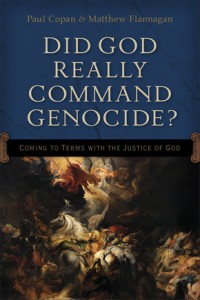 A common objection to belief in the God of the Bible is that a good, kind, and loving deity would never command the wholesale slaughter of nations. In the tradition of his popular Is God a Moral Monster?, Paul Copan teams up with Matthew Flannagan to tackle some of the most confusing and uncomfortable passages of Scripture. Together they help the Christian and nonbeliever alike understand the biblical, theological, philosophical, and ethical implications of Old Testament warfare passages.