You are invited to a Thinking Matters Auckland, God, Morality and Society, DVD screening: What: William Lane Craig v Christopher Hitchens debating Does God Exist? When: Tuesday 21 July – 7:00pm Where: Lecture Room 2, Laidlaw College, 80 Central Park Drive, Henderson, West Auckland Format: DVD followed by discussion. Cost: Free – donations appreciated. If […]
Entries Tagged as 'Philosophy of Religion'
See William Lane Craig and Christopher Hitchens debate: Does God Exist?
July 14th, 2009 3 Comments
Tags: Apologetics · Events · Thinking Matters
Living Philosophers of Religion
July 13th, 2009 2 Comments
Over at Common Sense Atheism, Lukeprog has compiled an impressively comprehensive list of 100+ Living Philosophers of Religion and Their Best Work. Lukeprog identifies his list of philosophers of religion as those who have “published at least one influential work in the field” offering “analytic arguments over the truth of theism vs. atheism.” What I […]
Tags: Philosophy of Religion
Weight Watchers and the Historical Atrocities Argument
July 8th, 2009 6 Comments
We’ve all heard the slogan that atheism is superior to theism because of all the atrocities committed in the name of religion. If you flick through the pages of the new-atheist publications by the likes of Dawkins, Hitchens, Loftus, Harris, et al you’ll probably find some version of this assertion in each. Setting aside the […]
Tags: Atheism · Christian History · Historical Atrocities · Religious History · Thinking Matters · Weight Watchers
Sunday Study: Does the Bible Teach that a Rape Victim has to Marry her Rapist?
July 5th, 2009 53 Comments
In our recent discussion on the Bible’s teachings on slavery John Loftus asked Madeleine, “if you were raped you should marry your rapist? Get real. … Would you want to be treated the way the Bible says women and slaves should be treated?” Loftus then dedicated a post on Debunking Christianity to Madeleine’s “stupidity” for […]
Tags: John Loftus · Michael Martin · Old Testament Ethics · Sexual Morality · Sunday Study · Theology
Evolution should not be taught in State Schools: A Defence of Plantinga Part II
July 1st, 2009 66 Comments
In Evolution should not be taught in State Schools: A Defence of Plantinga Part I, I articulated and defended Alvin Plantinga’s proposal that evolution should not be taught as “the sober truth” in state schools. In this post I will address what should be taught in state schools and look at Robert Pennock’s objections to […]
Tags: Alvin Plantinga · Evolution · Public Policy · Public Schools · Religion in Public Life · Robert Pennock · Science and Religion · State Schools
Evolution should not be taught in State Schools: A Defence of Plantinga Part I
June 30th, 2009 55 Comments
In this two-part series I will sketch and defend Alvin Plantinga’s proposal that evolution should not be taught as “the sober truth” in state schools. In Part I, I will sketch Plantinga’s position and the arguments he provides for it; in Part II, I will look at what should be taught and then I’ll defend […]
Tags: Alvin Plantinga · Evolution · Public Policy · Public Schools · Religion in Public Life · Robert Pennock · Science and Religion · State Schools
Tooley, Plantinga and the Deontological Argument from Evil Part II
May 27th, 2009 13 Comments
In my last post, Tooley, Plantinga and the Deontological Argument from Evil Part I, I sketched Tooley’s distinction between a deontological and an axiological argument from evil and argued that Tooley rejects the axiological version because it rests on controversial ethical claims that are likely to be rejected by many theists. I outlined Tooley’s deontological […]
Tags: Alvin Plantinga · Atheism · Divine Command Theory · Michael Tooley · Philosophy of Religion · Problem of Evil · William Alston

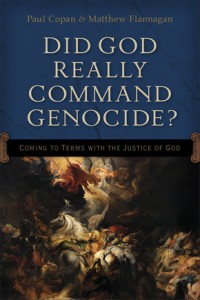 A common objection to belief in the God of the Bible is that a good, kind, and loving deity would never command the wholesale slaughter of nations. In the tradition of his popular Is God a Moral Monster?, Paul Copan teams up with Matthew Flannagan to tackle some of the most confusing and uncomfortable passages of Scripture. Together they help the Christian and nonbeliever alike understand the biblical, theological, philosophical, and ethical implications of Old Testament warfare passages.