Category: Social Commentary

  • Freedom of Religion in a Secular Society @ Auckland University this Monday

    Church and StateAs part of AUSA’s Human Rights week at the University of Auckland, and in association with Thinking Matters, Matt and I will be giving a free public lecture with Q&A on the topic “Freedom of Religion in a Secular Society” on Monday 12 September from 7-8.30pm in Clock Tower Lecture Room 032.

    The Facebook page for this event states:

    The New Zealand Bill of Rights Act states:

    13 – Everyone has the right to freedom of thought, conscience, religion, and belief, including the right to adopt and to hold opinions without interference.

    14 – Everyone has the right to freedom of expression, including the freedom to seek, receive, and impart information and opinions of any kind in any form.

    15 – Every person has the right to manifest that person’s religion or belief in worship, observance, practice, or teaching, either individually or in community with others, and either in public or in private.

    • How should we read these sections alongside idea that New Zealand is a secular society?
    • How should we read them alongside the viewpoint advanced most notably by philosophers such as John Rawls that religion should be privatised?
    • Does Separation of Church and State require Separation of Religion from public life?
    • Can we still have Freedom of Religion in New Zealand and hold to these views?
    • What approach is just and fair in a pluralistic society like ours?

    Analytic Theologian and Ethicist, Dr Matthew Flannagan and Legal Scholar, Madeleine Flannagan (a post-graduate student in Law at Auckland) will give a joint lecture followed by a Q&A session on the topic Freedom of Religion in a Secular Society from 7.00-8.30pm on Monday 12 September 2011 in Clock Tower 032.

  • Contra Mundum: Separating Church and State

    Co-authored by Matthew and Madeleine Flannagan

    The late Philosopher Richard Rorty once described religion as a “conversation stopper”, something that polarises discussion and ends or prevents fruitful dialogue. Rorty was an advocate of,

    “the happy, Jeffersonian compromise that the Enlightenment reached with the religious. This compromise consists in privatizing religion — keeping it out of … “the public square,” making it seem bad taste to bring religion into discussions of public policy.”

    The view that the public square – the legal system, economy, public education system, politics and so on – should be secular is now standard in contemporary political theory. When making decisions about their private conduct religious believers can utilise religious reasons in but in public they are morally bound to bracket their beliefs about God and appeal only to secular considerations.

    In an earlier column, “Secularism and Public life”, Matthew criticised this position. He pointed out that a growing number of scholars working in philosophy, political science and law are calling the defensibility of this position into question. We will not repeat those points here instead we will address one interesting feature of Rorty’s comment above; Rorty referred to his position as “the … Jeffersonian compromise.”

    In doing this he reflected a trend that began in the US the mid to late 20th Century and has spread around the Western World. The First Amendment of the United States (US) Constitution asserts that “Congress shall make no law respecting an establishment of religion, or prohibiting the free exercise thereof; …”. In a letter to the Danbury Baptists in 1802, US Founding Father Thomas Jefferson stated that this amendment established a “wall of separation” between church of state. In the mid 20th century the US Supreme court argued that on the basis of Jefferson’s comments the US Constitution required the “separation of church and state”. This was then interpreted to mean that the US Constitution demanded a secular public square, religious ideals and beliefs were not to be allowed in public life.

    It won’t be news to anyone who has watched any US television shows to hear that the Supreme Court has interpreted the First Amendment to mean that religious instruction, prayer, references to God, displays of the 10 Commandments, nativity scenes — even where participation is voluntary — are banned from public institutions.

    Separation of Church and StateWhen Rorty referred to his position as “the Jeffersonian compromise” he was alluding to this line of argument. It is an argument we have heard over and over: because our society has a separation of church and state, we are committed to having a secular public square. If one opposes a secular public square and believes, as we do, that religious beliefs should influence public life then one gets accused of denying the separation of church and state.

    We think this inference is wrong-headed. It confuses the separation of two institutions, the church and state, with the separation of religion and public life. These are not the same things.

    To understand separation of church and state some history is necessary.

    Prominent legal scholar, Steven D Smith, observed that the church-state relationship, which would have been familiar to an eighteenth century American, was one where “governments controlled or directly intervened in the internal affairs of churches, and churches claimed and were formally endowed with governmental powers.” He elaborated that,

    “Since the middle ages, scholars and polemicists of all stripes had argued-on both religious and political grounds-that the church should exercise control over the state or-again on both religious and political grounds-that the state should control the church. The common view for centuries had been that an established church was essential to political and social stability. …

    In medieval Europe, for example, kings had claimed, and had exercised, the power to appoint bishops and popes. After the Reformation, the British monarch became the official head of the Church of England, and British government assumed control over both the selection of ecclesiastical officials and the formulation of religious doctrine.

    Medieval popes regularly crowned earthly emperors and kings, and they claimed (and frequently purported to exercise) the authority not merely to excommunicate but actually to depose those kings. Popes sometimes asserted jurisdiction to adjudicate what were essentially political or property disputes. In England, the Church enjoyed-and still enjoys-official representation in Parliament. Immigrants later imported established churches in some form into most of the American colonies.”

    Separation of church and state is the idea that the church should not be formally endowed with governmental powers and that the state should not try to intervene in or control the church. Now many people (including we, the writers) accept this. We do not believe that the government should set up an official state church or have any say in the liturgy, theology, choice of ministers and so on in established churches. Nor do we think that churches should be granted state powers, the right to hold seats in parliament, the ability to pass legislation, prosecute or tax people and so on. We wholeheartedly accept the separation of church and state.

    However, separation of church and state is not separation of religious beliefs from public life – perhaps this confusion arises because both concepts have the word “separation” in them. Church and state are formal institutions; public life is not an institution nor is a religious belief an institution. To assert, as so many commentators do, that separation of church and state commits us to a secular public square is to offer a non-sequitur.

    Some examples will illustrate this point. Suppose New Zealand were to allow the establishment of a completely private university; this university would not be an official state university, it would not be endowed with any political status nor would it does it hold any judicial, legislative or executive powers. The government would not choose its employees or its curriculum and the scholars within it would have total academic freedom. If this were to occur we would say there was an institutional separation between the state and this university.

    Now, imagine that the science department (more…)

  • Career Choices: Our Version of Child Slavery

    The following appeared in a recent edition of Sunday News. As you read this, please bear in mind that what is described here is officially fictional. The line from the Commentariat is that this sort of thing never actually occurs and certainly could not exist. The official Commentariat talking points are that human beings are not like this, and are incapable of acting and thinking as this article describes.

    If, by scintilla of remote probability, there may be some truth in the construct narrated below, it would only be because something (certainly not Unbelief) has made victims of  these unfortunates.

    Pre-Teens Dream of Kids and Dole

    IMOGEN NEALE

    Last updated 05:00 31/07/2011

    Lots of babies, lots of partners, lots of houses and lots of benefits.

    Welcome to the career dream of young boys already failing in the education system.

    Alison Sutherland, who works in Wairarapa schools with children who have behavioural problems, says many of the boys she deals with – who haven’t even reached their teenage years – can only see being the father of children and living with their mothers ahead. “That is their career future,” she said of youngsters who were opting out of education and employment because they saw babies as a source of income.

    But coupled with the desire for children was a complete lack of understanding of what being a good parent might entail. “There is no warmth about loving little children or wanting to be good parents. It is purely about this being a pathway to an income,” the one-time principal of a youth justice facility school said. “They have a perception that their future is to be unemployed. That is their norm. They have no sensitivity for the children – they see it as their form of income.”

    Sutherland said in some cases the children were merely repeating what they saw in their own homes. “They perceive that they’ll get a girl pregnant. She will be on some form of benefit and will get a house, and that they’ll live with them, and that is their income. “They live with mum, who often has a number of children and boyfriends. . . .Their reality is that the men in their lives live off mum, so they say, `Why would I get a job? I don’t need one, I’ll be like whoever the chap is who is living with mum at the moment’.”

    What lessons can we draw from this?  Firstly, these young lads described in the article are being perfectly rational. In terms of the world New Zealand has created for them, they are acting in a perfectly understandable way, merely doing what we all do. They are maximising their economic utility. The State pays unemployed (and even working) people more money if they have children–so, there are financial returns and rewards from “having kids”. It is money for jam, for nothing.

    Cha-chingSecondly, this situation represents our version of child labour and child slavery. Children are being brought into the world as “earners”.  Their worth and dignity only extends to their causing the state-funded “free” money spigots to open for the parents.  To maintain the return, all one needs do is keep them with a semblance of life; as long as they are barely breathing they are useful and tolerable as “earners”. At this point there is simply no difference from the impersonal objectivisation of children for economic gain that we decry in “Third World” countries and the England of Charles Dickens. The children born into the “families” described above are equally destroyed.  They may even (more…)

  • Contra Mundum: Consenting Adults and Harm

    In debates over abortion, homosexual conduct, euthanasia, prostitution, drugs, those who call themselves liberals often mount the same basic argument; a socially or morally permissive stance is necessitated towards such practices because people have a right to choose do what ever they like with their own bodies. As John Stuart Mill put it in his book On Liberty:

    “The only part of the conduct of anyone, for which he is amenable to society, is that which concerns others. In the part which merely concerns himself, his independence is, of right, absolute. Over himself, over his own body and mind, the individual is sovereign.” [Emphasis added]

    John Stuart Mill

    Here Mill articulates the harm principle. He makes a distinction between other-regarding actions, actions that harm other people, and self-regarding actions, those that harm oneself. He argues that society, either by law or by social pressure, cannot justly regulate any action a person performs unless it is other-regarding; that is, it harms people other than the agent him/herself.

    As Mill’s position is typically interpreted, harm is understood to be governed by the principle volenti non fit injuria (where there is consent there is no injury); it refers to things done to other people without their consent. Mill states that a self-regarding action is one “which affects only himself, or affects others with their free and voluntary, and undeceived consent”.

    Mill intended his principle to be criteria as to what should and should not be made a criminal offence; he did not consider it criteria for determining what is right and wrong. Yet many contemporary liberals appear to use it in this latter way. They contend that as long as the action involves only consenting adults it is morally permissible. It is often asserted in our society, as though it were self-evident, that people have a moral right to do whatever they like with their own bodies.

    I think this claim is far from self-evident. Irving Kristol famously proposed this counter-example in a 1971 article in New York Times Magazine:

    “[T]he plain fact is that none of us is a complete civil libertarian. We all believe that there is some point at which the public authorities ought to step in to limit the “self-expression” of an individual or group even where this might be seriously intended as a form of artistic expression, and even where the artistic transaction is between consenting adults. A playwright or theatrical director might, in this crazy world of ours, find someone willing to commit suicide on stage, as called for by the script. We would not allow that-any more than we would permit scenes of real physical torture on the stage, even if the victim were a willing masochist. And I know of no one, no matter how free in spirit, who argues that we ought to permit gladiatorial contests in Yankee stadium, similar to those once performed in the Coliseum of Rome-even if only consenting adults were involved.”

    The examples Kristol gives are all cases where any person of common sense would condemn the act but where all the victims consent to be harmed.

    In his book Harmless Wrong Doing: Moral Limits of the Criminal Law, Liberal Political Philosopher Joel Feinberg considers Kristol’s objection as the most important and potentially-devastating counter-example to the harm principle and he spends considerable energy attempting to circumvent it. He offers four responses. Here I will argue that these responses fail.

    First, Feinberg questions whether such cases are really cases of consensual homicide. He suggests (more…)

  • Jesus: The Cold Case a Guest Post by Glenn Peoples

    Glenn Peoples shares his thoughts on TV One’s recent episode Jesus: The Cold Case.

    Jesus: The Cold Case

    Like a number of others tonight I have just watched Jesus: The Cold Case on TV One, presented by Bryan Bruce. Here are my thoughts on what I have seen. First off, who is Bryan Bruce?

    Bryan Bruce

    Bryan Bruce is an award winning producer, writer & director who lives in Wellington, New Zealand. He has a MA in Sociology, Psychology & philosophy from Canterbury University. A former musician and schoolteacher, he began his television career in 1984 as front person and writer for a TVNZ arts show. Since then has won awards for Best Director and Best Factual Writer and his work has made the finals of several international festivals, including the New York Television Festival and the prestigious Banff Awards.

    The overarching message that Bryan Bruce is gravitating towards in this documentary is that the biblical and subsequent Christian message on who killed Jesus, namely, “the Jews” in some broad sense, is false, and what’s more it is responsible for centuries of great evil.

    Something that strikes the viewer quite early on is that Bruce quite simply doesn’t believe that the Gospels accounts are true in general terms. “Many,” he says, “now believe that the Gospels contain more fiction than fact.” Throughout the documentary we hear from a number of academics who lend their credibility to the various claims Bruce makes.

    One of the immediate worries about the presentation is that although we’re led to believe that the presenter is applying rigorous criminal investigation methods to the case, to those familiar with the world of biblical scholarship, his list of authorities suggests otherwise:

    • Emeritus Prof. Geza Vermes (Oxford)
    • Emeritus Prof John Dominic Crossan ( St Pauls)
    • Prof. Elaine Paigels (Princeton)
    • Bishop John Shelby Spong (USA)
    • Prof. Lloyd Geering (New Zealand)
    • Dr Helen Bond ( Edinburgh)
    • Prof . Israel Hershkovitz (Tel Aviv)
    • Dr Shimon Gibson (London)

    Does this read like the list a careful investigator consults if he wants a decent shot at getting to the unvarnished truth, rather than a somewhat partisan perspective?

    According to Vermes, Jesus was resurrected in the hearts of his followers, but not literally from the dead.

    Crossan claims that Jesus’ followers had a kind of spiritual visionary experience
    Paigels writes that early Christians didn’t believe in physical resurrection at all, seeking instead a state of spiritual knowledge and enlightenment Spong says that Jesus’ resurrection had nothing to do with him coming back to life, but with the subjective – but real – experiences in the hearts of his followers.

    Lloyd Geering, who himself does not believe in any such being as God, claims that the body of Jesus remained buried and that the story of his resurrection was a later story concocted on the basis of a re-reading of the Old Testament.

    Now of course this isn’t a documentary on the resurrection, but the pattern is somewhat striking. It looks fairly clearly as though the presenter has intentionally stacked the witness stand with those hostile to the Christian story. It will hardly come as a surprise that, given such a uniform and narrow sample, the testimony will (rather gleefully!) point away from the traditional version of events surrounding the death of Christ. We might just as easily consult the faculty of Dallas Theological Seminary and claim that using rigorous scrutiny, we have reached the conclusion that the biblical portrait of Jesus’ death is, well, inerrant! Given that those consulted would be placed at one extreme of the spectrum on whether or not we can generally trust the Gospel accounts or the teaching of the early Christian movement, the interests of balance would surely call for less radical voices, the likes of Craig Evans, James Dunn, Luke Timothy Johnson or N. T Wright. One example – Lloyd Geering is quoted as assuring viewers – completely unchallenged – that the details of the crucifixion was no more than what people “imagined” had probably taken place. When it comes to the story of the resurrection, Geering is explicit – Jesus was probably buried by the Romans and that was that. No tomb, no stone rolled away, and no angels. Geering laughs, “the very fact that you’ve got angels [in the story] shows that we’re dealing with myth, not history.” There was not a single challenge raised. Not even an innuendo that Geering’s view isn’t the scholarly consensus. This was said just minutes after the narrator told us that the Gospel was more fiction than fact.

    This type of concern rears its head among a more sceptical audience when the evangelical likes of Lee Strobel seeks to do just what Bryan Bruce is doing: Apply critical scrutiny to the facts concerning the life of Christ. And yet we frequently hear the complaint that Strobel consults only committed and usually conservative Christians, people who are unlikely to disagree strongly with each other – or with Strobel. I would hope, then, that this same type of sceptical, professedly critical audience will likewise regard Bruce’s offering as a biased, selective survey of a very thin slice of the scholarly community. For example (more…)

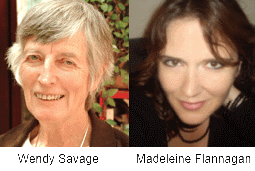
  • “Are there Good Reasons for Abortion?” Wendy Savage and Madeleine Flannagan Debate on Unbelievable?

    Wendy Savage and Madeleine FlannaganThis week, the UK’s Christian Premier Radio show, Unbelievable?, aired an episode on the topic “are there good reasons for abortion?” The episode saw host, Justin Brierley, moderate a debate between this blog’s Madeleine Flannagan and Professor Wendy Savage, a representative of Doctors for a Women’s Choice.

    A range of topics related to the issue of abortion were raised which saw some interesting back and forth between Madeleine and Professor Savage.

    Amidst the discussion as to what counts as a good reason for having an abortion, they got into post-viability abortions, whether a fetus is human, whether brain activity or lack of dependency on the mother should be the criteria for humanity, the use of terms like fetus, abortion for fetal abnormalities, abortion to save a woman’s life, the  argument from backstreet abortion and so on. The episode provides a pretty good presentation of the alternative views in the debate.

    I am clearly biased but I think Madeleine offered the more persuasive position; her arguments were on the mark and very cogent yet she came off measured, humane and reasonable. You can listen to the Unbelievable? episode here: “Are there good reasons for abortion?“

    RELATED POSTS:
    Abortion and the Morality of Feticide: Part I
    Abortion and the Morality of Feticide: Part II
    My Body, My Choice? The Inconsistent Paternalism of Feminism
    Abortion and Viability
    Abortion and Sentience Part I
    Abortion  and Sentience Part II
    Abortion and Brain Death
    Illegal “Backstreet” Abortion
    Abortion and Child Abuse
    Is Abortion Liberal?
    Abortion and Capital Punishment: No Contradiction 
    See our Feticide and Abortion tags for more.

  • Ethics in Journalism – Hear Matt’s Interview on Radio Rhema

    On Thursday Matt was interviewed on Radio Rhema by their breakfast host, Tim Sisarich, on the topic of ethics in journalism. This was in the wake of the media frenzy over the Israelis killed in the Christchurch earthquake and New Zealand Prime Minister John Key’s rebuttal to claims that they were spies. The Murdoch saga was running at the same time.

    Radio Rhema ran the interview 3 times on Thursday but in case you missed it, here was the intro and an MP3 (used here with permission):

    “An Israeli news agency is slamming reports of Israeli spies working in Christchurch around the February earthquake.
    The original story, by Southland Times Editor Fred Tulett has attracted criticism from Israeli groups in New Zealand – and now the editor of the Jerusalem Post.
    An editorial in the paper describes the allegations as ‘far-fetched fiction disseminated by New Zealand news outlets’.
    It accuses this country of being biased and says no tourists from any other country would have been the objects of what it calls, ‘unsubstantiated suspicion’.
    This morning Rhema Breakfast host, Tim Sisarich, asked blogger and theologian, Matthew Flannagan, if we, as Christians and consumers of news, do enough to search out the truth behind the news we read…. “

    Click to Listen to Matthew Flannagan on Journalism Ethics