Some readers of this blog will know that I work as a secondary school teacher. Recently, several people have asked my opinion on the government’s decision to ditch the National Certificate of Educational Achievement (NCEA). My thoughts follow.
When I was at teachers’ college, we were taught that New Zealand had the best curriculum in the world. Unlike other curricula, which focused on subject content, New Zealand’s curriculum focused on certain kinds of skills—analysis, critical thinking, research, etc.
A comparison between the NCEA standards for Religious Studies (my specialist subject) and Cambridge illustrates the contrast. For IGCSE World Religions, students study two major religions over the course of a year. The syllabus requires them to learn a huge amount of content—about the religion’s history, doctrines, modes of worship, and so on. The assessment is an examination in which any of these topics could be assessed.
By contrast, Level 1 NCEA has standards such as: Demonstrate understanding of the development of a community that shares religious or spiritual beliefs. This is flexible—teachers can choose any religion. One gets an Achieved if they show understanding of the development of the religious community, a Merit if they can explain it, and an Excellence if they examine it. The focus is on analytical skills. Prima facie, this is a good idea. Education should not be about regurgitating facts; it should develop skills of understanding, explaining, and examining.
This appearance, however, has not withstood my experience at the coalface, teaching Religious Studies to Year 11–13 boys.
My first practical experience with NCEA was during my practicum in 2009. I was placed at a low-decile school in South Auckland. The school was almost entirely in Pasifika in its demographic. Despite being in a poor area and having a demographic that statistically underachieves, the school was getting good results—large numbers of students were getting Achieved. Here was the method I encountered:
- Period 1: Tell the students the questions they will be assessed on. Get them to copy them down.
- Period 2: Tell them the answer to Question 1. Write it down.
- Period 3: Tell them the answer to Question 2. Write it down.
- Rinse and repeat
- Then the assessment: Take the sheet of paper you’ve copied the answers onto into an exam where you will be asked the memorised questions.
I am not joking. What was interesting was that even under these conditions, students would talk during the assessment and not finish. So extensions were given until the students all passed. Or they were held in till they finished.
Here I discovered the perverse incentive structures of NCEA. Because there were certain prescribed skills (such as “explain” and “describe”) which were internally assessed by the school, and because the school’s reputation was tied to how well it got traditionally low-achieving groups to pass, tactics like this actually made the school “successful.” Students who struggled with basic skills and academic discipline would pass at high rates.
My experience in the teaching sector has suggested to me that this sort of thing is not an aberration. I have seen many NCEA programmes where students who lack basic skills pass because they are spoon-fed the answers. I have seen, for example, courses where students copy notes into a workbook in each class, then have a week of classes to copy those notes into a resource, and are then given a structured worksheet on how to write an essay. They fill in the worksheet with the material from the resource. Despite the apparent ease of this, I have witnessed teachers offer several weeks of classes—including lunchtime and after-school sessions—to get students to complete the task. If all else fails, threaten a detention until they fill out the sheet. Instant, Achieved. In a short time, this student who can’t write an essay or hand one in on time gets University Entrance. A school has managed to get large numbers of students known for lack of academic ability to university level. It looks impressive—but of course, in the long term, it is fraudulent. These students haven’t achieved the “skills”; they’ve ticked boxes and been micromanaged on how to tick them.
My next experience was doing professional development on NCEA marking. At a best-practice workshop, I was given a model answer for the standard Describe the beliefs of a religious community. It stated: “According to Christianity, Jesus was a good moral teacher.” Achieved or Not Achieved?
I said Not Achieved. My reason: this is not an accurate description of what Christianity teaches. Muslims believe Isa (Jesus) was a prophet, so they would consent to this statement. An agnostic could—and many do—accept that Jesus was a good moral teacher. Christianity teaches Jesus is the Messiah and God incarnate.
I was told I was being too precise. To meet the standard, they only need the most generic answer. The student should get an Achieved simply for writing that down.
We went on to look at exemplars of Merit and Excellence. To get an Excellence, a student needs to “evaluate.” I pointed out that the evaluation provided was extremely poor. I was told that the standard didn’t say “evaluate well”—it simply said “evaluate.” That meant the student used words like therefore and in conclusion. If they used such words, they were using evaluative language and hence got an Excellence.
On another occasion, I was learning the ropes of moderation. The course was on the Reformation. To get an Achieved, the student had to describe the key facts. To get a Merit, they had to show the implications of the facts. I was told that because the word “facts” is plural, NZQA required that a student get two facts correct. Facts were things like names, places, and dates. This meant that if a student, after studying the Reformation for several weeks, wrote only: “Martin Luther, Wittenberg 1517,” they got an Achieved.
Here I learned how words like “describe,” “evaluate,” “discuss,” and “analyse” did not mean what they appeared to. Due to bureaucratic requirements and moderation procedures, they had highly specific meanings which reduced them to a checklist. A student could know in advance what the checklist was and tick the boxes. They didn’t need to understand, analyse, or evaluate in the ordinary sense of those terms. Or at least not in terms of what would be expected by the canons of the discipline.
Students were often aware of this. I’ve had several classes where I assigned an essay and got the response: “Sir, if I don’t write an intro and a conclusion, but just write X, Y, Z, will I still get an Achieved?” The honest answer, according to the requirements I had been told, was yes. What do the students do? They don’t bother learning to write an essay. They can Google the basic “facts” they need to meet the minimum standard. Do it, pass. They haven’t learned to write an essay, or research, or think critically. They’ve learned that they don’t have to. The most efficient path to success is to not do these things. They know the game.
This was exacerbated by a third feature of NCEA. When I was teaching it, a student could pass an entire course by doing two or three internal assessments early in the year. Once they had ticked the box and got an Achieved, they could tune out for the rest of the course. They could fail to show up for the exam and still get an Achieved. I had many students ask me: “Sir, if I don’t hand in X and Y or do the exam, I’ll still get an Achieved, right?” They were right. I saw large numbers of students pass subjects without ever successfully sitting an exam. They left with University Entrance.
The school I currently teach at has a dual pathway: NCEA and Cambridge. A few years ago, the leadership began assigning me fewer NCEA classes and more Cambridge ones. Here’s what I noticed.
First, students were much more concerned about learning the content. They knew that anything they learned might be in the examination—and they didn’t know which topics would be. Second, they were keenly aware of risk. They understood that if they failed the exam, that was it—they failed the year. They also knew I couldn’t give them a break; I wasn’t the examiner—Cambridge was. A re-sit might mean they would repeat another six months of work. It couldn’t be done for two days during my lunch hour.
Third, I discovered that appearances can be deceiving. While Cambridge had a huge amount of content, when it asked questions in the exam, it used terms like “discuss,” “describe,” and “explain.” These terms were not redefined in non-standard ways. The people marking the exams were subject specialists who knew what these terms meant, and the marking schedule reflected that. Students were assessed on things like “used relevant information,” “took into account various views,” and “some inaccurate information.” “detailed evidence” “technical precision”. They also had to write answers in essay form. Through the process of doing practice exams, students learned those skills. To prepare, they had to research a massive body of content and ask how they could put it into essay form—how to analyse and draw on relevant information. They weren’t just regurgitating facts; they were developing the requisite skills.
Fourth—and most disturbing—I noticed that every year I taught bright students with potential who told me they were going to transfer to NCEA because it was easier. They could get into university without doing an exam and could, with minimal stress, get an Excellence in every subject—often in the first half of the year. Even more pernicious, I encountered Māori and Pasifika students who told me that because of their race, they are “too dumb” for Cambridge. These students—often bright and full of potential—lack self-belief. Because of this, they doubt themselves, and they know they can get academic success without the risk, effort, or fear of failure. Every year, I try to talk students out of dropping out and switching to NCEA because “it’s easier to pass.”
Here I reflect on the irony of my first experience with NCEA. People were concerned about Māori and Pasifika fail rates. They were using NCEA to fix the problem. Large numbers were passing. The problem is—they were not being educated. We were defrauding society and the students themselves by declaring they were educated and certifying them as having skills they didn’t have. Academic skills are acquired through work, practice, and the risk of failure. Making errors is part of the process. It requires students to take ownership and responsibility for their learning. It cannot just be given for free by a teacher or from the ministry. These students were learning that they didn’t need any of that to pass. Someone else would just give them the results if they checked a box.
So, when I heard the government was scrapping NCEA, my initial response was this: Goodbye NCEA. Farewell, get lost. Good riddance.
Cross-posted at kiwiblog
Tags: NCEA

 on certain passages in the Torah, such as this one:



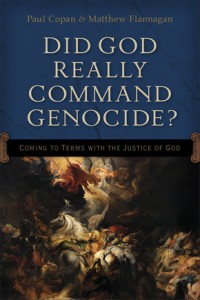 A common objection to belief in the God of the Bible is that a good, kind, and loving deity would never command the wholesale slaughter of nations. In the tradition of his popular Is God a Moral Monster?, Paul Copan teams up with Matthew Flannagan to tackle some of the most confusing and uncomfortable passages of Scripture. Together they help the Christian and nonbeliever alike understand the biblical, theological, philosophical, and ethical implications of Old Testament warfare passages.


Goodbye NCEA, Farewell, Get lost, Good Riddance
September 21st, 2025 by Matt
Respond
Some readers of this blog will know that I work as a secondary school teacher. Recently, several people have asked my opinion on the government’s decision to ditch the National Certificate of Educational Achievement (NCEA). My thoughts follow.
When I was at teachers’ college, we were taught that New Zealand had the best curriculum in the world. Unlike other curricula, which focused on subject content, New Zealand’s curriculum focused on certain kinds of skills—analysis, critical thinking, research, etc.
A comparison between the NCEA standards for Religious Studies (my specialist subject) and Cambridge illustrates the contrast. For IGCSE World Religions, students study two major religions over the course of a year. The syllabus requires them to learn a huge amount of content—about the religion’s history, doctrines, modes of worship, and so on. The assessment is an examination in which any of these topics could be assessed.
By contrast, Level 1 NCEA has standards such as: Demonstrate understanding of the development of a community that shares religious or spiritual beliefs. This is flexible—teachers can choose any religion. One gets an Achieved if they show understanding of the development of the religious community, a Merit if they can explain it, and an Excellence if they examine it. The focus is on analytical skills. Prima facie, this is a good idea. Education should not be about regurgitating facts; it should develop skills of understanding, explaining, and examining.
This appearance, however, has not withstood my experience at the coalface, teaching Religious Studies to Year 11–13 boys.
My first practical experience with NCEA was during my practicum in 2009. I was placed at a low-decile school in South Auckland. The school was almost entirely in Pasifika in its demographic. Despite being in a poor area and having a demographic that statistically underachieves, the school was getting good results—large numbers of students were getting Achieved. Here was the method I encountered:
I am not joking. What was interesting was that even under these conditions, students would talk during the assessment and not finish. So extensions were given until the students all passed. Or they were held in till they finished.
Here I discovered the perverse incentive structures of NCEA. Because there were certain prescribed skills (such as “explain” and “describe”) which were internally assessed by the school, and because the school’s reputation was tied to how well it got traditionally low-achieving groups to pass, tactics like this actually made the school “successful.” Students who struggled with basic skills and academic discipline would pass at high rates.
My experience in the teaching sector has suggested to me that this sort of thing is not an aberration. I have seen many NCEA programmes where students who lack basic skills pass because they are spoon-fed the answers. I have seen, for example, courses where students copy notes into a workbook in each class, then have a week of classes to copy those notes into a resource, and are then given a structured worksheet on how to write an essay. They fill in the worksheet with the material from the resource. Despite the apparent ease of this, I have witnessed teachers offer several weeks of classes—including lunchtime and after-school sessions—to get students to complete the task. If all else fails, threaten a detention until they fill out the sheet. Instant, Achieved. In a short time, this student who can’t write an essay or hand one in on time gets University Entrance. A school has managed to get large numbers of students known for lack of academic ability to university level. It looks impressive—but of course, in the long term, it is fraudulent. These students haven’t achieved the “skills”; they’ve ticked boxes and been micromanaged on how to tick them.
My next experience was doing professional development on NCEA marking. At a best-practice workshop, I was given a model answer for the standard Describe the beliefs of a religious community. It stated: “According to Christianity, Jesus was a good moral teacher.” Achieved or Not Achieved?
I said Not Achieved. My reason: this is not an accurate description of what Christianity teaches. Muslims believe Isa (Jesus) was a prophet, so they would consent to this statement. An agnostic could—and many do—accept that Jesus was a good moral teacher. Christianity teaches Jesus is the Messiah and God incarnate.
I was told I was being too precise. To meet the standard, they only need the most generic answer. The student should get an Achieved simply for writing that down.
We went on to look at exemplars of Merit and Excellence. To get an Excellence, a student needs to “evaluate.” I pointed out that the evaluation provided was extremely poor. I was told that the standard didn’t say “evaluate well”—it simply said “evaluate.” That meant the student used words like therefore and in conclusion. If they used such words, they were using evaluative language and hence got an Excellence.
On another occasion, I was learning the ropes of moderation. The course was on the Reformation. To get an Achieved, the student had to describe the key facts. To get a Merit, they had to show the implications of the facts. I was told that because the word “facts” is plural, NZQA required that a student get two facts correct. Facts were things like names, places, and dates. This meant that if a student, after studying the Reformation for several weeks, wrote only: “Martin Luther, Wittenberg 1517,” they got an Achieved.
Here I learned how words like “describe,” “evaluate,” “discuss,” and “analyse” did not mean what they appeared to. Due to bureaucratic requirements and moderation procedures, they had highly specific meanings which reduced them to a checklist. A student could know in advance what the checklist was and tick the boxes. They didn’t need to understand, analyse, or evaluate in the ordinary sense of those terms. Or at least not in terms of what would be expected by the canons of the discipline.
Students were often aware of this. I’ve had several classes where I assigned an essay and got the response: “Sir, if I don’t write an intro and a conclusion, but just write X, Y, Z, will I still get an Achieved?” The honest answer, according to the requirements I had been told, was yes. What do the students do? They don’t bother learning to write an essay. They can Google the basic “facts” they need to meet the minimum standard. Do it, pass. They haven’t learned to write an essay, or research, or think critically. They’ve learned that they don’t have to. The most efficient path to success is to not do these things. They know the game.
This was exacerbated by a third feature of NCEA. When I was teaching it, a student could pass an entire course by doing two or three internal assessments early in the year. Once they had ticked the box and got an Achieved, they could tune out for the rest of the course. They could fail to show up for the exam and still get an Achieved. I had many students ask me: “Sir, if I don’t hand in X and Y or do the exam, I’ll still get an Achieved, right?” They were right. I saw large numbers of students pass subjects without ever successfully sitting an exam. They left with University Entrance.
The school I currently teach at has a dual pathway: NCEA and Cambridge. A few years ago, the leadership began assigning me fewer NCEA classes and more Cambridge ones. Here’s what I noticed.
First, students were much more concerned about learning the content. They knew that anything they learned might be in the examination—and they didn’t know which topics would be. Second, they were keenly aware of risk. They understood that if they failed the exam, that was it—they failed the year. They also knew I couldn’t give them a break; I wasn’t the examiner—Cambridge was. A re-sit might mean they would repeat another six months of work. It couldn’t be done for two days during my lunch hour.
Third, I discovered that appearances can be deceiving. While Cambridge had a huge amount of content, when it asked questions in the exam, it used terms like “discuss,” “describe,” and “explain.” These terms were not redefined in non-standard ways. The people marking the exams were subject specialists who knew what these terms meant, and the marking schedule reflected that. Students were assessed on things like “used relevant information,” “took into account various views,” and “some inaccurate information.” “detailed evidence” “technical precision”. They also had to write answers in essay form. Through the process of doing practice exams, students learned those skills. To prepare, they had to research a massive body of content and ask how they could put it into essay form—how to analyse and draw on relevant information. They weren’t just regurgitating facts; they were developing the requisite skills.
Fourth—and most disturbing—I noticed that every year I taught bright students with potential who told me they were going to transfer to NCEA because it was easier. They could get into university without doing an exam and could, with minimal stress, get an Excellence in every subject—often in the first half of the year. Even more pernicious, I encountered Māori and Pasifika students who told me that because of their race, they are “too dumb” for Cambridge. These students—often bright and full of potential—lack self-belief. Because of this, they doubt themselves, and they know they can get academic success without the risk, effort, or fear of failure. Every year, I try to talk students out of dropping out and switching to NCEA because “it’s easier to pass.”
Here I reflect on the irony of my first experience with NCEA. People were concerned about Māori and Pasifika fail rates. They were using NCEA to fix the problem. Large numbers were passing. The problem is—they were not being educated. We were defrauding society and the students themselves by declaring they were educated and certifying them as having skills they didn’t have. Academic skills are acquired through work, practice, and the risk of failure. Making errors is part of the process. It requires students to take ownership and responsibility for their learning. It cannot just be given for free by a teacher or from the ministry. These students were learning that they didn’t need any of that to pass. Someone else would just give them the results if they checked a box.
So, when I heard the government was scrapping NCEA, my initial response was this: Goodbye NCEA. Farewell, get lost. Good riddance.
Cross-posted at kiwiblog
Tags: NCEAComments Off on Goodbye NCEA, Farewell, Get lost, Good Riddance