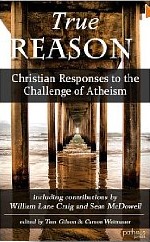
Tekton Education and Apologetics ministries have released an online book, John Loftus’ Why I Became an Atheist Refuted, as a special edition for their E-Block Online Journal. While most of the book is authored by JP Holding, Chapter 2 is not completely, Chapter 2: “The Christian Illusion of Rational and Moral Superiority” — Two part […]
Entries Tagged as 'Divine Command Theory'
Tekton E-Book: John Loftus’ Why I Became an Atheist Refuted Feat. MandM
September 17th, 2009 5 Comments
Tags: Divine Command Theory · E-Book · God and Morality · John Loftus · JP Holding · Tekton Apologetics Ministries
Walter Sinnott-Armstrong on God, Morality and Arbitrariness
July 17th, 2009 21 Comments
Is morality independent of religion? One common argument for this position is that denying it makes God’s commands arbitrary. Walter Sinnott-Armstrong argues, Let’s assume that God commanded us not to rape. Did God have any reason to command this? If not, his command was arbitrary, and then it can’t make anything morally wrong. On the […]
Tags: Atheist · Divine Command Theory · God and Morality · Philosophy of Religion · Walter Sinnott-Armstrong · William Wainwright
Tooley, Plantinga and the Deontological Argument from Evil Part II
May 27th, 2009 13 Comments
In my last post, Tooley, Plantinga and the Deontological Argument from Evil Part I, I sketched Tooley’s distinction between a deontological and an axiological argument from evil and argued that Tooley rejects the axiological version because it rests on controversial ethical claims that are likely to be rejected by many theists. I outlined Tooley’s deontological […]
Tags: Alvin Plantinga · Atheism · Divine Command Theory · Michael Tooley · Philosophy of Religion · Problem of Evil · William Alston
Tooley, Plantinga and the Deontological Argument from Evil Part I
May 13th, 2009 9 Comments
This two-part series criticises the deontological argument from evil proposed by Micheal Tooley in The Knowledge of God, the print debate between him and Alvin Plantinga.1 My critique proceeds in four parts. Initially I will sketch Tooley’s distinction between a deontological and an axiological argument from evil and will argue that Tooley rejects the axiological […]
Tags: Alvin Plantinga · Atheism · Divine Command Theory · Michael Tooley · Philosophy of Religion · Problem of Evil · Selection · William Alston
John W. Loftus on The Christian Illusion of Moral Superiority Part II
May 8th, 2009 5 Comments
In my previous post, John W. Loftus on The Christian Illusion of Moral Superiority Part I, I argued that Loftus’ position was based on a confusion between ontological and epistemological foundations. I will now address his arguments against divine command theory. Loftus’ Arguments Against a Divine Command Theory After misconstruing the divine command theory as […]
Tags: Alvin Plantinga · Atheism · Divine Command Theory · God and Morality · John Loftus · Robert Adams · William Wainwright
John W. Loftus on The Christian Illusion of Moral Superiority Part I
May 7th, 2009 14 Comments
Several Christian thinkers, most notably, C S Lewis, John Hare, Robert Adams and William Lane Craig have argued that Theism provides a superior foundation for moral obligation than Naturalism does. Most of these thinkers defend this notion by developing and defending a divine command theory.[1] John W Loftus is aware of this and in The […]
Tags: Atheism · Divine Command Theory · God and Morality · John Loftus · Philip Quinn · Robert Adams · Stephen Evans · William Alston
Divine Commands and Intuitions: A Response to Ken Perrott
May 5th, 2009 34 Comments
Ken Perrott from Open Parachute has asked me some questions about my views on morality and divine commands. Views I have repeatedly expressed on this blog. Given that others have from time to time asked me similar questions, and given the length of my response, I have decided to turn my answers into a post. […]
Tags: Atheism · Bad Reasoning · Divine Command Theory · Ethics · God and Morality

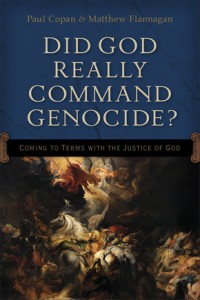 A common objection to belief in the God of the Bible is that a good, kind, and loving deity would never command the wholesale slaughter of nations. In the tradition of his popular Is God a Moral Monster?, Paul Copan teams up with Matthew Flannagan to tackle some of the most confusing and uncomfortable passages of Scripture. Together they help the Christian and nonbeliever alike understand the biblical, theological, philosophical, and ethical implications of Old Testament warfare passages.