Category: Philosophy of Religion

  • Hear Matt at MPC on: “Is it Narrow-Minded to Think Jesus is the Only Way?”

    This blog’s Matthew Flannagan will be speaking at Massey Presbytarian Church’s Night Church Service on the topic “Is it Narrow-Minded to Think Jesus is the Only Way?“

    Details are:

    MPC

    7:00pm (come at 6:30pm to grab a meal from the Night Church cafe)
    Sunday 29 September 2013
    Massey Presbyterian Church
    510 Don Buck Road, Auckland, New Zealand

    All welcome.

  • There Probably are no Duties. Now Stop Worrying and Enjoy Your Life!

    Some atheists offer  moral critiques of theism; their claim is not just that belief  in God is false or unjustified, it is that such irrational beliefs are intricately linked with immoral and oppressive practices. Moral outrage often motivates the critiques offered – one only needs to read the condemnation of religious wars, religiously motivated terrorism, inquisitions, witch hunts, the suppression of science, sexism, homophobia, and so on, which is so prevalent in many free thought writings. Similarly, one needs only to read the accusations, regularly repeated in popular atheist literature, that the Bible condones slavery, or genocide, or stoning cheeky children, or rape,  to observe this.

    DutyNote that behind this critique is the presupposition that there are moral duties. People have a duty to not engage in wars or acts of terrorism, religious people who promote sexist or homophobic practices are wrong for doing so. I think this is nonsense as it assumes there is such a thing as a moral duty, it assumes things religious people do can be wrong. This is false and here is why:

    First, the burden of proof is on he who makes a claim. I am not making a claim. I am simply not affirming that moral duties exist, therefore I do not have to justify my non-belief in duties. Instead those who believe in duties have to come up with compelling proof that they exist.

    Second, no-one has ever seen a duty. Duties have no colour, shape or smell or sound, hence, they are invisible to sensory perception. One cannot empirically verify or falsify the claim that duties exist so it is meaningless incoherent nonsense to believe in duties until verification of them is given. Moreover, the inability to verify these claims shows they are unscientific and so they cannot be accepted as rational.

    Third, no one as yet has provided a proof that duties of any sort exist. Such things, if they can be decided at all, must be shown to exist by the methods of natural science. To date no one has shown that belief in moral duties is necessary to any scientific theory; physics or chemistry or biology each have no need of that hypothesis to explain the world.

    Fourth, think of all the evil done in the name of duties. Almost every war fought throughout history has been justified by those who claimed they were doing the right thing. Inquisitions, crusades and the suppression of science were all done in the name of doing the right thing and avoiding the wrong thing. While science flies us to the moon, belief in duties flies planes into buildings. (more…)

  • Published in Philo: Is Ethical Naturalism more Plausible than Supernaturalism? A Reply to Walter Sinnott-Armstrong

    Jeffery Jay Lowder  has informed me that my article “Is Ethical Naturalism more Plausible than Supernaturalism? A Reply to Walter Sinnott-Armstrong”  was  published in the Spring/Summer 2012 issue of Philo. The abstract is below:

    Is Ethical Naturalism more Plausible than Supernaturalism? A Reply to Walter Sinnott-Armstrong“In many of his addresses and debates, William Lane Craig has defended a Divine Command Theory of moral obligation (DCT). In a recent article and subsequent monograph, Walter Sinnott-Armstrong has criticized Craig’s position. Armstrong contended that a DCT is subject to several devastating objections and further contended that even if theism is true a particular form of ethical naturalism is a more plausible account of the nature of moral obligations than a DCT is. This paper critiques Armstrong’s argument. I will argue Armstrong’s objections do not refute a DCT and the ethical naturalism he defends is not more plausible than Craig’s ethical supernaturalism.”

    You can read “Is Ethical Naturalism more Plausible than Supernaturalism? A Reply to Walter Sinnott-Armstrong” here.

  • Is a Divine Command Theory Pscyopathic? Sam Harris on Divine Commands: Part II

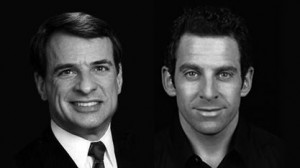
    William Lane Craig v Sam HarrisIn my last post, Sam Harris on Divine Commands: Part I, I criticised Sam Harris’ characterisation of divine command meta-ethics.  In this post I want to turn to his second line of criticism of a Divine Command Theory. In Harris’ debate with William Lane Craig at Notre Dame, transcript here, Harris stated:

    “I’m glad he raised the issue of psychopathy—we are being offered a psychopathic and psychotic moral attitude. It’s psychotic because this is completely delusional. There’s no reason to believe that we live in a universe ruled by an invisible monster Yahweh. But it is, it is psychopathic because this is a total detachment from the, from the well-being of human beings. It, this so easily rationalizes the slaughter of children. Ok, just think about the Muslims at this moment who are blowing themselves up, convinced that they are agents of God’s will. There is absolutely nothing that Dr. Craig can s—can say against their behavior, in moral terms, apart from his own faith-based claim that they’re praying to the wrong God. If they had the right God, what they were doing would be good, on Divine Command theory.”

    Here, Harris suggests a Divine Command Theory expresses both a psychopathic and a psychotic moral attitude. I will address the charge of a Divine Command Theory being “psychotic” in a later post. Here, I want to address what I think is Harris’ main concern: a Divine Command Theory is psychopathic. It involves a “total detachment … from the well-being of human beings” and “so easily rationalizes the slaughter of children”. Why does Harris think this? “Because, at this moment Islamic terrorists are blowing themselves up convinced they are agents of God’s will, and a divine command theory can say nothing against their behavior in moral terms except the faith based claim that they are praying to the wrong God.”

    A lot could be said about this argument. First, note that even if it were sound, it does not show the Divine Command Theory is false. Harris is, in fact, offering pragmatic arguments against the theory: it is dangerous, or is easily misused – but there are many things which are dangerous and easily misused that are nevertheless true.

    More importantly, the argument is unsound. A Divine Command Theory contends that an action is obligatory if God actually commands that action. It does not contend that an action is obligatory if someone claims, or believes that God commands it. Obviously, simply believing something is the case does not mean that it is true. Harris, as an atheist, surely recognises this; many people believe and are convinced God exists yet Harris thinks they are mistaken.

    Hence, the mere fact an Islamic terrorist believes God has commanded him or her to “blow themselves up” does not commit the divine command theorist to supporting terrorism. All a divine command theorist needs to say in response to Islamic terrorists is that (more…)

  • Sam Harris on Divine Commands: Part I

    William Lane Craig v Sam HarrisIn a previous post, Divine Commands and Pyschopathic Tendancies, I said I would look in more detail at Sam Harris’ charge that Divine Command Theories (“DCT”) of meta-ethics are psychopathic. In this, and in several forthcoming posts, I will attempt to deliver on that promise.

    In Harris’ debate with William Lane Craig at Notre Dame, transcript here, Harris offered three direct lines of argument against a DCT. (I say direct lines because many of Harris’ rebuttals did not address DCT at all; rather he engaged popular objections to Christian doctrines about exclusivism and hell.) The first direct argument was as follows:

    “According to Dr Craig’s Divine Command theory, God is not bound by moral duties; God doesn’t have to be good. Whatever he commands is good, so when he commands that the Israelites slaughter the Amalekites, that behavior becomes intrinsically good because he commanded it.”

    Here Harris makes three claims.  First he argues that according to a DCT God does not “have to be good”. Second, he infers from this that God can therefore make any action at all intrinsically good. Third, he alludes to an incident in the book of Samuel where, on the face of it, God commands the killing of the Amalekites.

    Turning to Harris’s first claim, according to DCT a person has a duty to a person to do some action only if that person is commanded by God to do it. As God does not issue commands to himself he is not bound by moral duties. Harris infers from this that “God doesn’t have to be good”.

    Whether this is inference is sound depends on what Harris means by “have to be good”. There are at least two possible things he could mean by this.

    Sometimes when we say someone does or does not “have” to do something, we mean they are not morally obligated to do it. When I tell my children they have to tell the truth, for example, I am saying they have a duty to tell the truth. In other contexts however, when we say that someone does or does not “have” to do something we mean it is possible for them to do it.

    If Harris, in saying “God does not have to be good”, means God is not under an obligation to be good then his inference is sound; if God is not bound by duties then he obviously does not have an obligation to be good. This, however, does not entail that it is logically possible for God to lack goodness.

    If, on the other hand, Harris’ claim that “God does not have to be good” carries the implication that it is possible for God to do evil then it is a a flat out straw man.

    Craig’s position is that (more…)

  • Yet Another Lawyer Agrees: Marriage Amendment Act Bill is an Affront to Freedom of Religion and Belief

    Barrister Ian Bassett has given another opinion describing the risks to freedom of religion and belief of Louisa Wall’s Marriage Amendment Act Bill if it is enacted in its presently proposed form, which would include this amendment:

    “Without limiting the generality of subsection (1), no celebrant who is a minister of religion recognised by a religious body enumerated in Schedule 1, and no celebrant who is a person nominated to solemnize marriages by an approved organisation, is obliged to solemnize a marriage if solemnizing that marriage would contravene the religious beliefs of the religious body or the religious beliefs or philosophical or humanitarian convictions of the approved organisation.”

    It is clear that any marriage celebrant exercising their public function who is not covered by the amendment risks being in breach of the New Zealand Bill of Rights Act 1990 and the Human Rights Act 1993 if they refuse to perform their public function as marriage celebrants because it is a same sex couple seeking to be married.

    Injustice

    Church ministers, marriage celebrants, court registrars, church elders, leaders, photographers and caterers and any other person or entity supplying services to the public risks being in breach of the Human Rights Act 1993 if they refuse to supply services to a couple seeking to be married because the couple are same sex. For some this could also mean risking their employment.

    Service providers to the public risk being in breach of the Human Rights Act 1993 if they refuse to supply services to a married couple because the couple are same sex.

    The New Zealand Law Society’s Law Reform Committee headed by Professor Paul Rishworth LLB (Hons) M Jur highlighted the risk to freedom of religion and belief in the Bill in its submission to Parliament:

    “The proposer of the Bill said that the Bill was not intended to compel marriage celebrants to perform marriages contrary to their religious beliefs. However, in the Law Society’s view, Professor Rishworth says it is arguable that marriage celebrants who refuse to perform same-sex marriages will be acting unlawfully under the Human Rights Act 1993, the New Zealand Bill of Rights Act 1990, or both.

    “We want to highlight arguable conclusions which seem to be at odds with the settled intentions of the Bill’s drafters. Whatever the position, the Law Society believes it makes sense to put the matter beyond doubt,” Professor Rishworth says.

    The only thing that the amended Bill puts beyond doubt is that the critics of those raising fears about the Bill’s threat to freedom of religion and belief were wrong. By recommending an amendment the Select Committee are agreeing that a risk existed, as the likes of Ian Bassett, Grant Illingworth have argued, contra to The Human Rights Commission’s claim that all “…religious officials and leaders are free to refuse to perform marriages that are not in accordance with their religious beliefs.”

    Bassett, Illingworth and Rishworth are not alone with their concerns among the legal fraternity.

    Graeme Edgeler, a Wellington Barrister has been quoted in the Herald saying:

    … if an independent celebrant declined to marry a same-sex couple, the couple could then complain to the Human Rights Commission.

    “It’s not about [celebrants] being forced, it’s about people getting in trouble afterwards if they didn’t,” he told APNZ.

    “They’re not breaking any rule in the Marriage Act, but rules in other acts. The main one would be the Human Rights Act, which says you can’t discriminate on the basis on sexual orientation or gender.”

    Auckland Barrister Rachel Wong has raised issues against the Bill.

    This blog’s Madeleine Flannagan LLB, Associate Barrister and Solicitor at Coast Legal, adds her voice:

    “The Bill, in its present form, fails to protect individual freedom of religion and belief (belief being a comprehensive viewpoint not based on religion). The proposed amendment only protects group religious rights, which is little protection at all for most religious celebrants as few denominations hold formal views on marriage, many practitioners of religion do not belong to a group and for those that do they might hold a different personal view on this topic to the group view. The amendment then fails to protect the religious freedom of most religious celebrants just as it utterly fails to protect the freedom of belief of non-religious celebrants who have no group to appeal to to protect their freedom.”

    Ian Bassett’s latest opinion thoroughly analyses the legal effects of the amended Bill, a summary as to whose freedom of religion and belief it protects and whose it does not follows: (more…)

  • Divine Commands and Psychopathic Tendencies

    Sam HarrisThere has been some interesting debate in the blogosphere over Sam Harris’ contention that a divine command theory of ethics manifests “a psychopathic and psychotic moral attitude.”

    Randal Rauser responded to Harris’ contention noting that “if you read through the twenty traits on the Psychopath Checklist you’ll find qualities like callousness, shallow effect, grandiose sense of self-worth, and lack of empathy. But you won’t find adherence to a divine command theory of meta-ethics among them.” Christopher Hallquist rejoins:

    “I almost have a hard time believing Randal is serious here.  When he talks about “adherence to a divine command theory of meta-ethics,” what he means is believing that blowing up a bus full of children is right if that’s what God told you to do. That may not be explicitly listed in the Psychopath Checklist, but neither are things like actually blowing up a bus full of children. And being willing to approve of such an act just because you think God approves certainly sounds like something that would require a shocking degree of callousness and lack of empathy.”

    I plan to address Harris’ original charge in a future post. Here I will limit my comments to Hallquist’s defence of it.  Hallquist suggests that a divine command theory (DCT) is psychopathic for two reasons. First, a DCT entails the following conditional: If God commands you to blow up a bus full of children then you are required to blow up a bus full of children.  Second, accepting the truth of this conditional requires a “shocking degree of callousness and lack of empathy” possessing such callousness and lack of empathy is, a of course, a psychopathic trait.

    Hallquist has considerable confidence in these arguments. So much so he finds it hard to believe Randal’s denial of his conclusion is serious. Note also the rhetorical tactics he uses. The picture of people up blowing up buses full of children brings immediately to pictures of terrorism, sometimes terrorist activities are done for religious motivations, and since 9/11 there has been considerable fear and angst about terrorist acts of this sort. Hence, Hallquist taps deep into people’s fears. Moreover, a long meta-narrative going back to the enlightenment contends religion causes wars, is the source of violence and so on, whether that narrative is historically accurate or not is a matter of considerable dispute. However, prejudices of this sort are widely believed and raw in a post 9/11 environment. The fact a position resonates with people’s fears, emotions and prejudices, however, does not excuse us from asking whether it is true or rationally defensible. In this case I think a little reflection shows it is not. Hallquist’s argument is unsound and, in fact, incoherent. Hallquist’s bravado is therefore strongly misplaced.

    Let us turn to Hallquist’s first premise. A DCT entails the conditional: If God commands you to blow up a bus full of children then you are required to blow up a bus full of children. This conditional is indeed an implication of divine command theories.  Undoubtedly that sounds shocking at first but note two important points which Hallquist skims over:

    First, this is a conditional or hypothetical statement; it states that if God commanded blowing up buses then blowing up buses would be morally obligatory. Nothing about this conditional entails that God actually ever does, or even could, command such a thing, nor does it entail one is ever rationally justified in believing that he does. It simply states that if this situation occurred then the action would be permissible.  It’s a well-known point in logic that a person can affirm that one thing would be true if a certain situation occurred without being committed to claiming it ever occurs. It would be true for example that if I had never been born then I would not be writing this post right now, that does not mean I believe I was never born.

    Second, DCT entails that blowing up buses is morally obligatory only (more…)