Recently Peter Cresswell published a guest post by James Valliant, which originally appeared on SOLO. In Freedom, Science and Christianity: A Response to James Valliant Part I, I addressed Valliant’s claims that science and freedom of religion were unanimously opposed by Christians and the success of science and freedom of religion in Europe was solely […]
Entries Tagged as 'Philosophers'
Freedom, Science and Christianity: A Response to James Valliant Part II
February 18th, 2010 2 Comments
Tags: Aristotle · Christian History · Dark Ages · Enlightenment · Founding Fathers · James Valliant · Libertarianism · Liberty · Mark Murphy · Nicholas Wolterstorff · Peter Cresswell · Regine Pernoud · Rodney Stark · Science and Religion · SOLO · W.E.H. Lecky
Property Rights: Blackstone, Locke and the Legislative Scheme Part I
February 17th, 2010 10 Comments
This two part series looks at the state of property rights under the current legislative scheme in New Zealand. Particularly I address attempts to suggest that the passage of Acts such as the Crown Minerals Act and the Resource Management Act have not significantly altered the common law concept of property rights and the claim […]
Tags: Crown Minerals Act 1991 · Edward Feser · John Locke · Property Rights · Resource Management Act 1991 · Rights and Freedoms · Sub-Soil Land Rights · William Blackstone
Freedom, Science and Christianity: A Response to James Valliant Part I
February 12th, 2010 14 Comments
Recently Peter Cresswell published a guest post by James Valliant, which originally appeared on SOLO. The following series is a critique of this piece. Valliant’s basic thesis is that, Both science and freedom came about among European Christians despite the best efforts of pious Christians to prevent their development, and only on a foundation of […]
Tags: Christian History · Dark Ages · David Lindberg · Enlightenment · Founding Fathers · James Hannam · James Valliant · Libertarianism · Liberty · Peter Cresswell · Regine Pernoud · Science and Religion · SOLO
Sunday Study: Two Forms of Inerrancy
February 8th, 2010 6 Comments
The discussion arising in response to my recent post Inerrancy and Biblical Authority, both on this blog and on some of the blogs that linked to it, got me thinking a bit more about this topic. I was reminded of an interesting comment made by Alan Rhoda regarding the doctrinal statement of the Evangelical Philosophical […]
Tags: Alvin Plantinga · Inerrancy · Michael Tooley · William Lane Craig
Sunday Study: Inerrancy and Biblical Authority
January 18th, 2010 46 Comments
Recently Glenn Peoples and Dominic Bnonn Tennant had an interesting exchange over the issue of biblical inerrancy, the doctrine, that the bible contains no errors. In his post, Errantly Assuming Inerrancy in History, Peoples makes this interesting comment, While there has always been a clear expression of the view that what Scripture teaches is correct, […]
Tags: David Brink · Dominic Bnonn Tennant · Glenn Peoples · Inerrancy · Michael Tooley · Sunday Study
Christian Blog Carnival CCCX
January 14th, 2010 Comments Off on Christian Blog Carnival CCCX
The Christian Carnival CCCX is out now at Parableman. There are a number of articles on a range of topics, including some handpicked by the host, philosopher Jeremy Pierce – see the heading “ringers” for those. Matt’s post, Sunday Study: Joshua and the Genocide of the Canaanites Part II, was featured. If you wish to […]
Tags: Jeremy Pierce · The Christian Carnival
Sunday Study: Joshua and the Genocide of the Canaanites Part II
January 10th, 2010 45 Comments
In my previous post, Joshua and the Genocide of the Canaanites Part I, I mentioned the position suggested by Alvin Plantinga and endorsed by Nicholas Wolterstorff that the passages in Joshua that appear to record the carrying out of genocide at God’s command, such as, “putting all the people to the sword”, “leaving no survivors”, […]
Tags: Alvin Plantinga · Canaanites · Genocide · K Lawson Younger · Kenneth Kitchen · Nicholas Wolterstorff · Old Testament Ethics · Sunday Study

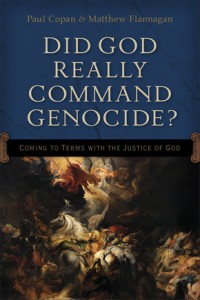 A common objection to belief in the God of the Bible is that a good, kind, and loving deity would never command the wholesale slaughter of nations. In the tradition of his popular Is God a Moral Monster?, Paul Copan teams up with Matthew Flannagan to tackle some of the most confusing and uncomfortable passages of Scripture. Together they help the Christian and nonbeliever alike understand the biblical, theological, philosophical, and ethical implications of Old Testament warfare passages.