In Tooley, Plantinga and the Deontological Argument from Evil Part I and Part II, I discussed Michael Tooley’s deontological argument from evil. In The Problem of Evil Peter Van Inwagen makes a reference to the type of argument I proposed. In this post I intend to make some critical commentary on Van Inwagen’s comments. Tooley […]
Entries Tagged as 'Philosophers'
Van Inwagen, Divine Duties and the Deontological Argument from Evil
January 9th, 2010 1 Comment
Tags: Divine Command Theory · Michael Tooley · Peter Van Inwagen · Problem of Evil
Contra Mundum: Confessions of an Anti-Choice Fanatic
January 5th, 2010 76 Comments
If current media is to be believed opposition to legal abortion comes from misogynist fundamentalist fanatics who want to impose their religious mores onto others. This string of pejorative terms is amusing; however, it does not actually address the more crucial question of whether laws against feticide (the killing of a fetus) are just. I […]
Tags: Abortion · Contra Mundum · David Boonin · Feticide · Investigate Magazine · Peter Singer · Selection
Sunday Study: Joshua and the Genocide of the Canaanites Part I
January 3rd, 2010 52 Comments
Critics of Christianity often claim that the book of Joshua teaches that God commanded genocide. Raymond Bradley for example states, In chapters 7 through 12, [the book of Joshua] treats us to a chilling chronicle of the 31 kingdoms, and all the cities therein, that fell victim to Joshua’s, and God’s, genocidal policies. Time and […]
Tags: Alvin Plantinga · Brevard Childs · Canaanites · Genocide · Hermeneutics · Joshua · Kenneth Kitchen · Nicholas Wolterstorff · Old Testament Ethics · Raymond Bradley · Sunday Study · Theology · Walter Sinnott-Armstrong
Does Abortion Benefit the Fetus? A Critique of Himma Part 2
December 24th, 2009 7 Comments
In my previous post, Does Abortion Benefit the Fetus? A Critique of Himma Part 1, I discussed Kenneth Einar Himma’s argument that even if a fetus is a human being, laws permitting feticide are compatible with the harm principle.I elaborated an important objection to Himma’s argument, an objection articulated by Mark Murphy, which appeals to […]
Tags: Abortion · Augustine · David Boonin · Eschatology · Feticide · Infanticide · Kenneth Einar Himma · Lalia Williamson · Mark Murphy
Philosophers’ Carnival XCXI
December 21st, 2009 9 Comments
Welcome to MandM, a New Zealand based philosophy of religion, ethics, theology, jurisprudence and social commentary blog, hosts of the XCXI edition of the Philosophers’ Carnival. We have a good selection of philosophy readings for your holiday perusal, so take a look around and enjoy.
Tags: Blog Carnival · Philosophers' Carnival
Does Abortion Benefit the Fetus? A Critique of Himma Part 1
December 18th, 2009 7 Comments
This series was developed from the paper I gave to the Auckland STAANZ Conference: Eschatology and Pneumatology. In Is Abortion Liberal? I suggested that one cannot simultaneously affirm the harm principle, accept that a fetus is a human being, and support permissive abortion laws. If abortion is homicide then it harms a human being, and […]
Tags: Abortion · Alan Donagan · Augustine · Eschatology · Feticide · Kenneth Einar Himma · Mark Murphy
Plantinga & Ruse on Methodological Naturalism & Science Definitions
December 8th, 2009 32 Comments
Michael Ruse (and many others) contend that science is constrained by methodological naturalism, which is the thesis that that neither the data, for a scientific investigation, nor a scientific theory nor the background beliefs, against which a theory is assessed, can properly refer to or contain supernatural beings or propositions based on revelation. In Darwinism […]
Tags: Alvin Plantinga · Methodological Naturalism · Michael Ruse · Science and Religion

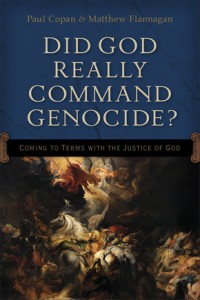 A common objection to belief in the God of the Bible is that a good, kind, and loving deity would never command the wholesale slaughter of nations. In the tradition of his popular Is God a Moral Monster?, Paul Copan teams up with Matthew Flannagan to tackle some of the most confusing and uncomfortable passages of Scripture. Together they help the Christian and nonbeliever alike understand the biblical, theological, philosophical, and ethical implications of Old Testament warfare passages.