In my last post, Tooley, Plantinga and the Deontological Argument from Evil Part I, I sketched Tooley’s distinction between a deontological and an axiological argument from evil and argued that Tooley rejects the axiological version because it rests on controversial ethical claims that are likely to be rejected by many theists. I outlined Tooley’s deontological […]
Entries Tagged as 'Philosophers'
Tooley, Plantinga and the Deontological Argument from Evil Part II
May 27th, 2009 13 Comments
Tags: Alvin Plantinga · Atheism · Divine Command Theory · Michael Tooley · Philosophy of Religion · Problem of Evil · William Alston
Tooley, Plantinga and the Deontological Argument from Evil Part I
May 13th, 2009 9 Comments
This two-part series criticises the deontological argument from evil proposed by Micheal Tooley in The Knowledge of God, the print debate between him and Alvin Plantinga.1 My critique proceeds in four parts. Initially I will sketch Tooley’s distinction between a deontological and an axiological argument from evil and will argue that Tooley rejects the axiological […]
Tags: Alvin Plantinga · Atheism · Divine Command Theory · Michael Tooley · Philosophy of Religion · Problem of Evil · Selection · William Alston
John W. Loftus on The Christian Illusion of Moral Superiority Part II
May 8th, 2009 5 Comments
In my previous post, John W. Loftus on The Christian Illusion of Moral Superiority Part I, I argued that Loftus’ position was based on a confusion between ontological and epistemological foundations. I will now address his arguments against divine command theory. Loftus’ Arguments Against a Divine Command Theory After misconstruing the divine command theory as […]
Tags: Alvin Plantinga · Atheism · Divine Command Theory · God and Morality · John Loftus · Robert Adams · William Wainwright
John W. Loftus on The Christian Illusion of Moral Superiority Part I
May 7th, 2009 14 Comments
Several Christian thinkers, most notably, C S Lewis, John Hare, Robert Adams and William Lane Craig have argued that Theism provides a superior foundation for moral obligation than Naturalism does. Most of these thinkers defend this notion by developing and defending a divine command theory.[1] John W Loftus is aware of this and in The […]
Tags: Atheism · Divine Command Theory · God and Morality · John Loftus · Philip Quinn · Robert Adams · Stephen Evans · William Alston
Antony Flew v William Lane Craig debate “Does God Exist?”
April 26th, 2009 3 Comments
In 1948 Bertrand Russell and Frederick Copleston debated the existance of God on the BBC radio. That debate was considered the definitive debate of that generation. Fifty years later, to commemorate this debate, a debate re-examining the arguments for and against the existence of God was arranged between William Lane Craig and Antony Flew before […]
Tags: Antony Flew · Debates · Philosophy of Religion · William Lane Craig
Walter Sinnott-Armstrong, William Lane Craig and the Argument from Harm Part I
April 18th, 2009 1 Comment
This is the first of a two-part series where I examine a recent argument criticising religious ethics by Walter Sinnott-Armstrong. In many of his publications and debates William Lane Craig has defended the contention that if theism is true then there exists a sound foundation for moral duties. In a recent article, Walter Sinnott-Armstrong has […]
Tags: Divine Command Theory · Ethics · God and Morality · Walter Sinnott-Armstrong · William Alston · William Lane Craig
The Problem of Evil: Why does God Allow Suffering?
April 12th, 2009 74 Comments
One of the most common objections to the Christian faith is the problem of evil. Of all objections mounted against the Christian faith, prima facie, it does seem the most compelling, one of the hardest things for us to get our heads around. How does a Christian reconcile the fact of evil and suffering in […]
Tags: Alvin Plantinga · Apologetics · Philosophy of Religion · William Alston

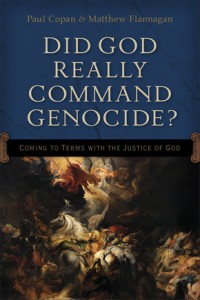 A common objection to belief in the God of the Bible is that a good, kind, and loving deity would never command the wholesale slaughter of nations. In the tradition of his popular Is God a Moral Monster?, Paul Copan teams up with Matthew Flannagan to tackle some of the most confusing and uncomfortable passages of Scripture. Together they help the Christian and nonbeliever alike understand the biblical, theological, philosophical, and ethical implications of Old Testament warfare passages.