Category: Hermeneutics

  • Contra Mundum: The Number of the Beast

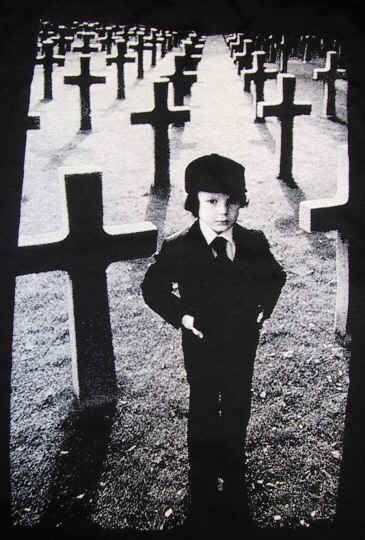
    The OmenRecently TV3 screened The Omen. This classic horror is a about a boy called Damian who is the predicted anti-Christ and appropriately has the number 666 on his head. This film epitomises how the book of Revelation is understood in contemporary culture; apparently it predicts a future person, the beast or the anti-Christ who will take over the world. Associated with this is the number 666 which is literally inscribed into people’s heads or hands.  I think this pop-theology is mistaken.

    The relevant section in Revelation says:

    And the dragon stood on the shore of the sea. And I saw a beast coming out of the sea. He had ten horns and seven heads, with ten crowns on his horns, and on each head a blasphemous name. The beast I saw resembled a leopard, but had feet like those of a bear and a mouth like that of a lion. The dragon gave the beast his power and his throne and great authority… The whole world was astonished and followed the beast. Men worshiped the dragon because he had given authority to the beast, and they also worshiped the beast and asked, “Who is like the beast? Who can make war against him?” (Rev 13:1-2, 3b-4)

    The text proceeds:

    Then I saw another beast, coming out of the earth. He had two horns like a lamb, but he spoke like a dragon. He exercised all the authority of the first beast on his behalf, and made the earth and its inhabitants worship the first beast … He also forced everyone, small and great, rich and poor, free and slave, to receive a mark on his right hand or on his forehead, so that no one could buy or sell unless he had the mark, which is the name of the beast or the number of his name. This calls for wisdom. If anyone has insight, let him calculate the number of the beast, for it is man’s number. His number is 666. (Rev 13:11,16-18)

    Most English translations mention the number 666, (more…)

  • Bovine Faeces and the Sexual Proclivities of Rocks: We are all Selective Literalists

    Jónathan Mark Deundian sent us the following correspondence,

    You addressed the following paragraph to a blogger named RyogaM. This one and actually the one right above it was so common sensible but so completely profound. I read it to my wife and it was as if shutters fell from her eyes. Best thing since Molinism! lol

    When I looked at the exchange Jónathan referred to I realised I had not seen it before. It was buried in a pile of comments on Matt’s post, Joshua and the Genocide of the Canaanites Part II. Anyway it made me laugh so much and it was so good that I have decided it warrants its own post.

    Context is important, of course, so here we go.

    Over at Driving the Peterbilt: Bible Critique by Ryoga M, RyogaM wrote a sarcastic rendition of the battle of Gibeon, which is found in Joshua 10. Here are some highlights of that rendition:

    [Asterisks not original]

    AT GIBEON, AGAIN

    Adoni-zedek king of Jerusalem: Well, now, let’s see. I suggest we attack…holy [****]! What’s that?!

    Hoham king of Hebron: That’s a big f[***]ing rock!

    Piram king of Jarmuth: And it’s falling on our heads!

    Japhia king of Lachish: Run away! Run away!

    Debir king of Eglon: Well, this is going to suck.

    AT THE HEBREW CAMP

    Messenger: Message for Joshua!

    Joshua: Yes?

    Messenger: God has attacked with big f[***]ing rocks, sir. He’s slain them with a great slaughter at Gibeon, and chased them along the way that goes up to Beth-horon, and smote them to Azekah, and to Makkedah. he’s killed a lot of them, sir. Squished like bugs.

    Joshua: Well it’s about time he did something useful. I guess we should kill everyone left, huh?

    Joel Watts commented that RyogaM was being excessively literalistic in his reading of the text and referred RyogaM to Matt’s Joshua and the Genocide of the Canaanites series. RyogaM was not impressed he made several points of critique on his blog, which he repeated on ours. The relevant parts are below:

    The purpose of my blog is to explore what the Bible actually SAYS, not what one wishes it to say, not what one would expect it to say if one presupposes the existence of an all-knowing, all-loving, all-power god, not what one can rationalize away because the concept of slaughtering every inhabitant of a town, including every old man, woman and child, goes against every enlightenment value we have.

    And the reason I do this is because even your average, non-fundy, modern Christian takes certain parts of the Bible literally. I assume, for example, Christians take literally the idea that Jesus Christ was the son of god, that he died and rose again. Which is as equally absurd, if not even more absurd, idea, than the idea that Joshua and his people engaged in total warfare against the country he and his people invaded at the command of god. I hope, by taking the Bible literally, and pointing out why to do so is absurd, Christians such as yourself feel free to reject the entire concept of reading any part of the Bible literally and free themselves from superstition.

    Now, looking at your blog, I think you are one of those selective literalistic, Christian. You presuppose that no god who calls himself just could ever order the slaughter of innocent old men, women and children, and you are right. So, you have to assume that god didn’t really mean what he very clearly said. Then you choose other parts of the Bible which are clearly in contradiction and think it resolves the question to say it’s all hyperbole….You refuse to accept what it says on its face and instead engage in mind-reading of the authors.

    Matt’s response to these particular comments caused me to erupt into fits of laughter (and apparently caused shutters to fall from Jónathan’s wife’s eyes),

    RyogaM, you state that I am a “selective literalist” and that not even “non-fundy, modern Christians takes certain parts of the Bible literally.”I agree. I read some parts literally and other parts non-literally. That’s a sensible approach to any form of communication.

    Another sceptic told me they thought that “the Bible was bull[****], because it was full of contradictions.” No sensible person would interpret this entire passage literally, to do so would mean it would be easily refuted. One could show that most bibles are composed of thousands of pages of ink and paper. One could note that ink and paper are different substances to bovine faeces and that the term “bull[****]” is, in English, a metaphor for falsehood. Similarly, no one would interpret this passage as entirely figurative; the reference to the Bible, for example, is not a metaphor nor is the reference to contradictions.

    The sceptic is literally referring to the Bible and literally attributing contradictions to it and metaphorically describing it as bull[****] in the same sentence. A sensible interpreter who is honestly trying to interpret the sceptics’ comments will interpret “bull[****]” figuratively and the rest literally. This is for two reasons: (a) taken literally, the comment is clearly absurd and it is unlikely an intelligent person would mean it to be taken this way; (b) the word “bull[****],” in English, is a well-attested metaphor for falsehoods in contexts like this.

    These same two reasons are precisely what we see present in Joshua: (a) taken literally, the statements are absurd (they contradict the rest of the text); (b) the language is well-attested in ANE writing of this sort as hyperbole for victory.

    Most literature and communication involves both literal and figurative language and any sensible communicator will attempt to discern both. If you disagree with me then I think your own blog post is easily refuted.

    Big Rocks

    You, after all, talk in your own post about “big f[***]ing rocks.” Now this is clearly stupid, rocks cannot engage in sexual intercourse and only a complete moron with no knowledge of the sexual proclivities of rocks would say this. On the face of it, you clearly stated that rocks “f[***].” Of course I could contend (sensibly) that the word “f[***]ing” in this context should not be taken literally, that you used the word “f[***]ing” in a hyperbolic manner to emphasise the size of the rocks and the might of God. But then you are a selective literalist, you clearly do not want me to take everything on your blog as figurative. To do so would involve me “reading your mind,” it would involve me assuming you would not intend to say something obviously stupid. Seeing you think people should not do that then I have to conclude that you are a moron.

    Please learn a bit more about sexual reproduction and its relationship to rocks before you write in future.

  • What Atheists Could Learn from Legal Interpretation 101

    At the beginning of each semester my lecturers would remind students of the fire policy, “if the alarm sounds leave the lecture theatre immediately through the nearest exit and reassemble outside the Davis law library.” Now if during class one day my lecturer had said to me, “Madeleine, do not leave class today until you have spoken with me about your brilliant essay which simply must be included in my upcoming book” [what? it is a thought experiment ok? It could’ve happened…] but then half-way through class the fire alarm rang and the smell of smoke wafted into the lecture theatre – would anyone seriously expect me to remain in my seat? Should I be paralysed with confusion by the contradictions – did my lecturer mean me to be burned alive or overwhelmed by smoke inhalation because he told me to not leave class that day until I had spoken to him or should I follow his earlier instruction to exit the classroom on hearing a fire alarm and go to the area outside the Davis Law Library? What should I do? Oh the confusion! Perhaps I should simply conclude that due to the contradictions inherent in trying to read both sets of instructions together that my lecturer, in fact, does not exist.

    Is anyone buying this? I mean, clearly what I should do is leave with the rest of the class and talk to my lecturer later. [Doh!]

    Illustrations of this sort are often used in conflict of laws or legal interpretation classes to show that what prima facie appears to be a contradiction between two pieces of legislation actually is not. This is because imperatives occur in contexts where commonly accepted qualifications, riders, priorities, idioms, etc are assumed to be understood; implicit background beliefs are in play.

    We can see this clearly in the example above. I know it is unlikely my lecturer wants his students to obey his instructions to the extent that they burn to death. I know this because I know something of his purposes and of his character. I know him to be fairly decent, humane and not one to issue arbitrary, irrational commands. I know also something of the weights involved in the issues. For example, I know the fire policy is university policy and it concerns the issue of safety – both the physical safety of students as well as its own, it does not want to be sued or prosecuted or subject to critical public scrutiny. I know that the lecturer’s authority is derived from university authority and so his instructions cannot contradict or override it. I also know that the reason he gave the instruction for me to stay behind in class was because he wanted to work with me in the future to ensure the sales of his book make the top 10 list. So from all of this I can safely conclude that he did not mean for me to follow his instructions on pain of death today.

    Of course if I already believed my lecturer to be a petty, arbitrary, narcissistic, cruel bully, capable of anything who routinely issued commands with the purpose of harming, maiming and destroying students (and if I suspected he wanted to take my essay and publish it as his own so as to keep all the book royalties for himself) I might take a different approach as to how I read his instructions together. But it would be uncharitable of me in excelsis to adopt this assumption of his character as the default one to reason from.

    Taking these contextual factors together, along with a basic grasp of the English language, its idioms and a dose of common sense it is not that hard to navigate apparently conflicting instructions.

    I raise this because a site ironically called “Common Sense Atheism” recently put up a short post entitled 6 Questions with which to Stump Conservative Christians. I was extremely underwhelmed by the questions and was left wondering if the author had actually read any Christian works above Sunday School level on Christian ethics, biblical interpretation and so on (and clearly had not read very far into this blog) but I found one of the questions stood out en stupidus maximus (that’s a legal latin maxim meaning it was so stupid it had to be taken out). Question 4 asks,

    “The Bible says to worship God (obviously) and to obey your mother and father, but what do you do if your parents tell you to worship other gods?”

    Here, the atheist is trying to establish a contradiction in the commands God issues and from this contradiction we are presumably supposed to concede that Christians are irrational or that God does not exist or some such thing (and, of course, any Christian reading it is supposed to be “stumped”).

    No Christian I know would be even momentarily stumped by this because the answer is obvious: in such a case you should disobey your parents and worship God; end of. I find it no more paralysing than the issue of whether I should leave class when the fire alarm sounds or stay to talk to my lecturer. In both cases, I understand that the command cannot sensibly be understood as an absolutely unqualified imperative. I doubt very much that God, out of allegiance to Him, wants us to give up allegiance to Him.

    Of course if one wanted to make God look silly and arbitrary one could interpret it this way, just as you could attribute silly interpretations of what my lecturer meant such as intepreting his instructions as a command to wait for him even if I get burned alive in a fire or that my lecturer does not exist, but why would you?

    If you think I am just picking on one unfortunate atheist’s example I beg to differ. When Matt was an undergrad at the University of Waikato a leader of the campus rationalist society confronted him with Isaiah 30:26,

    The moon will shine like the sun, and the sunlight will be seven times brighter, like the light of seven full days, when the LORD binds up the bruises of his people and heals the wounds he inflicted.

    The rationalist then informed Matt as to what the temperature of the sun was. He multiplied that number by seven and then noted that if it were to become that hot then world would burn to a crisp. He concluded that the Bible taught that heaven was hotter than hell. Matt’s initial inclination was to laugh and asked the guy if the exchange had “brightened up his day and warmed his heart.” It turned out that the example came from a highly regarded book by a scientist critiquing creationism, ironically entitled “Telling Lies for God: Reason vs Creationism” [scientists really really shouldn’t pontificate on theology]. The book had recieved endorsements from leading Australian Clergy. [I am reminded of Rob Muldoon’s position on Australians]

    Then there was a discussion I had on Debunking Christianity’s “Madeleine Flannagan is Happy to be Treated as Women Were in the Bible!” where John Loftus pointed to Deuteronomy,

    “Deuteronomy 22:23 If a man happens to meet in a town a virgin pledged to be married and he sleeps with her, 24 you shall take both of them to the gate of that town and stone them to death—the girl because she was in a town and did not scream for help, and the man because he violated another man’s wife. You must purge the evil from among you.

    Deuteronomy 22:28 If a man happens to meet a virgin who is not pledged to be married and rapes her and they are discovered, 29 he shall pay the girl’s father fifty shekels of silver. [c] He must marry the girl, for he has violated her. He can never divorce her as long as he lives.”

    Now Matt had written several posts on this atheist chestnut which saw me get embroiled in an exchange with both Loftus and Stephen Carr. Carr surmised that,

    “If a woman is threatened with a knife, told she will be killed if she screams out, and does not scream out, there will always be a Christian to say , and I quote ‘isn’t she a part of the problem’?”

    Apparently the non-offensive-to-God way to rape a woman is to simply render her incapable of screaming because God’s issue is with the screaming and not the raping…

    Apparently when the bible lays down case laws, it cannot simply lay down a paradigm. It must spell out every possible nuance, qualification, exception, situation, application to analogous situations and so on.

    Apparently if it does not do this then it is denying opposition to the act – now even modern case law precedents do not function like this and legislation is never drafted this way but apparently this is the way to read Biblical law.

    Seriously.

    Perhaps Carr is a too easy a target. Atheist philosopher Michael Martin makes a similar interpretation of Deuteronomy,

    “it is assumed that in all cases that a rape victim could cry for help and if she did, she would be heard and rescued. Both of these assumptions are very dubious and sensitive to the contextual aspects of rape.”

    I am at a loss to understand why atheists insist on reading these texts like a lawyer with Aspergers Syndrome in search of a convincing technicality by way to circumvent the spirit and intendment of the law? I mean why? We can all handle instructions that conflict with fire alarms going off, we don’t interpret modern laws like this, so why do atheists (and some Christians) switch to such silly anachronistic readings when the instructions are attributed to God?

    I suspect the issue is the background factors I mention above. Many atheists believe God is a petty, arbitrary, narcissistic, cruel bully, capable of anything who routinely issues commands with the purpose of harming, maiming and destroying people. They believe that the bible is obviously silly, irrational, oppressive and supports contradictory absolutism in the family, is anti-women (and so obviously supports rape) is full of scientific absurdities (and so Isaiah was talking about cosmology) and so on.

    When you have a pre-conceived notion as to what you want the text to mean – be it an uncharitable reading or what you think or have heard that the text teaches – I suppose the silly reading is congenial. What this tells us is that the reading of the text is not what leads atheists (and some Christians) to their conclusions, rather it is their conclusions lead them to read the text this way.

  • Contra Mundum: Abraham and Isaac and the Killing of Innocents

    Since 9/11 a choir of commentators have claimed that the willingness to murder innocent people in the name of God stems from the progenator of the Abrahamic faiths. Abraham, the father of Christianity, Judaism and Islam is commended for attempting to kill his own son.

    The account of this episode is arguable the most infamous passage in the Hebrew Scriptures:

    Then God said, [to Abraham] “Take your son, your only son, Isaac, whom you love, and go to the region of Moriah. Sacrifice him there as a burnt offering on one of the mountains I will tell you about.” (Genesis 22:2)

    Now, as anyone who has read the story knows, God intervened and prevented Abraham from killing Isaac. In the Mosaic laws that follow this story, the Prophets, Psalms and the historical books, human sacrifice is unequivocally condemned. Notwithstanding these prohibitions, it appears inescapable that Abraham was acting on God’s commands. For this reason, it is not surprising that this story looms large in the criticisms of theological morality. The passage appears to show that God commanded someone to do something clearly and obviously immoral.

    Appearances can be deceiving. There are two issues here: the first is whether the text teaches that God commanded the killing of an innocent child, the second is whether commanding the killing of an innocent child is always immoral. For this objection to have force both these contentions must hold, I will examine each one in turn.

    Turning to the first, did God command the killing of an innocent child? I think the answer is yes, but in a specific context. Let me elaborate. In Gen 12:1-2, Abraham is told, by God, that he will be the father of an entire nation, one that will have its own country. An obvious implication of this is that Abraham believed he would have descendants, he would have a son who would live long enough to have children of his own. The text implicitly teaches here that Abraham knew, on the basis of a reliable source, that his son would live to adulthood.

    This point is reiterated in several other encounters between God and Abraham. In Gen 15 “the word of the LORD” came to Abraham “in a vision.” Abraham’s response was, “You have given me no children; so a servant in my household will be my heir.” God’s answer was emphatic, “This man will not be your heir, but a son coming from your own body will be your heir.” Abraham was told and hence knew, that his heir would be a son from his own body, a biological descendant.

    The text continues, “He took him outside and said, ‘Look up at the heavens and count the stars—if indeed you can count them.’ Then he said to him, ‘So shall your offspring be.’” Again, the narrative implies that Abraham knew that he would both, have a biological son and that this son would live at least long enough to have children. Moreover, the passage continues with God promising, as part of a covenant, that these things will be so. Abraham clearly had assurance that God would see that his son lived into adulthood.

    After this incident, Abraham made the mistake of sleeping with Hagar, which resulted in her giving birth to Ishmael. This lead to various domestic problems including rivalry between Hagar, Ishmael and Abraham’s wife Sarah. Abraham then had another encounter with God (Gen 17:2-14) and here again God promised that Abraham’s descendants would be numerous, again implying, very clearly, that Abraham’s son would live to adulthood. This promise was signified by a covenant marked by circumcision and it was reiterated by God changing his name from Abram (exalted father) as he was called at that point in the text to Abraham (father of many). God again promised and assured Abraham that his son would grow to adulthood.

    More specifics can be found, Gen 17:15-19 makes it crystal-clear that the promise of future descendants came through the line of  Isaac who would be born of Sarah. This seemed impossible to Abraham due to the fact that his wife was barren. God, however, was emphatic and changed his wife’s name from Sarai (my princess) to Sarah (mother of nations). So Abraham was again reassured that Isaac would be born and would live at least long enough to have children of his own. This promise is to be confirmed by a seemingly impossible event, a barren woman bearing a child.

    In chapter 18 the promise is again reiterated. Abraham is visited by three men who appear to represent God himself. The text records in verse 10, “Then the LORD said, ‘I will surely return to you about this time next year, and Sarah your wife will have a son.” Sarah will have Abraham’s child, this is the child that will live on to adulthood to have children of his own.

    If the point has not yet been be-laboured enough, when Isaac is born (Gen 21) God again makes it clear to Abraham on the day Isaac is weaned. Abraham is told in verse 12 “it is through Isaac that your offspring will be reckoned.” Again Abraham is reassured that Isaac will live to adulthood and have children of his own.

    This narrative of several chapters is the backdrop to the events described in Gen 22. To the astute reader reading the whole story as one block of text (note that chapter and verse divisions were not present in the original text, these were added centuries later) by the time a we to get to Gen 22 both Abraham and the reader should know that Isaac is not going to die, both the reader and Abraham know that Isaac will live beyond this day to rear children of his own. The text reminds us in verse 5, just before Abraham goes up the mountain to sacrifice Isaac Abraham states to his servants, “Stay here with the donkey while I and the boy go over there. We will worship and then we will come back to you.” Abraham expected Isaac to return alive.

    Further, the New Testament teaches that this is the correct way to understand this passage,

    By faith Abraham, when God tested him, offered Isaac as a sacrifice. He who had received the promises was about to sacrifice his one and only son, even though God had said to him, “It is through Isaac that your offspring will be reckoned.” Abraham reasoned that God could raise the dead, and figuratively speaking, he did receive Isaac back from death. (Hebrews 11:17-19)

    This is significant because Christians, at least, do not accept any and all interpretations of the Old Testament. Christians accept as authoritative the Old Testament as interpreted by the New Testament. If one attacks a different interpretation of the passage, one is attacking an interpretation Christians (should) reject and hence, one is not attacking anything Christians (should) believe or are committed to believing.

    The text teaches that God commanded Abraham to kill his son in a context where Abraham knew that his son would not die but would live on after the incident. God commanding killing, in this context, needs to be shown as immoral for the objection to gain traction.

    The brings us to the second question, is commanding the killing of an innocent always immoral? Here I think the answer is yes, provided a certain context is assumed.

    The applicability of many moral prohibitions depend in part on certain facts about the world. Hitting someone in the head is wrong because doing so causes pain and risks harming another. However, if the physical structure of the world was different, if hitting someone in the head did not harm people but instead advanced their health and improved their quality of life then it may be permissible to hit someone in the head. Of course, this does not show us that hitting people in the actual world is permissible because in the real world hitting people does cause harm but it does show that prohibitions rely on certain background assumptions about the effects of hitting. If these assumptions are not true then the prohibition will not hold.

    Yale philosopher John Hare develops this point in an interesting way. Hare asks us to imagine a world in which when people of a certain age are killed they immediately come back to life suffering no injury. He opines, quite plausibly, that if this were to be the case then killing people at this age would not be wrong or at least, not seriously wrong. One of the reasons that killing people is wrong in the world we live in is because people stay dead. If they were only unconscious for a split second and came back to life in full health then arguably killing a person would not be the serious wrong we believe it is. The answer to the question, is it wrong to kill an innocent then is yes, provided a certain context is assumed.

    The context where it is plausible to state that killing innocent people is seriously wrong is the very context in which the narrative shows that Abraham knew did not apply to Isaac. God commanded Abraham to kill his son in the highly unusual context where Abraham knew that he would not be deprived of an earthy life but would come down the mountain afterwards and live on to adulthood to father children of his own.

    At this stage I am sure some readers will scoff, they will contend that they do not believe these stories could be literally true, they do not think God appeared to Abraham and told him any of this or that he could not know these things for certain. This complaint is beside the point. Whether one believes the story or not, this is what the story says. If one seeks to argue that the text teaches something immoral or portrays God in a certain way then one needs to accurately portray what the text actually says. Misrepresenting what it says and using that distortion as the basis of an argument to a conclusion is not a valid criticism of the text or the faiths that hold to those texts.

    I write a monthly column for Investigate Magazine entitled Contra Mundum. This blog post was published in the Oct 10 issue and is reproduced here with permission. Contra Mundum is Latin for ‘against the world;’ the phrase is usually attributed to Athanasius who was exiled for defending Christian orthodoxy.

    Letters to the editor should be sent to:
    editorial@investigatemagazine.DELETE.com

    RELATED POSTS:
    Contra Mundum: Selling Atheism
    Contra Mundum: Did God Command Genocide in the Old Testament?
    Contra Mundum: Fairies, Leprechauns, Golden Tea Cups & Spaghetti Monsters
    Contra Mundum: Secularism and Public Life
    Contra Mundum: Richard Dawkins and Open Mindedness
    Contra Mundum: Slavery and the Old Testament

    Contra Mundum: Secular Smoke Screens and Plato’s Euthyphro

    Contra Mundum: What’s Wrong with Imposing your Beliefs onto Others?
    Contra Mundum: God, Proof and Faith
    Contra Mundum: “Bigoted Fundamentalist” as Orwellian Double-Speak
    Contra Mundum: The Flat-Earth Myth
    Contra Mundum: Confessions of an Anti-Choice Fanatic
    Contra Mundum: The Judgmental Jesus

  • Commonsense Atheism and the Canaanite Massacre

    Luke Muehlauser at Commonsense Atheism has written a review of my argument on the genocide of the Canaanites (Joshua and the Genocide of the Canaanites Part I and Part II). Luke’s comments are largely positive (and I appreciate that a critic of Theism and Christianity sees merit in my position) he does, however, raise a few issues I would like to respond to.

    First, Luke summarises my conclusion as:

    Perhaps instead the most genocidal phrases in Joshua were meant as hyperbole. Imagine a basketball team speaking of how they “totally slaughtered” their opponents like their coach told them to. In the same way, maybe the Israelites wrote in hyperbolic language about how they defeated their enemies. Indeed, this kind of exaggeration and hagiography on a nation’s own behalf is common in ancient literature.

    This is not quite right; I did not state “perhaps” the passages are hyperbolic. I argued a hyperbolic reading best fits the context, as it explains why the author uses stylised phrases in some passages which, if taken literally, contradict what he affirms elsewhere in the text did literally happen. Furthermore, I did not suggest that such exaggeration and hagiography is common in ancient literature. I suggested it was common in literature of the same general time and place, which used the same literary conventions and rhetorical techniques as the Bible does in the Book of Joshua – namely Ancient Near-Eastern war and conquest accounts.   

    Second, Luke states that my position “agrees with the Biblical minimalism already espoused by most atheists, for it says that these events found in the Bible never happened.” This comment is intriguing because much of my research drew from the writings of biblical maximalists who were criticising minimalism. My repeated citation of Kenneth Kitchen is an obvious example. Minimalists point out that the archaeological record does not fit the picture of total conquest and genocide and hence conclude the Bible is inaccurate. Maximalists, such as Kenneth Kitchen and James Hoffmeier, respond by arguing that the text is not inaccurate because, having examined the literary conventions of Ancient Near-Eastern historiography, one finds it does not actually teach total conquest and genocide as it is written according to the hyperbolic and to some extent hagiographic rhetoric of Ancient Near-Eastern historiography. So I am inclined to think my position is a development of a rejoinder to minimalist challenges.  

    This is of course another area where my perspective has merit. It resolves not only some of the moral questions people have with the narrative; it also resolves the apparent contradictions within the text cited by critical scholars, answers the challenge of archaeology and fits what we know about the conventions of such literature. If we know that Joshua is written according to certain literary conventions and we know that these conventions frequently are hagiographic and hyperbolic, then to insist on a literal reading is implausible. This is particularly so when it makes the text contradictory, contrary to archaeological record and seemingly immoral.   Luke goes on to ask,

    If Matt did think these events happened literally as described in the Bible, would he then conclude that God was an evil monster to command them? Or would he, in the end, agree with Bill Craig that genocide is okay as long as God feels like it?

    I will make two points in answering Luke’s questions.

    One, it seems to me one could only conclude that Joshua actually carried out a divinely authorised Genocide if, in addition to taking Joshua literally one also accepts that the Bible is inerrant. But Joshua is not the only text in the canon, the Bible also in various other places teaches that God is good, just, and so on. So it’s hard to see how a person could coherently draw the conclusion Luke mentions. A person who concluded that God is evil, would have to conclude that much of what the Bible teaches about God is mistaken, but if this is the case then one has reason for doubting that it is accurate in its description of Genocide in the first place.

    Two, Luke asks if I “agree with Bill Craig that genocide is okay as long as God feels like it?” It is important to note is that this is not Craig’s position. Craig claims that killing non combatants in war is permissible if a loving and just God commands it. He also contends that God in fact did not command this in the biblical narratives hence his view is about a hypothetical conditional.1 Once this is realised the issues are not as simple as Luke appears to think.   Either it is possible for a just and loving omniscient person to command genocide or is not. If it is, then genocide would only be commanded in situations where a just and loving person aware of all the relevant facts could endorse it, and under these circumstances its hard to see how genocide could be evil.

    On the other hand if it is impossible for a perfectly good omniscient being to ever command genocide, then the situation Luke mentions is one with an impossible antecedent. On the standard accounts of counter factual logic, conditionals with impossible antecedents are true. Of course this is a disputed point of modal logic, the debate however is technical and complex and certainly not one with an obvious answer. As I have argued elsewhere every ethical theory is such that under impossible circumstances it entails that genocide is permissible.

    Finally, Luke argues that atheists are not “‘attacking a straw man’ or ‘taking things out of context’ as Matt sometimes says” but rather, “they are responding to the way that millions of Christian fundamentalists interpret these verses.” He states,  

    Atheists are not, as Matt claims, reading the Bible as fundamentalists. Atheists don’t believe the genocide ever took place! What we atheists are saying is this: If you think these events were literally commanded by God and carried out by the Israelites, then how can you call God “perfectly good”?

    But here Luke is quoting me out of context.  The argument I responded to was developed by Ray Bradley. Ray’s conclusion was not that fundamentalist Christianity is false but that theism is false, and that all forms of theistic ethics are false. This only follows if you assume either,

    (a) that fundamentalist readings are the only defensible ones or,
    (b) all theists as a matter of fact do make such readings.

    To affirm (a) is to adopt a fundamentalist hermeneutic as correct interpretation.

    To affirm (b) is to attack a straw man.

    Of course someone might adopt a more qualified argument along the manner he suggests. But if he does, then it is not an argument against theism, nor is it an argument against Christianity, it is not even an argument against a form of Christianity committed to a strong view of inerrancy. It is an argument against anyone who accepts these things and also accepts an interpretation of Scripture which reads these passages as a literal description of what actually happened, as opposed to hagiographic or hyperbolic description. Now showing this combination of positions to be indefensible might be  interesting and useful, but it is extremely limited in its conclusion. Anyone appraised of such an argument can respond simply by moving to a less literalistic hermeneutic and retaining every thing else. I suspect this is much less than atheists typically want and certainly less than they typically maintain this argument shows.

    1. In Divine Command Morality and Voluntarism William Lane Craig writes “I’ve come to appreciate that the object of God’s command to the Israelis was not the slaughter of the Canaanites, as is often imagined.” The command rather was primarily to drive them out of the land.” He goes on to state “But I’m assuming a “worst case” scenario for the sake of argument.”

    RELATED POSTS:
    Joshua and the Genocide of the Canaanites Part I
    Joshua and the Genocide of the Canaanites Part II
    Contra Mundum: Did God Command Genocide in the Old Testament? 

  • Matthew Flannagan’s Opening Statement: Bradley v Flannagan Debate

    On Monday 2 August at the University of Auckland Emeritus Professor of Philosophy Dr Raymond Bradley and Dr Matthew Flannagan (of this blog) debated the topic “Is God the Source of Morality? Is it rational to ground right and wrong in commands issued by God?” For the benefit of those who could not be there, who are awaiting the editing and uploading of the video of the debate, we will be running a blog series where we bring you some of the debate in written form.

    DR CHRIS TUCKER’S INTRODUCTION

    Published here with permission

    Dr. Matthew Flannagan is quickly becoming a respected scholar on issues related to the philosophy of religion, ethics, and theology.  His articles and book chapters cover such weighty topics as, whether the Bible condones genocide, the ethics of holy war, abortion and tonight’s topic, the relationship of God and morality.  The importance of Dr. Flannagan’s work has led to many speaking engagements all over New Zealand and also in the United States.  Two of these speaking engagements were public debates, including one against Dr Bill Cooke, an erstwhile President of the New Zealand Association of Rational Humanists.  Dr Flannagan received his PhD in Theology from the University of Otago.  From the University of Waikato, he received his Master’s in Philosophy with First Class Honours.  You can follow Dr Flannagan’s work at mandm.org.nz, the blog that he co-authors with his wife, Madeleine Flannagan.  When he is not working, he enjoys spending time outdoors with his wife and four children. Please join me in welcoming Dr. Matthew Flannagan

    DR MATTHEW FLANNAGAN’S OPENING STATEMENT

    Is it defensible to ground right and wrong in the commands of God? In this debate I will defend an affirmative answer to this question. I will defend the position that moral rightness and wrongness consist in agreement and disagreement, respectively, with Gods commands1– this is what Philosophers call a divine command theory. In defending this thesis I will do two things. First I will argue the standard arguments against a divine command theory fail. Second I will argue that Ray’s attempts to refute this theory fail. God is the source of morality.

    1. Standard Arguments Against a Divine Command Theory

    Divine command theories are frequently said to suffer a debilitating problem, they make morality arbitrary – anything at all could be deemed ‘right’ as long as God commanded it, even torturing other people for fun. This objection assumes that it is possible that God could command atrocious things like torturing people for fun. This assumption, however, seems very dubious. We need to remember that we are not talking about right or wrong as being based on the commands of just anyone, we are talking about God defined by Ray as “omnipotent, omniscient, and morally perfect.”

    So, as the terms are defined, the claim that it is possible for God to command people to torture others for fun is true only if it is possible for a morally perfect person to command such an atrocious thing. But this is unlikely. The very reason critics cite examples such as torturing people for fun is because these actions are paradigms of conduct that no morally good person could ever entertain or endorse.

    A predictable rejoinder to this response is that if some action is wrong because God prohibits it then God cannot be said to be good in any meaningful sense. The claim ‘God is good’ turns into no more than the claim that God obeys his own commands, if this is so, can God be said to have any duties at all?

    The suggestion that if God has no duties then he cannot be said to be good in any meaningful sense, has a grain of truth to it. If we are going to understand God’s goodness in terms of God having duties that he consistently fulfils then a divine command theory cannot account for God’s goodness. However, why must the phrase ‘God is good’ be understood in terms of God having duties? I do not see why it should?

    Many theologians and philosophers have suggested an alternative, God’s goodness should be understood in terms of God having certain character traits. To claim God is good is to claim that he is truthful, benevolent, loving, gracious, merciful, that he is opposed to certain actions such as murder, rape, torturing people for fun and so on. Now, even if God does not have duties, it does not follow that he cannot have character traits such as these. It is true that God is not under any obligation to love others or to tell the truth or what have you, but that does not mean he cannot love others or tell the truth. God does not have to have a duty to do something in order to do it.

    So the standard criticisms of a divine command theory fail.

    2. Raymond Bradley’s Moral Argument

    Ray attempts a different tack. Ray argues the divine command theorist is committed to five inconsistent propositions:

    1. What God proposes for our belief–including beliefs about what we ought to do–is what we ought to believe or do.

    2. In his holy scripture God proposes for our belief that he has caused, committed, condoned, or laid down commands for us to obey, every one of the four types of crimes of types A, B, C, and D.

    3. It is morally wrong to cause, commit, condone, or command any of the crimes of types A, B, C, D.

    4. God is omnipotent, omniscient, and morally perfect.

    5. A morally perfect being would not do anything that is morally wrong.

    In response to this I will make three lines of criticism.

    I

    The first line of criticism is that even if Ray’s argument is sound it does not show that a divine command theory is false. Ray has argued that the Bible presents an indefensible picture of God. However, the question of biblical infallibility is not the topic of our debate tonight. While many divine command theorists believe in biblical infallibility, some do not. A divine command theorist could, for example, claim that the wrongness of an action is determined by God but we know what is right and wrong from our conscience and not from a written revelation. The Philosopher Philip Quinn suggested a theory like this.2 Alternatively he or she could accept some other revelation such as the Talmud or the Koran. So strictly speaking, Ray’s argument does not address the moot of the debate tonight. One could accept everything Ray says about the Bible and still defensibly embrace a divine command theory, the claim that God is the source of morality is untouched.

    II

    This brings me to my second line of criticism. Ray’s third proposition [3] is formulated as:

    3. It is morally wrong to cause, commit, condone, or command any of the crimes of types A, B, C, D.

    This claim is ambiguous; there are two ways it could be interpreted. The first is:

    [3a] It is morally wrong for human beings to cause, commit, condone or command any of the crimes of types A, B, C, D.

    or Ray could mean:

    [3b] It is morally wrong for any person (including God) to cause, commit, condone or command any of the crimes of types A, B, C, D.

    To be valid Ray’s argument needs to be interpreted in terms of [3b]. Ray argues that God, engages in wrongdoing when he causes, commits, commands and condones A B C and D. There are two problems with this interpretation.

    First, Ray’s argument does not justify this conclusion. Ray states “to deny (3) would be to … ally oneself with moral monsters like Ghenghis Khan, Hitler, Stalin, and Pol Pot.” This is false: Genghis Khan, Hitler and Stalin are human beings to condemn them we only need to accept [3a] not [3b].

    Second, Ray’s argument is circular, [3b] assumes that God has duties; however, on my view the wrongness of an action consists in its being forbidden by God. Given that God does not issue commands to himself it follows that he has no duties. To propose [3b] Ray has to assume that my view is unjustified, which is what he is supposed to be proving. He is reasoning in a circle.

    III

    My third line of criticism concerns Ray’s second proposition,

    2. In his holy scripture God proposes for our belief that he has caused, committed, condoned, or laid down commands for us to obey, every one of the four types of crimes of types A, B, C, and D.

    Actually none of the passages Ray cites contain commands to us. He cites some of God’s actions and he cites some commands God gave to Israel and to Joshua but one cannot directly infer from these that these are commands issued to us.

    We have to keep in mind that the Bible is a collection of Ancient Near Eastern (ANE) texts. It was written centuries ago in three different languages, none of which were English. The cultural methods of written communication back then differ significantly from what we are used to when we pick up the latest ‘new atheist’ book at Whitcoulls. Further, the Bible is made up of various books written in various literary genres. To interpret it correctly one needs to take what it says in context – as a whole – and in accord with the literary conventions governing ancient texts translated from foreign languages. Ray fails to do this,

    Instead he uses a selective, out of context, and excessively literalistic interpretation of these passages.

    let me cite some examples.

    1. The Slaughter of the Canaanites

    The first is the slaughter the Canaanites. Ray claims God “orders the slaughter, without compassion, of hundreds of thousands of women, children, and suckling babes.” Ray here alludes to the book of Joshua’s record of the conquest of the Canaanites. Critics, like Ray, are quick to point out that this text states Joshua “totally destroyed all who breathed”, left “no survivors” in “the entire land”, went through the land “exterminating them without mercy” at God’s command.

    What they do not note is that the text proceeds after this to state that the Canaanites were, in fact, not literally wiped out. Over and over the text affirms that the land was still occupied by the Canaanites, who remained heavily armed and deeply entrenched in the very same regions and the very same cities that Joshua was said to have “destroyed all who breathed” and left “no survivors” in. In light of this, it is unlikely that the author intended the language in question to be taken literally.3

    This conclusion is confirmed by research into Ancient Near-Eastern history writing. In a comprehensive comparative study of Ancient Near-Eastern historiography. Old Testament scholar, K Lawson Younger concludes that the Old Testament uses the same literary conventions as other Ancient Near-Eastern conquest accounts. He also establishes that within this genre the rhetoric of total conquest, complete annihilation, destruction of the enemy, killing everyone, leaving no survivors, and so on are frequently used as hyperbole4: the language functions like a person watching David Tua in a boxing match, yells, “Knock his block off! Hand him his head! Take him out!” or hopes that the All Blacks will “annihilate the Springboks” or “totally slaughter the Wallabies.”5 Now, sports fans do not actually want David Tua to decapitate his opponent or the All Blacks to become mass murderers. Understood in a non-literal sense, the phrases probably meant something like, attack them, defeat them, drive them out; not literally kill every man, woman, child, donkey, etc.

    2. Capital Punishment.

    My second example is Ray’s reference to at least 34 offences for which God prescribes the death penalty. (Actually there are only 15 such offences). Ray contends that these passages constitute literal commands to the courts to execute people. This is dubious. The Torah is is written according to the literary and rhetorical conventions of Ancient Near-Eastern legal writing. J J Finkelstein notes that capital sanctions in such texts,

    [W]ere not meant to be complied with literally even when they were first drawn up, [But rather they] serve an admonitory function. If one would be bold enough to restate Hammurabi’s 230 as a direct admonition it might run to this effect: “woe to the contractor who undertakes construction and in his greed cuts corners”.6

    One of the leading experts on Ancient Near-Eastern legal texts Raymond Westbrook states they “reflect the scribal compilers’ concern for perfect symmetry and delicious irony rather than the pragmatic experience of the law courts.”7 The method used was “to set out principles by the use of often extreme examples.”8 In Ancient Near-Eastern legal practice a person who committed a serious crime would be legally considered to have forfeited their life or limb – this, however, did not mean that they were executed or mutilated. Instead they could ransom their life or limb by making a monetary payment decided by the courts “the death sentence is mostly hyperbole,” a literary device designed to under underscore the seriousness of the crime.9

    A careful reading of the Torah confirms this. The clearest example occurs in Numbers 35. After laying out clearly and repeatedly that a person who kills in pre-meditation “shall surely be put to death” the text goes on to state “Do not accept a ransom for the life of a murderer, who deserves to die. He must surely be put to death… .” Unless there was an assumed practice of “ransoming” the lives of those under a capital sentence, this comment seems superfluous. Old Testament scholar Joe Sprinkle notes, “The availability of ransom seems to have been so prevalent that when biblical law wants to exclude it, as in the case of intentional murder, it must specifically prohibit it.”10

    3. Hell

    My third example is Ray’s discussion of hell. Ray cites the book of Revelation’s reference to “the lake of fire” where “they will be tormented with burning sulphur in the presence of the holy angels and of the Lamb, and the smoke of their torment ascendeth for ever and ever”. He maintains this text teaches God will torture people forever merely for not having the right religious beliefs.

    This is dubious, Revelation is apocalyptic literature. Apocalyptic literature is highly metaphorical and uses stock symbols drawn from the Old Testament. If one looks at how the symbols Ray refers to are actually used in the Old Testament, they do not support Ray’s conclusion. The imagery of sulphur being poured upon people and smoke rising is regularly used in the Old Testament to symbolise the destruction of various nations.(Deut 29:23; Job 18:15-17; Ps 11:6; Isa 30:33, Isa 34-8-11). Similarly the “lake of fire” is drawn from Daniel, where it symbolises the destruction of various world empires. In Rev 18, a few chapters later, the destruction of a city, named Babylon (probably a reference to Rome or Jerusalem) is symbolised by the city being tormented by fire and onlookers watch the rising smoke. The message is that Babylon has been judged and destroyed, not that it continues to be tortured forever.

    The same is true of Ray’s references to the Gospels; the phrase the “weeping and gnashing of teeth” occurs many times in both the Old Testament and the New Testament, and in almost every instance signifies hatred or rage and envy at God or the righteous – not the agony of pain and torture.(Job 16:9; Ps 35:16, Psalm 112:10, 36:16, 37:12; Lam. 2:16, Acts 7:54) In one instance, in fact, it states “they will gnash their teeth and waste away.” Similarly, the phrase “unquenchable fire” is used nine times in the Old Testament. There it refers not to a fire that tortures but one that consumes what it devours because it is never put out. (see Isa 1:31, 34:10, 11; Jer 4:4, 7:20, 17:27, 21:12; Ezek 20:47, 48; Amos 5:6).

    Ray cites from the King James version of 2 Thessalonians 1:7-8, “the Lord Jesus Christ shall be revealed from heaven with his mighty angels, in flaming fire taking vengeance on them that know not God.” He, however, snips the end off the quote, the full text states,

    God is just: He will pay back trouble to those who trouble you and give relief to you who are troubled, and to us as well. This will happen when the Lord Jesus is revealed from heaven in blazing fire with his powerful angels. He will punish those who do not know God and do not obey the gospel of our Lord Jesus. They will be punished with everlasting destruction and shut out from the presence of the Lord and from the glory of his might.

    In context the reference to fire clearly means destruction and not torture.

    Ray’s claim that the Bible teaches that people will be condemned ‘merely for having the wrong religion’ is equally dubious. An in context examination of the passages he cites show that the basis of judgement is a person’s actions not merely their beliefs.

    Conclusion

    First, even if Ray’s case is sound, at best it only amounts to an attack of the doctrine of biblical infallibility, the denial of which is perfectly compatible with a divine command theory of ethics.

    Second, his argument for proposition (3) commits the fallacy of equivocation and assumes the very thing the argument is trying to prove.

    Finally, Ray’s argument for (2) consists of citing a series of passages, often selectively, out of context and without regard for literary genre or literary conventions that are found within the texts itself.This might might be a sure-fire way to make the best-seller list at Whitcoulls but it is obviously not the way any serious biblical scholar should read a text.

    Divine command theorists are not committed to all of the five inconsistent propositions he refers to and so are not required, on pain of contradiction, to deny that God is the source of morality.

    1. Robert M Adams “Moral Arguments for Theism” in Robert Adams The Virtue of Faith (New York: Oxford University Press, 1987) 145.
    2. Philip Quinn “Divine Command Theory” in Blackwell Guide to Ethical Theory ed Hugh La Follette (Malden MA: Blackwell Publishing House, 2000) 67.
    3. See Nicholas Wolterstorff’s “Reading Joshua” in Divine Evil ? The Moral Character of the God of Abraham eds Micheal Rea, Michael Murray and Michael Bergmann (New York: Oxford University Press, 2010) forthcoming.
    4. K Lawson Younger Jr Ancient Conquest Accounts: A Study in Ancient Near Eastern and Biblical History Writing (Sheffield: Sheffield Academic Press, 1990).
    5. This example is adapted from Alvin Plantinga “Reply to Fales” and Nicholas Wolterstorff “Reading Joshua” in Divine Evil ? The Moral Character of the God of Abraham eds Micheal Rea, Michael Murray and Michael Bergmann (New York: Oxford University Press, 2010) forthcoming.
    6. J. J. Finkelstein The Ox that Gored (Philadelphia: American Philosophical Society, 1981) 35.
    7. Raymond Westbrook, “The Character of Ancient Near Eastern Law,” in A History of Ancient Near Eastern Law, Vol. 1, ed. Raymond Westbrook (Boston: Brill Academic Publishers, 2003) 74.
    8. Ibid.
    9. Walter Kaiser, “Gods Promise Plan and his Gracious Law,” Journal of the Evangelical Theological Society 35:3 (1992) 293. Joe M Sprinkle “The Interpretation of Exodus 21:22-25 (Lex Talonis) and Abortion,” Westminster Theological Journal 55 (1993) 238.
    10. Joe M Sprinkle “The Interpretation of Exodus 21:22-25 (Lex Talonis) and Abortion,” Westminster Theological Journal 55 (1993) 238.

    Please note that this series is not a transcript of the debate. Each post in this series is effectively a very close approximation of what was said on the night and has been put together from the papers and notes each speaker prepared and spoke from plus any additions each recalled making.

    RELATED POSTS:
    Video: Bradley v Flannagan “Is God the Source of Morality?
    The Podcast: Bradley v Flannagan
    Joint Communique: Bradley v Flannagan Debate
    Raymond Bradley’s Opening Statement: Bradley v Flannagan Debate
    Bradley’s Reply to Matt: Bradley v Flannagan Debate
    Flannagan’s Reply to Ray: Bradley v Flannagan Debate
    Glenn Peoples’ Review: Bradley v Flannagan Debate

    William Lane Craig, Raymond Bradley and the Problem of Hell Part One
    William Lane Craig, Raymond Bradley and the Problem of Hell. Part Two.
    Sunday Study: Joshua and the Genocide of the Canaanites Part I
    Sunday Study: Joshua and the Genocide of the Canaanites Part II
    Capital Punishment in the Old Testament: 1
    Capital Punishment in the Old Testament: 2