Category: God and Morality

  • Friday Fallacy: Equivocation

    In my post on Assessing Arguments I noted that a valid argument is one where it is impossible for the premises to be true and the conclusion false. I gave the following example:

    Premise: All men are under 10 feet tall;
    Premise: John is a man;
    Conclusion: John is under 10 feet tall.

    This argument is valid because it is impossible for both premises to be true and the conclusion false. If it is true that all men are under 10 feet tall and if it is true that John is a man then John cannot be over 10 feet tall. If it were possible for John to be over 10 feet tall then the first premise would mean he could not be a man, which, of course, would contradict the second premise.

    In this post I want to note an important feature of this type of argument. There is an obvious link between the first and the second premises. The first premise makes a claim about all men; it identifies a class of beings, those we call men, and it attributes a property to members of this class. The second premise identified John as a man – a member of the class mentioned in premise one. The fact that both premises refer to the same class of beings is important to the validity of the argument because John is a member of the same class that is stated to be under 10 feet tall; the conclusion, that John is under 10 feet tall, cannot be logically avoided. This argument is valid because the word ‘man’ refers to the same thing in both premises. If the word ‘men’ in the first premise did not refer to the same class John is said to be a member of in the second premise then the argument would not follow.

    This brings me to this weeks fallacy: the fallacy of equivocation. Sometimes the same word has more than one meaning. The fallacy of equivocation occurs when a person uses the same word in different premises but not the same meaning. Because the same word is used the argument appears valid but when one looks at what the word actually refers to in each premise, the argument is not valid.  A obvious example is as follows:

    1. Money put in a bank will earn interest;
    2. A bank is the body of land at the side of a river;

    Therefore:

    3. If you want to earn interest on your money you should put it in the body of land at the side of a river.

    This silly example shows quite nicely how the fallacy works. Both premise 1. and premise 2. make reference to a bank; at a superficial glance the argument might appear valid if what the first premise says of a bank is true and if what the second premise says of a bank is true. The problem is (and in this example it is fairly obvious) the word ‘bank’ in each premise has a different meaning. In the first premise it refers to a financial institution, in the second it refers to a body of land at the side of a river. When one looks at what the terms actually refer to, as opposed to their verbal form, the argument is invalid.

    In this example the fallacy is obvious; the conclusion is so outrageously silly and the premises so uncontroversial that the mistake is obvious. However, in other cases the fallacy can be more subtle.

    The Fallacy of Equivocation

    Here is an example I recently spotted on Common Sense Atheism’s (more…)
  • Debate Review: Sam Harris and William Lane Craig on Divine Command Theory Part I

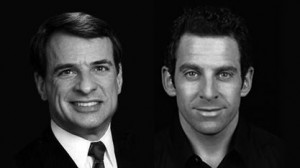
    William Lane Craig v Sam HarrisLast week Sam Harris and William Lane Craig debated the question: “Is the Foundation of Morality Natural or Supernatural?” at the University of Notre Dame. Given my interest in divine command meta-ethics I found the debate and the subsequent online discussion concerning it extremely interesting. I was particularly interested in how the ‘new atheist’ movement would address this issue given Dawkins’ neglect of moral arguments in The God Delusion. Unfortunately, the debate turned out to be very one-sided. [Both the debate video and the debate MP3 are now online.]

    In this review I will analyse the debate in two parts. In Part I, I will look at the discussion of Craig’s contention that,

    1. If God exists then we have a plausible account of (a) the nature of moral goodness and (b) the nature of moral obligation.

    In Part II, I will examine Harris’s contention that,

    2. If atheism is true then we have a plausible account of (a) the nature of moral goodness and (b) the nature of moral obligation.

    A couple of definitions are necessary here; what both Craig and Harris are defending are rival accounts of what both goodness and moral obligation are. When Craig or Harris offers an account of the nature of goodness, each is offering an account of what moral values and obligation are, that is, their ontological or metaphysical nature. Similarly, when Craig refers to God, he is referring to a personal immaterial being who is necessarily existent, omniscient, omnipotent and morally perfect.

    Craig’s Argument for a Divine Command Theory
    In support of 1(a) Craig argued that if theism is true, goodness could be identified with God himself. His view is that goodness is best understood in terms of an exemplar, that good is identified with the perfect paradigm of a good person and that the goodness of everything else is measured by its resemblance to this paradigm. An analogy to this idea is the official “metre stick” that exists in France today. The metre stick is exactly one metre long, and the length in metres of every other length is determined by comparison with it. In the same way, God is both perfectly good and is the standard of goodness for everything else. God’s goodness, for Craig, is cashed out in terms of certain character traits. To claim God is good is to claim that he is truthful, benevolent, loving, gracious, merciful and just, and that he is opposed to certain actions such as murder, rape, torturing people for fun and so on.

    In support of 1(b) Craig argued that if God exists, moral obligations can be identified with Gods commands. He therefore advocated the version of a divine command theory of obligation proposed by Robert Adams in Finite and Infinite Goods.

    While Craig sketched his account of goodness and obligation in his opening statement, he never offered any actual argument for why he thinks that if theism is true, this account is correct; yet later in the debate he said it was obvious. While I myself agree with a certain version of divine command theory, I think this suggestion is inadequate. There have been many objections raised against such theories in the literature, and hardly any of them presuppose the non-existence of God. I think these objections fail, and most of them fail miserably. But it would be a gross overstatement to claim that, given the truth of theism, a divine command theory is obvious.

    Later in the debate, (more…)

  • Ethical Naturalism and the Euthyphro Dilemma

    Some people argue that moral obligations can be grounded in scientifically verifiable facts about human wellbeing and flourishing. This view is a form of ethical naturalism.  For these people moral rightness is just the property of promoting or enhancing human flourishing.

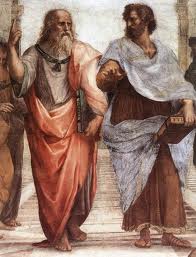
    Plato and Aristotle arguing in the School of Athens

    Plato refuted this argument over 2,000 years ago in his famous dialogue The Euthyphro. The Euthyphro argument is commonly appropriated in the form of a dilemma: “is an action right because it promotes human flourishing or does it promote human flourishing because it is right?

    If ethical naturalists take the second horn of this dilemma and claim that something promotes human flourishing because it is right then things are right prior to, and hence independently of, whether they promote human welfare; so the ethical naturalists’ position here is false.

    If the ethical naturalists take the former horn then morality is arbitrary. If rape or murder or cruelty for fun had the natural property of promoting happiness then rape and murder and cruelty for fun would be morally required but it is impossible for these things to be morally required; so ethical naturalism is clearly absurd.

    Moreover, if things are right because they have natural properties, like promoting human flourishing, then one cannot meaningfully say that human flourishing is good. To say “human flourishing”  is good is just to say that  “human flourishing is human flourishing,” which is just an empty tautology.

    So in short, Plato’s Euthyphro dilemma refuted ethical naturalism 2,000 years ago. Contemporary ethical naturalists who say otherwise just have not read Plato and have never come across this argument before.

    In any event, ethical naturalism is deeply problematic. Throughout history people have appealed to human flourishing and forms of ethical naturalism to justify atrocities. The Inquisition, for example, was often justified by Dominican Theologians on the basis that it was in accord with natural law, and natural law was understood to be grounded in human flourishing. Similarly, wars have been justified on the basis of moral theories based on human flourishing. Stalin and Lenin wanted to bring about human flourishing through a communist utopia and murdered millions in their pursuit of that. And the Americans dropped an atomic bomb on Japan because they wanted to promote the flourishing of American soldiers that were going to invade.

    Finally, it is obviously insulting to suggest that right and wrong are grounded in scientifically verifiable properties like this. There are a large number of people who live morally upright lives who do not believe in ethical naturalism. The suggestion that these people are all immoral is obviously false. Name me one moral action a person who is not an ethical naturalist cannot do? This unanswerable question shows that ethical naturalism is clearly false.

    RELATED POSTS: (more…)

  • Video: Sam Harris v William Lane Craig Debate “Is the Foundation of Morality Natural or Supernatural?”

    Sam Harris and William Lane Craig debated the moot “Is the Foundation of Morality Natural or Supernatural?” at the University of Notre Dame on 7 April 2011. We’ve already linked to the debate  MP3 but here is the video of the whole debate.

    Hat tip: Pondering the Preponderance

    See Matthew Flannagan’s:
    Debate Review: Sam Harris and William Lane Craig on Divine Command Theory Part I


  • Video of Matthew Flannagan Speaking on Divine Command Theory

    On 4 February 2011 the Auckland Reason and Science Society (“RSS”) hosted an event they titled “Divine Command Theory with Dr. Matthew Flannagan” at the University of Auckland. For those of you who missed the event, here is the video.

    Note: This video only includes footage of the talk itself and not the Q&A that followed the talk.

  • Contra Mundum: Is God a 21st Century Western Liberal?

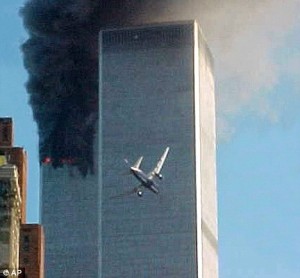
    World Trade Centre Terrorist AttackOn 11 September 2001 Islamic terrorists flew two planes into the World Trade Centre killing thousands of innocent people. Ostensibly they did this because they believed God commanded them to do so. This event has invigorated a fear latent in the Western psyche since the 17th century when wars of religion tore Europe apart, the fear of religious fanaticism, of people willing to murder hundreds in the name of God. These fears were centre-stage recently at a Conference held by the Centre for Philosophy of Religion at the University of Notre Dame. Sceptics presenting at the conference argued passionately that the God of the bible issues commands which are at odds with contemporary modern understandings of morality. Adultery is punished with death; on some occasions, God is portrayed as commanding the killing of non-combatants in “holy wars” against the local Canaanite population.

    There is a lot that can be said about these concerns and in a short column I cannot say everything. In many instances I think the sceptics fail to appreciate the context and genre of the passages they cite. They fail to appreciate, for example, that Ancient Near Eastern conquest accounts employ highly figurative rhetoric, which hyperbolically describe victories in terms of total annihilation of the enemy. They fail to appreciate that Ancient Near Eastern legal texts, as noted by Raymond Westbrook, “reflect the scribal compilers’ concern for perfect symmetry and delicious irony rather than the pragmatic experience of the law courts.” Or that, as JJ Finkelstein points out, they “were not meant to be complied with literally” but to “serve an admonitory function” and so probably do not command execution for the crimes mentioned. Sceptics can fail to grasp that claiming the bible is God’s word does not mean it did not come to us mediated through the writings of human beings who wrote in a particular time and place using the language, rhetoric and literary conventions of their time and so and frequently they fail to appreciate the bible is a Canon and that passages need to be read in their broader context i.e. taking into account the whole bible. A full articulation of these points, however, would take more space than I can here muster.

    Instead I will address another feature of this issue which concerns the general method in play here. In each case the sceptic takes a purported divine command and compares it to a moral belief that he takes to be correct. The conclusion he draws is that the purported command is inauthentic. This is of course a possibility; there is, however, another possibility that on at least some occasions, moral statements these sceptics are relying on are mistaken.

    This feature of the dialectic became clear to me after a public debate I had on these issues in August. A sceptic wrote to me claiming that (more…)

  • Nietzsche on Over-Compensating

    Friedrich Nietzsche

    They are rid of the Christian God and now believe all the more firmly that they must cling to Christian morality. They must rehabilitate themselves after ever little emancipation from religion by showing in a veritably awe-inspiring way what moral fanatics they are. That is their penance.

    Friedrich Nietzsche