Tekton Education and Apologetics ministries have released an online book, John Loftus’ Why I Became an Atheist Refuted, as a special edition for their E-Block Online Journal. While most of the book is authored by JP Holding, Chapter 2 is not completely, Chapter 2: “The Christian Illusion of Rational and Moral Superiority” — Two part […]
Entries Tagged as 'God and Morality'
Tekton E-Book: John Loftus’ Why I Became an Atheist Refuted Feat. MandM
September 17th, 2009 5 Comments
Tags: Divine Command Theory · E-Book · God and Morality · John Loftus · JP Holding · Tekton Apologetics Ministries
Sunday Study: Interpreting the Sixth Commandment Part I
September 6th, 2009 5 Comments
One of the most well known biblical commands is the sixth commandment of the Decalogue (according to protestant enumeration). This commandment occurs in the 20th chapter of the book of Exodus and the fifth chapter of the book of Deuteronomy. In its most well-known rendition, the King James Version (KJV), this commandment states “thou shalt […]
Tags: Old Testament Ethics · Sunday Study · Ten Commandments · Theology
Dr Glenn Peoples on Abortion, Morality and Law
July 27th, 2009 2 Comments
Canterbury student group Prolife UC have organised for Dr Glenn Peoples to deliver some free public lectures at the University of Canterbury in Christchurch on Abortion, Morality and Law. Thursday 30th July 7.30 pm“Chasing the Justificatory Goalpost: Public Justification and Religious Beliefs” There is a broad political tradition that we are a part of that […]
Tags:
Sunday Study: Abraham and Isaac – Did God Command the Killing of an Innocent?
July 26th, 2009 17 Comments
Perhaps the most infamous passage in the Hebrew scriptures occurs in Genesis 22:2, Then God said, “Take your son, your only son, Isaac, whom you love, and go to the region of Moriah. Sacrifice him there as a burnt offering on one of the mountains I will tell you about.” Of course, as anyone who […]
Tags: Abraham · Abram · Ethics · Genesis · Isaac · John Hare · Kant · Kenneth Kitchen · Killing Innocents · Louise Anthony · Old Testament Ethics · Philip Quinn · Robert Adams · Selection · Stephen Evans · Sunday Study
Walter Sinnott-Armstrong on God, Morality and Arbitrariness
July 17th, 2009 21 Comments
Is morality independent of religion? One common argument for this position is that denying it makes God’s commands arbitrary. Walter Sinnott-Armstrong argues, Let’s assume that God commanded us not to rape. Did God have any reason to command this? If not, his command was arbitrary, and then it can’t make anything morally wrong. On the […]
Tags: Atheist · Divine Command Theory · God and Morality · Philosophy of Religion · Walter Sinnott-Armstrong · William Wainwright
John W. Loftus on The Christian Illusion of Moral Superiority Part II
May 8th, 2009 5 Comments
In my previous post, John W. Loftus on The Christian Illusion of Moral Superiority Part I, I argued that Loftus’ position was based on a confusion between ontological and epistemological foundations. I will now address his arguments against divine command theory. Loftus’ Arguments Against a Divine Command Theory After misconstruing the divine command theory as […]
Tags: Alvin Plantinga · Atheism · Divine Command Theory · God and Morality · John Loftus · Robert Adams · William Wainwright
John W. Loftus on The Christian Illusion of Moral Superiority Part I
May 7th, 2009 14 Comments
Several Christian thinkers, most notably, C S Lewis, John Hare, Robert Adams and William Lane Craig have argued that Theism provides a superior foundation for moral obligation than Naturalism does. Most of these thinkers defend this notion by developing and defending a divine command theory.[1] John W Loftus is aware of this and in The […]
Tags: Atheism · Divine Command Theory · God and Morality · John Loftus · Philip Quinn · Robert Adams · Stephen Evans · William Alston

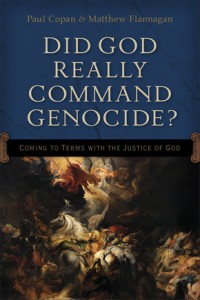 A common objection to belief in the God of the Bible is that a good, kind, and loving deity would never command the wholesale slaughter of nations. In the tradition of his popular Is God a Moral Monster?, Paul Copan teams up with Matthew Flannagan to tackle some of the most confusing and uncomfortable passages of Scripture. Together they help the Christian and nonbeliever alike understand the biblical, theological, philosophical, and ethical implications of Old Testament warfare passages.