In my last posts, beginning Religious Restraint and Public Policy: Part I, I set out the doctrine of religious restraint and touched on some criticisms of it. I looked at and critiqued some of the key arguments in support of the doctrine of religious restraint. In this post I will look at the objection that […]
Entries Tagged as 'God and Morality'
Religious Restraint and Public Policy: Part III
November 25th, 2009 3 Comments
Tags: Christopher Eberle · Doctrine of Religious Restraint · Freedom of Religion · Gerald Gaus · Glenn Peoples · John Rawls · Jurisprudence · Law Studies · Nicholas Wolterstorff · Philip Quinn · Philosophy of Religion · Political Philosophy · Public Policy · Religion in Public Life · Robert Audi
Religious Restraint and Public Policy: Part II
November 24th, 2009 2 Comments
In my last post, Religious Restraint and Public Policy: Part I, I set out the doctrine of religious restraint and touched on some criticisms of it. In this post, I begin looking at and critiquing some of the key arguments in support of the doctrine of religious restraint. II Arguments for the Doctrine of Religious […]
Tags: Christopher Eberle · Doctrine of Religious Restraint · Freedom of Religion · John Rawls · Jurisprudence · Law Studies · Lydia McGrew · Matthew Flannagan · Nicholas Wolterstorff · Philosophy of Religion · Political Philosophy · Public Policy · Religion in Public Life · Robert Audi
Religious Restraint and Public Policy: Part I
November 23rd, 2009 31 Comments
In this series I set out the doctrine of religious restraint, the idea that in a pluralistic, liberal, society religious beliefs should not be utilised in the formation of public policy. I note that this doctrine entails an asymmetrical treatment of religious and secular beliefs, which appears to conflict with the central notion of liberal […]
Tags: Christopher Eberle · Doctrine of Religious Restraint · Freedom of Religion · Jurisprudence · Law Studies · Nicholas Wolterstorff · Philip Quinn · Philosophy of Religion · Political Philosophy · Public Policy · Religion in Public Life · Stephen Carter · Terence Cuneo
“My Ways are Not Your Ways” Notre Dame Conference
November 10th, 2009 2 Comments
In September this year, the centre for Philosophy of Religion at the University of Notre Dame hosted a conference entitled “My Ways Are Not Your Ways”; the proceedings of the conference can be seen at the previous link and is a good resource. The theme of the conference, as outlined on Notre Dame’s webpage, is […]
Tags: Faith and Reason · God and Morality · Notre Dame · Philosophy of Religion · Theology
Audi and the Infallibility of Religious Reasons
November 7th, 2009 6 Comments
In “Liberal Democracy and the Place of Religion in Politics”,[1] Robert Audi defends the liberal thesis that religious reasons should not be utilised in debate on issues of public policy. Instead he contends that “one should not advocate or support any law or public policy that restricts human conduct unless one has, and is willing […]
Tags: Ethics · Philosophy of Religion · Religion in Public Life · Robert Audi
Sunday Study: The Bible and Rape – A Response to Michael Martin
September 27th, 2009 9 Comments
A little while ago I wrote a post criticising Michael Martin’s contention that the Bible commands a rape victim to marry her rapist, Does the Bible Teach that a Rape Victim has to Marry her Rapist? To summarise briefly, Martin cited Deuteronomy 22:28-29 and interpreted it as, Here the victim of rape is as treated […]
Tags: Bible · Ethics · Hermeneutics · Michael Martin · Old Testament Ethics · Rape · Sexual Morality · Sunday Stu · Sunday Study · Theology
Walter Sinnott-Armstrong and Infantile Religious Morality
September 24th, 2009 71 Comments
In “Why Traditional Theism Cannot Provide an Adequate Foundation for Morality” Walter Sinnott Armstrong criticises William Lane Craig’s contention that theism, if true, provides an adequate foundation for morality. Armstrong contends that Craig’s position is “incredible”[1] and subject to a “cavalcade of devastating objections.”[2] He goes on to conclude that his criticisms do not just […]
Tags: Divine Command Theory · Ethics · God and Morality · Patrick Nowell Smith · Philosophy of Religion · Richard Mouw · Walter Sinnott-Armstrong

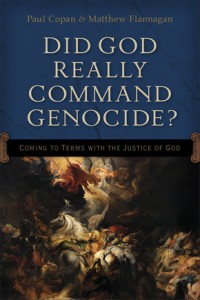 A common objection to belief in the God of the Bible is that a good, kind, and loving deity would never command the wholesale slaughter of nations. In the tradition of his popular Is God a Moral Monster?, Paul Copan teams up with Matthew Flannagan to tackle some of the most confusing and uncomfortable passages of Scripture. Together they help the Christian and nonbeliever alike understand the biblical, theological, philosophical, and ethical implications of Old Testament warfare passages.