Category: Theology

  • The New Zealand Association of Rationalist Humanists and the Privileging of Secularism

    The New Zealand Association of Rationalist Humanists (“NZARH”) has a statement of aspirational ideals for the New Zealand state on their website. Entitled “The Tolerant Secular State” it is anything but.

    The first two sentences of the document exhibit a confusion which is inherent throughout (and commonly found in discussions of church and state):

    Lord Voldemort

    “The NZARH strongly believes that government should be secular; that is dealing with the issues of this world rather than following a religious agenda. Our law should not give one set of beliefs privilege over another and the state should treat religious organisations the same as any other organisation.”

    An equivocation on the meaning of the word “secular” in the very first sentence is immediately apparent.

    Stephen Smith notes that the word secular has two distinct meanings. Etymologically, “secular” refers to things pertaining to this world and life as opposed to the next. In this sense of the word “secular” is not opposed to religion; many religious beliefs and values pertain to life in this world, beliefs about: marriage, sex, human life, killing,  justice for the poor, what one’s duties are in this life, what God’s purposes are in this life and so on are all secular beliefs in this sense. The second and more common meaning of “secular” is to say it excludes, is in opposition to beliefs and values that are religious in nature; this is usually the first definition one will find in a dictionary.

    The NZARH use both meanings in the first sentence of their “Tolerant Secular State” document (more…)

  • The Separation of Church and Self: Rethinking Separationism

    Is it just for a pluralistic society to ground its public policy on religious premises? What role should religion play in such a society? Debate over questions like these has figured in theology, philosophy, political science, jurisprudence and popular culture for centuries. In contemporary Western pluralistic society the debate continues. Even for those unfamiliar with its nuances at the higher levels the effect of the standard view, as described by Stephen Carter, is immediately familiar:

    “One good way to end a conversation – or start an argument – is to tell a group of well educated professionals that you hold a political position (preferably a controversial one such as being against abortion or pornography) because it is required by your understanding of God’s will. In the unlikely event that anyone hangs around to talk with you about it, chances are that you will be challenged on the ground that you are intent on imposing your religious beliefs on other people. And in contemporary political and legal culture, nothing is worse.”[1]

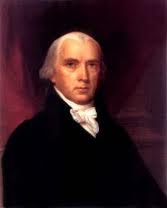
    James Madison

    Carter is referring to the separationist understanding of religion and public life, the idea that in a contemporary pluralistic society significant restraint must be put on the political role of religious reasons. This restraint is negative; when a functionary deliberates over a proposed policy it is not justified for that functionary to decide to support or oppose that policy on grounds derived from religion. A corollary of this is that citizens should not try to influence public policy by appealing to religious reasons. Separationists argue that the public policy of a pluralistic society must be able to be justified by a plausible secular justification in order for it to be just to all. Religious beliefs, while utilised and followed in private, should be kept separate from public policy debates, the administration of public institutions and the deliberation of public functionaries. (more…)

  • Download Matt’s EPS Talk “God and the Genocide of the Canaanites” (& other EPS talks)

    In November Matt flew to Marietta, Atlanta, Georgia and delivered a talk entitled “God and the Genocide of the Canaanites” for the Evangelical Philosophical Society’s (“EPS”) annual meeting. Matt’ talk is now available to download over here at the EPS website for the very low price of $1.99 USD.

    Download "God and the Genocide of the Canaanites"

    The EPS have made available for download, all of the great teaching from the their popular EPS-Sponsored conferences from 2003 to (more…)

  • Contra Mundum: The Number of the Beast

    The OmenRecently TV3 screened The Omen. This classic horror is a about a boy called Damian who is the predicted anti-Christ and appropriately has the number 666 on his head. This film epitomises how the book of Revelation is understood in contemporary culture; apparently it predicts a future person, the beast or the anti-Christ who will take over the world. Associated with this is the number 666 which is literally inscribed into people’s heads or hands.  I think this pop-theology is mistaken.

    The relevant section in Revelation says:

    And the dragon stood on the shore of the sea. And I saw a beast coming out of the sea. He had ten horns and seven heads, with ten crowns on his horns, and on each head a blasphemous name. The beast I saw resembled a leopard, but had feet like those of a bear and a mouth like that of a lion. The dragon gave the beast his power and his throne and great authority… The whole world was astonished and followed the beast. Men worshiped the dragon because he had given authority to the beast, and they also worshiped the beast and asked, “Who is like the beast? Who can make war against him?” (Rev 13:1-2, 3b-4)

    The text proceeds:

    Then I saw another beast, coming out of the earth. He had two horns like a lamb, but he spoke like a dragon. He exercised all the authority of the first beast on his behalf, and made the earth and its inhabitants worship the first beast … He also forced everyone, small and great, rich and poor, free and slave, to receive a mark on his right hand or on his forehead, so that no one could buy or sell unless he had the mark, which is the name of the beast or the number of his name. This calls for wisdom. If anyone has insight, let him calculate the number of the beast, for it is man’s number. His number is 666. (Rev 13:11,16-18)

    Most English translations mention the number 666, (more…)

  • Back from Atlanta

    On Wednesday I arrived back in New Zealand after a full-on week in Atlanta. During this time I attended bits of four conferences: The Annual Meeting of the Evangelical Theological Society (ETS), The Annual Meeting of the Evangelical Philosophical Society (EPS), The Evangelical Philosophical Society Apologetics Conference “Set Forth Your Case” and the The Annual Meeting of the Society for Biblical Literature (SBL).

    The EPS Apologetics Crowd at Johnson Ferry Baptist Church

    These four conferences ran over a period of two weeks, in roughly the same place, and overlapped each other – thousands of people attended them.

    There is no way I can do justice to everything that occurred so here are some highlights.

    I did not attend many sessions of the ETS as it ran parallel to the EPS. However, the highlight for me of what I did see was a rigorous address by Tom Wright on justification and the new perspective on Paul. This was followed by a lively panel discussion on this issue with Tom Wright, Thomas Schreiner, Frank Thiemann.

    The ETS crowd.I thoroughly enjoyed my time at the EPS, this was an excellent three days. I attended numerous sessions. My hosts laughed at how I was constantly seen going back and forward to various Hilton conference rooms between sessions, I could always be found engaging in rigorous discussion during the Q&A sessions or simply involved in an intense conversation dissecting the issues just raised with other attendees. It was a fairly intense time intellectually but I really enjoyed it.

    Space prevents me doing justice to all the excellent papers I heard. There was an interesting paper on the role of ridicule and irony in convincing people of basic beliefs, which combined ideas from Kerkigaard and Reid. Another I enjoyed was an interesting discussion on inclusivism, the view that people who have not heard or accepted the gospel can be saved through Christ’s atonement if they are invincibly ignorant and respond in faith to the minimal revelation about God they do have. I heard some fascinating discussions on whether it is possible for God to issue insincere commands and how the issue of Abraham relates to this; questions of whether the fact that one’s epistemic peers disagree with you provides grounds for reducing confidence in your beliefs.

    Mike Austin delivered a thoughtful paper on the Canaanite issue, noting that on an influential moral theory, Rossian deontology, that duties to not kill are prima facie duties which can be overridden in certain circumstances and so God could, in principle, command killing the innocent. There was also a really interesting paper by Gary Habermas on the latest theories regarding the Turin Shroud. Frank Beckwith criticised evangelical appropriations of Aquinas. Mike Licona offered a synopsis of his new book. Paul Copan spoke on how naturalists declare the glory of God. All these sessions were associated with vigorous and thoughtful discussion.

    William Lane Craig presenting at the EPS

    The two most technical papers were William Lane Craig’s response to Peter Van Inwagen and Alvin Plantinga’s paper “A New Argument against Materialism.” Van Inwagen has argued for Platonism, the view that abstract objects have real existence independently of God. Craig, a fictionalist, argued Van Inwagen had not really responded to the nominalist and fictionalist alternatives. Plantinga, in a packed out plenary session – by packed out, I mean a good thousand in attendance – argued that the counter-factual test for causation shows that if materialism is true then beliefs cannot cause behaviour. This involved Plantinga making some really interesting moves such as rejecting the standard view of impossible counter-factuals. Plantinga was particularly good in the Q&A.

    Doug Geivet, me, Paul Copan, Rodney Lake

    What was striking for me was not just the calibre of the papers and the philosophical seriousness of those in attendance but also the obvious evangelical Christian commitment of the attendees. There was a strong sense that even when offering critique we were working together to better each other’s papers in the service of God. It was quite weird for me to be in a context where both of these things were conjoined. It was also surreal to find myself in the same room as numerous people whose work I had read and respected for years and yet I was able to discuss and critique their work face to face. This mixture of intellectual rigor, fellowship and spirituality was perhaps most evident at the reception. There, while we mingled with Philosophy greats, like Alvin Plantinga, everyone paused for a talk on the importance of prayer and religious devotion in spiritual formation. My entire experience to that moment as a Christian had been that when people spoke of the latter they did so at the expense of the former. It was refreshing to see the kind of spiritual wholism those present aspired to.

    Another thing that totally blew me away was how many people read MandM and recognised me on sight. On the first day I sat next to a woman who told me she knew my wife from the net. Later I heard someone walking past say “I read that guys work, he has a good website.” A few Philosophy professors approached me and said things like “it’s good to meet you Dr Flannagan” and they’d relay how they regularly read my work online.

    Alvin Plantinga at the EPS

    On Thursday, we drove to Johnson Ferry Baptist Church for the EPS Apologetics conference. This church was huge. I have never seen a church of this size in my life. It was three stories high and had literally hundreds of rooms. It had numerous lecture theatres, a gymnasium, a two-storied church auditorium, a dining room, bookstore and so on. Over 1,500 people turned up to hear Alvin Plantinga give his plenary talk. Plantinga presented his paper “Science and Religion where the Conflict Really Lies.” He rebutted arguments that evolution shows that God does not exist and then offered a summary of his evolutionary argument against naturalism. What was a little disappointing was the aggressive response of some questioners who were horrified that  evolution and atheism may not *be* the same thing. In the Q&A, however, Plantinga, quite typically, provided gracious but effective responses exposing with humour the fallacies in the objections raised.

    After the talk I went to the book signing session only to discover a huge number of Americans who read MandM, knew who I was on sight and wanted my thoughts, ideas or even to be photographed with me (go figure!?). One biblioblogger made a point of snapping at least one papparazzi-style shot of me every day which he then published on his blog. Madeleine kept emailing me links to blogs and Facebook status updates of people present at the conferences excitedly rattling off a list of their favourite scholars that they’d met that day that had me in them. It was surreal.

    The business end of the conferences occurred on Saturday where I had two presentations to give. The first was on Saturday morning where I presented my paper “God and the Genocide of the Canaanites,” an updated and modified version  (thanks to the many people who interacted with it on this blog and others) of the infamous blog post I published back in January, which will soon be published in Come Let us Reason edited by William Lane Craig and Paul Copan to be published through B&H Academic.

    My talk at EPS Apologetics ConferenceThe basic thesis of this paper was that the accounts of Genocide in Josh 6-11, if taken literally, contradict the accounts of the conquest in Judges and Joshua 13-17. Given that the final editor of the Canon juxtaposed these accounts, and was not stupid, he must have not intended both to be taken literally. I suggested that Wolterstorff’s position, that the former were hagiographic history and highly hyperbolic, made best sense of the evidence.

    To my considerable surprise it was well received. Given some of the tone of the questions directed at Plantinga, I was worried I might have upset the more literalist attendees but instead there was real interest in my idea that the Joshua narratives were not literal accounts of what happened. I later heard that William Lane Craig had said I’d had the biggest attendance of the break-out sessions that day, and I was inundated with people asking me questions afterwards so that I had to go into over time.

    Particularly amusing was the response to an illustration in my talk I gave as an example of hyperbolic and hagiographic writing, the claim that the All Blacks annihilated their opponents whilst touring the northern hemisphere. This is obviously hyperbole and, as any kiwi knows, it is also a form of hagiography (the All Blacks are revered after all). After the talk, a US rugby player told me he really appreciated this illustration; he also told me that if his team ever played the All Blacks he expected that his team would be annihilated and that the annihilation would not be hyperbolic!

    The EPS Session at the SBL: Richard Hess, Randal Rauser, Paul Copan, me, Michael ReaThe second presentation was positively terrifying. I was on a panel at the SBL Conference. The SBL Conference was not only the biggest of the fourconferences but is the biggest annual gathering of biblical scholars in the world. Naturally it is a gathering of the world’s best biblical scholars in one place too. The panel topic was “Is Yahweh a Moral Monster?” and I was talking on how the holy war passages related to divine command morality. This was really scary. First I was on the panel with some pretty good scholars. Richard Hess, from Denver seminary, is a world class old testament scholar. Paul Copan of Palm Beach Atlantic University, the President of the Evangelical Philosophical Society has just published a monograph on Old Testament Ethics. Randall Rauser is a theologian from Canada who has also published in this area. The chair was the distinguished Notre Dame Philosopher, Michael Rea. Moreover, the audience contained numerous high-level scholars including Christopher Wright, William Lane Craig, Doug Geviett and many others. Each panellist was slated to speak for 20 minutes and then there would be a long Q&A afterwards. I was terrified.

    Me speaking at the EPS panel discussion at the SBLDespite being gripped with panic, the talk went well. Everyone in the audience I spoke to said they found it interesting and I eventually settled into the Q&A with increasing confidence. The panellist’s presentations were all very interesting. Richard Hess argued that the cities the Isrealites were commanded to attack in Deut 20:16 were forts not population centres.  Paul Copan argued that the Bible does not support slavery, as that term is understood in English, but rather tolerated a form of indentured servitude. Particular suprising was the presentation from Randal Rauser. Prior to thetalk I had expected to be radically at odds with his views but I was surprised on how many basic issues and methods we agreed. Both of us, for example, advocated a more canonical approach, one that stressed the divine author of the final form as opposed to focusing on individual authors of pericopes in addressing the issue. We did disagree over some exegetical questions, how to interpret herem, for example, and we did sharply disagree over whether a particular analogy he used was valid.

    Mary Jo Sharp and William Lane Craig in the audience at my SBL talk

    What I was even more pleased with, however, was the positive feedback from the audience regarding the Q&A. William Lane Craig said he found our discussion “hugely interesting and helpful!” This was a sentiment repeated by numerous others including Doug Geviett and Mike Licona. Mary Jo Sharp said “this discussion was outstanding” and Claude Mariottini said that he considered it the best of the sessions he attended. It turned out to have had the biggest turn-out of any EPS presentation at the SBL to date.

    So now I am back in NZ, having presented papers that began as blog posts on a international stage and have done so successfully. The opportunity was truly amazing and I thank all MandM supporters and readers who have supported me in doing this. I also need to thank Paul Copan and William Lane Craig for the opportunity to do so. I truly enjoyed the challenge and relish the opportunity to do it again next year in San Fancisco.

    RELATED POSTS:
    Georgia on my Mind
    Joshua and the Genocide of the Canaanites Part I
    Joshua and the the Genocide of the Canaanites Part II
    Did God Command Genocide in the Old Testament?
    A Selection of Matt’s posts on Divine Commands

  • Bovine Faeces and the Sexual Proclivities of Rocks: We are all Selective Literalists

    Jónathan Mark Deundian sent us the following correspondence,

    You addressed the following paragraph to a blogger named RyogaM. This one and actually the one right above it was so common sensible but so completely profound. I read it to my wife and it was as if shutters fell from her eyes. Best thing since Molinism! lol

    When I looked at the exchange Jónathan referred to I realised I had not seen it before. It was buried in a pile of comments on Matt’s post, Joshua and the Genocide of the Canaanites Part II. Anyway it made me laugh so much and it was so good that I have decided it warrants its own post.

    Context is important, of course, so here we go.

    Over at Driving the Peterbilt: Bible Critique by Ryoga M, RyogaM wrote a sarcastic rendition of the battle of Gibeon, which is found in Joshua 10. Here are some highlights of that rendition:

    [Asterisks not original]

    AT GIBEON, AGAIN

    Adoni-zedek king of Jerusalem: Well, now, let’s see. I suggest we attack…holy [****]! What’s that?!

    Hoham king of Hebron: That’s a big f[***]ing rock!

    Piram king of Jarmuth: And it’s falling on our heads!

    Japhia king of Lachish: Run away! Run away!

    Debir king of Eglon: Well, this is going to suck.

    AT THE HEBREW CAMP

    Messenger: Message for Joshua!

    Joshua: Yes?

    Messenger: God has attacked with big f[***]ing rocks, sir. He’s slain them with a great slaughter at Gibeon, and chased them along the way that goes up to Beth-horon, and smote them to Azekah, and to Makkedah. he’s killed a lot of them, sir. Squished like bugs.

    Joshua: Well it’s about time he did something useful. I guess we should kill everyone left, huh?

    Joel Watts commented that RyogaM was being excessively literalistic in his reading of the text and referred RyogaM to Matt’s Joshua and the Genocide of the Canaanites series. RyogaM was not impressed he made several points of critique on his blog, which he repeated on ours. The relevant parts are below:

    The purpose of my blog is to explore what the Bible actually SAYS, not what one wishes it to say, not what one would expect it to say if one presupposes the existence of an all-knowing, all-loving, all-power god, not what one can rationalize away because the concept of slaughtering every inhabitant of a town, including every old man, woman and child, goes against every enlightenment value we have.

    And the reason I do this is because even your average, non-fundy, modern Christian takes certain parts of the Bible literally. I assume, for example, Christians take literally the idea that Jesus Christ was the son of god, that he died and rose again. Which is as equally absurd, if not even more absurd, idea, than the idea that Joshua and his people engaged in total warfare against the country he and his people invaded at the command of god. I hope, by taking the Bible literally, and pointing out why to do so is absurd, Christians such as yourself feel free to reject the entire concept of reading any part of the Bible literally and free themselves from superstition.

    Now, looking at your blog, I think you are one of those selective literalistic, Christian. You presuppose that no god who calls himself just could ever order the slaughter of innocent old men, women and children, and you are right. So, you have to assume that god didn’t really mean what he very clearly said. Then you choose other parts of the Bible which are clearly in contradiction and think it resolves the question to say it’s all hyperbole….You refuse to accept what it says on its face and instead engage in mind-reading of the authors.

    Matt’s response to these particular comments caused me to erupt into fits of laughter (and apparently caused shutters to fall from Jónathan’s wife’s eyes),

    RyogaM, you state that I am a “selective literalist” and that not even “non-fundy, modern Christians takes certain parts of the Bible literally.”I agree. I read some parts literally and other parts non-literally. That’s a sensible approach to any form of communication.

    Another sceptic told me they thought that “the Bible was bull[****], because it was full of contradictions.” No sensible person would interpret this entire passage literally, to do so would mean it would be easily refuted. One could show that most bibles are composed of thousands of pages of ink and paper. One could note that ink and paper are different substances to bovine faeces and that the term “bull[****]” is, in English, a metaphor for falsehood. Similarly, no one would interpret this passage as entirely figurative; the reference to the Bible, for example, is not a metaphor nor is the reference to contradictions.

    The sceptic is literally referring to the Bible and literally attributing contradictions to it and metaphorically describing it as bull[****] in the same sentence. A sensible interpreter who is honestly trying to interpret the sceptics’ comments will interpret “bull[****]” figuratively and the rest literally. This is for two reasons: (a) taken literally, the comment is clearly absurd and it is unlikely an intelligent person would mean it to be taken this way; (b) the word “bull[****],” in English, is a well-attested metaphor for falsehoods in contexts like this.

    These same two reasons are precisely what we see present in Joshua: (a) taken literally, the statements are absurd (they contradict the rest of the text); (b) the language is well-attested in ANE writing of this sort as hyperbole for victory.

    Most literature and communication involves both literal and figurative language and any sensible communicator will attempt to discern both. If you disagree with me then I think your own blog post is easily refuted.

    Big Rocks

    You, after all, talk in your own post about “big f[***]ing rocks.” Now this is clearly stupid, rocks cannot engage in sexual intercourse and only a complete moron with no knowledge of the sexual proclivities of rocks would say this. On the face of it, you clearly stated that rocks “f[***].” Of course I could contend (sensibly) that the word “f[***]ing” in this context should not be taken literally, that you used the word “f[***]ing” in a hyperbolic manner to emphasise the size of the rocks and the might of God. But then you are a selective literalist, you clearly do not want me to take everything on your blog as figurative. To do so would involve me “reading your mind,” it would involve me assuming you would not intend to say something obviously stupid. Seeing you think people should not do that then I have to conclude that you are a moron.

    Please learn a bit more about sexual reproduction and its relationship to rocks before you write in future.

  • What Atheists Could Learn from Legal Interpretation 101

    At the beginning of each semester my lecturers would remind students of the fire policy, “if the alarm sounds leave the lecture theatre immediately through the nearest exit and reassemble outside the Davis law library.” Now if during class one day my lecturer had said to me, “Madeleine, do not leave class today until you have spoken with me about your brilliant essay which simply must be included in my upcoming book” [what? it is a thought experiment ok? It could’ve happened…] but then half-way through class the fire alarm rang and the smell of smoke wafted into the lecture theatre – would anyone seriously expect me to remain in my seat? Should I be paralysed with confusion by the contradictions – did my lecturer mean me to be burned alive or overwhelmed by smoke inhalation because he told me to not leave class that day until I had spoken to him or should I follow his earlier instruction to exit the classroom on hearing a fire alarm and go to the area outside the Davis Law Library? What should I do? Oh the confusion! Perhaps I should simply conclude that due to the contradictions inherent in trying to read both sets of instructions together that my lecturer, in fact, does not exist.

    Is anyone buying this? I mean, clearly what I should do is leave with the rest of the class and talk to my lecturer later. [Doh!]

    Illustrations of this sort are often used in conflict of laws or legal interpretation classes to show that what prima facie appears to be a contradiction between two pieces of legislation actually is not. This is because imperatives occur in contexts where commonly accepted qualifications, riders, priorities, idioms, etc are assumed to be understood; implicit background beliefs are in play.

    We can see this clearly in the example above. I know it is unlikely my lecturer wants his students to obey his instructions to the extent that they burn to death. I know this because I know something of his purposes and of his character. I know him to be fairly decent, humane and not one to issue arbitrary, irrational commands. I know also something of the weights involved in the issues. For example, I know the fire policy is university policy and it concerns the issue of safety – both the physical safety of students as well as its own, it does not want to be sued or prosecuted or subject to critical public scrutiny. I know that the lecturer’s authority is derived from university authority and so his instructions cannot contradict or override it. I also know that the reason he gave the instruction for me to stay behind in class was because he wanted to work with me in the future to ensure the sales of his book make the top 10 list. So from all of this I can safely conclude that he did not mean for me to follow his instructions on pain of death today.

    Of course if I already believed my lecturer to be a petty, arbitrary, narcissistic, cruel bully, capable of anything who routinely issued commands with the purpose of harming, maiming and destroying students (and if I suspected he wanted to take my essay and publish it as his own so as to keep all the book royalties for himself) I might take a different approach as to how I read his instructions together. But it would be uncharitable of me in excelsis to adopt this assumption of his character as the default one to reason from.

    Taking these contextual factors together, along with a basic grasp of the English language, its idioms and a dose of common sense it is not that hard to navigate apparently conflicting instructions.

    I raise this because a site ironically called “Common Sense Atheism” recently put up a short post entitled 6 Questions with which to Stump Conservative Christians. I was extremely underwhelmed by the questions and was left wondering if the author had actually read any Christian works above Sunday School level on Christian ethics, biblical interpretation and so on (and clearly had not read very far into this blog) but I found one of the questions stood out en stupidus maximus (that’s a legal latin maxim meaning it was so stupid it had to be taken out). Question 4 asks,

    “The Bible says to worship God (obviously) and to obey your mother and father, but what do you do if your parents tell you to worship other gods?”

    Here, the atheist is trying to establish a contradiction in the commands God issues and from this contradiction we are presumably supposed to concede that Christians are irrational or that God does not exist or some such thing (and, of course, any Christian reading it is supposed to be “stumped”).

    No Christian I know would be even momentarily stumped by this because the answer is obvious: in such a case you should disobey your parents and worship God; end of. I find it no more paralysing than the issue of whether I should leave class when the fire alarm sounds or stay to talk to my lecturer. In both cases, I understand that the command cannot sensibly be understood as an absolutely unqualified imperative. I doubt very much that God, out of allegiance to Him, wants us to give up allegiance to Him.

    Of course if one wanted to make God look silly and arbitrary one could interpret it this way, just as you could attribute silly interpretations of what my lecturer meant such as intepreting his instructions as a command to wait for him even if I get burned alive in a fire or that my lecturer does not exist, but why would you?

    If you think I am just picking on one unfortunate atheist’s example I beg to differ. When Matt was an undergrad at the University of Waikato a leader of the campus rationalist society confronted him with Isaiah 30:26,

    The moon will shine like the sun, and the sunlight will be seven times brighter, like the light of seven full days, when the LORD binds up the bruises of his people and heals the wounds he inflicted.

    The rationalist then informed Matt as to what the temperature of the sun was. He multiplied that number by seven and then noted that if it were to become that hot then world would burn to a crisp. He concluded that the Bible taught that heaven was hotter than hell. Matt’s initial inclination was to laugh and asked the guy if the exchange had “brightened up his day and warmed his heart.” It turned out that the example came from a highly regarded book by a scientist critiquing creationism, ironically entitled “Telling Lies for God: Reason vs Creationism” [scientists really really shouldn’t pontificate on theology]. The book had recieved endorsements from leading Australian Clergy. [I am reminded of Rob Muldoon’s position on Australians]

    Then there was a discussion I had on Debunking Christianity’s “Madeleine Flannagan is Happy to be Treated as Women Were in the Bible!” where John Loftus pointed to Deuteronomy,

    “Deuteronomy 22:23 If a man happens to meet in a town a virgin pledged to be married and he sleeps with her, 24 you shall take both of them to the gate of that town and stone them to death—the girl because she was in a town and did not scream for help, and the man because he violated another man’s wife. You must purge the evil from among you.

    Deuteronomy 22:28 If a man happens to meet a virgin who is not pledged to be married and rapes her and they are discovered, 29 he shall pay the girl’s father fifty shekels of silver. [c] He must marry the girl, for he has violated her. He can never divorce her as long as he lives.”

    Now Matt had written several posts on this atheist chestnut which saw me get embroiled in an exchange with both Loftus and Stephen Carr. Carr surmised that,

    “If a woman is threatened with a knife, told she will be killed if she screams out, and does not scream out, there will always be a Christian to say , and I quote ‘isn’t she a part of the problem’?”

    Apparently the non-offensive-to-God way to rape a woman is to simply render her incapable of screaming because God’s issue is with the screaming and not the raping…

    Apparently when the bible lays down case laws, it cannot simply lay down a paradigm. It must spell out every possible nuance, qualification, exception, situation, application to analogous situations and so on.

    Apparently if it does not do this then it is denying opposition to the act – now even modern case law precedents do not function like this and legislation is never drafted this way but apparently this is the way to read Biblical law.

    Seriously.

    Perhaps Carr is a too easy a target. Atheist philosopher Michael Martin makes a similar interpretation of Deuteronomy,

    “it is assumed that in all cases that a rape victim could cry for help and if she did, she would be heard and rescued. Both of these assumptions are very dubious and sensitive to the contextual aspects of rape.”

    I am at a loss to understand why atheists insist on reading these texts like a lawyer with Aspergers Syndrome in search of a convincing technicality by way to circumvent the spirit and intendment of the law? I mean why? We can all handle instructions that conflict with fire alarms going off, we don’t interpret modern laws like this, so why do atheists (and some Christians) switch to such silly anachronistic readings when the instructions are attributed to God?

    I suspect the issue is the background factors I mention above. Many atheists believe God is a petty, arbitrary, narcissistic, cruel bully, capable of anything who routinely issues commands with the purpose of harming, maiming and destroying people. They believe that the bible is obviously silly, irrational, oppressive and supports contradictory absolutism in the family, is anti-women (and so obviously supports rape) is full of scientific absurdities (and so Isaiah was talking about cosmology) and so on.

    When you have a pre-conceived notion as to what you want the text to mean – be it an uncharitable reading or what you think or have heard that the text teaches – I suppose the silly reading is congenial. What this tells us is that the reading of the text is not what leads atheists (and some Christians) to their conclusions, rather it is their conclusions lead them to read the text this way.