Category: Ethical Theory

  • Ethical Supernaturalism is still more Plausible than Naturalism: Carrier’s Preliminary Objections

    Last year I had an article Is Ethical Naturalism more plausible than Supernaturalism: A reply to Walter Sinnott Armstrong published in the journal Philo. In the comments section a reader asked me to comment on a response to that article published by classical historian Richard Carrier. This post will be the first of several where I do so.Carrier

    In, Is Ethical Naturalism more Plausible than Supernaturalism, I did two things. Firstly, I briefly explicated a conditional that has recently been proposed explicitly by William Lane Craig but which is also defended by several others, and secondly I rebutted several arguments raised against this conditional by Walter Sinnott-Armstrong. Carrier argues my rebuttals fail, but before he does so he offers three preliminary arguments against the positive thesis I was defending against Armstrong. It is these that I will address in this post.

    The Contention

    The conditional I explicated as follows:

    Craig’s contention is that if theism is true then we can plausibly explain the nature of moral obligation by identifying obligations with God’s commands, analogous to the way “we explain the nature of water by identifying it with H2O, or explain the nature of heat by identifying it with molecular motion.” By “God” Craig means a necessarily existent, all-powerful, all-knowing, loving and just, immaterial person who created and providentially orders the universe.[1]

    Note three things.

    First, this is a conditional, if affirms that if theism is true then then we can plausibly explain the nature of moral obligation by identifying obligations with God’s commands.

    Second, I define the concept of God used in this conditional as a necessarily existent, all-powerful, all-knowing, loving and just, immaterial person who created and providentially orders the universe.

    Third, this conditional specifies the kind of grounding relationship I am addressing, one where the relationship between God’s commands and moral obligations is one of identity. It’s the same kind of (more…)

  • Hear Matt Speak at Stayin’ Alive Pro Life Training Day

    The Autumn 2013 Stayin’ Alive Pro-Life Training Day will be held in Christchurch this Saturday 16 March 2013. Matt will be speaking twice.

    Stayin' Alive Autumn 2013

    8:15am Rego’s and tea & coffee (YouTube videos in main hall)
    9:00am Introduction, housekeeping, and ice breaker (people bingo)
    09:30am session: ‘Relativism, Utilitarianism and Abortion’ – Dr Matthew Flannagan
    10:30am Morning tea break
    10:50am session: ‘Abortion Apologetics’ – Brendan Malone
    11:50pm Break
    12:00pm session: ‘The media and the culture of life’ – Bob McCoskrie
    12:45pm Lunch Break
    13:30pm WORKSHOPS:

    1. ‘Modern medicine and abortion’ – Dr C. Hallagan
    2. ‘The truth about post-abortion trauma’ – Carolina Gnad
    3. ‘Practical media skills’ – Bob McCoskrie

    14:30pm Break
    14:45pm WORKSHOPS:

    1. ‘What women in crisis-pregnancy need from us’ – Sandra Martin
    2. ‘Using the Internet to build a culture of life’ – Jason McTague
    3. ‘Skills every pro-life apologist needs’ – Dr Matthew Flannagan

    15:45pm Afternoon tea break
    16:15pm session ‘Be the voice your culture needs you to be!’ – Brendan Malone
    17:00pm Small group discussion
    17:15pm Final wrap up
    17:45pm BBQ Dinner
    19:00pm Finish and clean up

    When and where:
    Saturday 16 March, 2013 at:

    Burwood Christian Centre
    54 Bassett Street
    Burwood
    Christchurch

    Registration starts at 8:45am on Saturday 16 March, and the event runs all day finishing with a BBQ dinner at approximately 5:45pm.

    The registration fee is $20 per person (includes lunch and dinner plus morning and afternoon tea).

    More information including how to register is available on the Stayin’ Alive website.

  • Divine Commands and Psychopathic Tendencies

    Sam HarrisThere has been some interesting debate in the blogosphere over Sam Harris’ contention that a divine command theory of ethics manifests “a psychopathic and psychotic moral attitude.”

    Randal Rauser responded to Harris’ contention noting that “if you read through the twenty traits on the Psychopath Checklist you’ll find qualities like callousness, shallow effect, grandiose sense of self-worth, and lack of empathy. But you won’t find adherence to a divine command theory of meta-ethics among them.” Christopher Hallquist rejoins:

    “I almost have a hard time believing Randal is serious here.  When he talks about “adherence to a divine command theory of meta-ethics,” what he means is believing that blowing up a bus full of children is right if that’s what God told you to do. That may not be explicitly listed in the Psychopath Checklist, but neither are things like actually blowing up a bus full of children. And being willing to approve of such an act just because you think God approves certainly sounds like something that would require a shocking degree of callousness and lack of empathy.”

    I plan to address Harris’ original charge in a future post. Here I will limit my comments to Hallquist’s defence of it.  Hallquist suggests that a divine command theory (DCT) is psychopathic for two reasons. First, a DCT entails the following conditional: If God commands you to blow up a bus full of children then you are required to blow up a bus full of children.  Second, accepting the truth of this conditional requires a “shocking degree of callousness and lack of empathy” possessing such callousness and lack of empathy is, a of course, a psychopathic trait.

    Hallquist has considerable confidence in these arguments. So much so he finds it hard to believe Randal’s denial of his conclusion is serious. Note also the rhetorical tactics he uses. The picture of people up blowing up buses full of children brings immediately to pictures of terrorism, sometimes terrorist activities are done for religious motivations, and since 9/11 there has been considerable fear and angst about terrorist acts of this sort. Hence, Hallquist taps deep into people’s fears. Moreover, a long meta-narrative going back to the enlightenment contends religion causes wars, is the source of violence and so on, whether that narrative is historically accurate or not is a matter of considerable dispute. However, prejudices of this sort are widely believed and raw in a post 9/11 environment. The fact a position resonates with people’s fears, emotions and prejudices, however, does not excuse us from asking whether it is true or rationally defensible. In this case I think a little reflection shows it is not. Hallquist’s argument is unsound and, in fact, incoherent. Hallquist’s bravado is therefore strongly misplaced.

    Let us turn to Hallquist’s first premise. A DCT entails the conditional: If God commands you to blow up a bus full of children then you are required to blow up a bus full of children. This conditional is indeed an implication of divine command theories.  Undoubtedly that sounds shocking at first but note two important points which Hallquist skims over:

    First, this is a conditional or hypothetical statement; it states that if God commanded blowing up buses then blowing up buses would be morally obligatory. Nothing about this conditional entails that God actually ever does, or even could, command such a thing, nor does it entail one is ever rationally justified in believing that he does. It simply states that if this situation occurred then the action would be permissible.  It’s a well-known point in logic that a person can affirm that one thing would be true if a certain situation occurred without being committed to claiming it ever occurs. It would be true for example that if I had never been born then I would not be writing this post right now, that does not mean I believe I was never born.

    Second, DCT entails that blowing up buses is morally obligatory only (more…)

  • Jerry Coyne on God and Morality Revisited

    Late last year I, wrote a criticism of Jerry Coyne’s piece in USA today. Entitled, As  atheists know, you can be good without God.  My critique attracted some attention. Getting commentary from Mary Ann Spikes, Jason Thibodeau,  Jeffery Lay Lowder, and Brian Zamulinski.  Since the USA today article Coyne has written a follow up article where he purports to address the kinds of criticisms I made in this post. This article is entitled Maybe my Philosophy isn’t so Unsophisticated After All.  However, far from exonerating his poor reasoning, Coyne’s response simply further demonstrates my point.

    In this article Coyne focuses almost exclusively on criticisms I and others have made to his use of the arbitrariness objection. This is significant, for this criticism was just one of several criticisms of Coyne’s article that I raised .  Consequently, even if Coyne’s rejoinder is sound it addresses only one of my objections.  The rest remain untouched.

    As it is, his response is poor.  He begins by noting the response to the arbitrariness objection proposed by William Lane Craig. According to Coyne, Craig’s response is “whatever God orders is good and morally obligatory simply by virtue of the fact that He is God.” He cites this as a quotation but fails to provide a source. His response to this is to refer to alleged atrocities taught in the Old Testament and claim Craig’s response is “too stupid to address”

    Three things are evident, First, this is not Craig’s response to the arbitrariness objection; in his book Philosophical Foundations of  a Christian Worldview, Craig argues that Our moral duties are constituted by the commands of a just and loving God” (emphasis original)   and that

     this fact also supplies the key to the arbitrariness objection.  For our duties are determined by the commands, not merely of a supreme potentate, but of a just and loving God.  God is essentially compassionate, fair, kind, impartial, and so forth, and His commandments are reflections of His own character.  Thus, they are not arbitrary, and we need not trouble ourselves about counterfactuals with impossible antecedents like “If God were to command child abuse . . . .[1]

    So, Craig, in fact, maintains it’s impossible for God to command actions which are cruel, unjust and so on.   He does not, claim such actions can become good merely by God commanding them and Coyne appears to insinuate.

    Second, I actually addressed the Old Testament atrocity argument in my original article . However, Coyne simply repeats his argument.

    Third, calling someone “stupid” is not a rational rebuttal of their position; it commits a fallacy that logicians call the ad hominem fallacy, where one attacks the arguer instead of rebutting his argument. The distinction between attacking a person and refuting their argument is an elementary one in logic; it’s hard to believe Coyne is unaware of it.

    If Coyne thinks misrepresenting people, insulting them and then repeating an argument which has been addressed counts as competent philosophical or theological analysis he is gravely mistaken.

    After setting this tone, Coyne turns specifically to my criticisms. After suggesting that responding to on MandM is “a mugs game” he directs the reader to an article by Jason Thibodeau who Coyne calls a “real” philosopher” and cites two paragraphs which he claims “decisively” refute me.

    Now it doesn’t need saying that simply finding an article that agrees with you and maintaining the author of that article is a “real scholar” is not really a response to anything. Neither is simply asserting that someone has offered a refutation itself a refutation.

    But what’s interesting is Coyne’s selective citation. After noting my point, that a loving and just person would not command the kinds of actions he mentions, Thibodeau states

    There are a few problems with this response. The most important (and the one that I think that Coyne had in mind) is that if we are to understand the reply to mean that a moral God would not issue immoral commands… the response implies that there is a standard of morality that is independent of God against which he and his commands can be judged. But if morality is independent of God, then the DCT [divine command theory] is false.

    Coyne suggests this response “shows pretty definitively that” my argument fails and it “sets the record straight” for all thinking Christian’s

    In fact this response is mistaken. The fact that a loving and just being does not command certain actions does not entail that there is a moral standard independent of that being requiring them to not command those things. This is because it is possible for a person to be loving and just with being obligated to be loving and just. Suppose, for the sake of argument, morality was an illusion and in reality no one really was required to love their children.  Would it follow that all parents would cease to love them, or that they could not exercise love?  Not at all, I can be loving without being under an obligation to be loving. So this objection fails.

    Interestingly however, Thibodeau actually points this out in the very next line of the article which Coyne snips from his quotation. Thibodeau writes:

    In any event, as Flannagan indicated, the debate does not end here because the divine command theorist may concede the point but still insist that all he needs is that God is all-loving, and he will get the same consequence (or at least one that is close enough); namely that God will not issue commands that require us to cause horrible pain and suffering (or do anything that we all agree would be horrendous). If developed in the appropriate direction, this reply can lead to a fully developed response to the arbitrariness objection.

    So, the “real philosopher” Coyne cites actually says this argument is unsuccessful, for reasons I had already indicated in my criticisms.  Coyne’s response therefore appears to be as follows (a) find an article that agrees with his conclusions (b) assert the author (apparently unlike me) is a real philosopher (c)  quote an argument  the author actually says fails to address my point (d) Snip the context so your readers don’t know this (e) assert boldly that his comment refutes me.  Far from showing that my criticisms of Coyne are mistaken these kinds of tactics suggest I was on the mark.  Of course readers of Coyne’s work online or in USA today won’t have the original articles Coyne cites from and so will take his assertions on faith. This is effective propaganda but little else.

    After these dubious manoeuvres, Coyne then asserts that the rest of Thibodeau’s article makes devastating points against me but does not cite or summarise these arguments.

    In fact Thibodeau’s makes two arguments both of which fail.

    Thibodeau’s, first argument appeals to God’s omnipotence, which he defines as the ability to do whatever is logically possible.  If omnipotence is defined this way, then God could command the torture of children.

    Now whether omnipotence should be defined in this way is in fact a matter of dispute. However, suppose we grant Thibodeau’s definition; the argument still fails. Adams’ position is that that moral obligations are constituted by the commands of a loving and just God.  Even if God, being omnipotent could command the torture of children, he could not do so and continue to be loving and just. This is because it’s not logically possible for a loving and just being to command things like this. So this argument does nothing to show that a loving and just God could command torturing children and hence does not refute Adams’ position.

    Thibodeau’s second argument is similarly mistaken. Thibodeau argues that it’s possible that there exists an all-powerful creator that enjoys watching sentient beings suffer, he labels this being Azura. He then notes that Azura could command the torture of children.

    Now assuming that it is possible that Azura exists (which I doubt), this argument is beside the point. The fact that an evil being who is all powerful could command the torture of children, does not entail that a loving and just God could. So Adam’s contention that moral obligations are best accounted for by the commands of a loving and just God remains un-refuted.

    Both arguments fail because they misconstrue the position that Adams and those who follow him defend. These people contend that the nature of moral obligations is best explained by the commands of a loving and just God. Pointing out that they are not explained by a God who lacks these attributes does not address this contention. It ignores it.

    Interestingly,  in  some commentary on Coyne’s exchange with myself arguments philosopher and ethicist  Brian Zamulinski notes that he had pointed this out to Coyne months before he wrote the USA today article. Zamulinski  writes

    Robert Merrihew Adams contended that morality is constituted by the commands of an essentially loving God.  The Euthyphro dilemma collapses because an essentially loving God could not command just anything.  In his USA Today article, Coyne rehearses the Euthyphro dilemma but does not mention the Adams reformulation.  This is odd.  I had an e-mail correspondence with Coyne some months earlier in which I pointed out the Adams reformulation.  Coyne should have taken time to rebut the reformulation.  He did not.

    Coyne’s final riposte is to ask a question, how do you know a loving God exists? And this whole issue is “moot unless you can show that there’s a God to issue moral commands”. This however is to reason in a circle, in his USA today article Coyne was criticising the argument that morality was “strong evidence for [God’s] existence.” People like Adams argue it is because the best account of the nature of moral obligations is that moral obligations are commands issued by a loving and just God.  To contend Adams is wrong because no one has offered an argument for a loving God’s existence is to assume the very issue under dispute. One could just as easily argue Coyne’s argument is flawed on the grounds that his arguments are flawed.

    Nothing in Coyne’s follow up leads me to revisit my initial conclusion. Misrepresenting people’s views, calling people names, quoting from articles out of context, denigrating others’ scholarly qualifications and confidently asserting a position whilst reasoning in a circle, and ignoring objections, are not the same as actually addressing them.  I doubt such sophistry would pass muster in the scientific community when people write on scientific topics, and it does not pass muster when scientists comment on theology or philosophy.

    [1]William Lane Craig and J P Moreland Philosophical Foundations of a Christian WorldView (Downers Grove Il:Intervarsity Press academic), 531,

  • Back from San Francisco: A Belated Report

    MandM has been quite of late, this is because Madeleine and I have been very busy.  With moving house in the midst of Christmas and New Years and Madeleine working part-time in a law firm and so on, we’ve had little time to blog. We are now set up, to some extent, and so this post will be a belated comment on my recent trip to San Francisco.

    In November I flew to San Francisco where I attended I attended the  Meeting of the Evangelical Theological Society (ETS), The Annual Meeting of the Evangelical Philosophical Society (EPS), The Evangelical Philosophical Society Apologetics Conference and The Annual Meeting of the Society for Biblical Literature (SBL) and American academy of religion.(AAR). While I would love to give detailed commentary on each session, to do so would require several blog posts of inordinate length, instead I will simply summarise what went down.

    I arrived in San Francisco at around 4pm  on the 15th. I presented my first paper at 8:30am the next morning. My paper was a critique of Walter Sinnott Armstrong’s arguments against divine command theory meta-ethics. Armstrong contends that the nature of moral obligation is best explained by identifying moral obligations with the natural property of harming others without justification, and, focusing largely on Craig’s work, argues this is superior to divine command ethics. I argued: (a) his argument fails to note the conditional nature of Craig’s (his main target’s) contention that if theism is true moral obligations are best explained as divinecommands (b) Armstrong’s does not provide a better account of moral objectivity (c) Armstrong’s account is not more economical than a divine command theory. (d) Even if it were an economical account, it does not explain various features of obligation such as (i) the social nature of moral obligations (ii) the fact that moral obligations constitute a decisive reason for acting and (iii) the specific moral content of obligations; as well as a divine command theory. All in around 30 minutes!!! The paper was very well received, with several people asking me to forward them a copy. I plan to get it published later this year.

    The rest of the morning was filled with me hearing various papers on moral theory and philosophy of religion all of which were interesting and stimulating. These panellists all shared similar perspectives yet were astutely critical of each other’s arguments. Particularly interesting was the dialogue between Baggett and Craig. Some of the issues here were technical and deserve further discussion so I plan to blog on this dialogue in more detail in the future. But in sum: Craig has defended a counterfactual: if God did not exist then moral obligations would not exist. Baggett  argued for various reasons that this is too strong; if God, the creator and sustainer of the universe, did not exist, the universe would not exist. To make sense, Craig’s claim needs to envisage a compossible world, which is like the actual world in all respects except that God does not exist, if it’s like the world in all other respects however, then it has all the features of the world God has created – and hence the resources for something like moral obligations to exist. Instead, Baggett contended, one should argue that a world with God provides a better explanation of the nature and existence of moral obligations than a world without God does. This means the theist does not have to argue, with Craig, that there is no adequate secular account of the existence of moral obligations, only that a divine command theory is more plausible than such accounts. Both Craig and Baggett made telling points which I will have to elaborate on some other time. highlight of Wednesday was the afternoon session. A panel discussion of David Baggett and Jerry Wall’s new book “Good God: The Theistic Foundations of Morality”. This book is the latest defence of divine command theory ethics, recently published by Oxford University Press. Baggett and Walls sketched briefly the content of the book and Paul Copan and William Lane Craig offered critical commentary, to which Baggett and Walls responded.

    Thursday started with an excellent critique of evolutionary (more…)

  • Randal Rauser’s Mistake: A Defense of Calvin’s Doctrine of Election

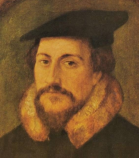
    John CalvinThanks go to Matthew Flannagan for pointing me in the direction of this response to the problem.

    A while back Professor Randal Rauser issued a blog entitled “Calvinism and the Arbitrary Camp Director” in which he criticised the Calvinist understanding of election.

    For those of you who are unaware of the Calvinistic understanding of election, very roughly, it’s the idea is that God elected some for salvation and did not elect others for salvation. Now obviously there’s FAR more to Calvin’s doctrine of election than merely the claim that some are elected and others are not. But that at least, is the centre point of Rauser’s criticism, and more particularly, it’s that element of Calvin’s doctrine that I seek to defend in this article.

    Before we begin, it’s interesting to note that barely three months ago I was a staunch Arminian when it came to soteriology. I reacted against Calvin’s doctrine with the greatest of revulsion. How could it possibly be, I thought, that God could be “good” and yet actively choose some for salvation while leaving others to die?! It made no sense to me! In-fact, I remember going to scripture one Sunday morning actively seeking to find that knock down scriptural blow against the Reformed understanding of election. Interestingly, the first scripture I read was the parable of the wheat and the tares Matthew 13:24-29/13:36-43. While I read it, it struck me that this challenged my Arminian understanding of Salvation. But I didn’t want to believe it, so I left it for a week hoping that there would be some other explanation. But none was forthcoming. Very quickly I found myself speaking in terms that a week earlier I would never have been revolted to hear myself say. I was not yet a practicing Calvinist. I was what you might call “soteriologically agnostic”.

    Now the reason I say this is not because I hope to establish myself as any authority on the matter. To the contrary, Rauser, being a Professor of Historical Theology at Taylor Seminary is far more of an authority on the matter than I can hope to be at this stage of my life. So it’s with much fear and trepidation that I dare post this article contradicting Rauser’s arguments. So why do I give my testimony of how I came to Calvinism? Well I myself am a little unsure. Nevertheless, I suspect that the main reason I give such testimony is that I find it and irony worth sharing that I am writing an article that barely three months ago I would never have even dreamed of writing. If I was going to write anything, it would have been about how Calvinism completely destroys any sensible understanding of God’s justice and love.

    But now let’s get down to business. Precisely what is Rauser’s objection? More than anything else, it appears to be a moral objection. The problem, Rauser urges, is that it makes God’s choice about who save entirely arbitrary. Why, he asks (referring to one of his dialectic opponents apparently named Tom) should God bring glory to him (Tom) and not another say Saddam Hussein? This picture, Rauser asserts, completely undermines the idea that God is loving. In order help us to see this point. Rauser entreats us to consider the following illustrative analogy:

    Randal Rauser“Imagine that there is a camp for troubled youth. The camp director has a rather unorthodox method of dealing with the campers. Some of them are beaten severely with whips in a wholly punitive or retributive (i.e. not restorative) manner while others are chosen by the director to receive care, love and nurture in a way that restores them.

    You are contemplating sending your child to the camp but you want your child to be lovingly restored, not viciously beaten, even if the beatings are just. So you enquire: what is it that makes the director decide to beat the children rather than nurture them? Is it the nature of their crimes? Their race? Gender? What?

    The answer comes back. There is (more…)

  • Debate Review: Sam Harris and William Lane Craig on Ethical Naturalism Part II

    William Lane Craig v Sam HarrisIn Part I of my review of the debate between Sam Harris and William Lane Craig on the moot “Is the Foundation of Morality Natural or Supernatural? I discussed Craig’s defence of the contention that:

    1. If God exists then we have a plausible account of (a) the nature of moral goodness and (b) the nature of moral obligation.

    I noted that Harris’s attempt to refute this conditional failed miserably. However, he did not just offer a negative case; Harris contended that:

    2. If atheism is true then we have a plausible account of (a) the nature of moral goodness and (b) the nature of moral obligation.

    Harris defended 2(a) by contending that moral goodness could be identified with human well-being, which he “in turn” identified with physical states of the brain. Harris defended 2(b) by identifying our moral obligations with the property of promoting human well-being. Harris suggested that this means that moral questions are scientific questions that can be answered by science.

    Harris’s Argument for Ethical Naturalism
    Harris’s argument for 2(a) consisted of three claims. First, he proposed a thought experiment of a world without conscious beings. Intuitively, we judge that nothing is good or bad in this world because nothing matters to anyone in such a world, since there is no one for anything to matter to. Harris concluded that the existence of goodness is dependent on conscious beings.

    Second, Harris asked us to imagine a world full of conscious creatures who live forever in excruciating pain. We intuitively judge this state of affairs to be bad and we intuitively assume a duty to avoid it.

    Third, since states of consciousness are brain states, science can develop ways of promoting these states.

    However, this argument fails to establish Harris’s conclusion. The first claim shows only that goodness depends on the existence of conscious beings. It does not show that goodness is a state of consciousness. Moreover, the second and third premises affirm that we have a duty to avoid maximising pain and that science can tell us how to fulfil this duty. It does not show that moral obligation is the property of promoting or enhancing human flourishing. Nor does the argument show that science can answer moral questions.

    The argument, in fact, relies on people determining, by moral intuition, what things are good and what obligations we have prior to scientific investigation. After this is determined science is used to ascertain how to fulfil these duties. Nothing in Harris’s argument implies that science can discover what our duties are or what is good in the first place.

    Moreover, as I noted in my previous post, this method involves accepting moral beliefs as properly basic. However, if it is the case that we can accept moral beliefs as properly basic then what is the problem with Alvin Plantinga’s contention that belief in God is properly basic? What exactly is it about religious beliefs that disqualifies them from being basic in the same way Harris contends moral beliefs are? (more…)