
My paper, “Can a Divine Command Theory Vindicate the Objectivity of Morality?” was published in Philosophia Christi, vol 21. No 1 2025. A copy is now available online at my academia.edu page. The abstract is below. Abstract:Defenders of divine command metaethics (DCM) often argue that one of its key advantages is its ability to vindicate […]
Entries Tagged as 'Professional'
New publication Online: “Can a Divine Command Theory Vindicate the Objectivity of Morality?”
May 17th, 2026 No Comments
Tags: David Brink · Divine Command Theory · Elizabeth Tropman · Michael Huemer · Objectivism
Sinnott-Armstrong on God, Secularism and “reasons” to be moral. Part One:
September 3rd, 2025 Comments Off on Sinnott-Armstrong on God, Secularism and “reasons” to be moral. Part One:
In his book Morality Without God, Walter Sinnott-Armstrong argues that a secular account of the nature of moral properties—namely, that wrongness is constituted by the property of harming others—is preferable to a theistic account, in which wrongness is identified with the property of being contrary to God’s commands Chapter 6 is entitled “Why be moral?” In […]
Tags: Dualism of Practical Reason · God and Morality · Walter Sinnott-Armstrong · Why be Moral?
New publication: “Can a Divine Command Theory Vindicate the Objectivity of Morality?”
August 26th, 2025 Comments Off on New publication: “Can a Divine Command Theory Vindicate the Objectivity of Morality?”
My paper, “Can a Divine Command Theory Vindicate the Objectivity of Morality?” has been published in the latest issue of Philosophia Christi. Abstract:Defenders of divine command metaethics (DCM) often argue that one of its key advantages is its ability to vindicate the objectivity of moral judgments. Critics, however, contend that DCM is a subjectivist theory […]
Tags: David Brink · Divine Command Theory · Elizabeth Tropman · Michael Huemer · Objectivism
Published: Theological Utilitarianism, Supervenience, and Intrinsic Value
April 14th, 2023 Comments Off on Published: Theological Utilitarianism, Supervenience, and Intrinsic Value
My paper, “Theological Utilitarianism, Supervenience, and Intrinsic Value” has been published in a special issue of Religions, devoted to the topic God and Ethics. The abstract is as follows: Erik Wielenberg has argued that robust realism can account for the “common-sense moral belief” that “some things distinct from God are intrinsically good”. By contrast, theological stateism […]
Tags: Erik Wielenberg · George Berkeley · God and Morality · Intrinsic Value · supervenience · Theological Utilitarianism · Theological Voluntarism · William Paley
Is Theism Incompatible with the Pauline Principle? Comments on James Sterba’s Argument from Evil
November 3rd, 2022 Comments Off on Is Theism Incompatible with the Pauline Principle? Comments on James Sterba’s Argument from Evil
My paper, “Is Theism Incompatible with the Pauline Principle?” has been published in a special issue of Religions, devoted to the topic Do We Now Have A Logical Argument From Evil? The abstract is as follows: This paper criticises James Sterba’s use of the Pauline principle to formulate a logical version of the problem of […]
Tags: Alvin Plantinga · Deontological Argument from Evil · Divine Command Theory · George Berkeley · James Sterba · John Mackie · Pauline Principle · Problem of Evil · Theological Utilitarianism · Utilitarianism
Published in Sophia “Why the Horrendous deeds objection is still a bad argument”
February 12th, 2021 3 Comments
My paper, “Why the Horrendous deeds objection is still a bad argument” has now been published by Sophia here. The abstract is as follows: A common objection to divine command meta-ethics (‘DCM’) is the horrendous deeds objection. Critics object that if DCM is true, anything at all could be right, no matter how abhorrent or […]
Tags: Brad Hooker · Divine Command Theory · Erik Wielenberg · Euthyphro Dilemma · God and Morality · Jason Thibodeau · Louise Anthony · Walter Sinnott-Armstrong · Wes Morriston

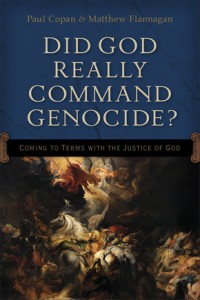 A common objection to belief in the God of the Bible is that a good, kind, and loving deity would never command the wholesale slaughter of nations. In the tradition of his popular Is God a Moral Monster?, Paul Copan teams up with Matthew Flannagan to tackle some of the most confusing and uncomfortable passages of Scripture. Together they help the Christian and nonbeliever alike understand the biblical, theological, philosophical, and ethical implications of Old Testament warfare passages.

Goodbye NCEA, Farewell, Get lost, Good Riddance
September 21st, 2025 Comments Off on Goodbye NCEA, Farewell, Get lost, Good Riddance
Some readers of this blog will know that I work as a secondary school teacher. Recently, several people have asked my opinion on the government’s decision to ditch the National Certificate of Educational Achievement (NCEA). My thoughts follow. When I was at teachers’ college, we were taught that New Zealand had the best curriculum in the […]
Tags: NCEA