In his book Morality Without God, Walter Sinnott-Armstrong argues that a secular account of the nature of moral properties—namely, that wrongness is constituted by the property of harming others—is preferable to a theistic account, in which wrongness is identified with the property of being contrary to God’s commands Chapter 6 is entitled “Why be moral?” In […]
Entries Tagged as 'Book Reviews'
Sinnott-Armstrong on God, Secularism and “reasons” to be moral. Part One:
September 3rd, 2025 Comments Off on Sinnott-Armstrong on God, Secularism and “reasons” to be moral. Part One:
Tags: Dualism of Practical Reason · God and Morality · Walter Sinnott-Armstrong · Why be Moral?
Is Theism Incompatible with the Pauline Principle? Comments on James Sterba’s Argument from Evil
November 3rd, 2022 Comments Off on Is Theism Incompatible with the Pauline Principle? Comments on James Sterba’s Argument from Evil
My paper, “Is Theism Incompatible with the Pauline Principle?” has been published in a special issue of Religions, devoted to the topic Do We Now Have A Logical Argument From Evil? The abstract is as follows: This paper criticises James Sterba’s use of the Pauline principle to formulate a logical version of the problem of […]
Tags: Alvin Plantinga · Deontological Argument from Evil · Divine Command Theory · George Berkeley · James Sterba · John Mackie · Pauline Principle · Problem of Evil · Theological Utilitarianism · Utilitarianism
“Robust Ethics and the Autonomy Thesis” Now Online
April 3rd, 2018 Comments Off on “Robust Ethics and the Autonomy Thesis” Now Online
www.youtube.com/watch?v=6iVyVJAMiOY”>William
Recently, Philosophia Christi published Matt’s article “Robust Ethics and the Autonomy Thesis: A reply to Erik Wielenberg”. This article consisted of some critical commentary and responses to Erik Wielenberg’s book Robust Ethics: The Metaphysics and Epistemology of Godless Normative Realism. Since then Matt’s article has received a little bit of unexpected attention. One of my arguments […]
Tags: Autonomy Thesis · Divine Command Theory · Erik Wielenberg · God and Morality · Philosophia Christi · Publications · William Lane Craig
Erik Wielenberg and the Autonomy Thesis: Part Three Standard Objections to the Autonomy Thesis, Human Rights and Dignity without God
March 25th, 2017 1 Comment
In my last post I looked at Erik Wielenberg’s response to the objection that, in the absence of God, people lack compelling reasons to comply with morality’s demands. A second objection Wielenberg briefly addresses is that without certain theological doctrines, one cannot provide a plausible basis for human rights and dignity. Wielenberg, here again, takes Craig […]
Tags: David Boonin · Erik Wielenberg · Infanticide · Loius Pojman · Nicholas Wolterstorff · Peter Singer · Rights · William Lane Craig
Erik Wielenberg and the Autonomy Thesis: Part Two Standard Objections to the Autonomy Thesis, Reasons to be Moral Without God
March 20th, 2017 3 Comments
The autonomy thesis contends that there can be moral requirements to φ regardless of whether God commands, desires, or wills that people φ. In his monograph, Robust Ethics: The Metaphysics and Epistemology of Godless Normative Realism,[1] Erik Wielenberg offers arguably one of the most sophisticated defences of the autonomy thesis to date. Wielenberg argues three […]
Tags: Erik Wielenberg · God and Morality · Robert Adams · Stephen Layman · Why be Moral? · William Lane Craig
Erik Wielenberg and the Autonomy Thesis: part one Wielenberg’s criticism of Divine command meta-ethics
March 11th, 2017 2 Comments
The autonomy thesis contends that there can be moral requirements to φ regardless of whether God commands, desires, or wills that people φ. In his monograph, Robust Ethics: The Metaphysics and Epistemology of Godless Normative Realism,[1] Erik Wielenberg offers arguably one of the most sophisticated defences of the autonomy thesis to date. Wielenberg argues that: […]
Tags: Divine Command Theory · Erik Wielenberg · God and Morality · Wes Morriston
Ed Feser reviews Jerry Coyne
July 7th, 2016 1 Comment
Over at First Thing’s, Edward Feser has an interesting, but characteristically scathing review of Jerry Coyne’s book Faith vs Fact: Why Religion and Science Are Incompatible.
Tags:

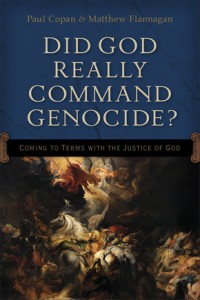 A common objection to belief in the God of the Bible is that a good, kind, and loving deity would never command the wholesale slaughter of nations. In the tradition of his popular Is God a Moral Monster?, Paul Copan teams up with Matthew Flannagan to tackle some of the most confusing and uncomfortable passages of Scripture. Together they help the Christian and nonbeliever alike understand the biblical, theological, philosophical, and ethical implications of Old Testament warfare passages.