In my last post, Tooley, Plantinga and the Deontological Argument from Evil Part I, I sketched Tooley’s distinction between a deontological and an axiological argument from evil and argued that Tooley rejects the axiological version because it rests on controversial ethical claims that are likely to be rejected by many theists. I outlined Tooley’s deontological […]
Entries Tagged as 'Atheism'
Tooley, Plantinga and the Deontological Argument from Evil Part II
May 27th, 2009 13 Comments
Tags: Alvin Plantinga · Atheism · Divine Command Theory · Michael Tooley · Philosophy of Religion · Problem of Evil · William Alston
Tooley, Plantinga and the Deontological Argument from Evil Part I
May 13th, 2009 9 Comments
This two-part series criticises the deontological argument from evil proposed by Micheal Tooley in The Knowledge of God, the print debate between him and Alvin Plantinga.1 My critique proceeds in four parts. Initially I will sketch Tooley’s distinction between a deontological and an axiological argument from evil and will argue that Tooley rejects the axiological […]
Tags: Alvin Plantinga · Atheism · Divine Command Theory · Michael Tooley · Philosophy of Religion · Problem of Evil · Selection · William Alston
More on God, Negatives and the Burden of Proof: Some responses to Mark V
July 13th, 2008 6 Comments
In my last post I took a swipe at certain popular dismissals of theism on the grounds that “God’s existence can’t be proved.” Mark V offered a measured and thoughtful response in the comments section. We enjoy feedback from our readers and I have always enjoyed his, particularly those on the Euthyphro dilemma and I […]
Tags: Atheism · Faith and Reason · Mark V · Philosophy of Religion · Science and Religion
On Negatives and the Burden of Proof
July 3rd, 2008 4 Comments
One common reason I hear for atheism is the claim that there is no proof that God exists. Several questions can be asked about this objection. What exactly does the objector mean by proof? If all things need to be proved to be sensibly believed then what is the proof that all things require proof? […]
Tags: Atheism · Bad Reasoning · Faith and Reason · Philosophy of Religion
William Lane Craig, Raymond Bradley and the Problem of Hell. Part Two.
June 23rd, 2008 13 Comments
In a previous post I mentioned Professor Raymond Bradley’s (Bradley) contention that, [3] The bible teaches that God will torture people endlessly for their beliefs. In his article he cites several scriptural passages in support of this contention. I think his exegesis is problematic; I cannot go into huge detail in a blog post but […]
Tags: Apologetics · Atheism · Bill Cooke · Debates · Divine Command Theory · Faith and Reason · God and Morality · Hermeneutics · NZARH · Philosophy of Religion · Rationalists · Raymond Bradley · William Lane Craig
Is God a Delusion? The Auckland Craig v Cooke Debate Online
June 21st, 2008 10 Comments
Dr William Lane Craig and Dr Bill Cooke debated the moot “Is God a Delusion?” at Auckland University on 17 June 2008. The debate was chaired by Professor John Bishop and was organised by New Zealand Association of Rationalists and Humanists and Tertiary Students Christian Fellowship with MandM. High quality DVD copies of the debate […]
Tags: Apologetics · Atheism · Bill Cooke · Debates · Events · Faith and Reason · NZARH · Philosophy of Religion · Rationalists · Videos · William Lane Craig
William Lane Craig, Raymond Bradley and the Problem of Hell Part One
June 21st, 2008 5 Comments
During the Q & A at the recent Auckland Cooke – Craig debate, Professor Raymond Bradley (Bradley), Emeritus Professor of Philosophy at Auckland University, offered an argument, which he has laid out in more detail in his article A Moral Argument for Atheism, as follows: Christians accept that: [1] Any act that God commits, causes, […]
Tags: Apologetics · Atheism · Bill Cooke · Debates · Divine Command Theory · Faith and Reason · God and Morality · Hermeneutics · NZARH · Philosophy of Religion · Rationalists · Raymond Bradley · William Lane Craig

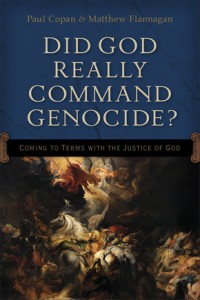 A common objection to belief in the God of the Bible is that a good, kind, and loving deity would never command the wholesale slaughter of nations. In the tradition of his popular Is God a Moral Monster?, Paul Copan teams up with Matthew Flannagan to tackle some of the most confusing and uncomfortable passages of Scripture. Together they help the Christian and nonbeliever alike understand the biblical, theological, philosophical, and ethical implications of Old Testament warfare passages.