The bold statement “Richard Dawkins opens minds” leaped out at me from the newsletter sitting on the University of Auckland’s Law Library counter. The article went on to sing the praises of Richard Dawkins and mentioned his book The God Delusion. On reading the piece one could be forgiven for concluding that Dawkins’ works are […]
Entries Tagged as 'Atheism'
Contra Mundum: Richard Dawkins and Open Mindedness
May 6th, 2010 146 Comments
Tags: Alvin Plantinga · Atheism · Contra Mundum · Faith and Reason · Investigate Magazine · Nicholas Wolterstorff · Peter Van Inwagen · Richard Dawkins · Richard Swinburne · Science and Religion · The God Delusion · William Alston · William Lane Craig
The Theological Foundations of the Enlightenment Philosophers
February 14th, 2010 7 Comments
In my previous post, Freedom, Science and Christianity: A Response to James Valliant Part I, I criticised a recent post by James Valliant. I plan to put Part II of this critique online later this week (after Madeleine is clear of her exam on Tuesday to edit it). Here, I simply want to pick up […]
Tags: James Madison · James Valliant · John Locke · Lactantius · Lindsay Perigo · Pierre Bayle · Tertullian · Thomas Aquinas
John Loftus on Calvin, Matthew Flannagan and Psalm 14
January 11th, 2010 17 Comments
John Loftus from Debunking Christianity is at it again. In his recent post, When Psalm 14:1 Says Atheists Are “Fools” This Can Be Easily Refuted, he suggests he can easily refute the idea of biblical inerrancy and cites me to assist him in doing so! Unfortunately he makes several straight-forward mistakes. Given that he has […]
Tags: John Calvin · John Loftus · Psalm 14
Van Inwagen, Divine Duties and the Deontological Argument from Evil
January 9th, 2010 1 Comment
In Tooley, Plantinga and the Deontological Argument from Evil Part I and Part II, I discussed Michael Tooley’s deontological argument from evil. In The Problem of Evil Peter Van Inwagen makes a reference to the type of argument I proposed. In this post I intend to make some critical commentary on Van Inwagen’s comments. Tooley […]
Tags: Divine Command Theory · Michael Tooley · Peter Van Inwagen · Problem of Evil
Sunday Study: Joshua and the Genocide of the Canaanites Part I
January 3rd, 2010 52 Comments
Critics of Christianity often claim that the book of Joshua teaches that God commanded genocide. Raymond Bradley for example states, In chapters 7 through 12, [the book of Joshua] treats us to a chilling chronicle of the 31 kingdoms, and all the cities therein, that fell victim to Joshua’s, and God’s, genocidal policies. Time and […]
Tags: Alvin Plantinga · Brevard Childs · Canaanites · Genocide · Hermeneutics · Joshua · Kenneth Kitchen · Nicholas Wolterstorff · Old Testament Ethics · Raymond Bradley · Sunday Study · Theology · Walter Sinnott-Armstrong
Contra Mundum: “Bigoted Fundamentalist” as Orwellian Double-Speak
November 2nd, 2009 16 Comments
I am a Theologian with a strong background in Philosophy; apart from Philosophical Theology, my particular area of interest is Ethics. Given this, I often publish my thoughts and reflections on moral issues, of various persuasions, in various media. I have written on the morality of warfare, whether it is sometimes permissible to lie, the […]
Tags: Alvin Plantinga · Contra Mundum · Fundamentalism · Investigate Magazine
Contra Mundum: God, Proof and Faith
October 1st, 2009 11 Comments
Since the 17th century one of the most common sceptical objections to the Christian faith is the claim that belief in God is irrational because his existence has never been successfully proven. For centuries theologians and philosophers have proposed a range of arguments for the existence of God; sceptics not only contend every one of […]
Tags: Antony Flew · Contra Mundum · Faith and Reason · Investigate Magazine · John Mackie · Kai Neilsen · Roy Clouser
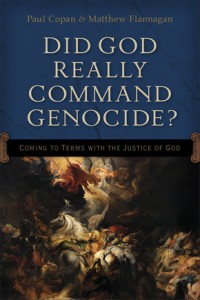 A common objection to belief in the God of the Bible is that a good, kind, and loving deity would never command the wholesale slaughter of nations. In the tradition of his popular Is God a Moral Monster?, Paul Copan teams up with Matthew Flannagan to tackle some of the most confusing and uncomfortable passages of Scripture. Together they help the Christian and nonbeliever alike understand the biblical, theological, philosophical, and ethical implications of Old Testament warfare passages.