Category: Theology

  • Randal Rauser’s Mistake: A Defense of Calvin’s Doctrine of Election

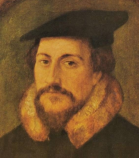
    John CalvinThanks go to Matthew Flannagan for pointing me in the direction of this response to the problem.

    A while back Professor Randal Rauser issued a blog entitled “Calvinism and the Arbitrary Camp Director” in which he criticised the Calvinist understanding of election.

    For those of you who are unaware of the Calvinistic understanding of election, very roughly, it’s the idea is that God elected some for salvation and did not elect others for salvation. Now obviously there’s FAR more to Calvin’s doctrine of election than merely the claim that some are elected and others are not. But that at least, is the centre point of Rauser’s criticism, and more particularly, it’s that element of Calvin’s doctrine that I seek to defend in this article.

    Before we begin, it’s interesting to note that barely three months ago I was a staunch Arminian when it came to soteriology. I reacted against Calvin’s doctrine with the greatest of revulsion. How could it possibly be, I thought, that God could be “good” and yet actively choose some for salvation while leaving others to die?! It made no sense to me! In-fact, I remember going to scripture one Sunday morning actively seeking to find that knock down scriptural blow against the Reformed understanding of election. Interestingly, the first scripture I read was the parable of the wheat and the tares Matthew 13:24-29/13:36-43. While I read it, it struck me that this challenged my Arminian understanding of Salvation. But I didn’t want to believe it, so I left it for a week hoping that there would be some other explanation. But none was forthcoming. Very quickly I found myself speaking in terms that a week earlier I would never have been revolted to hear myself say. I was not yet a practicing Calvinist. I was what you might call “soteriologically agnostic”.

    Now the reason I say this is not because I hope to establish myself as any authority on the matter. To the contrary, Rauser, being a Professor of Historical Theology at Taylor Seminary is far more of an authority on the matter than I can hope to be at this stage of my life. So it’s with much fear and trepidation that I dare post this article contradicting Rauser’s arguments. So why do I give my testimony of how I came to Calvinism? Well I myself am a little unsure. Nevertheless, I suspect that the main reason I give such testimony is that I find it and irony worth sharing that I am writing an article that barely three months ago I would never have even dreamed of writing. If I was going to write anything, it would have been about how Calvinism completely destroys any sensible understanding of God’s justice and love.

    But now let’s get down to business. Precisely what is Rauser’s objection? More than anything else, it appears to be a moral objection. The problem, Rauser urges, is that it makes God’s choice about who save entirely arbitrary. Why, he asks (referring to one of his dialectic opponents apparently named Tom) should God bring glory to him (Tom) and not another say Saddam Hussein? This picture, Rauser asserts, completely undermines the idea that God is loving. In order help us to see this point. Rauser entreats us to consider the following illustrative analogy:

    Randal Rauser“Imagine that there is a camp for troubled youth. The camp director has a rather unorthodox method of dealing with the campers. Some of them are beaten severely with whips in a wholly punitive or retributive (i.e. not restorative) manner while others are chosen by the director to receive care, love and nurture in a way that restores them.

    You are contemplating sending your child to the camp but you want your child to be lovingly restored, not viciously beaten, even if the beatings are just. So you enquire: what is it that makes the director decide to beat the children rather than nurture them? Is it the nature of their crimes? Their race? Gender? What?

    The answer comes back. There is (more…)

  • Comparing the Old & New Teleological Arguments

    Robin Collins

    The “New Teleological Argument” is a theistic argument which attempts to show that theism is more probable than the postulate of an “atheistic single universe”[i]. There are number of reasons why this argument is termed the “New” teleological argument. Chief among these reasons is that its explanandum i.e. the incredible fine tuning of the laws and constants of physics have only been discovered in the past 20-30 years[ii] [iii]. By contrast, the explanandum of “Old Teleological Arguments” has long since been available to theologians and philosophers of religion. Of course the relatively recent origin of the “New” Teleological argument is not the only feature which distinguishes it from its historical counterpart. Whereas historical versions of design arguments (such as Paley’s famous watchmaker argument) rest on an argument from analogy, contemporary versions of the argument rest on what the philosopher of biology Elliot Sober calls the “Likelihood Principle”[iv] [v]. In other words, rather than relying on an analogy between the explanandum and some obviously contrived entity such as (in Paley’s case) a watch, contemporary versions of the teleological argument argue that the explanandum (the fine tuning of the laws and constants of physics) is more probable given the hypothesis of theism as opposed to the postulate of an atheistic single universe[vi].

    The Conditions of Success
    Throughout the rest of this post, I hope to argue that, on purely philosophical grounds, there is little which will allow us to say which version of the argument (be it contemporary or historical) is more or less plausible. In this respect, it seems only fair that we should assess the strength of David Hume’s critiques, since they are popularly regarded as decisive refutations of teleological arguments.[vii] [viii] It’s important to note also, that while the failure of the Humean critiques would not guarantee the conclusion that the design arguments are equally plausible, it is suggestive thereof. After all, if the joint failure of natural theological and atheological arguments should suggest that it’s impossible to arbitrate (on the evidence) between theism and atheism, then similarly, the failure of stock arguments against either of the design arguments should lead us to think that it’s impossible to arbitrate between them.  In spite of the fact that both contemporary and historical versions of the design argument are equally plausible, I will argue that the contemporary version of the argument has a number of key dialectic advantages which may warrant us in thinking that it is “dialectically speaking”, more successful than its historical counterpart. More precisely, I am saying that the relative success of the new teleological argument is a function of the fact that it does not turn on premises that are as deeply controversial as the commitments required by the historical version.

    The Contemporary Version of the Argument
    The most prolific contemporary defender of the design argument is Robin Collins who, rather than arguing from facts about biology, argues from recent discoveries in physics[ix]. As we noted earlier, this is one of the main reasons why it is termed the “New” teleological argument. Collins frames his rendition of the argument as follows:

    (1)     The existence of fine tuning is not improbable under theism[x]

    (2)     The existence of fine tuning is very improbable under the atheistic single-universe hypothesis[xi]

    Therefore, given the prime principle of confirmation[1] [xii],

    (3)     The existence of fine tuning is evidence for theism over the atheistic single-universe hypothesis[xiii]

    By “fine tuning”, I mean the very precise arrangement of the fundamental laws and constants of physics that must be met in order for our Universe to fall into the very narrow life permitting range.[xiv] [xv] According to contemporary physics, these conditions seem to be arranged in such a way that, were they to vary by even the tiniest amount, life (or more precisely, sentient life) would not be a physical possibility. For example, as P.C.W. Davies points out, a change in “the weak force”[2] by only 1 part in 100100 would make the Universe uninhabitable.[xvi] Similarly, if the cosmological constant[3] were just a fraction faster, matter would spread apart so quickly that even relatively small clumps of matter would have insufficient time to form[xvii].

    The Plausibility of the Premises
    Premise (1) amounts to the claim that if God exists, then it is entirely within His creative capability to create the universe finely tuned as it is. Hence the observation that there is a universe which exhibits teleo-functional properties is not surprising given the postulate of theism. Considering that the traditional conception of God holds that He is an omnipotent being, this is a fairly straightforward premise that we should accept.

    Premise (2) amounts to the claim that if God does not exist and if the single universe hypothesis is true, then the apparent fine tuning of the universe is a very surprising fact. After all, the fundamental laws and constants of physics seem to be arranged in such a way that their placement seems guided. But if God doesn’t exist, it doesn’t seem likely that there would be any intelligent, guiding mind such that it could plausibly account for this apparent fine tuning. Hence premise (2) seems (more…)

  • Hear Matt’s EPS Apologetics Conference Paper in Advance & Eat 3 Courses for $10 – This Weekend in Auckland

    We are going to the United States in November to, between us, give 4 talks to 4 different conferences that we have been invited to speak at (details below). We need to raise the funds to get there and so far we have raised about half of what we need thanks to the generosity of readers of this blog 🙂

    Sticky Date Pudding with Maple Butterscotch Sauce - recipe at Mad | FoodMassey Presbyterian Church (“MPC”) has offered to help us put on a fundraising night where both of us will utilise our talents to bring you a three-course meal for $10 cooked by me (I cook see my cooking website Mad | Food) and a talk given by Matt “Can God Command Evil? The Problem of Apparently Immoral Commands” – this will be a slightly abridged version of the very same talk Matt will give to the EPS Apologetics conference in November so make sure you don’t miss it or you’ll have to fly to San Francisco to hear it!

    This event is happening this weekend at the MPC Night Church Service on Sunday 2 October. The starter and main will be served to your table before the service and the dessert will be served after. So please arrive at 6pm to be seated if you are coming for dinner; the service will start at 7pm.

    Menu

    (Diners choose 1 from each category)

    Entree:

    Creamy Tomato Soup – home made, mildly spiced (gluten free)

    MPC Bread – fresh-baked individual loaf with hummus

    Main:*
    White Chilli Chicken Enchilada – chicken, cannellini beans and mild mexican flavours in a delicious sauce wrapped and baked in a tortilla (Gluten free option: served without the tortilla on rice)

    Beef Lasagne – tasty beef mince, layered with pasta and topped with a cheese sauce

    Empanadas – mildly spiced, creamy vegetable and chickpea curry encased in flaky puff pastry topped with poppy seeds, served with chutney on the side (vegetarian) (Gluten free option: served without the pastry on rice)

    * All mains served with your choice of crunchy slaw or steamed winter vegetables

    Dessert:
    Berry Bombe with Boysenberry Coulis – Home made ice-cream with crushed meringue, marshmallows and berries topped with home made boysenberry sauce. (Gluten free)

    Chocolate Tiramisu – layers of coffee-rum flavour infused chocolate sponge and cream (alcohol free)

    Sticky Date Pudding with Maple Butterscotch Sauce – light, fluffy and so delicious!

    Non-alcoholic beverages will also be available.

    Donations towards our trip gratefully received 🙂 

    (If you can’t eat a whole three-course meal or you want two of something individual prices are: entree $2, main $5, dessert $3)  

    Please use the Facebook Page to RSVP and invite others.

    (more…)

  • The Podcast: 20 Tough Questions on Life FM’s “The Forum”

    The Podcast of last night’s show on Life FM’s The Forum, which featured this blog’s Madeleine Flannagan, along with Frank Ritchie and Dale Campbell, answering 20 Tough Questions about God, the Bible, Christianity, Church and life, thrown at them by host George Penk, is now available online in its entirety.

    Click the image to listen online or use these links for the MP3s:

    Click to Listen to Madeleine Flannagan on Life FM's The Forum answering 20 Tough Questions

    The Forum 18 September 2011: 20 Questions Part 1

    The Forum 18 September 2011: 20 Questions Part 2

    Normally Life FM only release a 20 minute highlight podcast of The Forum but they announced on Facebook today that due to the sheer volume of requests for the whole show they decided to make an exception. I think that says a lot about how hungry people are for Apologetics and what a good job Madeleine, Frank, Dale and George did.

  • Tough Questions on Life FM’s “The Forum” this Sunday feat. Madeleine Flannagan

    Yesterday Madeleine was one of a panel who recorded a two-hour show answering tough questions about God, the Bible, Christianity, Church and life for Life FM’s “The Forum.”

    Radio MicrophoneThe show which, along with Madeleine, will feature Frank Ritchie, Dale Campbell and host George Penk, will air tomorrow night, Sunday 18 September from 9pm – 11pm NZT (5am-7am Sunday 18 September EDT).

    You can listen online here if you are not in New Zealand; the frequencies for if you are in New Zealand are here.

    Some of the questions Madeleine answered were:

    • Can people who never hear about Jesus go to heaven?
    • Is there any actual proof for the resurrection?
    • Is abortion ever justified?
    • A lot of movies push the idea of having a soul mate. If God has a plan for my life, does that include one specific person I’m supposed to marry?
    • Why aren’t Christians doing greater works than Jesus did, like he said they would in the Bible? (John 14:12)
    • Do you think that God is ok with the death penalty?
    • My friend is really into Harry Potter. Is there anything wrong with that?
    • Do you think people who commit suicide can still go to heaven?
    • Can you explain the existence of dinosaurs and Neanderthals? Humans never interacted with dinosaurs or there’d be evidence. If God made all the animals for humans, then what’s the point of animals that humans never encountered?
    • Is war ever ok in God’s eyes?
    • Do Christians, Jews and Muslims all worship the same God? If not, how do you know you’ve got the right one?
    • Why didn’t God stop my Dad dying of cancer?
    • What’s the point in praying? Does it change God’s mind? Does that mean that he is not already in control?
    • Is depression wrong? Is it ever ok for a Christian to have depression?
    • It doesn’t seem fair that somebody can get saved on their deathbed after never having to sacrifice for God, while other live for him for years. Will things in heaven be different for these two people?
    • I went to a church and they told me if I gave money that God would bless me ten times over. Do you think that actually happens? If not, is there a certain amount that I have to give?
    • With all the earthquakes and tsunamis etc recently, do you think that we are living in the end times?
    • I don’t get the whole trinity thing. How can God have three different parts without it being three gods? How can Jesus talk to God if they’re the same person?

  • Divine Commands Post 9/11

    The night of September 11, 2001, was a night we did not get much sleep in. By 4am September 12 (New Zealand time) our two-week old son and 14 month old daughter had woken us twice already. Frustratingly, I awoke again sometime after 4am to a different noise coming from the lounge; it turned out that our eldest son, then aged 6, was up watching television. I stumbled into the room and told him to go back to bed. As I got back into bed I told Madeleine “It’s OK hon, it was just Christian watching some movie about New York” (I’d seen the Twin Towers on the screen as I switched the TV off). Less than an hour later our sleep was interrupted again, this time by the telephone. Madeleine, awoken for the 4th time that night, angrily moaned “who the hell is ringing at this time? Don’t they know we have a newborn?” It was my Dad.

    “Matt” he told me tersely “I am just ringing to say I am alright. I got grounded at Heathrow airport and did not fly into the US as I had intended to this morning and so was not caught up in the drama that’s unfolded.”

    “What drama?” I said bewilderedly “why wouldn’t you be ok?”

    “Haven’t you heard?” he responded “planes have been high-jacked; there has been a terrorist attack in America – the World Trade Centre has been hit, as has the Pentagon”.

    I suddenly was wide awake.

    9/11 World Trade Centre Terrorist AttackOne particularly poignant fact about the events of 9/11 is that the terrorists who carried out the attacks justified their actions by claiming God commanded them to do so. That fact has lead many contemporary commentators to argue that a divine command theory of ethics is indefensible. September 11 is just the most recent example in a series of incidents throughout history such as the Crusades, Inquisition and wars of religion. Divine command ethics is discredited by the fact that people appeal to such commands to justify terrorism.

    At first glance this objection is hard to take seriously; the premise is that some people have appealed to divine commands to commit atrocities. The conclusion is that any appeal to divine commands in ethics should be rejected.  This conclusion does not follow. To be valid the objector must assume a tacit premise: if people appeal to certain reasons to justify atrocities, then appeals to those reasons are always problematic. This premise is false.

    An analogous line of reasoning applies to appeals to right and wrong per se. Take any historical atrocity that people have attempted to justify; in almost every case the justifier will have argued that the action in question was the right action to do, the justifier invariably appeals to the purported rightness of their action. If the tacit premise is true then appeals to right and wrong are always problematic.

    Other examples illustrate the same point. The “reign of terror” during the French Revolution was justified by appeals to liberty, equality, fraternity and the rights of humankind; one victim of the guillotine famously remarked, “Oh, liberty, what crimes are committed in your name?” Millions have been slaughtered by appeals to the greater good of society or the liberation of the oppressed classes and it is well known that people have defended wars on the basis of justice and social peace. Should we therefore avoid liberty, equality, opposing oppression, seeking justice, social peace and so on? Obviously not.

    The fact that people have attempted to offer justifications for atrocities by appealing to some reason does not entail that any or all appeals to such reasons are problematic. This is a fairly innocuous claim. Take any premise you like – secular or theological – it is true that a person could appeal to this premise in an attempt to justify something but this fact does not mean the premise is problematic. For the appeals to atrocities argument to have bite one needs to show more than just that someone has tried to justify an abhorrent action by appealing to God’s commands; one would have to show that they did so successfully, that God actually commands such practises.

    The claim that God commands atrocities appears to be indefensible. We need to remember that we are not talking about the commands of just anyone; we are talking about God, who is typically defined as a being who is omnipotent, omniscient, and morally perfect. So, as the terms are defined, the claim that it is possible for God to command people to torture others for fun is true only if it is possible for a morally perfect person to command an atrocious thing. But this is not possible. The very reason that critics cite atrocities in their arguments against God is because they regard these actions as paradigms of conduct that no morally good person could ever (more…)

  • Sermon on The Parable of the Net (Mp3)

    On Sunday 4 September 2011 Matt preached a sermon on The Parable of the Net in Matthew 13:47-51:

    Once again, the kingdom of heaven is like a net that was let down into the lake and caught all kinds of fish. When it was full, the fishermen pulled it up on the shore. Then they sat down and collected the good fish in baskets, but threw the bad away. This is how it will be at the end of the age. The angels will come and separate the wicked from the righteous and throw them into the blazing furnace, where there will be weeping and gnashing of teeth. “Have you understood all these things?” Jesus asked. “Yes,” they replied.

    Click to Listen to Matthew Flannagan on The Parable of the NetJachin at Explaining the Bible has uploaded it as an Mp3.

    listen to Matt preaching on The Parable of the Net.