Category: Philosophy of Religion

  • Understanding the Abortion Debate with Francis Beckwith

    Those who have been following Matt’s series Abortion and the Morality of Feticide might enjoy this video featuring Francis Beckwith of Baylor University’s Philosophy faculty speaking to the Summit Ministries Interns on the topic “Understanding the Abortion Debate“. Beckwith is arguably one of best contemporary philosophers writing from the pro-life position. He is a clear and entertaining speaker who can break his work down into a form that anyone can follow.

    In this talk Beckwith poses the question, who and what are we? He goes on to discuss current bio-ethical issues such as cloning and stem cell research as well as the nature of the fetus. He also critiques common arguments for abortion.

    Click to View "Understanding the Abortion Debate"


  • Abortion and the Morality of Feticide: Part I

    Is it morally permissible to commit feticide? The abortion debate swirls around this question, a lot of rhetoric, emotion and anger gets spent on debating this question or avoiding it.

    In this series I will examine this question. First I will sketch an argument against feticide: the killing of a fetus. Then I will examine three common ways of criticising this argument and respond to them.

    The Argument Against Feticide

    Implicit, if not overtly explicit, in much historic Christian moral reflection on feticide is a simple three-premise position. Firstly, that there is a divine law prohibiting homicide – the killing of a human being without adequate justification; secondly, a fetus is a human being; and thirdly, that in all or most cases of feticide, justification for homicide is not forthcoming. This argument can be summarised as follows:

    [1] It is wrong to kill a human being without justification;

    [2] A fetus is a human being;

    [3] In the case of feticide (at least in the majority of cases) insufficient or no justification is forthcoming.

    This argument is formally valid. These three premises jointly entail that feticide is wrong; premises [1] and [2] entail that it is wrong to kill a fetus without justification, this conclusion, conjoined with [3], entails that feticide is wrong in at least the majority of cases. Given the argument is formally valid, any critique of this argument must call into question the truth of either of the premises. [For more on validity see Assessing Arguments]

    Avoidance Tactics
    FetusNotwithstanding this, the most common response to this argument is some tactic seeking avoidance of the issue. It is not unusual to see attempts to denounce, insult, caricature or defame the character of those who oppose feticide. If current commentary is to be believed opposition to legal abortion comes from misogynist fundamentalist fanatics who want to impose their religious mores onto others.

    Of course, these strings of pejorative terms fail to address the argument above. Suppose everything that is said of such people is true – people who oppose feticide do have the bad character traits or motives claimed – the soundness of the argument remains untouched. A good argument does not cease to be a good argument just because someone has personal flaws or dubious motives. It is only unsound if (more…)

  • Video of Matthew Flannagan Speaking on Divine Command Theory

    On 4 February 2011 the Auckland Reason and Science Society (“RSS”) hosted an event they titled “Divine Command Theory with Dr. Matthew Flannagan” at the University of Auckland. For those of you who missed the event, here is the video.

    Note: This video only includes footage of the talk itself and not the Q&A that followed the talk.

  • Contra Mundum: Is God a 21st Century Western Liberal?

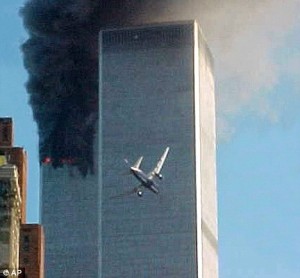
    World Trade Centre Terrorist AttackOn 11 September 2001 Islamic terrorists flew two planes into the World Trade Centre killing thousands of innocent people. Ostensibly they did this because they believed God commanded them to do so. This event has invigorated a fear latent in the Western psyche since the 17th century when wars of religion tore Europe apart, the fear of religious fanaticism, of people willing to murder hundreds in the name of God. These fears were centre-stage recently at a Conference held by the Centre for Philosophy of Religion at the University of Notre Dame. Sceptics presenting at the conference argued passionately that the God of the bible issues commands which are at odds with contemporary modern understandings of morality. Adultery is punished with death; on some occasions, God is portrayed as commanding the killing of non-combatants in “holy wars” against the local Canaanite population.

    There is a lot that can be said about these concerns and in a short column I cannot say everything. In many instances I think the sceptics fail to appreciate the context and genre of the passages they cite. They fail to appreciate, for example, that Ancient Near Eastern conquest accounts employ highly figurative rhetoric, which hyperbolically describe victories in terms of total annihilation of the enemy. They fail to appreciate that Ancient Near Eastern legal texts, as noted by Raymond Westbrook, “reflect the scribal compilers’ concern for perfect symmetry and delicious irony rather than the pragmatic experience of the law courts.” Or that, as JJ Finkelstein points out, they “were not meant to be complied with literally” but to “serve an admonitory function” and so probably do not command execution for the crimes mentioned. Sceptics can fail to grasp that claiming the bible is God’s word does not mean it did not come to us mediated through the writings of human beings who wrote in a particular time and place using the language, rhetoric and literary conventions of their time and so and frequently they fail to appreciate the bible is a Canon and that passages need to be read in their broader context i.e. taking into account the whole bible. A full articulation of these points, however, would take more space than I can here muster.

    Instead I will address another feature of this issue which concerns the general method in play here. In each case the sceptic takes a purported divine command and compares it to a moral belief that he takes to be correct. The conclusion he draws is that the purported command is inauthentic. This is of course a possibility; there is, however, another possibility that on at least some occasions, moral statements these sceptics are relying on are mistaken.

    This feature of the dialectic became clear to me after a public debate I had on these issues in August. A sceptic wrote to me claiming that (more…)

  • Maori Animism: New Zealand’s Established Religion

    New Zealand, along with all nations, is acutely religious. But, more than most Western countries, the dominant religion is now the Established Religion. We are using “established” in the historical sense of a religion prescribed and protected, so that all citizens must respect and honour that particular religion’s beliefs and practices. Established religion is the religion buttressed and proscribed by the law of the land and funded by tax money.

    The established religion in New Zealand is Maori animism. In historical terms it is a pagan and primitive religion, riddled with superstition and idolatry. It is an offence and provocation to the Living God. But none who want official and public respect in New Zealand dare criticise the Establishment. Those, however, who fear God more than man are prepared to call it for what it is: stale hokey pokey–a thoroughly sour, ignorant and stupefying batch of mouldy ice-cream. Every Christian who understands what the Bible says about idolatry and false gods has no hesitation in flatly rejecting Maori animism. In so doing, we have become the new dissenters.

    Wavering Christians may well be offended at such a stand because they fear it will cause offence to Maori. Not causing offence has regrettably become for some of our brethren, not the eleventh commandment, but the only commandment. To these brethren we say, “harden up”. Fear God, not man. These weaker brethren have not yet realised that when it comes to a choice between offending the Living God, on the one hand, or man on the other, Christians must offend man a thousand times over. We must never, ever wilfully offend our God.

    We will drive out any idol, never tolerating any in His presence. We will be as jealous of God’s honour as God is Himself. We will never bow down or honour any image of God, which makes all graphical representations of God idolatrous. We will never tolerate His Name being used in an empty or vain fashion. We will honour His holy day. This is what former generations called the First Table of the Law.

    The ignorance and stupidity of Maori animism has been on display in recent days. A church youth group had a fantastic day out, climbing Mount Taranaki, packing up a couch and BBQ by hand. Quite a feat. At the top they reclined for a celebratory meal. After enjoying the Lord’s creation and celebrating his goodness, they decamped taking their gear and detritus with them.

    Mt TaranakiOn returning to the land of the living dead they were assailed by a government official: an outraged Taranaki Department of Conservation boss, Phil Mohi. Now, Phil it turns out is a Maori who has returned to the religion of his ancestors and is a card carrying animist. He has taken it upon himself to speak out in the name of his god. His god is the mountain (Mt Taranaki). The top of the mountain is tapu–sacred ground, in the eyes of Phil and his colleagues. To eat up there is to eat on his god’s head. (We are not making this up. One shudders to think the depths of outrage that would be disembogued were anyone forced to relieve themselves up the mountain.) According to a media report entitled “Mt Taranaki summit cook-up ‘tapu offence’“:

    He said the summit barbecue was disappointing because the young people there probably didn’t realise or hadn’t learnt that the mountain and especially the summit is a very sacred place for iwi of Taranaki. “We discourage camping at the summit and try to make people aware that the very highest part is the most sacred of all – and ask climbers to avoid standing there. “There’s a difference too between eating prepared food for sustenance and actually cooking on the summit,” he said.

    Ah, the casuistry of the animist. How quaint. Now the young Christians were taken aback by this outburst. They apologised. They did not want to cause offence, they said.

    What they should have said is something like this (more…)

  • Nietzsche on Over-Compensating

    Friedrich Nietzsche

    They are rid of the Christian God and now believe all the more firmly that they must cling to Christian morality. They must rehabilitate themselves after ever little emancipation from religion by showing in a veritably awe-inspiring way what moral fanatics they are. That is their penance.

    Friedrich Nietzsche

  • Abraham, Isaac, Virginity, Rape and Child Killing (Another Old Testament Ethics Post)

    Randal Rauser has published a blog post touching on Old Testament ethics called “An update in the wake of Atlanta (plus a bit on rape and child killing)“. His post gives an update on his thoughts following his interaction with Paul Copan, Richard Hess and myself in the Evangelical Philosophical Society’s break-out panel discussion “Is Yahweh a Moral Monster” at the Society for Biblical Literature (“SBL”) in Atlanta in November. While there was considerable overlap between his position and mine, there was one particular issue on which he and I disagreed quite sharply on the night that he alludes to in his post. Let me contextualise this disagreement and then put my response to his comments.

    Back in 2009 I wrote “Abraham and Isaac – Did God Command the Killing of an Innocent?” This post addressed a dilemma several philosophers have raised for those Christians who take the patriarchal narratives in Genesis in literal manner. It seems plausible that Christians who do this are committed to an inconsistent triad,

    1. If God commands an action x then x is morally required;
    2. It is wrong to kill innocent human beings;
    3. God commanded Abraham to kill an innocent human being.

    These three propositions are inconsistent; 1 and 3 entail the denial of 2.

    To respond to this triad, I appropriated a thought experiment provided by John Hare; I wrote:

    One example Hare notes, is particularly interesting, “Perhaps (to get more bizarre) God could have willed that we kill each other at the age of 18, at which point God would bring us immediately back to life.” Hare asks us to imagine a world, in which, when people of a certain age are killed they immediately come back to life. He opines, quite plausibly, that if this were to be the case then killing people at this age would not be wrong or at least, not seriously wrong. One of the reasons that killing people is wrong in the world we live in is because people stay dead. If they were only unconscious for a split second and came back to life in full health then arguably killing a person would not be the serious wrong we believe it is.

    I suggested that, a careful examination of the text reveals that Abraham’s actions occurred in a context where he knew his son would not stay dead but would come down the mountain with him and live on to adulthood to father children of his own. I argued this fact resolves the dilemma,

    Once this is realised, I think it is evident that [1], [2] and [3] are consistent. If one assumes, for the sake of argument, that the Patriarchal Narratives are literally true then it follows that [3] is true only if a certain context is assumed. God commanded Abraham to kill his son in the highly unusual context where Abraham knew that his son would not stay dead but would come down the mountain afterwards and live on to adulthood to father children of his own. Proposition [2] is defensible only in a context where people do not know these sorts of things; the rule to not kill the innocent applies to a world where people do not come back to life after they have been killed. Hence, the story of Abraham and Isaac, if taken literally, does not entail that God commanded something immoral or contradictory.

    What I later discovered is that Paul Copan sometimes reads this blog and he, on reading my post, summarised my argument and appropriated it (with acknowledgements)  in chapter 5 of his latest book Is God a Moral Monster: Making Sense of the Old Testament God.

    The EPS Session at the SBL: Richard Hess, Randal Rauser, Paul Copan,  Matthew Flannagan, Michael ReaEnter Randal Rauser. In the paper he presented for the SBL panel, Rauser made a remark on the Abraham and Isaac issue. Copan responded by summarising his argument, which was an appropriation of my argument. Rauser responded with an analogy, which he has since (more…)