Category: History

  • FETICIDE IN CHRISTIAN MORAL THOUGHT (Part Four) : Feticide in the Reformed Protestant Tradition

    In our last post we saw how Medieval Christian’s adopted the same position on abortion we saw developed in Alexandrian Judaism and by Patristic theologians. We also saw how this position found its way into European and English law.  Of course during the medieval period, Christian’s in Europe were Catholic.  However, during the sixteenth and seventeenth centuries, the Protestant Reformation happened.

    I. Martin Luther
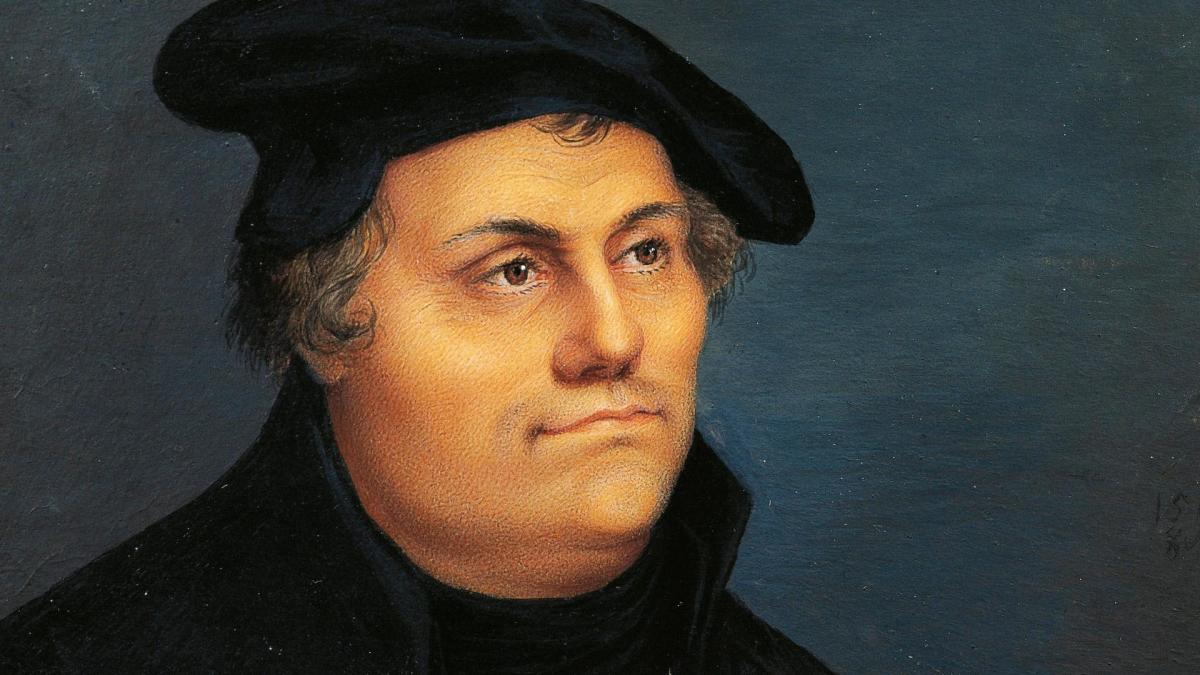
    In 1517 Martin Luther nailed 95 theses: propositions of protest, to the Wittenberg chapel door, sparking off a debate which would split Europe into religious factions. Luther began a movement known as Protestantism.  Protestants departed from several teachings that were advocated by the Roman Catholic Church during the Middle Ages.  These teachings predominately dealt with issues of whether a person is saved by faith or works and questions of authority and church government. There were however also some differences in opinion on certain moral issues such as divorce and celibacy.

    What is interesting however is that on abortion, the leaders of the Protestant Reformation came to essentially the same answer as their Catholic predecessors.

    In his writings, Luther addressed the issue of feticide briefly stating, “those who have no regard for pregnant women and do not spare the tender fruit are murderers and infanticides”[1].93  Luther claims that killing a fetus is both murder and infanticide.

    II. Philip Melanchthon (1497 –1560)

    A similar stance was taken by Philip Melanchthon. Melanchthon was a close companion of Luther and, next to Luther, was probably the most important leader in the Protestant Reformation and one of the first Protestant theologians. Melanchthon stated that on the forty-fifth day after conception a “fetus with formed distinct members begins to live” and he added, “souls are inserted into children about the forty fifth-day and then not only should it [the conceptus] be called an embryo but even an infant”.[2]   The reference to the forty-fifth day is probably a reference to the biological theories of ancient Greek philosophers which we looked when we studied  Alexandrian Judaism.

    III. John Calvin

    After Luther and Melanchthon, the next most important figure in the Reformation was John Calvin. Calvin established one of the most important schools of Protestant Theology in Geneva and wrote the most important defence of Protestant theology in the period.  In his Commentary on the Five Books of Moses. Calvin wrote that:

    [T]he fetus, though enclosed in the womb of its mother, is already a human being, (homo,) and it is almost a monstrous crime to rob it of the life which it has not yet begun to enjoy. If it seems more horrible to kill a man in his own house than in a field, because a man’s house is his place of most secure refuge, it ought surely to be deemed more atrocious to destroy a fetus in the womb before it has come to light.[3]

    This comment occurs in Calvin’s discussion of Exodus 21:22-25. The is the passage we looked at when we studied Alexandrian Judaism.  Calvin appeals directly to the law regarding a pregnant woman, which was cited by Alexandrian Jews, such as Philo, and Patristic writers like Jerome, Augustine.  Calvin concludes that killing a fetus in the womb is homicide.  Like these other writers, Calvin takes abortion to violate the fifth of the ten commandments. The quote above occurs in a commentary on the ten commandments specifically in the section that explains the meaning of the commandment “you shall not kill.”

    IV. Early Calvinists

    Calvin’s influence on later Protestants was immense. People who followed Calvin’s ideas were often called “Calvinists” or “reformed”. In England, a group of Calvin’s followers emerged who historians call “the Puritans” they wanted to reform the Church of England along much more Calvinist lines and make its liturgy less  Catholic.

    A leader of this group was a man called William Gouge (1575–1653) Gouge was the chairperson of a committee which drew up a document called “The Westminster Confession in 1640. The Westminster Confession was an official statement of Protestant belief and is still the official belief statement of Presbyterian and Reformed Churches today. Gouge wrote that it was a violation of the fifth commandment to abort “that which hath received a soul formed in it by God” and that “if it be unjustly cast away, shall be revenged”.[4]

    Calvinists understood the sixth commandment to forbid killing a human being without justification. Calvin had argued that “The sum of this Commandment is, that we should not unjustly do violence to anyone”.[5][Emphasis added]

    Calvin acknowledged that sometimes killing or violence are justified and in his commentary proceeded to justify homicide in certain situations based on the law itself. The conclusions that he reached were summarized in the Westminster Catechism under the question, “What is forbidden by the Sixth Commandment?” the answer was, “The sins forbidden in the Sixth Commandment are, all taking away the life of ourselves, or of others, except in case of public justice, lawful war, or necessary defence”[6] Seeing it makes no sense to punish a fetus for a crime or literally go to war with a fetus. These conclusions suggest that in the reformed tradition feticide can be justified, if at all, only under the justification of self-defence.


    [1] Ewald M Plass, What Luther Says: An Anthology, (St Louis, MO: Concordia Publishing House, 1959) 509, cited in G. Willams, “Religious Residues and Presuppositions in the American Debate on Abortion,” Theological Studies 31:1

    [2] Melanchthon, “Definitio Animae Usitata in Eccesia,” Corpus Reformatorum 13, cited in G. Willams, “Religious Residues and Presuppositions in the American Debate on Abortion,” Theological Studies 31:1 (1970).

    [3] John Calvin, Harmony of the Law, Vol. 3 http://www.ccel.org/c/calvin/comment3/comm_vol05/htm/TOC.htm.

    [4] W Gouge, Of Domesticall Duties, Eight Treatises 506, cited in G. Willams “Religious Residues and Presuppositions in the American Debate on Abortion,” Theological Studies 31:1 (1970).

    [5] Plass, What Luther Says, 509, cited in G. Willams, “Religious Residues and Presuppositions in the American Debate on Abortion” Theological Studies, 31:1 (1970).

    [6] Larger Westminster Catechism, question 136

  • On alleged Victim’s of Church abuse… “Can you blame them?”…. “Yes I can”

    Can you blame them? This was the rhetorical question I heard recently, posed by a speaker at a Conference of religious studies teachers that I attended.  The answer to the question was supposed to be No, and most of the audience seemed to take this to be the correct answer. Nor is this atypical It’s not the first time I have heard the same sort of rhetorical methods employed nor is it the first time I have seen this response.

    No doubt readers will wonder what this question was in response to so let me spell out the context. The speaker was articulating various demographics about the growth of religious belief and practise in contemporary Australia. While doing so he told the following story:  A woman and her family had been actively involved in a church for many years, however later in her life, her marriage ended in divorce. When this happened the woman was told she was no longer welcome in the church. Her family left. The speaker then passionately told us how her children all now are emphatic that organised religion does more harm than good. After relaying this story he then fired off the rhetorical question ” And who can blame them?”

    Had I been less polite I would have stated: “I can”. I think I can blame them. I have heard similar stories over the years from various speakers and must admit to being less than keen on the enthusiastic apologetic self-flagellation that Christian’s often engage in over such stories. Here is why

    First, is a matter of facts and evidence. One thing I have learnt is that when people have had an acrimonious dispute one should always be hesitant to jump to judgement. In any dispute, especially one involving divorce, parties on both sides will have conflicting stories. Both will claim to be unjustly aggrieved, and sorting out what happened isn’t always easy. In this context, I am reminded of a conversation I had with a family law judge once over dinner. The judge talked about both parties in a dispute expressing “their truth”. Piquing my interest, we got into a discussion about whether he believed the truth was relative. On clarification, however, it became apparent the judge wasn’t affirming relativism instead he was expressing a fact he had observed from years on the bench. When emotions run high and loyalties are betrayed or tested people tend to rationalise, deceive themselves, to minimise their own behaviour and maximise that of others. His point was that the different parties often sincerely believe their own stories. They are convinced what they say is true. Despite the fact that it can’t be. It’s the truth as they see it, even if we might see that it is selective with the facts and distorted.  I don’t doubt the judge’s observation that this is common.  In light of this, I think we need to be very careful before we judge that a church or church leadership group has acted appallingly in such a dispute. This isn’t to say Churches never act in inappropriate ways, or make pastoral or theological howlers. It’s just the point that, even though they do, we shouldn’t immediately accept as credible every accusation that they have the as unvarnished truth. Before we rush to judgement, we should try and work out whether the claim is credible.

    In this particular case there are many questions one would need to ask, for example, how did the divorce occur? Did one spouse commit adultery, was there violence or desertion, and from which spouse? Moreover, if the woman was a member of the church isn’t it at least likely that her husband is as well?

     In light of these questions, one can immediately see the situation could be more nuanced than it appears. Suppose the woman had committed adultery, deserted her husband, the church was offering pastoral support to her devastated husband. She was turning up every Sunday with the new man and refusing to acknowledge a problem. In this sort of situation, one can easily sympathise with the churches decision. On the other hand, if the man was a womanising wife beater and the pastoral team were taking his side because “wives should submit to their husbands” the picture is different. The point is I’d want to know more about the picture  before I rushed to judgement and said: “who can blame them?”

     It shouldn’t need to be said. But it’s simply not true that every time some angry person tells a story about their disputes with a church are that the church is in the wrong and the disputant is in the right. Sometimes it’s the case, and sometimes it isn’t. We owe church leaders more respect and justice than to simply believe without question every single accusation made against them, and to join in sympathetic outrage with every accusation. If we rush to judgement, it’s actually us who are behaving appallingly. So while I am quite sure that church leaders can and sometimes do act in bad ways, accusations still need to be substantiated.

    But let’s suppose the story is accurate. The church leadership did behave badly and kicked someone out unjustly. I still think we must answer the speaker’s rhetorical question in the affirmative.  Here is why: Note what the speaker said, he said that upon being treated this way the family concluded that organised religion does more harm than good. They didn’t want to be associated with an institution that behaves this way. So they will have nothing more to do with “religion”.

    But hang on! Can’t a person be legitimately questioned for drawing this kind of conclusion? What has happened is that one church has done one hurtful or offensive thing on one occasion. How can a person justifiably extrapolate from this that religion does more harm than good? Or even that this is normal or typical for churches per se.  To do this, a person would need to look at a representative sample of actions performed by various religious organisations over history. Looking at all the hurtful things religious institutions have done over the centuries and all the beneficial things they have done. There would need to be some weighing of these against one another. And only when this was done could one justifiably conclude that religion causes more harm than good.

    To suggest that because an organisation has hurt you and your family, you can, therefore, make a judgement about all religious institutions and their total effect on society and history is, frankly, absurd. It is obviously a bad inference. Moreover, this type of judgment is one we would out rightly condemn as stereotypical or bigoted if it occurred in a different context.

    Here is an example: suppose a woman’s husband was in the world trade tower on September 11, 2001. As a result of the attack that morning he is killed, and she is overcome with grief. We would feel justified empathy with her,  situation, it’s awful, and she has clearly been wronged, unjustifiably widowed by someone else’s criminal conduct. Does it follow however that we can now justifiably go along with her families claim that all Muslims are terrorists and complicit in such behaviour? Obviously not, to do this would, in fact, to sanction stereotyping and to put it bluntly bigotry.

    Or, to use another example, suppose someone is walking home and is attacked by an African American male. He is beaten and hospitalised and dies from the mugging. The victim’s family are angry in a fit of rage they declare that African American males are a scourge and want nothing to do with any African American men they do more harm than good? What would we say?  “Can you blame them?” I think we can and would; we would call this racial prejudice.  I think we would understand the anger and sympathise with their pain, but we would also recognise that this pain and anger has twisted or warped their perspective so that they are promoting, without evidence, harmful generalisations about others. And we would want to challenge those generalisations.  Of course, this may need to be done in a sensitive and tactful way. But the fact we are sensitive and tactful doesn’t mean we grant what they say is justified. It isn’t. They have allowed their rage and anger to become pathological and bigoted and this isn’t blameless.

    One might wonder why I am harping on about an anecdotal story I have heard in a talk. Here is why: the story I heard and the response I witnessed to it is, I think, representative of something common. Throughout many years at Bible college, University, and witnessing general culture I have often seen people react this way to claims about abuse on the part of religious leaders, and it bothers me that people react this way.

    My studies have taught me that there are in popular culture false narratives about religious people and religious institutions.  Some of these narratives are so notorious historians have given them names The black legend, the myth of a dark ages, the Whig view of history, the conflict thesis, myths about the Crusades in their own way these different narratives are deep in popular psychology and they tell a narrative about the role of religious institutions in our society and history. These narratives are also false. But, their falsity isn’t often appreciated in popular culture. It’s also worth noting these narratives can be harmful. A few years ago I studied the terror that occurred during the French revolution, and it was eye opening how some of these sorts of narratives were used to murder people. The idea of religion as an institution which inevitably oppresses the downtrodden was a well-known Marxist trophe[1]and it was used to justify the slaughter of thousands.  Obviously, not everyone who believes these things is going to kill, but we need to call a spade a spade. A false narrative based on selective and stereotypical reasoning is still a false narrative, and if such a narrative can and has been harmful, we need to be candid about this, it can be used this way. Sticks and stones break bones and names can hurt you.

    So when the speaker asks, “can we blame them” I answer “yes we can” In all walks of life people suffer, have disputes and can be unjustly treated, does this justify them in generalising about whole groups of people? No, it doesn’t. The fact the topic is religion doesn’t change this fact.


    [1] Compare for example Karl Marx’s “religion is the opium of the people’ Mao Tse Tung’s “Religion is Poison” and  the title of Christopher Hitchen’s  bestselling “God is not Great How Religion Poison’s Everything” (emphasis mine)

  • Contemporary Philosophy of Religion and NCEA Religious Studies: Part one

    This is a talk I gave to the New Zealand Association of Philosophy Teachers annual conference at St Cutherberts College in September this year. Several people have asked me to make this talk available.

    I have broken my talk up into four parts. Part One introduces what philosophy of religion. In part two I will outline two movements within analytic philosophy during the early to mid-century which I think resulted in religious beliefs not being taken very seriously within philosophy and philosophy of religion taking a fairly minor role. Part three will look at some responses to these movements offered in the late 20th century and how they changed the philosophical landscape. Part four will look at the question of “how to do philosophy of religion” comparing the methods used by two different atheist’s J L Mackie and Graham Oppy, and how this relates the National Certificate of Educational Achievement Standards. This post will contain part one.

    First, I want to thank the association for asking me to speak, seeing I have been teaching in the secondary sector full time for only a  couple of years so I am not sure I have a lot to share with you and feel very much like I have more to learn from you.

    I have been asked to talk about the contemporary philosophy of religion.  In my talk this morning I will focus on three things. First, I will talk about what philosophy of religion is. Second, I will talk a little bit about its history but focus on recent developments in contemporary analytic philosophy of religion. Finally, I will link some of these things with the current National Certificate of Educational Achievement (NCEA) Standards in Religious Studies. I hope what I say is helpful to you.

    What is Philosophy of Religion
    What is the philosophy of religion? Charles Taliaferro at the Stanford Encyclopedia of Philosophy defines it as “thephilosophy-of-religion philosophical examination of the central themes and concepts involved in religious traditions.” He adds “Philosophy of religion also includes an investigation into the religious significance of historical events (e.g., the Holocaust) and general features of the cosmos (e.g., laws of nature, the emergence of conscious life, widespread testimony of religious significance, and so on)”[1] Chad Meister at The Internet Encyclopedia of Philosophy defines it as “ the philosophical study of the meaning and nature of religion. It includes the analyses of religious concepts, beliefs, terms, arguments, and practices of religious adherents.”[2]

    The History of Philosophy of Religion

    Now, Philosophy of religion has a very long history, going back to the Pre-Socratics. And it was an integral part of medieval philosophy, Augustine, Aquinas, Anselm, Abelard, Scotus, Ockham and so forth worked in the tradition of “faith seeking understanding”. They used philosophy as a conceptual tool to reflect upon, analyse, refine, the religious faith that they held and develop philosophically informed models of core religious doctrines, they also used it to respond to objections and critique rival views and develop arguments for the own for theological models they supported. Some of these reflections proved very fruitful.  The Islamic-Christian dialogue over Aristotle’s understanding of causation and how it related to miracles, and Gods causal activity in the world, for example, is profoundly influential on latter accounts of causation by people like David Hume and the concepts of laws of nature used by early modern scientists.

    Perhaps lesser appreciated is the role of philosophy of religion during the enlightenment.  There is an unfortunate tendency in the history of philosophy not to appreciate the religious context in which important key thinkers of the enlightenment operated. Descartes cogito ergo sum (I think therefore I am), for example, comes from Augustine’s response to sceptics about religious knowledge in the city of God Book 11: 26. Descartes immediately follows this up of course with an appeal to his own version of the ontological argument, proposed famously by Anselm of Canterbury.

    Or consider John Locke, according to Locke’s associate James Tyrell, the impetus for Locke’s “Essay on human understanding” was a conversation  he, Locke and four others had on the topic of “the principles of morality and revealed religion.” Locke’s attempt to develop a comprehensive empiricist understanding of knowledge was an attempt to answer the question of faith and reason, a topic he explicitly addresses in the last section of the book. (Incidentally, it’s a section often skipped in contemporary courses on Locke.)

    Or consider what a widely used textbook refers to as the “revolution in ethics” which occurred in the 18-19th centuries. Which the author, James Rachels, contends is due to Hume, Bentham and Mill. Rachel’s refers to as “A new conception of ethics”… “Morality, he [Bentham] urged is not a matter of pleasing God,  nor is it about following abstract rules, Rather, morality is nothing more than the attempt to bring about as much happiness as possible into the world”.[3]

    Rachel’s is, of course, talking about utilitarianism. However, his characterisation of the history is quite selective. In 1715, some 74 years before Bentham, George Berkley had defended a rule utilitarian conception of ethics[4]Berkeley was a divine command theorist hat moral rightness, and wrongness consists in agreement and disagreement, respectively, with the will of God.  Because  God’s purposes were benevolent a God’s aim was to maximize the happiness of his creatures, so one could assume that whatever rules maximized happiness were those enjoined by God. Berkley used this theoretical account of God and morality to attempt to reconcile his Irish Anglican commitment to passive obedience with loyalty to the Glorious revolution during Jacobite uprisings in Ireland. Berkley’s “theological utilitarianism” was adopted by people like John Gay, Abraham Tucker and compiled by William Paley. Paley’s textbook defending this way of looking at ethics was the standard text at Cambridge and widely influential several years before Bentham published his defence of utilitarianism.

    I could go on; my point is that Philosophy of religion has a long and prestigious history, even during the enlightenment and an important part of educating students about our history and the history of concepts that undergird much of the modern world involves acknowledging these connections rather than ignoring them.

    [1] Charles Taliaferro “Philosophy of Religion”, Stanford Encyclopedia of Philosophy https://plato.stanford.edu/entries/philosophy-religion/

    [2] Chad Meister, “Philosophy of Religion” Internet Encyclopedia of Philosophy http://www.iep.utm.edu/religion/

    [3] James Rachels The Elements of Moral Philosophy, (Random House: New York, 1993) 80

    [4] For explication see Stephen Darwall, “Berkeley’s Moral and Political Philosophy” Kenneth Winkler (ed.), The Cambridge Companion to Berkeley. Cambridge University Press. (2005) see also C. D. Broad, “Berkeley’s Theory of Morals” Revue Internationale de Philosophie, vol. 23-24 (1953):  72-86.


  • Did Hannibal of Carthage Exist?

    HannibalHistorian James Hannam has written an entertaining article called “Satirising the Christ Myth.” The piece uses similar methods employed by those seeking to make the case for the claim that Jesus never existed to show that Hannibal of Carthage did not exist either. It is written in Hannam’s classicly witty yet accurate style;

    Did Hannibal Really Exist?

    To ask whether or not the great Carthaginian general Hannibal ever actually existed might seem rather pointless. It might be an exercise for a student learning about the nature of historical evidence, but not something any serious scholar would waste time on. But maybe we should not be too hasty in acquiescing with the opinion of establishment historians (in other words, there’s a plot by academics stifling debate).

    In fact, although there is plenty of writing about Hannibal, none of it is contemporary and there is no archaeological evidence for him at all (not surprising given the Romans razed the city from whence he came). Furthermore he is not mentioned in any Carthaginian sources, which is incredible, given he was supposed to be their greatest leader (there are no Carthaginian sources as the Romans burnt their city down)! We find when we actually try to pin him down he tends to recede further into the mists of time. His exploits, such as leading elephants over the Alps, are clearly legendary (the skeptic pretends to be incredulous but seems happy to buy his own amazing theory) and it is not hard to find a motive for the creation of this colorful character by Roman writers (as long we can invent a motive for fabrication we can assume that fabrication exists).

    Rome and Carthage were great trading rivals in the Western Mediterranean and it did not take them long to come to blows. Rome signed a peace treaty but, under the leadership of the elder Cato, desperately wanted to rid itself permanently of the competition (this is actually true and so helps to conceal the moment when we slip into fantasy). The Romans needed an excuse and the idea they developed was brilliant. Like many ancient civilizations, the Romans rewrote history as it suited them to exhibit their own prowess (a useful and exaggerated generalization). Consequently we should not be surprised to find that they invented a great enemy from Carthage to demonstrate the threat still existed and justify a further war to wipe them out.

    The author of the fiction was Cato himself (we need someone to point the finger at; note also how there is no distinction made between the background material above and theorizing here), as Cato wrote the earliest Roman History (true as well, as it happens). But it was intended simply as a justification for a further war with Carthage. It contained the details of Hannibal’s alleged campaigns against the Romans, including his victories on Italian soil (Cato’s history has conveniently not survived so we can speculate freely about what it contained). Cato brilliantly combined the truth with his own anti-Carthaginian propaganda with the intention of goading Rome into another wholly unjustified war with the old enemy (give the fabricator lots of credit for his invention). Once the war was over and Carthage was razed to the ground, the Romans were able to ensure that only their version of history survived (this is important as it enables all other sources to be declared forgeries).

    Therefore the myth of the great Carthaginian war leader became an accepted fact. Later Roman historians like the notoriously unreliable Livy (we have to denigrate counter sources) simply assumed Cato’s fabrications were true (because the ancients were stupid and simply could not do any research themselves).

    Conclusion

    The earlier parts set out in “The Christ Myth won’t die“ are also worth reading.

    RELATED POSTS:
    Guest Post: James Hannam on Dan Brown’s History of Science
    The “Dark Ages” and Other Propaganda
    More on the “Dark Ages” and Other Propaganda

  • The Theology of the Declaration of Independence

    As I write this it is just beginning to be the 4th of July in the United States now, though its been 4th July for some time here in New Zealand.

    The 4th of July is, of course, Independence Day. Typically in New Zealand, those members of the secular blogosphere, who consider themselves to be classical liberals, have an annual rant on the 4th of July about the Declaration of Independence, praising the philosophy expounded in this document.

    Declaration of IndependenceNot PC’s Peter Cresswell, for example, states in Happy July 4th! that “with the exception of just a few words, the words could hardly be bettered today;” the declaration is, “A wonderful, wonderful anthem to freedom that rings down through the years.”  He bemoans, “if only the real meaning of those words could be heard and understood.”

    A few years ago Kiwiblog’s David Farrar made similar claims, he stated he would often “marvel at those marvelous words, written in the heat of oppression…Marvelous, absolutely marvelous.”

    I agree. I would simply point out to my secular, liberal, country-men what the words in this document actually say, and some of the philosophical ideas they expound.

    First, the declaration refers to God; it does so four times. Maverick Philosopher has an excellent analysis of the theological content;

    In the initial paragraph, we find the phrase “…Laws of Nature and of Nature’s God….” This phrase rules out pantheism: God is distinct from Nature. In the second paragraph, there is the phrase, “…endowed by their Creator with certain unalienable rights….” Putting these two references together, we may infer that the God being referred to is not merely a deistic initiator of the temporally first segment of the physical universe, but a being involved in the creation of the human race. For if God endowed human beings with rights, this endowment had to occur at the time of the creation of human beings, which of course occurred later than the beginning of the physical universe. In traditional jargon, God is a creator continuans rather than a mere creator originans. He is not a mere cosmic starter-upper, but a being who is continuously involved in maintaining the universe in existence.

    …

    The other two references are in the final paragraph. There we find the phrase, “…Supreme Judge of the World for the Rectitude of our Intentions….” near the beginning of the paragraph, and near the end, “…a firm Reliance on the Protection of divine Providence….” Now if God is the Supreme Judge, then he is more than a mere metaphysical cause responsible for the universe’s beginning to exist; he is also the supreme moral arbiter. And since he endows human beings with rights, as opposed to being merely a judge of rights antecedently possessed, then it seems we may infer that God is the source of moral distinctions (as opposed to a mere judge of them).

    The reference to divine providence is further evidence that the conception of God in the Declaration is non-deistic. For if God provides and protects, then God has an ongoing involvement with the world and its inhabitants such as would be ruled out by a deistic view. It should also be obvious that talk of providence (from the Latin, pro-videre) implies divine foreknowledge which implies intelligence and perhaps omniscience on the part of the deity. The God of the Declaration is not a blind metaphysical cause posited to explain why the universe began to exist, but a being with such attributes as moral goodness and intelligence…. So if by ‘deism’ is meant the doctrine that God is a mere metaphysical cause of the universe’s beginning to exist who is thereafter uninvolved in its continuing to exist, then the God of the Declaration is non-deistic.

    Second, the declaration claims that belief in a creator is self-evident; that is, it is a properly basic belief, which is rationally acceptable to hold in the absence of any proof.

    We hold these truths to be self-evident, that all men are created equal, that they are endowed by their Creator with certain unalienable Rights, that among these are Life, Liberty, and the pursuit of Happiness.

    Third, the declaration makes political pronouncements about public policy on the basis of these theological claims and expects these pronouncements to be taken seriously.

    Fourth, the declaration says that various rights, such as the right to life and liberty, are unalienable. That is, a person cannot alienate one’s life or freedom as they can legally alienate a piece of property. You can’t take my property if I do not consent to you having it but if I do consent, you can take it; property is alienable, life and liberty are not. The argument of the declaration reflects John Locke’s argument in the Second Treatise of Civil Government;

    To understand political power right, and derive it from its original, we must consider, what state all men are naturally in, and that is, a state of perfect freedom to order their actions, and dispose of their possessions and persons, as they think fit, within the bounds of the law of nature, without asking leave, or depending upon the will of any other man.[1]

    …

    But though this be a state of liberty, yet it is not a state of licence: though man in that state have an uncontroulable liberty to dispose of his person or possessions, yet he has not liberty to destroy himself, or so much as any creature in his possession, but where some nobler use than its bare preservation calls for it. The state of nature has a law of nature to govern it, which obliges every one: and reason, which is that law, teaches all mankind, who will but consult it, that being all equal and independent, no one ought to harm another in his life, health, liberty, or possessions: for men being all the workmanship of one omnipotent, and infinitely wise maker; all the servants of one sovereign master, sent into the world by his order, and about his business; they are his property, whose workmanship they are, made to last during his, not one another’s pleasure[2]

    …

    This freedom from absolute, arbitrary power, is so necessary to, and closely joined with a man’s preservation, that he cannot part with it, but by what forfeits his preservation and life together: for a man, not having the power of his own life, cannot, by compact, or his own consent, enslave himself to any one, nor put himself under the absolute, arbitrary power of another, to take away his life, when he pleases. No body can give more power than he has himself; and he that cannot take away his own life, cannot give another power over it.[3]

    The point here is that because your right to life and liberty are from God, no one can legitimately enslave or kill you, even if you consent to it. This was not a mere incidental addendum idea, it was central to Lockean political philosophy, which maintained (as the declaration does) that the government derives its powers from the consent of the governed. If a person can consent to be killed or enslaved then they can consent to the government enslaving them also to having the arbitrary power to kill them and hence tyranny can be legitimate. The reason tyranny is illegitimate is because, “No body can give more power than he has himself; and he that cannot take away his own life, cannot give another power over it.”

    The declaration then makes a metaphysical claim: God exists. It makes an epistemological claim about faith and reason: that belief in God is rational independent of proof. It makes an implicit claim of political philosophy: religion is not a private thing that should not influence public life but rather, theological claims should influence public life. Finally it makes a moral claim; that consenting adults do not have a right to do whatever they like with their own bodies, rather there are “Laws of Nature and of Nature’s God” that bind all human beings, that they are compelled to follow even if all parties consent otherwise. Governments are legitimate to the extent in which they respect these laws.

    I agree with PC, it is hard to improve on this philosophy; I have defended it in several places on this blog.

    Ironically, however, the militant secular liberals in NZ who parrot the declaration seem committed to attacking these ideas and rejecting them on every point. They argue that belief in God is irrational because it cannot be empirically proven, they claim that the public square should be secular, that religion should be private and not influence public policy and they argue that liberty means consenting adults can do whatever they like with their own bodies and lives. Far from being unalienable, a person’s life and freedom is his property to alienate as that person sees fit.

    It is also hard to disagree with PC’s sentiments that the declaration is “A wonderful, wonderful anthem to freedom that rings down through the years. If only the real meaning of those words could be heard and understood.” “Indeed, if only.”

    [1] John Locke Second Treatise of Civil Government Section II 4.
    [2] Ibid II6.
    [3] Ibid IV 23.

  • Lest we Forget: Why My Poppy is Red

    I was asked today why my poppy was red and not white.

    The answer is simple really.

    They died so that we could be free and I deeply respect and appreciate that and cannot fathom those who do not.

    RELATED POST:
    ANZAC Day: Lest we Forget or Have we Already?

  • Guest Post: No Official Religion in God’s Own?

    David Simpkin is a Hamilton based lawyer with an interest in church-state issues. He studied law at the University of Auckland and holds a BA majoring in history and political studies. David is married to Susan and has a infant son, Caleb. He attends Whitiora Bible Church in Hamilton. David writes:

    As a holiday weekend that coincides with the most significant festival on the Christian calendar, Easter, concludes we should reflect on the freedom of religion we have in this nation. The Human Rights Commission is calling for submissions on a draft statement on freedom of religion and belief that includes the statement:

    ‘New Zealand has no official or established religion.’

    Race relations conciliator Joris de Bres has publicly said that New Zealand’s absence of a state religion is a statement of fact[1]. Former Prime Minister Helen Clark was also quoted as saying there is no state religion, there will be no state religion[2]. These comments may be a surprise to those Kiwis who thought rugby has the role of a national religion!

    Given the above comments by influential New Zealanders and the tax payer supported Human Rights Commission it must be clearly correct legally to say that New Zealand has no official religion.

    Well, actually, no, it is not.

    Does New Zealand Have an Official Religion?
    An important distinction needs to be made at the outset. A state with an established religion is one in which a particular religion or church is effectively an arm of the state, and the state identifies with a particular religion. A state with an official religion gives special recognition or privileges to a religion. While an established religion and an official religion are usually found together, that is not always the case.

    One of the most (if not the most) important offices in New Zealand is that of our head of state. New Zealand is a constitutional monarchy and the head of state in New Zealand is our monarch, currently Queen Elizabeth II.

    The Accession Declaration Act 1910 provides New Zealand’s head of state’s oath of office’ This accession declaration states:

    “I … do solemnly and sincerely in the presence of God profess, testify, and declare that I am a faithful Protestant, and that I will, according to the true intent of the enactments which secure the Protestant succession to the Throne of my Realm, uphold and maintain the said enactments to the best of my powers according to law.”

    The accession declaration provides that the Queen must claim to be a Protestant. This is inconsistent with the notion that New Zealand has no official religion. It also refers to other laws which “secure the Protestant succession.” These other laws are the Bill of Rights 1688[3] and The Act of Settlement 1700[4]. All these acts of parliament were re-affirmed as part of the law of New Zealand by our parliament as recently as 1988 in the Imperial Laws Application Act (which, curiously given her comments above, Helen Clark voted in favour of passing[5]). The other laws that secure the Protestant succession are intended to ensure that the King or Queen of New Zealand is always a Protestant Christian. These laws are, incidentally, identical to the current law in the now multi-religious United Kingdom. Where New Zealand differs from the United Kingdom is that neither the Anglican nor Presbyterian churches are established.

    The legal requirement that New Zealand’s head of state must be a Protestant Christian means that in our constitutional form at least we are a Christian nation. Technically our official religion is Anglicanism[6]. Having an official religion of course in no way requires New Zealanders to profess a particular religion. But does an Official Religion pose a threat to Religious Minorities? To answer this question lets refer to some overseas examples.

    Having no official religion and a secular state has been no guarantee that freedom of religion and human rights generally will be respected in North Korea, Cuba and the People’s Republic of China, all of which have woeful human rights records.

    By contrast the Lutheran church is the established church in Norway (there is even a minister of church affairs). It would be fair to say that Norway is not known for its suppression of freedom of religion or for having a poor human rights record.

    Likewise, the established Anglican Church in England and the Presbyterian Church in Scotland has not led to a lack of freedom of religion. Indeed the tolerant Anglican Church is preferable for religious minorities to intolerant secularism.

    It may come as a surprise to learn that there are leading Muslim and Jewish scholars who are actually against disestablishing the Anglican Church in the United Kingdom. To paraphrase their argument, an established but tolerant Anglican Church is preferable to a nation where all reference to the religious or sacred is ruthlessly excluded from the public domain[7].

    The intolerant secularism rightly feared by religious minorities has been evident in France recently. France has already banned the Islamic headscarf and outward wearing of the crucifix, and other religious symbols, in state schools[8] and is considering banning the wearing of a burqa altogether, moves which are causing public discord in France[9].

    Having an official religion is not necessarily any threat to freedom of religion, and may actually be more beneficial to religious minorities than aggressive secularism. The advancement of the rights of religious minorities and multi-culturalism should not be mis-used as a Trojan horse to advance intolerant secularism.

    Conclusion
    As a nation we should celebrate our tolerant Christian tradition, not attempt to falsely deny the legal fact that Christianity is a part of our national constitution. Ironically denials that Christianity is our official religion are playing down the Christian religious tradition that bought about the very religious freedom and tolerance the Human Rights Commission is attempting to promote.

    We have nothing to fear and will gain by having a National Statement on Religious Diversity in New Zealand and a Draft Statement on Freedom of Religion and Belief that acknowledge the existence of New Zealand’s official religion rather than willfully ignore it.


    [1] “There’s No State Religion –De Bres” New Zealand Herald 19 February 2007.
    [2]
    As above.
    [3]
    The relevant section of Bill of Rights 1688 provides:

    And whereas it hath beene found by experience that it is inconsistent with the safety and welfaire of this Protestant Kingdome to be governed by a Popish Prince or by and King or Queene marrying a Papist the said Lords Spirituall and Temporall and Commons doe further pray that it may be enacted that all and every person and persons that is are or shall be reconciled to or shall hold communion with the See or Church of Rome or shall professe the Popish religion or shall marry a Papist shall be excluded and be for ever uncapeable to inherit possesse or enjoy the Crowne and Government of this Realme.

    [4] Section 3 of the Act of Settlement 1700 states (inter alia) “that whosoever shall hereafter come to the possession of this Crown shall joyn in Communion with the Church of England.”
    [5]
    Hansard, 1988 (4th Labour government 1984-1990).
    [6] The Head of State is required to be an Anglican – refer to footnote 4.
    [7]
    Tariq Modood “(Muslim) Establishment, Multiculturalism and British Citizenship,” Political Quarterly 65 (1994) pp.53-73; Rabbi Jonathan Sacks, Ibid at 63-64; also Jonathan Sacks, The Persistence of Faith: Morality and Society in a Secular Age, London, 1991, cited in R Ahdar and J Stenhous et al God and Government The New Zealand Experience, University of Otago Press 2000.
    [8] “Party Pushes Burqa Law Despite Public Discord” New Zealand Herald 10 January 2010.
    [9] Ibid.

    [Wikipedia have a chart showing which countries Queen Elizabeth II is currently head of state of.]