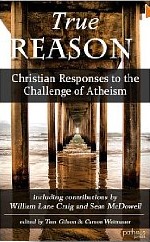
In December we were told that Matt’s article “Tooley, Plantinga and the Deontological Problem of Evil” had passed peer review and would be published in Philosophia Christi. Issue, 13: 2 is now out and if you look at the contents page you’ll see Matt’s article has now been published. The abstract to Matt’s article is as follows: […]
Entries Tagged as 'Ethics'
Philosophia Christi: Abstract Objects and Divine Command Ethics Down-Under
February 14th, 2012 1 Comment
Tags: Divine Command Theory · Glenn Peoples · Philosophia Christi · Publication · Published
Is Ethical Naturalism more Plausible than Supernaturalism? A Reply to Walter Sinnott-Armstrong Part I
February 7th, 2012 9 Comments
This is first half of the paper I presented to the Naturalisms in Ethics Conference at Auckland University last year. In many of his addresses and debates William Lane Craig has defended a Divine Command Theory of moral obligation (“DCT”). In a recent article Walter Sinnott-Armstrong has criticized this contention.[1] Armstrong contends that even if […]
Tags: Divine Command Theory · God and Morality · Robert Adams · Walter Sinnott-Armstrong · William Lane Craig
Back from San Francisco: A Belated Report
February 3rd, 2012 2 Comments
MandM has been quite of late, this is because Madeleine and I have been very busy. With moving house in the midst of Christmas and New Years and Madeleine working part-time in a law firm and so on, we’ve had little time to blog. We are now set up, to some extent, and so this […]
Tags: Biblioblog · David Baggett · Evangelical Philosophical Society · Jerry Walls · Paul Copan · Publication; San Francisco · Society of Biblical Literature · Walter Sinnott-Armstrong · William Lane Craig
Randal Rauser’s Mistake: A Defense of Calvin’s Doctrine of Election
November 12th, 2011 77 Comments
Thanks go to Matthew Flannagan for pointing me in the direction of this response to the problem. A while back Professor Randal Rauser issued a blog entitled “Calvinism and the Arbitrary Camp Director” in which he criticised the Calvinist understanding of election. For those of you who are unaware of the Calvinistic understanding of election, […]
Tags: Arminianism · Calvinism · Circular Reasoning · Election · Ethics · Evangelical Christianity · Philosophical Theology · Randal Rauser · Salvation · Soteriology · Supererogation · Systematic theology · Theology
Contra Mundum: When Scientists Make Bad Ethicists
October 10th, 2011 399 Comments
One thing I find particularly frustrating is reading commentary on theology and philosophy written by scientists. To be fair, some scientists I have read are informed and do offer astute and insightful comments; commonly, however, one finds a person who is undoubtedly brilliant in their own field, writing with confident gusto, articles that fail to […]
Tags: Charles Darwin · Contra Mundum · Divine Command Theory · God and Morality · Investigate Magazine · Jerry Coyne · Robert Adams · Science and Religion
Hear Matt’s EPS Apologetics Conference Paper in Advance & Eat 3 Courses for $10 – This Weekend in Auckland
September 26th, 2011 1 Comment
We are going to the United States in November to, between us, give 4 talks to 4 different conferences that we have been invited to speak at (details below). We need to raise the funds to get there and so far we have raised about half of what we need thanks to the generosity of readers […]
Tags: Apologetics · Evangelical Philosophical Society · Mad | Food · Massey Presbyterian Church · Problem of Evil · San Francisco · South Bend
Skepticule Extra – A Podcast on the Euthyphro Dilemma Feat. Matthew Flannagan
September 16th, 2011 31 Comments
Recently Matt did a podcast on Divine Command Theory and the Euthyphro Dilemma for Skepticule Extra, aka the “Pauls to the Power of Three Podcast” hosted by Paul Baird, Paul Thompson (“Sinbad”) and Paul S. Jenkins. You can listen to that podcast here. Visit Skepticule for more listening options.
Tags: Divine Command Theory · Euthyphro Dilemma · Paul Baird · Paul Jenkins · Paul Thompson · Skepticule

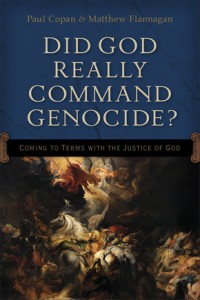 A common objection to belief in the God of the Bible is that a good, kind, and loving deity would never command the wholesale slaughter of nations. In the tradition of his popular Is God a Moral Monster?, Paul Copan teams up with Matthew Flannagan to tackle some of the most confusing and uncomfortable passages of Scripture. Together they help the Christian and nonbeliever alike understand the biblical, theological, philosophical, and ethical implications of Old Testament warfare passages.