At the beginning of each semester my lecturers would remind students of the fire policy, “if the alarm sounds leave the lecture theatre immediately through the nearest exit and reassemble outside the Davis law library.” Now if during class one day my lecturer had said to me, “Madeleine, do not leave class today until you […]
Entries Tagged as 'Philosophers'
What Atheists Could Learn from Legal Interpretation 101
October 7th, 2010 117 Comments
Tags: Bad Reasoning · Hermeneutics · John Loftus · Michael Martin · Old Testament Ethics · Rape · Stephen Carr
Contra Mundum: Abraham and Isaac and the Killing of Innocents
October 3rd, 2010 124 Comments
Since 9/11 a choir of commentators have claimed that the willingness to murder innocent people in the name of God stems from the progenator of the Abrahamic faiths. Abraham, the father of Christianity, Judaism and Islam is commended for attempting to kill his own son. The account of this episode is arguable the most infamous […]
Tags: Abraham · Contra Mundum · Investigate Magazine · Isaac · John Hare · Killing Innocents
Commonsense Atheism and the Canaanite Massacre
September 23rd, 2010 25 Comments
Luke Muehlauser at Commonsense Atheism has written a review of my argument on the genocide of the Canaanites (Joshua and the Genocide of the Canaanites Part I and Part II). Luke’s comments are largely positive (and I appreciate that a critic of Theism and Christianity sees merit in my position) he does, however, raise a few issues […]
Tags: Canaanites · Commonsense Atheism · Genocide · Luke Muehlhauser · Old Testament Ethics · William Lane Craig
Video: Bradley v Flannagan “Is God the Source of Morality?
September 20th, 2010 19 Comments
On Monday 2 August at the University of Auckland Emeritus Professor of Philosophy Dr Raymond Bradley and Dr Matthew Flannagan (of this blog) debated the topic “Is God the Source of Morality? Is it rational to ground right and wrong in commands issued by God?” Here is the video of that debate. Hat Tip: Thinking Matters […]
Tags: Debates · Divine Command Theory · God and Morality · MandM on Video · Matthew Flannagan · Raymond Bradley
Walter Sinnott-Armstrong and the Moral Scepticism Objection to Divine Commands
September 16th, 2010 9 Comments
In responding to William Lane Craig’s advocacy of a Divine Command Theory (DCT) Walter Sinnott-Armstrong makes the objection that,“The divine command theory makes morality unknowable.” He makes the following argument for this: To see why, consider whether or not it is immoral to eat pork. If the divine command theory is correct, we cannot answer […]
Tags: Divine Command Theory · God and Morality · James Cornman · Keith Lehrer · Patrick Nowell Smith · Walter Sinnott-Armstrong · William Lane Craig
Watch the Video of “The New Atheism, Science & Morality” with Glenn Peoples
September 8th, 2010 62 Comments
http://vimeo.com/moogaloo
The unofficial video of Glenn Peoples’ talk at Auckland Uni “The New Atheism, Science & Morality” is online. Hat Tip: E†B
Tags: Atheism · Glenn Peoples · New Atheists · Sam Harris · Thinking Matters
Apologetics 315 Interviews Matthew Flannagan on his Contribution to Apologetics
August 23rd, 2010 29 Comments
Apologetics 315, which brings together a variety of apologetics resources including audio, debates, podcasts, book reviews and articles profiling the works of the best apologists in the world, has interviewed Matt as part of their Apologist Interviews series. Matt is the first kiwi apologist to be featured in this series and stands alongside such contemporary […]
Tags: Apologetics · Apologetics 315 · Chris Shannon · Craig Hazen · Doug Geivett · Doug Groothius · Faith and Reason · Gary Habermas · Greg Koukl · Interviews · Kenneth Samples · Media · Michael Licona · Paul Copan · Peter Williams · Raymond Bradley · William Lane Craig

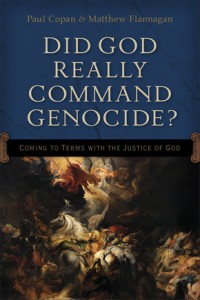 A common objection to belief in the God of the Bible is that a good, kind, and loving deity would never command the wholesale slaughter of nations. In the tradition of his popular Is God a Moral Monster?, Paul Copan teams up with Matthew Flannagan to tackle some of the most confusing and uncomfortable passages of Scripture. Together they help the Christian and nonbeliever alike understand the biblical, theological, philosophical, and ethical implications of Old Testament warfare passages.