Every November there is about a two week period in America where a number of professional academic conferences are held where the best of the best in the field gather. For the last two years Matt has been either accepted or invited to speak at them (I was accepted to speak at them last year too but had a visa problem at the last minute so Matt went without me). Anyway, this year they are all being held in Milwaukee and I am happy to announce that Matt received this email last week:
Congratulations! Your paper proposal for the 2012 Evangelical Philosophical Society meeting in Milwaukee (14-16 November) has been accepted for presentation.
…
Since there were nearly twice as many proposals as spaces, many fine papers had to be rejected. If for any reason you will not be able to present your paper after all, please inform the EPS program committee as soon as possible so that we can allow one of the alternates to fill the vacated slot.
Again, congratulations, and we look forward to hearing your paper in Milwaukee!
Sincerely in Christ,
The EPS program committee
Yay – so proud of him! The abstract he submitted for blind review was as follows:
Peter Singer, Human Dignity, and Infanticide
Christian theism has traditionally taught that human beings have equal dignity and worth, a moral status that separates them from other non-human animals. Peter Singer has famously argued that this teaching is problematic; human beings are not any more special than animals and doctrines of human dignity are indefensible. He contend that killing a new-born infant is, in and of itself, no more problematic than killing a non-human animal such as a cow or a pig, and he defends the permissibility of infanticide.
This paper will critically assess one important part of Singer’s position: his understanding of why it is wrong to kill. In part 1 I will sketch Singer’s “desire account” of killing and its relationship to his own preference utilitarianism and project of animal equality. Following Don Marquis, I will argue that this “desire account” is subject to important counter examples. In part 2, I will note Singer’s attempts to modify his position so as to avoid these counter examples and suggest that these modifications undercut his arguments for animal equality. In part 3, I will suggest that, despite this, there is an important truth in Singer’s critique, one that Christian thinkers can appropriate in developing moral arguments for Christian theism.
Matt did not apply for any other of the conferences this year, although he was invited to give a paper at the Society for Biblical Literature but the session got cancelled. He and I are contemplating applying to Notre Dame’s annual conference on the week before, it’s theme this year is Justice so both of us could, and I still have enough time on my US Visa to go, but I am not sure if I have time to write a paper as my case-load is insane, so it might be just Matt. Anyway – yay Matt!
Update
Wow, already in receipt of donation offers to help get him there! We love you guys 🙂 We have just over $1.5k left over from blog donations and fundraising last time which constitutes the refunds from my aborted-lack-of-visa trip. I will price Auckland to Milwaukee and put up a fundraising widget in the sidebar soon – as with previous years accommodation options will be needed so Milwaukee readers if you have a couch talk to me 🙂
 Those who have followed my



 After-birth abortion is, of course, a nonsensical euphemism; the term ‘abortion’ means to ‘terminate a pregnancy’, it cannot, by definition, apply post-pregnancy. The authors are talking about infanticide: the killing of infants; in essence, putting human babies down. People were shocked and perplexed that ethicists were advocating this and that a leading medical ethics journal was taking this idea seriously.
 Come Let Us Reason is the third book in a series on modern Christian apologetics that began with the popular Passionate Conviction and Contending with Christianity’s Critics. The nineteen essays here raise classical philosophical questions in fresh ways, address contemporary challenges for the church, and will deepen the thinking of the next generation of apologists. Packed with dynamic topical discussions and informed by the latest scholarship, the book’s major sections are:

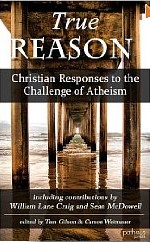 “While New Atheists like Richard Dawkins, Sam Harris, and others proclaim loudly their rationality, clear thinking, and incontrovertible scientific arguments, others are beginning to wonder how genuinely rational they are. Have they proved anything? Have they argued convincingly? Have they pinpointed any real challenges to the credibility of Christian faith?