Category: Theology

  • John Lennox on the “Religion v Science” Myth

    John Lennox will arrive in Auckland in less than two weeks for his New Zealand tour.

    If you are not familiar with Lennox watch this video “The “Religion v Science” Myth.” In it Lennox examines the historically ignorant myth that religion is and always has been at odds with science.

    Details of Lennox’s upcoming New Zealand tour are here: Hear John Lennox in New Zealand.

    Hat tip: Glenn Peoples

  • Hear John Lennox in New Zealand UPDATED

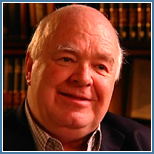
    John LennoxProfessor John Lennox of the University of Oxford will arrive in New Zealand in a fortnight for a brief public speaking tour in the centres of Auckland, Wellington and Christchurch.

    His New Zealand speaking itinerary of public events is below; all public events are free.

    Auckland

    Sunday 27 February

    9:30 – 11:00am Preaching at Howick Baptist Church on the corner of Picton and Wellington Streets, Howick, Auckland. Facebook Event Page.

    1:00 – 3:00pm Science and Religion Q&A at the Salvation Army East City Corps, 37-45 Wellington Street, Howick Auckland. Facebook Event Page.

    7:00 – 9:00pm Preaching at Greenlane Christian Centre, 17 Marewa Rd, Greenlane, Auckland.

    Monday 28 February

    7:00 – 9:00pm “Christ Among the Philosophers” at St Paul’s Church, Symonds St, Auckland. Facebook Event Page.

    Organised by Compass, “Dr Lennox will address questions such as, is faith delusional? Is it reasonable? How can we live faithfully in the public square? How might one engage faithfully as a Christian in the academy?”

    Tuesday 1 March

    12:00 – 1:00pm (this talk will be repeated in the same room from 1:00-2:00pm) “Has Science Buried God?” Public lecture at Auckland University at the Cap and Gown Lounge (Bar), Level 3, Students Union, Auckland University Campus. Facebook Event Page.

    Organised by TSCF: “Science and reason seem to be claiming to have disposed of our need of God. But have they? Prof John Lennox, author of “God’s Undertaker”, engages with the issues in an accessible, thoroughgoing and scientifically sound way. As a world renowned academic mathematician and the only Christian academic that Richard Dawkins has been happy to engage in public debate, John brings illumination, humour and challenge (as well as a cool accent) into this tense and controversial area.”

    7:30 – 9:30pm “So you want to change the world?” Student Meeting TSCF Offices, 441 Queen Street.

    Wellington

    Wednesday 2 March

    7:00 – 9:00pm “Why God Loves Richard Dawkins?” or “God and Stephen Hawking” at St Michael’s, Upland Road, Kelburn, Wellington. Facebook Event Page.

    “Hawking’s book argues that invoking God is not necessary to explain the origins of the universe, and that the big bang is the consequence of the laws of physics alone. Hawking has said, “One can’t prove that God doesn’t exist, but science makes God unnecessary”. Professor Lennox will discuss the flaws in Stephen Hawking’s logic and demonstrate that, far from disproving a creator, Hawking’s argument make the existence of God far more probable.”

    Christchurch

    Sunday 6 March

    9:00 – 10.30am Speaking at Spreydon Baptist Church, Corner Lyttelton & Cobham StreetsSpreydon,Christchurch

    Biography
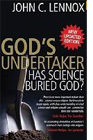
    God's Undertaker: Has Science Buried God?Dr John Lennox is a Professor of Mathematics at the University of Oxford, a Fellow in Mathematics and the Philosophy of Science and (more…)

  • The Pretensions of Democracy and the Egypt Riots

    The secular west has a secular gospel. It is the good news of democracy. When problems assail a nation, all would be assuaged if not solved if it had more democracy. And so it has come to pass with respect to Egypt.

    The West is not unique in that it has its own version of gospel. All human cultures, religions, and peoples have a gospel of some kind. The word “gospel” of course means good news. The gospel of any society is the proclamation of what that society believes will make things right. Whatever a culture looks to as the “super problem solver” is its saviour. Proclaiming and touting that “saviour” is its gospel. That gospel reaches the status of being established in a society when its promises and claims are seen as self-evident and beyond question. Whenever a culture fails to achieve a consensus view of what its saviour is, it has no gospel: fracturing is inevitable.

    In the West, under the aegis of its established religion of secular humanism, democracy is it. It is easy to understand why democracy has become the West’s established gospel of choice. The West is primarily about the glorification and celebration of man. Democracy is that form of government which does respectful obeisance to man–it is the system of government which seems to accord most closely with the idea that man is his own self-saviour. If man is his own self-saviour, then democracy is the form of government which brings man into a position of institutional supremacy in society. The will of the people is the voice of our god.

    So, if any society has problems (and all do), a system of government which institionalises and reifies the will and wisdom of man must be better, if not best. Democracy facilitates man taking control of his own destiny and this will result in the solving and resolution of all problems.

    Egypt RiotsAs the West opines and pontificates over Egypt it cannot help but project its gospel upon that country. The future for Egypt would be much more assured and all problems would be mitigated if the government were to become less authoritarian. If free and fair elections were held and the people had a voice all would be well, or at least better. How beautiful upon the mountains are the feet of those who come proclaiming the gospel of democracy. What a tingle goes up the spine when our high priests in the West proclaim our secular liturgical chants.

    Problem number one. (more…)

  • Waitangi’s Christian Heritage

    It is Waitangi Day in New Zealand today; the day where we remember the signing of the treaty of Waitangi in 1840.

    This morning at church I had the privilege of hearing a very interesting talk from my Pastor, Rev. Dr Stuart Lange about the lead up to the Treaty signing. Stuart is a church historian and something of an expert on the history of Christianity in New Zealand. When he is not being a pastor at Massey Presbyterian Church he lectures in Church History at Laidlaw College where he used to be Vice Principal.

    Samuel MarsdenStuart looked at the role of missionaries in NZ society. He pointed out some interesting facts, such as: the relationship between early missionary Samuel Marsden and William Wilberforce, the famous evangelical reformer who spearheaded the abolition of the slave trade in England; and that prior to the Treaty being signed, large numbers of Maori converted to Christianity; he touched on the role of Missionaries in brokering peace between warring tribes, and how these conversions lead to Maori tribes liberating their slaves who then carried the gospel back to their homes. He also noted that, in many respects, prior to 1840 Christianity was more prevalent amongst Maori than the colonial settlers, many of whom were fairly unscrupulous and had little time for serious evangelical commitment.

    He noted also the theological and pastoral motivations of the missionaries in pushing for the Treaty; they were concerned to see that, with colonialists arriving in great numbers, the indigenous people they worked with were protected. He also noted the role of several missionaries in speaking out against early violations of the Treaty.

    Stuart is apparently giving a 90 minute lecture on these issues at Congress 2011: 2020 Vision – The Gospel in the Decade Ahead, a Christian leadership conference in Wellington later this month – check it out if you’re in Wellington. This was a very brief snippet of that talk but it was thoroughly interesting and it was delivered with Stuart’s characteristic humour.

    I have posted on some of the moral issues around the Treaty before and I plan in the future to write some more on this topic but now  I also plan to look into some of the theological history as I found this talk fascinating.

    Anyway happy Waitangi Day fellow kiwis! Let us today all pause, consider and celebrate our country’s heritage and future together – take up Pat Brittenden’s idea and have a Waitangi Day barbeque! Kia kaha.

    RELATED POSTS:
    Maori and Pakeha are Not Partners to the Treaty of Waitangi
    Sovereignty and The Treaty of Waitangi
    View “Marae: The Great Waitangi Debate” Here
    The Foreshore and Seabed Repeal: The Inconvenience of Due Process

  • Contra Mundum: Is God a 21st Century Western Liberal?

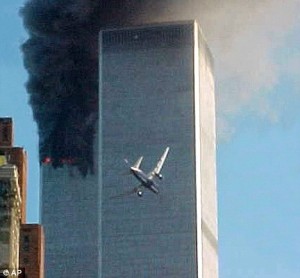
    World Trade Centre Terrorist AttackOn 11 September 2001 Islamic terrorists flew two planes into the World Trade Centre killing thousands of innocent people. Ostensibly they did this because they believed God commanded them to do so. This event has invigorated a fear latent in the Western psyche since the 17th century when wars of religion tore Europe apart, the fear of religious fanaticism, of people willing to murder hundreds in the name of God. These fears were centre-stage recently at a Conference held by the Centre for Philosophy of Religion at the University of Notre Dame. Sceptics presenting at the conference argued passionately that the God of the bible issues commands which are at odds with contemporary modern understandings of morality. Adultery is punished with death; on some occasions, God is portrayed as commanding the killing of non-combatants in “holy wars” against the local Canaanite population.

    There is a lot that can be said about these concerns and in a short column I cannot say everything. In many instances I think the sceptics fail to appreciate the context and genre of the passages they cite. They fail to appreciate, for example, that Ancient Near Eastern conquest accounts employ highly figurative rhetoric, which hyperbolically describe victories in terms of total annihilation of the enemy. They fail to appreciate that Ancient Near Eastern legal texts, as noted by Raymond Westbrook, “reflect the scribal compilers’ concern for perfect symmetry and delicious irony rather than the pragmatic experience of the law courts.” Or that, as JJ Finkelstein points out, they “were not meant to be complied with literally” but to “serve an admonitory function” and so probably do not command execution for the crimes mentioned. Sceptics can fail to grasp that claiming the bible is God’s word does not mean it did not come to us mediated through the writings of human beings who wrote in a particular time and place using the language, rhetoric and literary conventions of their time and so and frequently they fail to appreciate the bible is a Canon and that passages need to be read in their broader context i.e. taking into account the whole bible. A full articulation of these points, however, would take more space than I can here muster.

    Instead I will address another feature of this issue which concerns the general method in play here. In each case the sceptic takes a purported divine command and compares it to a moral belief that he takes to be correct. The conclusion he draws is that the purported command is inauthentic. This is of course a possibility; there is, however, another possibility that on at least some occasions, moral statements these sceptics are relying on are mistaken.

    This feature of the dialectic became clear to me after a public debate I had on these issues in August. A sceptic wrote to me claiming that (more…)

  • Abraham, Isaac, Virginity, Rape and Child Killing (Another Old Testament Ethics Post)

    Randal Rauser has published a blog post touching on Old Testament ethics called “An update in the wake of Atlanta (plus a bit on rape and child killing)“. His post gives an update on his thoughts following his interaction with Paul Copan, Richard Hess and myself in the Evangelical Philosophical Society’s break-out panel discussion “Is Yahweh a Moral Monster” at the Society for Biblical Literature (“SBL”) in Atlanta in November. While there was considerable overlap between his position and mine, there was one particular issue on which he and I disagreed quite sharply on the night that he alludes to in his post. Let me contextualise this disagreement and then put my response to his comments.

    Back in 2009 I wrote “Abraham and Isaac – Did God Command the Killing of an Innocent?” This post addressed a dilemma several philosophers have raised for those Christians who take the patriarchal narratives in Genesis in literal manner. It seems plausible that Christians who do this are committed to an inconsistent triad,

    1. If God commands an action x then x is morally required;
    2. It is wrong to kill innocent human beings;
    3. God commanded Abraham to kill an innocent human being.

    These three propositions are inconsistent; 1 and 3 entail the denial of 2.

    To respond to this triad, I appropriated a thought experiment provided by John Hare; I wrote:

    One example Hare notes, is particularly interesting, “Perhaps (to get more bizarre) God could have willed that we kill each other at the age of 18, at which point God would bring us immediately back to life.” Hare asks us to imagine a world, in which, when people of a certain age are killed they immediately come back to life. He opines, quite plausibly, that if this were to be the case then killing people at this age would not be wrong or at least, not seriously wrong. One of the reasons that killing people is wrong in the world we live in is because people stay dead. If they were only unconscious for a split second and came back to life in full health then arguably killing a person would not be the serious wrong we believe it is.

    I suggested that, a careful examination of the text reveals that Abraham’s actions occurred in a context where he knew his son would not stay dead but would come down the mountain with him and live on to adulthood to father children of his own. I argued this fact resolves the dilemma,

    Once this is realised, I think it is evident that [1], [2] and [3] are consistent. If one assumes, for the sake of argument, that the Patriarchal Narratives are literally true then it follows that [3] is true only if a certain context is assumed. God commanded Abraham to kill his son in the highly unusual context where Abraham knew that his son would not stay dead but would come down the mountain afterwards and live on to adulthood to father children of his own. Proposition [2] is defensible only in a context where people do not know these sorts of things; the rule to not kill the innocent applies to a world where people do not come back to life after they have been killed. Hence, the story of Abraham and Isaac, if taken literally, does not entail that God commanded something immoral or contradictory.

    What I later discovered is that Paul Copan sometimes reads this blog and he, on reading my post, summarised my argument and appropriated it (with acknowledgements)  in chapter 5 of his latest book Is God a Moral Monster: Making Sense of the Old Testament God.

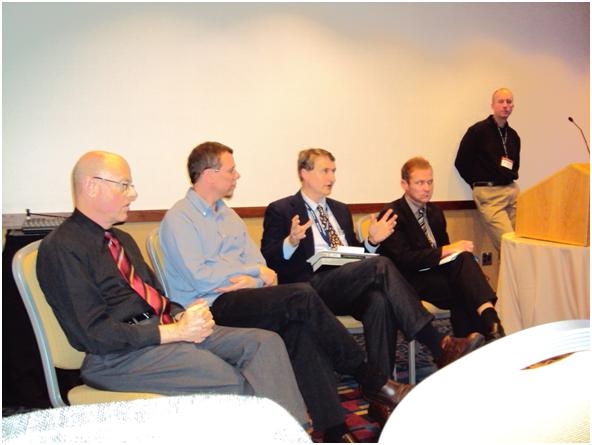
    The EPS Session at the SBL: Richard Hess, Randal Rauser, Paul Copan,  Matthew Flannagan, Michael ReaEnter Randal Rauser. In the paper he presented for the SBL panel, Rauser made a remark on the Abraham and Isaac issue. Copan responded by summarising his argument, which was an appropriation of my argument. Rauser responded with an analogy, which he has since (more…)

  • Alexander Pruss on Scientific Rigour

    Cookie-cutter scienceGiven the debate raging on JT’s Progressive Enslavement: The Seductions of Scientism I thought it timely to share this comment left on The Prosblogion by Baylor University Associate Professor of Philosophy and blogger Alexander Pruss,

    “Given the pessimistic meta-induction, or given the fact that we know that at least one of the two central theories in physics (relativity and quantum mechanics) is false (since the two are incompatible), I don’t think scientific standards of proof should be something for Christians to aspire to. We should aspire to something stronger. And the fact is that the Christian apologetic tradition does contain many very strong arguments.”