In a previous post I mentioned Professor Raymond Bradley’s (Bradley) contention that, [3] The bible teaches that God will torture people endlessly for their beliefs. In his article he cites several scriptural passages in support of this contention. I think his exegesis is problematic; I cannot go into huge detail in a blog post but […]
Entries Tagged as 'Divine Command Theory'
William Lane Craig, Raymond Bradley and the Problem of Hell. Part Two.
June 23rd, 2008 13 Comments
Tags: Apologetics · Atheism · Bill Cooke · Debates · Divine Command Theory · Faith and Reason · God and Morality · Hermeneutics · NZARH · Philosophy of Religion · Rationalists · Raymond Bradley · William Lane Craig
William Lane Craig, Raymond Bradley and the Problem of Hell Part One
June 21st, 2008 5 Comments
During the Q & A at the recent Auckland Cooke – Craig debate, Professor Raymond Bradley (Bradley), Emeritus Professor of Philosophy at Auckland University, offered an argument, which he has laid out in more detail in his article A Moral Argument for Atheism, as follows: Christians accept that: [1] Any act that God commits, causes, […]
Tags: Apologetics · Atheism · Bill Cooke · Debates · Divine Command Theory · Faith and Reason · God and Morality · Hermeneutics · NZARH · Philosophy of Religion · Rationalists · Raymond Bradley · William Lane Craig
Patrick Nowell Smith on Divine Commands
April 15th, 2008 2 Comments
In a widely-anthologised essay Morality: Religious and Secular. Patrick Nowell Smith offers a influential criticism of “religious morality” It is clear from his definition of religious morality that it is Voluntarism ( or a Divine Command Theory of Ethics) he has in mind. Smith states that the religious moralist has “assumed that just as the […]
Tags: Divine Command Theory · Ethics · God and Morality · Patrick Nowell Smith · Philosophy of Religion
Theology, Morality and Reason
March 1st, 2008 Comments Off on Theology, Morality and Reason
In my previous post I mediated on the morality of lying. I suggested that a divine command theorist: a person who believes that the property of moral wrongness is the property of being contrary to God’s commands does not need to affirm that lying is wrong in any and all circumstances. In updating the post […]
Tags: Divine Command Theory · Ethics · Faith and Reason · Peter Cresswell · Theology
Permissible Lies
February 19th, 2008 2 Comments
In wake of the return of the stolen victoria crosses and the Police claiming they are “honour bound” to pay the thieves the promised reward not PC argues that it is permissible to lie to an agressor. The standard example in the literature (which PC utilises) goes something like this: You are hiding someone fleeing […]
Tags: Divine Command Theory · Ethics · Lucia Maria · Peter Cresswell · Theology
The Euthyphro Objection Part III: The Redundancy of God is Good
November 1st, 2007 8 Comments
My first post in this series, The Euthyphro Objection Part I: Against Divine Commands & Avoiding Strawmen, I examined Peter Singer’s version of the Euthyphro argument and demonstrated that it relies upon a strawman. In my Part II I criticised Singer’s utilisation of the arbitrariness objection against divine command theory. Singer’s last objection comes as a rejoinder […]
Tags: Divine Command Theory · Edward Weirenga · Ethics · Euthyphro Dilemma · God and Morality · Paul Faber · Peter Singer · Philosophy of Religion
The Euthyphro Objection Part II: Arbitrariness
October 31st, 2007 4 Comments
In his work Practical Ethics Singer proposes a version of the Euthyphro dilemma to criticise a divine command theory of ethics, Some theists say that ethics cannot do without religion because the very meaning of “good” is nothing other than “what God approves”. Plato refuted a similar view more than two thousand years ago by […]
Tags: Divine Command Theory · Ethics · Euthyphro Dilemma · God and Morality · James Rachels · Mane Hajdin · Peter Singer · Philosophy of Religion · Roy Perrett

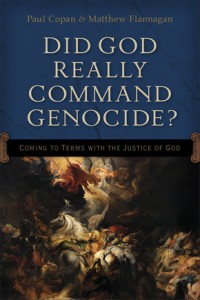 A common objection to belief in the God of the Bible is that a good, kind, and loving deity would never command the wholesale slaughter of nations. In the tradition of his popular Is God a Moral Monster?, Paul Copan teams up with Matthew Flannagan to tackle some of the most confusing and uncomfortable passages of Scripture. Together they help the Christian and nonbeliever alike understand the biblical, theological, philosophical, and ethical implications of Old Testament warfare passages.