Tag: Ethics

  • Contra Mundum: After Birth Abortion

    “What we call ‘after-birth abortion’ (killing a newborn baby) should be permissible in all the cases where abortion is, including cases where the newborn is not disabled.” These words, published in the prestigious “Journal of Medical Ethics” by ethicists Dr Francesca Minerva and Dr Alberto Giubilini, sparked outrage around the world.

    After Birth AbortionAfter-birth abortion is, of course, a nonsensical euphemism; the term ‘abortion’ means to ‘terminate a pregnancy’, it cannot, by definition, apply post-pregnancy. The authors are talking about infanticide: the killing of infants; in essence, putting human babies down. People were shocked and perplexed that ethicists were advocating this and that a leading medical ethics journal was taking this idea seriously.

    The outrage the followed has forced the authors to back-pedal; they have since argued that there conclusion was only theoretical, it was only published for Ethicists to read and they were not engaging in political lobbying. This response is odd. The whole point of Ethics is to answer the question of how we ought to do things. If the author’s conclusion is correct then doctors should perform after-birth abortions; they should kill newborn babies on any ground that currently abortions can be performed on, which, in practice, is almost any ground at all. It is precisely this implication that is widely and correctly condemned as outrageous.

    Less widely commented on is the argument the authors gave for this conclusion. Minerva and Giubilini note that “abortion is largely accepted even for reasons that do not have anything to do with the foetus’ health.” Taking this acceptance as given they then advance three key claims. First [1], they argue that an infant, like a foetus, is only a potential person and is not an actual person. Second [2], that potential personhood confers no right to life upon a biological organism. Third [3], that the interests of actual people to not be encumbered with the care or financial burden of raising a child (or even adopting) can be significant enough to justify killing potential persons. These claims are all extremely familiar; in fact, [1], [2] and [3] are simply claims that are already widely accepted in the literature justifying legal abortion, arguments which lead to the legalisation of abortion in the west some forty years ago.

    Take [2]; if merely being a potential person confers a right to life on an organism then foetuses have a right to life because they are at least potential persons. Defenders of abortion deny that feticide is killing an actual person; hence they accept [2].

    Similarly [3] is accepted, at least implicitly, in New Zealand. Current practice allows people to destroy potential persons for a wide variety of reasons, including the burdens of care associated with child rearing and economic grounds. If one accepts this current practice then potential persons can be destroyed for the sake of relieving all manner of unpleasant economic and social burdens. There is minimal outrage over this; those who express it are generally dismissed as extremist nutters, so [2] and [3] appear to be conventionally accepted as mainstream liberal thinking.

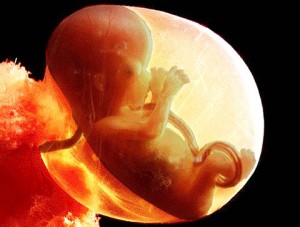
    In the same way, whilst it may not be widely known, [1] has been implicitly accepted in pro-abortion literature for the last 40 years. The reason is this: a foetus is clearly and unequivocally a human being. Whilst people sometimes claim that a foetus is merely a clump of cells, this is, at best, only accurate at the earlier embryonic stage of development. By the foetal stage of 6-8 weeks after conception (which is, incidentally, when most pregnancies are confirmed and most abortions occur) one clearly is talking about a living, biological, physiological human animal. To justify abortion defenders of abortion had to argue that whilst a foetus is a human being this fact is insufficient to give it a right to life.

    Two reasons lead to this conclusion. Firstly, a widely held position known as secularism contends that religious reasons must be bracketed from discussions of public policy. Hence, one cannot approach the question of abortion presupposing the standard Christian view that human beings have been made in God’s image and as such have been given a special dignity not given to other animals. One can afford human beings such a dignity only if one identifies a non-theological or natural property that human beings possess and which other animals lack that plausibly grounds such a status.

    Secondly, once religious beliefs are bracketed then it is very difficult to find any such property. The fact that an animal is of a particular species is, of itself, no more relevant than the fact that someone is of a particular race. The only properties that seem remotely relevant are that mature humans typically possess higher psychological functions that other animals lack such as: sentience, self-consciousness, rationality, ability to use language, autonomy and so on. These functions are relevant because an animal with these properties can be aware of its future existence and value it, judge it valuable, and desire its preservation. In the literature, these psychological properties are referred to as ‘personhood’. Even if there is no God to confer value or dignity on human beings, persons can still have lives that are valuable to themselves.

    To defend abortion rights, a distinction was drawn between being a human being and a person. Whilst foetuses are actual human beings they are not actually persons as the psychology of a foetus is extremely primitive. Foetuses do not appear to be conscious at all until around 28 weeks, and even then the consciousness is primitive. Most mature non-human animals are far more developed psychologically than a human foetus, and even though the foetus has some minimal consciousness, it certainly is not yet self-aware or rational or so on. Hence, foetuses are only potential persons, and according to [2], have no right to life.

    There are several problems with this argument. First, it implies that only those who value their life and desire its preservation have a right to life. This is subject to some obvious counter examples. Consider the (more…)
  • Randal Rauser’s Mistake: A Defense of Calvin’s Doctrine of Election

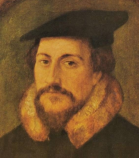
    John CalvinThanks go to Matthew Flannagan for pointing me in the direction of this response to the problem.

    A while back Professor Randal Rauser issued a blog entitled “Calvinism and the Arbitrary Camp Director” in which he criticised the Calvinist understanding of election.

    For those of you who are unaware of the Calvinistic understanding of election, very roughly, it’s the idea is that God elected some for salvation and did not elect others for salvation. Now obviously there’s FAR more to Calvin’s doctrine of election than merely the claim that some are elected and others are not. But that at least, is the centre point of Rauser’s criticism, and more particularly, it’s that element of Calvin’s doctrine that I seek to defend in this article.

    Before we begin, it’s interesting to note that barely three months ago I was a staunch Arminian when it came to soteriology. I reacted against Calvin’s doctrine with the greatest of revulsion. How could it possibly be, I thought, that God could be “good” and yet actively choose some for salvation while leaving others to die?! It made no sense to me! In-fact, I remember going to scripture one Sunday morning actively seeking to find that knock down scriptural blow against the Reformed understanding of election. Interestingly, the first scripture I read was the parable of the wheat and the tares Matthew 13:24-29/13:36-43. While I read it, it struck me that this challenged my Arminian understanding of Salvation. But I didn’t want to believe it, so I left it for a week hoping that there would be some other explanation. But none was forthcoming. Very quickly I found myself speaking in terms that a week earlier I would never have been revolted to hear myself say. I was not yet a practicing Calvinist. I was what you might call “soteriologically agnostic”.

    Now the reason I say this is not because I hope to establish myself as any authority on the matter. To the contrary, Rauser, being a Professor of Historical Theology at Taylor Seminary is far more of an authority on the matter than I can hope to be at this stage of my life. So it’s with much fear and trepidation that I dare post this article contradicting Rauser’s arguments. So why do I give my testimony of how I came to Calvinism? Well I myself am a little unsure. Nevertheless, I suspect that the main reason I give such testimony is that I find it and irony worth sharing that I am writing an article that barely three months ago I would never have even dreamed of writing. If I was going to write anything, it would have been about how Calvinism completely destroys any sensible understanding of God’s justice and love.

    But now let’s get down to business. Precisely what is Rauser’s objection? More than anything else, it appears to be a moral objection. The problem, Rauser urges, is that it makes God’s choice about who save entirely arbitrary. Why, he asks (referring to one of his dialectic opponents apparently named Tom) should God bring glory to him (Tom) and not another say Saddam Hussein? This picture, Rauser asserts, completely undermines the idea that God is loving. In order help us to see this point. Rauser entreats us to consider the following illustrative analogy:

    Randal Rauser“Imagine that there is a camp for troubled youth. The camp director has a rather unorthodox method of dealing with the campers. Some of them are beaten severely with whips in a wholly punitive or retributive (i.e. not restorative) manner while others are chosen by the director to receive care, love and nurture in a way that restores them.

    You are contemplating sending your child to the camp but you want your child to be lovingly restored, not viciously beaten, even if the beatings are just. So you enquire: what is it that makes the director decide to beat the children rather than nurture them? Is it the nature of their crimes? Their race? Gender? What?

    The answer comes back. There is (more…)

  • Abortion and the Morality of Feticide: Part II

    In my last post, Abortion and the Morality of Feticide: Part I, I briefly sketched an argument against feticide,

    [1] It is wrong to kill a human being without justification;

    [2] A fetus is a human being;

    [3] In the case of feticide (at least in the majority of cases) insufficient or no justification is forthcoming.

    I argued that defenders of feticide cannot rationally reject this argument unless they reject one of the premises. I argued further that attempts to refute [3] are successful only if one assumes that a fetus is not a human being. It follows then that defenders of abortion laws cannot rationally avoid the question of whether [2] is correct, whether a fetus is a human.

    Is the Fetus a Human Being?

    Big MacThe first thing to note is that the claim that feticide is homicide has considerable prima facie plausibility. Consider this, a hunter is in the woods and notices some rustling in the bushes. Looking through his scope he sees a six-foot high, bi-pedal being with brown hair, blue eyes, wearing a red and black swanndri. He refrains from shooting. Here, the hunter makes the sensible and reasonable judgement that in firing he would risk engaging in homicide. He bases this on what the target looks like. In the absence of reasons for thinking otherwise, he has good grounds for this claim.

    This example has application to the status of the fetus; “[there is] a general consensus that the fetus is recognisably human after six weeks, and certainly after eight”[1] This fact, conjoined with the above illustration, entails that, in the absence of good reasons to the contrary, there are good grounds for thinking that feticide is homicide.

    The second thing to note is is that good reasons for thinking the fetus does not have human status are not forthcoming. Here I will focus on four common examples: viability, sentience, birth and person-hood.

    Viability
    A common argument contends that a fetus is not a human because it is not viable. Susan Sherwin argues that feticide differs from killing children because a fetus “is wholly dependent on her [the mother’s] unique contribution to its maintenance, while a newborn is physically separate, though still in need of a lot of care”.[2]

    There are several problems with this position.

    The fact that a fetus cannot survive independently of its mother does not mean it is not a human being. Fetal viability is contingent upon the medical technology of a given culture. A fetus that is not viable in (more…)

  • Abortion and the Morality of Feticide: Part I

    Is it morally permissible to commit feticide? The abortion debate swirls around this question, a lot of rhetoric, emotion and anger gets spent on debating this question or avoiding it.

    In this series I will examine this question. First I will sketch an argument against feticide: the killing of a fetus. Then I will examine three common ways of criticising this argument and respond to them.

    The Argument Against Feticide

    Implicit, if not overtly explicit, in much historic Christian moral reflection on feticide is a simple three-premise position. Firstly, that there is a divine law prohibiting homicide – the killing of a human being without adequate justification; secondly, a fetus is a human being; and thirdly, that in all or most cases of feticide, justification for homicide is not forthcoming. This argument can be summarised as follows:

    [1] It is wrong to kill a human being without justification;

    [2] A fetus is a human being;

    [3] In the case of feticide (at least in the majority of cases) insufficient or no justification is forthcoming.

    This argument is formally valid. These three premises jointly entail that feticide is wrong; premises [1] and [2] entail that it is wrong to kill a fetus without justification, this conclusion, conjoined with [3], entails that feticide is wrong in at least the majority of cases. Given the argument is formally valid, any critique of this argument must call into question the truth of either of the premises. [For more on validity see Assessing Arguments]

    Avoidance Tactics
    FetusNotwithstanding this, the most common response to this argument is some tactic seeking avoidance of the issue. It is not unusual to see attempts to denounce, insult, caricature or defame the character of those who oppose feticide. If current commentary is to be believed opposition to legal abortion comes from misogynist fundamentalist fanatics who want to impose their religious mores onto others.

    Of course, these strings of pejorative terms fail to address the argument above. Suppose everything that is said of such people is true – people who oppose feticide do have the bad character traits or motives claimed – the soundness of the argument remains untouched. A good argument does not cease to be a good argument just because someone has personal flaws or dubious motives. It is only unsound if (more…)

  • Pro Life Tour: Hear Jill Stanek, Bryan Kemper, Glenn Peoples, Brendan Malone and Matthew Flannagan

    Student group Pro-Life New Zealand brought have popular pro-life speakers Jill Stanek and Bryan Kemper out from the US for a nationwide tour of New Zealand.Pro Life Tour 2011

    Pro Life Tour 2011

    Most centres will have day workshops and evening talks – click on the centre nearest you for details.

    Dr Glenn Peoples will be joining Jill and Bryan to speak on “Pro-life Apologetics” at the workshop in Dunedin, Brendan Malone will be speaking on “Why we Believe what we Believe” at the Christchurch workshop and Matt will be giving a talk entitled “Answering Arguments for Abortion” at the Auckland workshop and also the one in Hamilton.

    Pro-life Workshop Auckland

    Greenlane Christian Centre, 17 Marewa Road

    • 11:00am Doors open and Morning tea
    • 11:20 am Welcome
    • 11:30am Workshop 1 – Bryan Kemper “Why should we be pro-life and how can we reach this generation?”
    • 12.15 am Workshop 2 – Jill Stanek “Prolife blogging”
    • 1:00pm Lunch
    • 1:45pm Workshop 3 – Bryan Kemper “Pro-life activism on Campus”
    • 2:30pm Workshop 4 – Jill Stanek “Abortion and the breast cancer link”
    • 3:15pm Workshop 5 – Matthew Flannagan “Pro-Life Apologetics: Answering Arguments for Abortion”
    • 3:55pm Pro-life Auckland – Simeon Brown “What we do and how you can help”
    • 4:00pm – Finish

    Speaker Bios

    Jill Stanek was a registered nurse working in the labour & delivery department at an Illinois hospital. One evening she was on duty and she was asked to assist with a complicated abortion procedure. The baby was born alive and was subsequently put in the hospital’s soiled utility room and left to die. Jill went in and (more…)

  • Contra Mundum: The Judgmental Jesus

    Few things are thought to be more morally pernicious than the practice of judging others. Sometimes this is given a theological spin with people citing the Sermon on the Mount “Do not judge, or you too will be judged. For in the same way you judge others, you will be judged, and with the measure you use, it will be measured to you.” (Matthew 7:1-2).

    It is common for this imperative statement to be used as a kind of rhetorical club to silence moral critique of various cultural practices. When a particular practice is subjected to such critique those who engage in the practice will complain they are being “judged.” If the alleged judgers are Christian, the claim that “judging is contrary to what Christ taught” is typically added to the charge.

    I think this is a misrepresentation of the passage and an affront to common sense. I will address the latter point first. The claim that it is wrong to judge other people is problematic; it is so problematic that it is amazing that anyone gives it credence. For example, if it is wrong to judge other people then since Hitler was another person, it is wrong to say that what he did was wrong. To claim that his actions were wrong is to make a judgment about them and if judging is wrong then it is wrong to judge Hitler. Similarly, Martin Luther King Junior was wrong to criticise racism and doing so judged the actions of racists and William Wilberforce was wrong to make moral judgments about the slave trade as in doing so he was judging slave owners. Taken consistently, the claim that “it is wrong to judge” entails that we should have no legal system, no laws and no courts as all these things involve judging others by deeming certain conduct as wrong.

    The problems with this interpretation of Matthew 7:1-2 do not stop there. A little reflection will demonstrate that the claim that it is wrong to judge other people is incoherent. To claim that it is wrong to judge others is to make a moral judgment; in making the statement one is judging that a particular action is wrong. Moreover, when a person announces this to other people he or she is implicitly making a judgment about other people’s actions. To utter that it is wrong to judge others is to engage in judging others. This kind of thinking can easily induce a kind of intellectual vertigo, it is analogous to the person who states, in English, “I can’t speak a word of English” or a person who tries to convince you of the truth of the claim “there is no truth.”

    Fortunately, one does not need to attribute to Jesus such absurd, incoherent, platitudes because it is doubtful that Jesus meant anything quite so stupid. Several factors bear this conclusion out. First, one should note that the claim, “do not judge, or you too will be judged,” occurs as part of the Sermon on the Mount. In this Sermon, Jesus regularly used hyperbole to vividly illustrate a point. One should note that interpreting these hyperboles too literalistically leads to obvious absurdities. For example, Jesus states, when referring to the act of looking at another person’s spouse with lust, “If your right eye causes you to sin, gouge it out and throw it away” (Matthew 5:9). It is evident that Jesus is not advocating self-mutilation but simply making his point about not lusting in a vivid, hyperbolic fashion. Similarly, he commands people to, “do good deeds before men,” (Matthew 5:16) but a few verses later he tells us, “not to do good deeds before men.” (Matthew 6:1). Taken in a strictly literalistic sense this is a contradiction. However, a reading of the context shows these apparently opposing statements are simply vivid illustrations of the same point; one’s good deeds should be motivated by a desire to honour God, to do the right thing and not by a desire to advance one’s own reputation. In light of such contexts the phrase, “do not judge,” should be seen for what it is, a hyperbolic statement illustrating the point elaborated in the surrounding verses.

    Second, when one seeks out this context one can see quite clearly the point being made. The phrase translated in the NIV as, “do not judge, or you too will be judged,” was originally written by Matthew in Koine (a Greek dialect). The Interlinear Bible gives the literal translation here as, “do not judge that you be judged.” In other words, do not judge others in a way that leads one to put oneself under judgement. The surrounding words support this conclusion,

    For in the same way you judge others, you will be judged, and with the measure you use, it will be measured to you. ″Why do you look at the speck of sawdust in your brother’s eye and pay no attention to the plank in your own eye? How can you say to your brother, ‘Let me take the speck out of your eye,’ when all the time there is a plank in your own eye? You hypocrite, first take the plank out of your own eye, and then you will see clearly to remove the speck from your brother’s eye.″ Do not give dogs what is sacred; do not throw your pearls to pigs. If you do, they may trample them under their feet, and then turn and tear you to pieces. (Matthew 7:2-6)

    Here the qualifications are evident. One is not to judge in a way that brings judgment on oneself. The reason for this (“for”) is that the standard one uses to judge others is the standard that one’s own behaviour will be measured by. Jesus goes on to illustrate, with a sarcastic example, precisely what he is talking about; a person who nit-picks or censures the minor faults of others (taking the speck out of their brothers eye) who ignores the serious, grave, moral faults in their own life (the log in one’s own eye). His point is that such faults actually blind the person’s ability to be able to make competent moral judgments. This suggests that Jesus is focusing on a certain type of judging and not the making of judgments per se.

    In fact, the conclusion that Jesus does not mean to condemn all judging of others is evident from the proceeding sentences in the above quote. Rather than engaging in the kind of judgment Jesus has condemned one should “first take the plank out of your own eye, and then you will see clearly to remove the speck from your brother’s eye.” In other words one should try to rectify the serious moral flaws in one’s own life precisely so one can assist others with theirs. One needs to avoid hypocrisy in order to make constructive and effective moral judgments about others. This would make no sense if Jesus meant to condemn all judging by this passage.

    The reference to “pigs and dogs” in verse 6 further bears this out. Dogs and pigs, to Jews, were unclean animals and the term was frequently used to designate people considered to be of low moral character who were “unclean” before God. In this verse Jesus is simply repeating the Old Testament teaching to “not rebuke a mocker or he will hate you: rebuke a wise man and he will love you” (Proverbs 9:8). The implication, again, is that one should try to make constructive judgments rather than simply provoking anger. Constructive judgments involve making judgments.

    Just in case I have not belaboured the point enough, my interpretation is further reinforced by what follows after these passages. While reading a passage in its context is not the strength of many popular critics of Christianity, immediately after the cited passage Jesus goes on to warn about the dangers of religious charlatans, which he, rather judgmentally, refers to as “ferocious wolves” in “sheep’s clothing” (Matthew 7:15). In the age of Osama Bin Laden, David Koresh and Jim Jones the danger of such charlatans needs little further elaboration.

    In exhorting the requisite discernment, Jesus actually instructs his disciples to make moral judgments about others. He tells his disciples to judge whether a person is a false prophet or not by their “fruit.” Anyone familiar with Old Testament prophetic literature, as Jesus’ hearers were, would know that “fruit” is a metaphor for character. Isaiah’s use of the metaphor is paradigmatic; Isaiah famously described Israel as a vineyard that did not bear fruit. In the metaphor, fruit quite clearly referred to such things as right conduct, justice, morality, etc. Paul uses the same metaphor when he states that “the fruit of the Spirit is love, joy, peace, patience, kindness, goodness, faithfulness, gentleness and self-control” (Galatians 5:22-23a). Jesus makes it clear that he is utilising this metaphor. He goes on to stress that in this context the fruit of a prophet is whether he or she “does the will of my Father” and is not an “evil doer.” It is clear then that Jesus here is exhorting his disciples to make moral judgment about other people, to critically evaluate other people’s lives, choices and actions and to make judgments about their spiritual authenticity based on this evaluation. All of this would be very odd if Jesus thought it was wrong to judge.

    Moral judgment of religious leaders, of oneself, of the organisations one is contemplating joining, of people one considers associating with, of the political leaders one supports at the ballot box and broader issues in wider culture is a task essential to both authentic spirituality and the competent navigation of everyday life.

    I write a monthly column for Investigate Magazine entitled Contra Mundum. This blog post was published in the February 10 issue and is reproduced here with permission. Contra Mundum is Latin for ‘against the world;’ the phrase is usually attributed to Athanasius who was exiled for defending Christian orthodoxy.

    Letters to the editor should be sent to: editorial@investigatemagazine.DELETE.com

    RELATED POSTS:
    Contra Mundum: What’s Wrong with Imposing your Beliefs onto Others?
    Contra Mundum: God, Proof and Faith
    Contra Mundum: “Bigoted Fundamentalist” as Orwellian Double-Speak
    Contra Mundum: The Flat-Earth Myth
    Contra Mundum: Confessions of an Anti-Choice Fanatic

  • Auckland STAANZ Conference: Eschatology and Pneumatology UPDATED

    The Systematic Theology Association in Aotearoa New Zealand (STAANZ ) are this week holding a conference in Auckland focusing on eschatology and pneumatology.

    What: STAANZ Conference on Eschatology and Pneumatology
    When: Thursday 19 November – Friday 20 November 9:00am-5:30 pm
    Where: Ponsonby Baptist Church, 43 Jervois Rd, Auckland
    Cost: $15

    Pre-conference prayer will be held at 8:00am at All Saints in Ponsonby, 284 Ponsonby Rd, Auckland.
    Dinner at a local restaurant will be organised for the Thursday night.

    Speakers are as follows: [UPDATED]

    Thursday
    “Holy Spirit in the theology of Walter Kasper” – Hugh Bowron
    “Backgrounding Walter Kasper’s Early Thought”- John Dunn
    “Wandering between two worlds: 19th Century Reflections on Hope and Hell” – Carolyn Kelly
    “Conscious Awareness of the Spirit in Symeon the New Theologian” – Jim McInnes
    “Searching for Embers” – Susan Adams & John Salmon

    Friday
    “Abortion, Harm and Eschatology” – Matthew Flannagan
    “Infant Salvation: Is God’s Mercy Enough?” – Myk Habets
    “Participatory Glory : The Eschatological Direction of Karl Barth’s Theology of the Cross”— Rosalene Bradbury
    “The Spirit and Longing” – Judith Brown
    “Filioque, Personhood and Ecclesiology” – Scott Kirkland

    The abstract for Matt’s topic “Abortion, Harm and Eschatology” is as follows:

    In No Harm No Foul: Abortion and the Implications of Fetal Innocence Kenneth Einar Himma offers what I shall call ‘the eschatological argument for abortion rights.’ Himma argues that because a fetus lacks the mental capacity to be culpable for any sin, a plausible Christian eschatology entails that a person who kills a fetus does not actually harm the fetus. Instead feticide benefits the fetus by sending the person killed straight to the afterlife, thus avoiding the possibility of any risk of future sin and consequent damnation. Given abortion does not harm the fetus, and as one should only legally proscribe harmful actions, it follows that abortion should be considered a woman’s right. In this paper I will criticise the eschatological argument for abortion, arguing it has absurd implications that entail infanticide and killing the disabled. Further, that even if one grants the eschatological assumptions implicit in Himma’s critique, abortion does, in fact, harm the fetus.

    Whilst Matt’s paper will find its way onto this blog, it is always nicer to hear it delivered in person so if you are free Friday morning he will be delivering it from 9:00-10:00 am.