Anne was clearly angry. She relayed how her former husband had been abusive, had beaten her and sexually violated her. Despite this, however, he had never – as far as she knew – had an affair. Did this mean she had sinned before God for leaving her marriage? Was she now required to remain celibate […]
Entries Tagged as 'Theologians'
Contra Mundum: “Till Death do us Part” Christ’s Teachings on Abuse, Divorce and Remarriage
February 28th, 2011 46 Comments
Tags: Adultery · David Instone Brewer · Divorce · Hermeneutics · Marriage · Remarriage · Spousal Abuse
Waitangi’s Christian Heritage
February 6th, 2011 Comments Off on Waitangi’s Christian Heritage
It is Waitangi Day in New Zealand today; the day where we remember the signing of the treaty of Waitangi in 1840. This morning at church I had the privilege of hearing a very interesting talk from my Pastor, Rev. Dr Stuart Lange about the lead up to the Treaty signing. Stuart is a church […]
Tags: Christian History · Laidlaw College · New Zealand Christian Network · Samuel Marsden · Stuart Lange · Treaty of Waitangi · Waitangi Day · William Wilberforce
Abraham, Isaac, Virginity, Rape and Child Killing (Another Old Testament Ethics Post)
January 23rd, 2011 89 Comments
Randal Rauser has published a blog post touching on Old Testament ethics called “An update in the wake of Atlanta (plus a bit on rape and child killing)“. His post gives an update on his thoughts following his interaction with Paul Copan, Richard Hess and myself in the Evangelical Philosophical Society’s break-out panel discussion “Is Yahweh […]
Tags: Abraham and Isaac · David Boonin · Don Marquis · Evangelical Philosophical Society · Homicide · John Hare · Michael Tooley · Old Testament Ethics · Paul Copan · Peter Singer · Randal Rauser · Richard Hess · Society of Biblical Literature
God and the Genocide of the Canaanites Part III: Two Implications of the Hagiographic Hyperbolic Account
January 16th, 2011 21 Comments
This three-part blog series is a modified version of what I presented to the Evangelical Philosophical Society meeting in November 2010. In a recent Conference at Notre Dame Alvin Plantinga suggested that the commands to wipe out the Canaanites, recorded in the book of Deuteronomy, might be hyperbolic; they should be understood more like how […]
Tags: Alvin Plantinga · Canaanites · Christopher J H Wright · Genocide · Gordon Wenham · Hagiography · Hermeneutics · Hyperbole · J McConville · J P U Lilley · Joshua · Nicholas Wolterstorff · Old Testament Ethics · Paul Copan
NT Wright on Myth in Genesis
January 15th, 2011 65 Comments
If certain passages in Genesis are of the genre ‘myth’ it does not necessarily entail that they are therefore untrue or lacking in authority. This was the argument in Matt’s post Myth, Truth and Genesis 1-11 and it is also NT Wright‘s point in this short video made by the Biologos Forum, Hat Tip: Ropata
Tags: Biologos Forum · Genesis · Myth · NT Wright
God and the Genocide of the Canaanites Part II: Ancient Near Eastern Conquest Accounts
January 10th, 2011 14 Comments
This three-part blog series is a modified version of what I presented to the Evangelical Philosophical Society meeting in November 2010. In my previous post, God and the Genocide of the Canaanites Part I: Wolterstorff’s Argument for the Hagiographic Hyperbolic Interpretation, I expounded and adapted Nicholas Wolterstorff’s argument for a hagiographic hyperbolic reading of the book […]
Tags: Alvin Plantinga · Canaanites · Genocide · Hagiography · Hermeneutics · Hyperbole · J Van Seters · James K. Hoffmeier · John Goldingay · Joshua · K Lawson Younger · Kenneth Kitchen · Nicholas Wolterstorff · Old Testament Ethics · Richard Hess · Thomas Thompson · Ziony Zevit
Moving Beyond CS Lewis?
January 6th, 2011 28 Comments
CS Lewis still provides a great read and he has been an important figure in my own journey of working out my faith. But I cringe a little when, as repeatedly happens, Christian people hear I’m into philosophy and science and such and they recommend I read the author of the Narnia books. I’ve been reading […]
Tags: Church · CS Lewis · Narnia · Philosophy of Religion

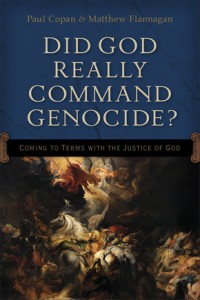 A common objection to belief in the God of the Bible is that a good, kind, and loving deity would never command the wholesale slaughter of nations. In the tradition of his popular Is God a Moral Monster?, Paul Copan teams up with Matthew Flannagan to tackle some of the most confusing and uncomfortable passages of Scripture. Together they help the Christian and nonbeliever alike understand the biblical, theological, philosophical, and ethical implications of Old Testament warfare passages.