Category: Philosophers

  • God and the Genocide of the Canaanites Part I: Wolterstorff’s Argument for the Hagiographic Hyperbolic Interpretation

    Around this time last year I wrote two posts Joshua and the Genocide of the Canaanites I and Joshua and the Genocide of the Canaanites II. These posts attracted a fair amount of attention and debate. I got offers to publish my ideas in several upcoming books and present them before both the Evangelical Philosophical Society (EPS) and the Society for Biblical Literature in November 2010. Since the original posts I have corresponded with various people and I have modified and refined some of the ideas. This three-part blog series is a modified version of what I presented to the EPS last month. These posts supersede and update what I wrote in a year ago.

    Joshua at AiOne of the most perplexing issues facing Christian believers is a series of jarring texts in the Old Testament. After liberating Israel from slavery in Egypt, the Israelites arrived on the edge of the Promised Land. The book of Deuteronomy records that God then commanded Israel to “destroy totally” the people occupying these regions (the Canaanites); the Israelites were to “leave alive nothing that breathes”. The book of Joshua records the carrying out of this command. In the sixth chapter it states “they devoted the city to the LORD and destroyed with the sword every living thing in it—men and women, young and old, cattle, sheep and donkeys”. In the tenth and eleventh chapters it states that Joshua “left no survivors. He totally destroyed all who breathed, just as the LORD, the God of Israel, had commanded.” The text mentions city after city where Joshua, at God’s command, puts every inhabitant “to the sword”  “totally destroyed the inhabitants” and “left no survivors.”

    If one takes these passages literally they record the divinely-authorised commission of genocide. But genocide surely is morally wrong. In the light of this, critics of Christian theism often ask a rhetorical question; how could a good and loving God command the extermination of the Canaanites?

    One response which goes back to the patristic era is to suggest that the strict, literal reading on which this rhetorical question is based is mistaken. Recently, several, protestant scholars have suggested a hyperbolic reading of the relevant passages.[1] Perhaps the most detailed is that proposed by Nicholas Wolterstorff. Wolterstorff suggests,

    “[T]hat the Book of Joshua has to be read as a theologically-oriented narration, stylized and hyperbolic at important points, of Israel’s early skirmishes in the Promised Land, with the story of these battles being framed by descriptions of two great ritualized events.  The story as a whole celebrates Joshua as the great leader of his people, faithful to Yahweh, worthy successor of Moses.  If we strip the word “hagiography” of its negative connotations, we can call it a hagiographic account of Joshua’s exploits.”[2]

    In this series I will defend Wolterstorff’s position. In this post I will sketch, adapt and defend Wolterstorff’s argument. In Part II, I will argue that external evidence from comparative studies in Ancient Near Eastern conquest accounts gives considerable support to Wolterstorff’s position. Finally in Part III I will look at two implications of this position.

    Wolterstorff’s Argument
    Wolterstorff’s contention is that “a careful reading of the text in its literary context makes it implausible to interpret it as claiming that Yahweh ordered extermination”. It is important to note what he means by context. Here, it is clear that Wolterstorff is advocating a canonical approach. He notes that,

    “Joshua as we have it today was intended as a component in the larger sequence consisting of Deuteronomy, Joshua, Judges, I and II Samuel, and I and II Kings…  I propose that we interpret the Book of Joshua as a component within this larger sequence – in particular, that we interpret it as preceded by Deuteronomy and succeeded by Judges.”[3]

    Joshua comes after Deuteronomy and before Judges. Wolterstorff points out that these books should be read as a single narrative. When one does this, however, several issues are apparent. (more…)


  • An Atheist and a Christian walk into a Bar… Original Sin & the Existential Paradox

    My previous post, William Lane Craig, Original Sin and Original Guilt, touched on the doctrine of original sin. According to the standard western articulation of this doctrine it has three components. First that human beings have a propensity towards doing wrong. Second, this propensity is inherited from our ancestors, it is not that we come into the world perfect and then later abandon perfection. In Edward Oakes’ words in “Original Sin: A Disputation”, “sin after Adam always takes the form of acquiescence and not of origination. We are born, that is, into a world where rebellion against God has already taken place, and the drift of it sweeps us along.” Finally, despite this we are responsible for this propensity in some way.

    As both theologians and philosophers have noted for centuries this doctrine appears paradoxical. How can we be responsible for something we inherit? I agree that there is something of a paradox in the notion of original sin and it is hard to find a coherent way of making sense of it. In this post I will take a different tack; I want to suggest that denying theological doctrines of original sin will not resolve this paradox. The reason: the paradox is in fact a paradox which is part of human existence and human moral experience. Hence, even without a doctrine of original sin, the paradox is still apparent to anyone who reflects on their experience.

    Original Sin

    This was made clear to me in a conversation I had in a bar with an atheist friend. My interlocutor, who had had a staunch Calvinist upbringing, was railing against the Calvinist doctrine of original sin and the apparent contradictions in it. His observations were fairly astute. He noted that on the one hand Calvinist parents instilled personal responsibility in their children and brought them up to accept responsibility and accountability for their actions. This he commended as morally good. At the same time he noted that these same parents believe in original sin. They believed human nature, as it exists today, is corrupt. Humans come into the world with a propensity to evil; their view is that from birth onwards it is inevitable that we will sin, that our hearts are inclined towards evil and so on. He proceeded to argue that if the latter view was correct then the former must be false. The doctrine of original sin undercuts the idea of personal responsibility.

    I listened carefully to my friend’s argument, when he had finished I asked him a question:

    Did he consider himself a moral agent who was responsible for his actions?

    Unsurprisingly, given his recent praise for personal responsibility, he immediately answered yes.

    Then came my second question:

    Have you ever lied? (more…)

  • False Alarm: Falsificationism and its Misapplication

    A fair number of people are fond of the claim that if one is to be able to take a claim seriously, it really ought to be falsifiable. One easy response is that it’s difficult to see how this particular claim, about how we are to go about accumulating knowledge and believing stuff, is itself falsifiable; but if that seems a bit too quick a dismissal, there are other fairly well documented reasons to be dubious of ‘falsificationism’ and its claims to epistemological kingship.

    Some ideas can be tested reasonably well e.g. with this early electron microscope. Others await the examination of evidence in different ways.

    The idea is commonly associated with the scientific method; a purportedly precise way of doing things that many (perhaps particularly scientists, surprisingly enough) are pretty sure everyone should be keen on. If you want to know something, use science – it works. Indeed, the requirement of falsifiability is sometimes seen as a shibboleth for rationality, or at least orthopraxy amongst ‘reasonable’ people. In the discipline of the philosophy of science itself however, it would appear to be considerably less popular than among certain popularisers of science; an intriguing sociological fact. Falsificationism is a dumbed-down version of the views of method which Karl Popper offered the scientific community. Yes, science involves testing claims against the evidence, but there is more to it than that. A requirement of falsifiability may be seen as a suitably sceptical approach; even (as I’ve seen) contrasted with the blind faith apparently invested by religious people in their beliefs. This is problematic for a number of reasons, some of which will become clear. Lying behind it is a conveniently selective scepticism which puts aside the complexities of science and assumes or pretends that the project of explicating the order in the universe is a natural fit with naturalism. If you want to know why science works, it’s not science and it may not be falsifiable theories which will give good answers.

    Perhaps the most pressing issue behind this post is widespread allegiance amongst many naïve people to some form of ‘scientism’. I and other Christians who decry this trend away from genuine rationality and accompany the hand-wringing with good arguments are often assured that it does not in fact exist (more…)

  • William Lane Craig, Original Sin and Original Guilt

    A lot of people are up in arms at the moment about a paragraph in William Lane Craig’s answer to Question 193 “Overweening Ignorance.” Facebook, blogs, twitter and message boards are abuzz with Christians angrily attacking Craig with the charge that this paragraph shows he either does not hold to the doctrine of original sin or that he thinks it is not essential to Christianity. Here is what some are saying about the offending paragraph:

    “Craig denies that original sin is essential to the Christian faith.” Steve Hays

    In “Bible-optional Christianity” Hays sets out the offending sentences from the offending paragraph then puts them alongside Romans 5:12 and Corinthians 15:21-22, 45-49 (passages which speak of man’s sinful nature and the need for Christ’s salvation). The conclusion we are supposed to draw is that Craig is denying the truth of these passages and views these as “optional.”

    In “Hollywood Squares” Hays draws a ejusdem generis parallel between Craig’s paragraph and the writings of liberal scholars like Spong, Bultmann and The Archbishop of Canterbury.

    In the comments section of his third post on the paragraph “Rabbit Ears“, where he accuses Craig of making “a V-sign behind God’s head when God is speaking (the rabbit-ear gesture),” Hays writes:

    “Craig doesn’t seem to care what the Bible teaches about original sin. He simply absolves his correspondent of responsibility to believe what the Bible teaches on this subject, regardless.”

    On Facebook Dominic Bnonn Tennant wrote:

    “This is why, contrary to the objections of some, William Lane Craig not the world’s foremost apologist. The first duty of apologetics is to the truth. Not to unbelieving presuppositions. You can’t have good apologetics without good theology.”

    On Hays’ blog Bnonn Tennant wrote:

    “As I think someone has said already, the problem with Craig is that he starts with philosophy and only then worries about theology. That’s ass-backwards.”

    James R White of Alpha & Omega Ministries Apologetics Blog wrote:

    “this is not the first time WLC has made this statement. I have said repeatedly that WLC’s theology is way too hobbled to support biblical Christian theism, which is why he has to produce a much smaller theism to defend. And this is one of the manifestations of starting with philosophy and then crafting a theology to match your philosophical opinions.”

    Jonathan wrote:

    “Some apologists are eager to get people into the “Kingdom” anyway they can.”

    Saint and Sinner wrote:

    “I am so sick of minimalist Christianity”

    Peter Pike wrote:

    “Without Original Sin, there is no basis by which Christ’s blood can be applied to any sinner whatsoever. Craig should know this. He has a responsibility to teach this. I don’t care if ignorant, non-biblical “Christians” don’t hold to it–Craig is held to a higher standard, and his outright ignoring of this doctrine instead of teaching it in a way that someone can understand it simply neuters Christianity.

    You don’t defend Christianity by surrendering”

    William Lane Craig

    Apparently, Craig is not only affirming heresy but is a compromiser who is not committed to the truth, who denies that the existence of universal sinfulness and that the need for salvation is an essential Christian belief.

    This own goal demonstrates not just an alarming inability for many Christians to read in context but also some overweening ignorance about theology (not to mention an alarming lack of charity for the man who is internationally renowned and respected for publicly defending the faith by lay people and the academy alike.)

    Let us take a look at the offending paragraph (more…)

  • A Refutation of Zeitgeist – The Movie

    Zeitgeist the MovementZeitgeist – The Movie is an internet phenomenon that has taken a lot of people in. I know several people who have seen it and have either been convinced by it or it has heavily rocked them. We’ve had commenters on this blog raising issues and asking questions which clearly have their roots in Zeitgeist. There is a global movement complete with a New Zealand chapter.

    For me the claims in Zeitgeist are patently absurd, funny almost and I totally got what Glenn Peoples was on about when he said on Facebook “I swear, watching Zeitgeist is draining my IQ” but it is important to not dismiss the opportunity to take such a clearly influential phenomenon apart, examine the claims it makes and clearly demonstrate the flaws in it so that those who are rocked by it have a good resource to get their feet back on solid ground with. It also won’t hurt those of us immune to Zeitgeist’s charms to take the time to see how best to respond to it for the next time we encounter someone who has been swayed by its content.

    For these reasons when Glenn asked for suggestions for his next podcast topic I suggested an analysis of Zeitgeist and for much the same reasons he leaped on it. Glenn has a PhD in Philosophy and a Masters and Bachelors in Theology. He is also a very lucid and clear thinker who makes the best podcasts which often have cool sound effects and original music. So grab a cuppa and sit back and listen to his podcast Episode 038: Zeitgeist (you’ll need a spare 55 minutes).

    One of the accompanying links Glenn has with his podcast is a must-view. It is written by a non-Christian and it thoroughly examines the astrological claims made by Zeitgeist complete with astrological charts and diagrams. The author states:

    “I prefer honesty in polemics. Some of the astronomical and astrological claims of Zeitgeist are simply wrong, and lead to a wrong impression of the origins of Jesus’ birth narrative. I hope to demonstrate scientifically why they’re wrong”.

    The link to this is here: Zeitgeist Astronomy.

  • The Separation of Church and Self: Rethinking Separationism

    Is it just for a pluralistic society to ground its public policy on religious premises? What role should religion play in such a society? Debate over questions like these has figured in theology, philosophy, political science, jurisprudence and popular culture for centuries. In contemporary Western pluralistic society the debate continues. Even for those unfamiliar with its nuances at the higher levels the effect of the standard view, as described by Stephen Carter, is immediately familiar:

    “One good way to end a conversation – or start an argument – is to tell a group of well educated professionals that you hold a political position (preferably a controversial one such as being against abortion or pornography) because it is required by your understanding of God’s will. In the unlikely event that anyone hangs around to talk with you about it, chances are that you will be challenged on the ground that you are intent on imposing your religious beliefs on other people. And in contemporary political and legal culture, nothing is worse.”[1]

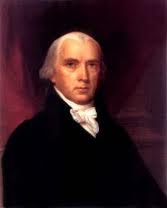
    James Madison

    Carter is referring to the separationist understanding of religion and public life, the idea that in a contemporary pluralistic society significant restraint must be put on the political role of religious reasons. This restraint is negative; when a functionary deliberates over a proposed policy it is not justified for that functionary to decide to support or oppose that policy on grounds derived from religion. A corollary of this is that citizens should not try to influence public policy by appealing to religious reasons. Separationists argue that the public policy of a pluralistic society must be able to be justified by a plausible secular justification in order for it to be just to all. Religious beliefs, while utilised and followed in private, should be kept separate from public policy debates, the administration of public institutions and the deliberation of public functionaries. (more…)

  • God, Morality and Abhorrent Commands: Part III Philip Quinn

    In this three-part series I look at some different ways of adjudicating conflicts between apparent divine commands and moral beliefs. I started with Immanuel Kant, I then looked at Robert Adams’ defence of Kant’s position. Now I will complete the series by exploring Philip Quinn’s alternative view.

    In “God, Morality and Abhorrent Commands: Part II Robert Adams” I mentioned Phillip Quinn’s observation that theists can face a particular dilemma,

    “[I]t seems possible that a theist should have both good reasons for believing that God has commanded him to perform a certain action and good reasons for believing that it would be morally wrong for him to perform that action. Thus a theist can be confronted with moral dilemmas of a peculiar sort.”

    Quinn’s point is that a theist might find himself believing all three of the following propositions:

    [1] Whatever God commands is morally permissible;

    [2] God commands X;

    [3] It is wrong to do X.

    Adams and Kant argued that one should resolve dilemmas of this sort by affirming [3] and denying [2].  I argued in Part I Kant and Part II Robert Adams that this conclusion is unjustified. What Adams does show is that one cannot “accept a theological ethics that ascribes to God a set of commands that is too much at variance with the ethical outlook that we bring to our theological thinking.” [Emphasis added] His position, in fact, suggests that in many cases we should accept divine commands at variance with our moral beliefs. Hence, there may well be times when it is rational to reject [3] and embrace [2].

    In this last post I will elaborate Quinn’s answer to this question. Quinn’s position can be seen by contrasting two approaches he takes to specific examples of the kind of dilemma he cites.

    The first is Quinn’s response to the dilemma posed by “the sins of the patriarchs” (more…)