Category: Contra Mundum

  • Contra Mundum: Dawkins and Secular Hypocrisy

    Richard DawkinsWhen I was a non-Christian I was forever hearing about how Christians are hypocrites. When I converted to Christianity at 17, one thing that struck me is how often these charges were often a case of the pot calling the kettle black. While there is undoubtedly some hypocrisy within the church, it is also pervasive outside it. Secular culture often contains absurd ironies and hypocrisy which are conveniently ignored.

    A great example was the media fiasco over William Lane Craig’s visit to the United Kingdom last year. Craig is distinguished philosopher known professionally for his work in philosophy of time and philosophy of religion. Alongside his scholarly work, he has also developed a reputation as a prolific public speaker and debater, debating many of the world’s leading sceptics. His combination of scholarly ability and effective debating skills has earned him a reputation as one of the world’s foremost Christian apologists.

    “Apparently, having two PhD’s, authoring over 100 papers, and writing 30 books on a topic makes you unqualified to speak on it, but being the star of the 80’s TV series “Growing Pains” does.”

    Craig’s visit to the UK attracted media attention when Richard Dawkins, author of the best selling “God Delusion”, publically and resolutely refused to debate him. Dawkins publically stated earlier of his critics that “he did not care” who they were, he would “dialogue” with them and “win the argument”. He also had publically debated numerous critics significantly less qualified than Craig, notably Ted Haggard. These facts, alongside Dawkins implausible and inconsistent reasons lead to accusations of cowardice and hypocrisy from other academics such as Daniel Came a philosophy professor at St Hugh’s College Oxford.

    In the UK newspaper the Guardian Dawkin’s gave two reasons for his refusal. According to Dawkins, Craig “parades himself as a philosopher, but none of the professors of philosophy whom I consulted had heard his name”. Dawkins omitted to mention that this was not the first time he had publicly denigrated Craig’s scholarly credentials. On a previous occasion  Daniel Came,  had e-mailed him stating:

    “Professor Craig has a PhD in philosophy and a PhD in theology. He is Research Professor in Philosophy at Talbot University. He has published more than thirty books and over a hundred papers in reputable peer-reviewed journal. Given your passionate and unconditional commitment to truth, I can only think that you were not aware of Professor Craig’s credentials when you made the above reference.”

    So Dawkins claim that no philosopher he had consulted had ever heard of Craig was less than honest. A less charitable person might describe this as simply slander.

    Dawkins concern about Craig’s alleged lack of scholarly credentials also seems odd seeing that he (Dawkins) had earlier accepted an invitation to debate actor Kirk Cameron.  Apparently, having two PhD’s, authoring over 100 papers, and writing 30 books on a topic makes you unqualified to speak on it but being the star of the 80’s TV series “Growing Pains” does qualify you. It’s also ironic that Dawkins would accuse Craig of lacking scholarly credentials on the matter given that he (Dawkins) is a biologist and not a philosopher of religion.

    Dawkins next excuse was that Craig is “morally unfit” to debate him.  To substantiate this he cites not from any of Craig’s scholarly writings. But two blog posts Craig had written on with the conquest of Canaan. At face value  the early chapters of the book of Joshua portrays God as commanding the killing of every man women and child in Canaan. I say “appears”, here because latter sections of the book of Joshua and its sequel in judges proceed on the assumption this never occurred, and studies into ancient conquest accounts of this genre have noted the widespread use of literary hyperbole whereby victories are described in sweeping rhetoric of killing absolutely everyone when in reality they were (more…)
  • Contra Mundum: Separating Church and State

    Co-authored by Matthew and Madeleine Flannagan

    The late Philosopher Richard Rorty once described religion as a “conversation stopper”, something that polarises discussion and ends or prevents fruitful dialogue. Rorty was an advocate of,

    “the happy, Jeffersonian compromise that the Enlightenment reached with the religious. This compromise consists in privatizing religion — keeping it out of … “the public square,” making it seem bad taste to bring religion into discussions of public policy.”

    The view that the public square – the legal system, economy, public education system, politics and so on – should be secular is now standard in contemporary political theory. When making decisions about their private conduct religious believers can utilise religious reasons in but in public they are morally bound to bracket their beliefs about God and appeal only to secular considerations.

    In an earlier column, “Secularism and Public life”, Matthew criticised this position. He pointed out that a growing number of scholars working in philosophy, political science and law are calling the defensibility of this position into question. We will not repeat those points here instead we will address one interesting feature of Rorty’s comment above; Rorty referred to his position as “the … Jeffersonian compromise.”

    In doing this he reflected a trend that began in the US the mid to late 20th Century and has spread around the Western World. The First Amendment of the United States (US) Constitution asserts that “Congress shall make no law respecting an establishment of religion, or prohibiting the free exercise thereof; …”. In a letter to the Danbury Baptists in 1802, US Founding Father Thomas Jefferson stated that this amendment established a “wall of separation” between church of state. In the mid 20th century the US Supreme court argued that on the basis of Jefferson’s comments the US Constitution required the “separation of church and state”. This was then interpreted to mean that the US Constitution demanded a secular public square, religious ideals and beliefs were not to be allowed in public life.

    It won’t be news to anyone who has watched any US television shows to hear that the Supreme Court has interpreted the First Amendment to mean that religious instruction, prayer, references to God, displays of the 10 Commandments, nativity scenes — even where participation is voluntary — are banned from public institutions.

    Separation of Church and StateWhen Rorty referred to his position as “the Jeffersonian compromise” he was alluding to this line of argument. It is an argument we have heard over and over: because our society has a separation of church and state, we are committed to having a secular public square. If one opposes a secular public square and believes, as we do, that religious beliefs should influence public life then one gets accused of denying the separation of church and state.

    We think this inference is wrong-headed. It confuses the separation of two institutions, the church and state, with the separation of religion and public life. These are not the same things.

    To understand separation of church and state some history is necessary.

    Prominent legal scholar, Steven D Smith, observed that the church-state relationship, which would have been familiar to an eighteenth century American, was one where “governments controlled or directly intervened in the internal affairs of churches, and churches claimed and were formally endowed with governmental powers.” He elaborated that,

    “Since the middle ages, scholars and polemicists of all stripes had argued-on both religious and political grounds-that the church should exercise control over the state or-again on both religious and political grounds-that the state should control the church. The common view for centuries had been that an established church was essential to political and social stability. …

    In medieval Europe, for example, kings had claimed, and had exercised, the power to appoint bishops and popes. After the Reformation, the British monarch became the official head of the Church of England, and British government assumed control over both the selection of ecclesiastical officials and the formulation of religious doctrine.

    Medieval popes regularly crowned earthly emperors and kings, and they claimed (and frequently purported to exercise) the authority not merely to excommunicate but actually to depose those kings. Popes sometimes asserted jurisdiction to adjudicate what were essentially political or property disputes. In England, the Church enjoyed-and still enjoys-official representation in Parliament. Immigrants later imported established churches in some form into most of the American colonies.”

    Separation of church and state is the idea that the church should not be formally endowed with governmental powers and that the state should not try to intervene in or control the church. Now many people (including we, the writers) accept this. We do not believe that the government should set up an official state church or have any say in the liturgy, theology, choice of ministers and so on in established churches. Nor do we think that churches should be granted state powers, the right to hold seats in parliament, the ability to pass legislation, prosecute or tax people and so on. We wholeheartedly accept the separation of church and state.

    However, separation of church and state is not separation of religious beliefs from public life – perhaps this confusion arises because both concepts have the word “separation” in them. Church and state are formal institutions; public life is not an institution nor is a religious belief an institution. To assert, as so many commentators do, that separation of church and state commits us to a secular public square is to offer a non-sequitur.

    Some examples will illustrate this point. Suppose New Zealand were to allow the establishment of a completely private university; this university would not be an official state university, it would not be endowed with any political status nor would it does it hold any judicial, legislative or executive powers. The government would not choose its employees or its curriculum and the scholars within it would have total academic freedom. If this were to occur we would say there was an institutional separation between the state and this university.

    Now, imagine that the science department (more…)

  • Contra Mundum: Religion and Violence

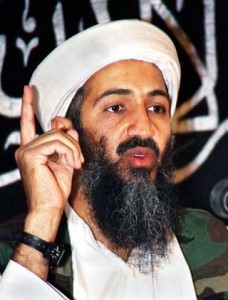
    On 1 May 2011 the world received the news that Osama Bin Laden was dead; gunned down in Pakistan by an elite team of US Navy Seals. Even before his death Bin Laden had become a legendary persona. Not only was he a terrorist leader responsible for the deaths of thousands of innocents but he functioned as a contemporary paradigm of the fanatical religious nutter who promotes hatred, violence and intolerance – much like the symbol Adolf Hitler was to earlier generations.

    Osama Bin LadenThe 9/11 terrorist attacks reinvigorated a fear that has lain dormant in the western psyche since at least the 17th century. This fear is encapsulated in an objection to belief in God known as the argument from historical atrocities. Many critics of religion refer to the religious wars that tore Europe apart during the 17th century, citing events such as the Inquisition and Crusades — although lately the Taliban have been the image of choice.

    Recently, whilst debating the viability of religious morality at the University of Notre Dame, best-selling author Sam Harris repeatedly cited the Taliban as a representative example of theological ethics. One need not read far into the literature of contemporary free thinkers to uncover this line of argument. Consider Jim Peron of the Institute for Liberal Values:

    “To admit religion into the “public arena” is “dangerous.” And long term the results will be just as bloody and violent as they were in the past. … To put religion into that sector is to ignore centuries of history and return to the conflict-ridden, bloody world of the Dark Ages.”

    Peron went on to refer to common motifs of the Inquisition: “crazy Puritans”, Servetus’ execution in Calvin’s Geneva and so on. Similar themes abound in the writings of Dawkins, Harris and Hitchens. The citation of historical cases is not in itself an argument so it is hard to discern the exact objection here. It appears to consist of two claims. Firstly, that some people who believe in God have committed atrocities against other people. Secondly, that if people who hold a belief commit atrocities then that belief is either false or should be avoided by liberal-minded people.

    Historians Ronald Numbers and David Lindberg point to recent research having discredited the portrayal of the early Middle Ages as “the Dark Ages” brought about by Christianity. Similarly, research into Inquisition archives reveal that while such tribunals did exist, many popular beliefs are based on embellishment, exaggeration and propaganda rather than a sober assessment of facts. The picture of the Inquisition that emerges from these studies is significantly more benign than has popularly been thought. Similarly, historian Leland Ryken’s studies on the Puritans have questioned many of the popular stereotypes Peron referred to.

    Take Peron’s allusion to the execution of Servetus. In his study on the life of Calvin, Oxford Theologian Alister McGrath argues (more…)

  • Contra Mundum: Stoning Adulterers

    Back in 2005 there was a minor furore when Labour MP Ashraf Choudhary stated he agreed with the Koran’s teaching that people who engaged in homosexual conduct or who committed adultery should be stoned to death. In the media spiral that followed, some commentators pointed out that it was not just Islam that held this view; Christians are committed to the same conclusion. Consider Deuteronomy 22:22 “If a man is found sleeping with another man’s wife, both the man who slept with her and the woman must die. You must purge the evil from Israel” or Leviticus 20:10 “If a man commits adultery with another man’s wife—with the wife of his neighbour—both the adulterer and the adulteress are to be put to death. Often passages like this motivate a rhetorical question “why don’t Christians today stone to death women who commit adultery? After all, this is what the Bible commands isn’t it?”

    Ten Commandments

    I’ll make two points in response to this. First, those who press this line of argument assume that these commands are addressed to contemporary Christians. This is a dubious assumption; the laws occur as part of a covenant or vassal treaty between the tribes of Israel and God. While some of the laws expounded in this treaty reflect rules of justice and equity applicable to all people, Gentiles were not parties to this treaty nor were gentile Christians required to be – something the New Testament spends a lot of time elaborating on.

    Second, and this will be my main focus, this line of argument assumes that these apparent laws function like modern statute law; the assumption is that they are literal and binding commands to kill people who had committed certain crimes. It is also assumed that the author of these laws expected them to be carried out. Interestingly, it is precisely this assumption which many scholars of these laws have questioned. Here I will spell out some reasons why they do so.

    Comparisons between Leviticus and Deuteronomy and other ancient Near Eastern (“ANE”) law codes suggest they are the same genre. One feature of such codes is seemingly harsh penalties. In old Babylonian law, the hand that assaults was severed; a man who kissed another’s wife was to have his lips cut off; a person who stole bees was to be stung by bees; a man who raped another’s wife would be sentenced to having his own wife or daughter raped; a negligent builder whose house collapsed and killed another’s son would be sentenced to having his own son killed, and so on.

    ANE expert Raymond Westbrook notes that these prescribed punishments are both inconsistent with the actual legal practice known to have occurred in these cultures and are often inconsistent with themselves. He notes, “some law codes impose physical punishments and others payments for the same offenses, while some codes have a mixture of the two.” The contradiction is only apparent because, “in highlighting one or the other alternative, the codes are making a statement as to their view of the gravity of the offence.” He argues that the laws “reflect the scribal compilers’ concern for perfect symmetry and delicious irony rather than the pragmatic experience of the law courts.” Westbrook concludes that the method used in ANE legal texts was “to set out principles by the use of often extreme examples.”

    A similar point is made by Old Testament scholar John Goldingay who suggests that many of these laws “were not intended to be enforced” but rather were “promulgated to indicate the moral and social priorities of the law giver.” They functioned to express certain ideals of behaviour, to denounce actions like adultery as really bad and intolerable rather than to define precise penalties for these actions.

    Westbrook points to the practice of (more…)

  • Contra Mundum: Why Does God Allow Suffering?

    Christchurch's Cathedral after the earthquake22 February 2011 “may well be New Zealand’s darkest day”; these were the words of Prime Minister John Key in the aftermath of the earthquake which devastated the South Island’s largest city Christchurch. The death toll is expected to be over 200, many more have been injured, have lost property and now live in fear of the next big one. Inevitably a question is posed to those, like me, who have faith in God. Where was God that day? Of course the person who asks this is not literally asking where God physically was, he is asking, why did God not prevent this from happening? Why does God allow people to suffer? God clearly, as an all powerful being, can prevent suffering so why doesn’t he?

    The question is ambiguous. Taken one way it is simply a question which assumes that God exists and asks for God’s reasons for allowing a particular event. Taken the other way it is a rhetorical question which hides an unspoken argument that the existence of disasters, like the Christchurch earthquake, is evidence that God, most likely, does not exist. In “God, Evil and Suffering” Daniel Howard-Snyder notes,

    [T]he theoretical “problem” of evil is often expressed in the form of a pointed question. God is able to prevent evil and suffering and He would know about them before they happened, right? Moreover, since He is unsurpassably good, surely He would not permit them just for the fun of it. So why doesn’t He prevent them?

    The sceptic notes two things; first that God knows about and is able to prevent suffering. Second that God, being perfectly good, would prevent this suffering unless he had a good reason for allowing it, which Howard-Snyder defines as “a reason that was compatible with his never doing wrong and his being perfect in love”. This is the implicit background to the question.

    The rhetorical force of this argument is powerful and its emotional appeal has a strong pull, particularly on the back of an horrific disaster. Nevertheless, many philosophers have found that when examined rationally it has an important flaw. The argument establishes that if God exists then He must have a good reason for allowing suffering. The sceptic is asking for an account of these reasons. The assumption is that if a believer cannot give a precise account of God’s reasons then there probably are none. It is this assumption upon which the argument hangs or falls.

    The problem is that this assumption is questionable. Philosopher Alvin Plantinga illustrates,

    I look inside my tent: I don’t see a St. Bernard; it is then probable that there is no St. Bernard in my tent. That is because if there were one there, I would very likely have seen it; it’s not easy for a St. Bernard to avoid detection in a small tent. Again, I look inside my tent: I don’t see any noseeums (very small midges with a bite out of all proportion to their size); this time it is not particularly probable that there are no noseeums in my tent—at least it isn’t any more probable than before I looked. The reason, of course, is that even if there were noseeums there, I wouldn’t see ’em; they’re too small to see. And now the question is whether God’s reasons, if any, for permitting such evils as [the Christchurch earthquake] are more like St. Bernards or more like noseeums.

    In his book The Reason for God: Belief in an Age of Skepticism, Timothy Keller notes “we see lurking within supposedly hard-nosed skepticism an enormous faith in one’s own cognitive faculties. If our mind (more…)

  • Contra Mundum: Is God a 21st Century Western Liberal?

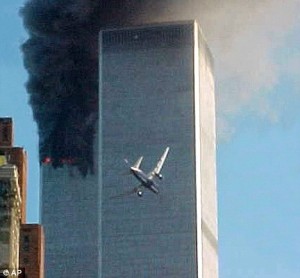
    World Trade Centre Terrorist AttackOn 11 September 2001 Islamic terrorists flew two planes into the World Trade Centre killing thousands of innocent people. Ostensibly they did this because they believed God commanded them to do so. This event has invigorated a fear latent in the Western psyche since the 17th century when wars of religion tore Europe apart, the fear of religious fanaticism, of people willing to murder hundreds in the name of God. These fears were centre-stage recently at a Conference held by the Centre for Philosophy of Religion at the University of Notre Dame. Sceptics presenting at the conference argued passionately that the God of the bible issues commands which are at odds with contemporary modern understandings of morality. Adultery is punished with death; on some occasions, God is portrayed as commanding the killing of non-combatants in “holy wars” against the local Canaanite population.

    There is a lot that can be said about these concerns and in a short column I cannot say everything. In many instances I think the sceptics fail to appreciate the context and genre of the passages they cite. They fail to appreciate, for example, that Ancient Near Eastern conquest accounts employ highly figurative rhetoric, which hyperbolically describe victories in terms of total annihilation of the enemy. They fail to appreciate that Ancient Near Eastern legal texts, as noted by Raymond Westbrook, “reflect the scribal compilers’ concern for perfect symmetry and delicious irony rather than the pragmatic experience of the law courts.” Or that, as JJ Finkelstein points out, they “were not meant to be complied with literally” but to “serve an admonitory function” and so probably do not command execution for the crimes mentioned. Sceptics can fail to grasp that claiming the bible is God’s word does not mean it did not come to us mediated through the writings of human beings who wrote in a particular time and place using the language, rhetoric and literary conventions of their time and so and frequently they fail to appreciate the bible is a Canon and that passages need to be read in their broader context i.e. taking into account the whole bible. A full articulation of these points, however, would take more space than I can here muster.

    Instead I will address another feature of this issue which concerns the general method in play here. In each case the sceptic takes a purported divine command and compares it to a moral belief that he takes to be correct. The conclusion he draws is that the purported command is inauthentic. This is of course a possibility; there is, however, another possibility that on at least some occasions, moral statements these sceptics are relying on are mistaken.

    This feature of the dialectic became clear to me after a public debate I had on these issues in August. A sceptic wrote to me claiming that (more…)

  • Contra Mundum: In Defence of Santa

    I grasped the sponge, water dripped down my wrist as I took aim. The man from the McGillicuddy Serious Party raised his voice and said “now throw!” The sponge flew through the air from my hand and struck Santa solidly on the chest soaking his red costume. Santa laughed and said “throw another one!”

    It was my second year at university and the McGillicuddies were running their annual “throw a sponge at Santa” event. This was done ostensibly to protest materialistic consumerism of which they saw Santa as a modern icon. I was simply sick of the whole hypocritical façade that was Christmas. An event that for many, myself included, has deeply religious significance was being trivialised by a fat man in a red suit from the north-pole. It really irked me.

    Years have passed since this event and with age comes (I hope) more reserve and wisdom. I have learned more about the cultural icon known as Santa and I have come to appreciate, at least from an historical perspective, why this icon exists. I agree that today the historical meaning of this icon has been forgotten. However I think that the solution to this forgetfulness is to re-awaken our cultural memory by addressing the theological and historical ignorance prevalent in our culture; attempts to cut ourselves off from the past even further are not the right approach.

    Nicholas of Myra

    The reference to Santa as an icon is apt because the original Santa, Nicholas of Myra, became an icon in religious art. In earlier times there was no printing press and illiteracy was widespread so vivid art became an important way of communicating a message. Characters had to be readily recognisable, in religious art Nicholas was represented by the figure of a man with a large white beard. Given that he was a Catholic bishop, he was portrayed in red robes. The figure of a white-bearded man in red robes became a symbol for an historical person, and the story of Nicholas was kept alive because of its immediate relevance for the present.

    Nicholas of Myra was probably (more…)