Category: Theology

  • Contra Mundum: Religion and Violence

    On 1 May 2011 the world received the news that Osama Bin Laden was dead; gunned down in Pakistan by an elite team of US Navy Seals. Even before his death Bin Laden had become a legendary persona. Not only was he a terrorist leader responsible for the deaths of thousands of innocents but he functioned as a contemporary paradigm of the fanatical religious nutter who promotes hatred, violence and intolerance – much like the symbol Adolf Hitler was to earlier generations.
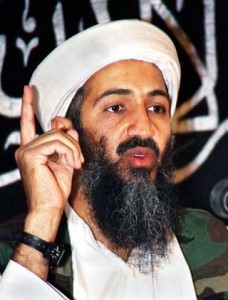
    Osama Bin LadenThe 9/11 terrorist attacks reinvigorated a fear that has lain dormant in the western psyche since at least the 17th century. This fear is encapsulated in an objection to belief in God known as the argument from historical atrocities. Many critics of religion refer to the religious wars that tore Europe apart during the 17th century, citing events such as the Inquisition and Crusades — although lately the Taliban have been the image of choice.

    Recently, whilst debating the viability of religious morality at the University of Notre Dame, best-selling author Sam Harris repeatedly cited the Taliban as a representative example of theological ethics. One need not read far into the literature of contemporary free thinkers to uncover this line of argument. Consider Jim Peron of the Institute for Liberal Values:

    “To admit religion into the “public arena” is “dangerous.” And long term the results will be just as bloody and violent as they were in the past. … To put religion into that sector is to ignore centuries of history and return to the conflict-ridden, bloody world of the Dark Ages.”

    Peron went on to refer to common motifs of the Inquisition: “crazy Puritans”, Servetus’ execution in Calvin’s Geneva and so on. Similar themes abound in the writings of Dawkins, Harris and Hitchens. The citation of historical cases is not in itself an argument so it is hard to discern the exact objection here. It appears to consist of two claims. Firstly, that some people who believe in God have committed atrocities against other people. Secondly, that if people who hold a belief commit atrocities then that belief is either false or should be avoided by liberal-minded people.

    Historians Ronald Numbers and David Lindberg point to recent research having discredited the portrayal of the early Middle Ages as “the Dark Ages” brought about by Christianity. Similarly, research into Inquisition archives reveal that while such tribunals did exist, many popular beliefs are based on embellishment, exaggeration and propaganda rather than a sober assessment of facts. The picture of the Inquisition that emerges from these studies is significantly more benign than has popularly been thought. Similarly, historian Leland Ryken’s studies on the Puritans have questioned many of the popular stereotypes Peron referred to.

    Take Peron’s allusion to the execution of Servetus. In his study on the life of Calvin, Oxford Theologian Alister McGrath argues (more…)

  • In Defense of Reasonable Disagreement

    At the close of his 1967 book “God and Other Minds”, Alvin Plantinga argues that if theistic belief is to be dismissed as “irrational”, or in some sense “epistemically sub-par” on the basis that it lacks a rationally compelling argument, then likewise we should also reject belief in other minds, since the best argument for the belief in such minds (the analogical argument) is not rationally compelling[i]. What this implies is that if belief in other minds is justified even in spite of the fact that it lacks a rationally compelling argument, then equally so, belief in God may be justified in spite of such an argument[ii]. To hold then, that belief in God is unjustified in the absence of a compelling theistic proof, would be to hold a double standard[iii].

    What elephant?For obvious reasons, few people would dare to dispute the contention that belief in other minds is rational. However, Plantinga’s critics have two options: (1) they might contend that belief in other minds is rational, but only in virtue of a rationally compelling argument. Hence their burden would be to produce a rationally compulsive version of the analogical argument. (2) They could admit that there is no rationally compulsive version of the analogical argument, but argue that there is a relevant difference between theistic belief and belief in other minds, such that the two beliefs are not epistemically equivalent or, as it were, “equiprobable”.

    In this paper, I am not concerned to argue against (1), but suffice to say I think it thoroughly wrong-headed. I am concerned however, to argue against one particular version of (2). Some of Plantinga’s critics have charged that belief in God and belief in other human minds are epistemically unalike in the sense that reasonable people do not disagree about whether or not other minds exist, whereas reasonable clearly disagree about whether or not God exists.

    While he doesn’t explicitly respond to Plantinga or any of the so called “Reformed Epistemologists”, Richard Feldman argues something akin to in his article entitled “Reasonable Religious Disagreements”. Hence it makes sense to analyze his argument in the context of an objection against Reformed Epistemology.

    I do not find his argument convincing. In-fact, as I will go on to argue, un-sharable private evidence in the form of religious experience proves an intractable problem for Feldman’s argument with respect to religious disagreements. That is not to say that there is no epistemic parity between theistic belief and belief in other minds, rather it is simply to say that at least one attempt to establish any such parity is not successful.

    Feldman’s thesis is that reasonable disagreement between epistemic peers who have fully disclosed their evidence is not possible[iv]. That is to say, reasonable disagreement cannot subsist between two parties that are equivalently intelligent, have approximately equal powers of reasoning, are equal with respect to background information and have shared all relevant evidence[v]. When he says that reasonable disagreement cannot subsist between such people, Feldman does not mean to say that both parties should agree. Rather, what he means to say is that both parties should suspend judgement[vi]. In other words, those who are party to the discussion cannot simply “agree to disagree” (at least they can’t do so rationally) . Rather, they must opt for a position that can only be described as “agnostic”. The final preliminary point to clarify is the issue of “reasonability”. By this Feldman means to say is that a belief is “reasonable” just if it has sufficient evidential support. This point is important, because as Feldman points out, if by “reasonability” one simply means that there is no “obvious blunder”, then it’s possible to be “reasonable” and yet base ones beliefs on confusion and misunderstanding etc[vii]. Feldman introduces his thesis by way of the following questions: (more…)

  • Pacifism, the Bible and the Sin of Selfishness

    ‘If someone wants something from us and we do not want to give it to them that is the sin of selfishness and the Bible condemns selfishness.’ This was one of the three points a Christian pacifist speaker made in defending his stance at the panel discussion on War Ethics that Matt mentioned in Pacifism and The Golden Rule.

    Whilst there were a lot of issues raised that night that I wanted to respond to (being a member of the audience, I was only able to ask a question on one) it was this point that I woke up with in my head the next morning; I awoke with the question/statement I wished I’d have asked/said on the night fresh in my mind. Here it is:

    Mr Pacifist, you said that if someone wants something from us and we do not want to give it to them that is the sin of selfishness; if someone wants to take from us we should let them without resistance because that is what Jesus did when he let himself be crucified. Is that about right?

    Gun=Better Protection than any Pacifist Male

    So if I go out to the parking lot and a man pins me to the ground and starts raping me and my hand find a rock in the darkness next to me, is what you are saying that I should let him take what he wants, that I should not use the rock to smash him in the head but rather I should lie back and think of Jesus?

    I think the point you are missing is that Jesus let his life be taken to save humankind. If I let myself be taken I am saving no one; if I smashed the rapist in the head with a rock I could at least save the next victim. I could mount the argument that by responding with my choice to be pacifist I was selfishly not thinking of the next victim?

    And what if it was my daughter? What if I heard a noise in the night and found some man pinning my 10 year old down raping her? Should I tell her to lie back and think of Jesus too? Not call the police who might force him away in handcuffs to face a justice system that will deprive him on his liberty? Not smash him over the head with a frying pan or attack him with a kitchen knife? Because I’ll tell you what, anyone who I found doing that to my daughter would leave my house in a body bag or I would give my life trying.

    Pacifism might sound trendy but it misses the point that while Jesus might have lived a fairly pacifist looking life when he was on earth, Jesus is part of a Trinity and there are other parts of the Trinity that judge, that wage war, that strike down and destroy. Yet another part of the Trinity inspired the writing of  the whole Bible. All three elements of the Trinity’s example must be read together to understand the contexts they fall in and I believe  (more…)

  • Guest Post: One Less God

    Bethyada from True Paradigm writes:

    I have read a few posts on the ‘one less god’ proposition. Stephen F Roberts originally put it,

    “I contend we are both atheists, I just believe in one fewer god than you do. When you understand why you dismiss all the other possible gods, you will understand why I dismiss yours.”

    elsewhere he says,

    “We are all atheists, some of us just believe in fewer gods than others.”

    I have read a few responses against this illogical claim.

    Some of us just go one god further

    One retort is to state that Christians do believe in several gods, it is just that the lesser gods are demons and Christians claim allegiance to the true God. Yahweh is not just a local deity (1Ki 20:23) but the true God, creator heaven and earth

    And Hezekiah prayed before the LORD and said: “O LORD, the God of Israel, enthroned above the cherubim, you are the God, you alone, of all the kingdoms of the earth; you have made heaven and earth. (2 Kings 19:15)

    the most high God,

    Abram said to the king of Sodom, “I have lifted my hand to the LORD, God Most High, Possessor of heaven and earth,…” (Genesis 14:22)

    Though there is truth to this, depending a little on how one defines God, I do not think this rebutal gets to the crux of the problem.

    Another response is to state that polytheists believe in gods for different reasons than monotheists believe in God. Polytheists believe X and monotheists believe Y, thus the monotheist’s refutation of X does not refute Y, which the atheist is claiming. In other words, the reason Christians reject other gods is not the same as the reason they accept the Christian God. This is logically true, and hints at the atheist error, but does not get to the heart of it. It is inadequate though because it is not immediately obvious that polytheists and monotheists have significantly different reasons for theism. Romans 1 suggests that there are some basic reasons why all people are theists, but our fallen nature means this may be distorted such that theism becomes polytheism or, as per Romans, animism and pantheism.

    A related response is to state that Christians see polytheism is a distortion of monotheism. As such, removal of the distortion does not remove the argument. The dismissal of the wrong elements of theism is not an argument against theism. This gets closer to the problem.

    The primary problem with the atheist position is that it makes a category error. The following analogy demonstrates this central issue. As such the analogy is useful, but for several reasons I think it is inadequate and could be improved upon. Nevertheless, if it illustrates the problem it is helpful.

    “Let’s say that people are debating the best colour for stop signs. One person may prefer red for stop signs. Another green. Still others think that any colour can be used and no standardisation is necessary, and others promote the use of all colours on every sign.

    The atheist response is like saying you can’t agree on what colour to use because there are in fact no colours. Colours do not exist.”

    Debating colour preference is not the same as debating the existence of colours. Dropping from one god to no gods is not a continuation of the number-of-gods argument, it is a completely different argument.

    Consider the deity set. It is either empty: atheism; or not empty: theism. The argument over the number of members in a non-empty theism set is unrelated to argument about whether or not the set is in fact empty.

    Douglas Wilson put it well in his response to Sam Harris,

    “You say, “Understand that the way you view Islam is precisely the way devote Muslims view Christianity. And it is the way I view all religions.” Well, no, not exactly. And well, actually, no, not at all.

    Suppose we are considering a phenomenon that is, by most accounts, inexplicable by an unsupervised occurrence—three of us attend a sophisticated party uptown, and halfway through the evening at the party we find a trout in the punch bowl. At this point, the three of us divide into three schools of thought. I think that Smith, a practical joker, put it there; our friend Murphy thinks that Jones, the avant-garde performance artist, put it there; and you think that it has simply shown up as the result of natural forces. My central point is not to interact with the truth or falsity of your naturalistic position—except perhaps through the use of this absurd example of the punchbowl—but rather to show that you are arguing for something completely different from what Murphy and I are arguing. We all have an explanation but your explanation is of a different kind altogether.

    The differences between two of us (between Murphy and me) concern who put the trout in the punchbowl. The difference between the both of us together and you iswhether someone put a trout in the punchbowl. And who and whether represent different questions entirely. Quite apart from who is right and who is wrong about this, it is important to note that we are not disagreeing in the same way or over the same kind of issue at all. Murphy and I are disagreeing over the relative behaviours of Smith and Jones, but not over whether the trout calls for an explanation. Maybe I am more hostile to Smith than I ought to be, and maybe Murphy is deeply prejudiced against Jones. Maybe we are both wrong about who put it there. But thinking someone’s explanation is inadequate (when we agree the phenomenon must be explained) is quite different from arguing with someone who says it calls for no outside explanation whatever.” (Letter from a Christian Citizen)

    RELATED POST:
    Selling Atheism

  • Guest Post: Tim McGrew defends “The Argument from Miracles: A Cumulative Case for the Resurrection of Jesus of Nazareth”

    Tim McGrewA little while back we published a post linking to some talks by Tim McGrew on Undesigned Coincidences in the Gospels. For some bizarre reason this post of ours prompted fellow kiwi blogger Deane Galbraith to write a post on the Bulletin for the Study of Religion, linking to our post, on the separate topic of Tim and his wife Lydia McGrew’s article “The Argument from Miracles: A Cumulative Case for the Resurrection of Jesus of Nazareth” which was published in the The Blackwell Companion to Natural Theology.

    Here is a snippet of Galbraith’s post from the beginning:

    There are quite a few academic and quasi-academic studies in which statistical analysis seems to be employed as a substitute for thinking. It is, perhaps, fairly understandable why some people are tempted by the allure of numbers. Those mysteriously complex formulae, mindnumblingly boring statistics and obscure mathematical notations lend a magical aura of scientific objectivity and plausibility to even the most patently absurd claims.

    What gets me talking about this at this moment is my dumbfounded reading last night of an article published by Timothy McGrew and Lydia McGrew, entitled“The Argument from Miracles: A Cumulative Case for the Resurrection of Jesus of Nazareth” (2009). In this article, the McGrews utilize Bayesian probability in order to argue to the “scientific” conclusion that the probability of the resurrection of Jesus is a “staggering” 100,000,000,000,000,000,000,000,000,000,
    000,000,000,000,000 to 1.

    Are you staggered? overwhelmed? swooning? Were you previously skeptical about the Christian claim that Jesus was resurrected, but now you’re feeling pretty silly? Perhaps not.

    The post goes on in the same vein to accuse the McGrews of trying to trick people into belief in the resurrection. It is littered with terms like “flimsy basis”, “populist apologetics”, “fanciful” and “deeply and unavoidably farcical” and is illustrated complete with a giant white-robed Caucasian Jesus wistfully looking heavenward as he steps out of the tomb. It finishes with Galbraith laying out his understanding of their mathematical reasoning, the tone at this point is dripping with lashings of smug, self-congratulation at how easily he, PhD student from Otago whose research area is giants in the Old Testament narrative, had dispatched two of the top philosophers of religion working in this field, both specialists in probability theory.

    Not being qualified remotely in Bayesian probability theory myself, and therefore not wanting to presume anything beyond assessing the tone as exceedingly arrogant, I passed on Galbraith’s criticisms to the McGrews on Facebook. Well it turns out that Galbraith isn’t the only non-qualified liberal/atheist to take a punt at their reasoning on this piece. Tim McGrew explains that straw men have been popping up all over.

    Straw Men Burning: Misinterpretations of our Article on the Resurrection

    One of the hazards of writing technical philosophy is the risk that someone who lacks the appropriate expertise will attempt to critique it. In the case of the article on the resurrection that Lydia and I wrote for The Blackwell Companion to Natural Theology, this has already happened. It is hard enough to correct misimpressions of this sort on a relatively neutral topic; when the subject rouses passions of the sort that, as Hume reminds us, religious disputes are apt to generate, then the difficulties are redoubled.

    But one thing that we did not anticipate is that (more…)

  • Madeleine on Unbelievable?

    Recently we posted a link to an episode from Justin Brierly’s Unbelievable? show on the UK station Premier Christian Radio which featured a podcast of Paul Copan and Norman Bacrac discussing Is God a Moral Monster? Yesterday we were alerted to the fact that at the end of the Unbelievable? episode of 23 Apr 2011, “Rob Bell defends ‘Love Wins’“, Brierly had a  follow-up feedback session where he played calls and read out emails from listeners commenting on the issues raised in the Copan and Bacrac show. Several people were clearly confused by Copan’s argument and we were pleasantly surprised to hear Brierly positively offer a short hermeneutical piece written by Madeleine on the Unbelievable? forums as a response to the concerns of his listeners.

    To listen to the whole follow-up feedback session on the Copan Bacrac podcast click on Rob Bell defends ‘Love Wins’ and skip forward – just drag the slider forward – to 1:06:21 and play from there. (The section relating to Madeleine starts at 1:11:43.)

    We have had several requests for the text of what Madeleine wrote that Brierly read out, so here it is below:

    It does not follow that just because there is good textural and cultural evidence to read specific passages this way that all passages must now be read that way.

    Chocolate Cake

    If I wrote a book of memoirs of my life that included a poem I wrote to be read out at my wedding, my favourite recipe for chocolate cake and my first hand experience of surviving an earthquake do you read the part of my memoirs recording my experience and observations of the earthquake as a poem? Do you take the chocolate cake recipe as historical narrative of a natural disaster? Do you assume I am an idiot for mixing my genres in a single text? Of course not! you can recognise the different genres as you read your way through the book and strike them – doing this is easy when we are reading texts from our own culture and time but when we talking about another culture and time written in another language, it is a lot harder but it does not mean that the we stop looking for genre and context clues and we start saying if we are to interpret passage x as rhetorical flourish then we have to interpret everything as rhetorical flourish.

    It never ceases to amaze me that people fail to get this point which Madeleine makes in a far more pithy way than I could.

  • Transcript: Sam Harris v William Lane Craig Debate “Is the Foundation of Morality Natural or Supernatural?” UPDATED

    William Lane Craig v Sam HarrisSam Harris and William Lane Craig debated the moot “Is the Foundation of Morality Natural or Supernatural?” at the University of Notre Dame on 7 April 2011. We’ve already linked to the debate MP3 and a playlist of the video and we have published a two part review but now, as an MandM exclusive, we bring you the transcript.

    This transcript is the result of some 32 playbacks of the debate and is accurate down to the “uhs” and “oks”.

    UPDATE:
    Since publishing this transcript, William Lane Craig has emailed us and asked us to adjust the paragraph breaks and punctuation in his sections of the transcript in accord with where he placed them — something he conceded was very hard to get right when one is transcribing from audio. He also provided us with the footnotes for his sources which we have also included below.

    If Sam Harris wishes us to adjust his sections of this transcript in the same manner we are very happy to do so.

    – Madeleine

    Transcript of the Harris v Craig debate

    MODERATOR:

    Welcome to the second installment of “The God Debate”. My name is Michael Rea. I’m a professor of philosophy here at the University of Notre Dame, and the director of the Center for Philosophy of Religion, one of the sponsors of tonight’s event. The Center for Philosophy of Religion was founded in the late 1970s with the aim of promoting cutting-edge research on topics in the philosophy of religion, and in distinctively Christian philosophy. One of our goals in sponsoring the “God Debate” series is to try to bring some of the very issues discussed among our research fellows to a wider, non-academic audience, and in a format that will hopefully be fun and engaging.

    Our show tonight, as you already know, is a debate between William Lane Craig and Sam Harris, coming together for the very first time to discuss the question, “Are the foundations of moral values natural or supernatural?”

    William Lane Craig is Research Professor of Philosophy at Talbot School of Theology in La Mirada, California. He is best-known among philosophers for his extensive and influential work in the philosophy of time and the philosophy of religion. He is known to the wider public as someone who is able to articulate and defend the doctrines of the Christian faith in a way that is highly accessible but also philosophically and theologically rigorous. He became a Christian at the age of 16, pursued undergraduate studies at Wheaton College, and holds two earned doctorates: one in philosophy from the University of Birmingham, and one in theology from the University of Munich. He has authored or edited over 30 books, as well as over a hundred articles in professional journals of philosophy and theology.

    Known as one of the “Four Horsemen” of the New Atheist movement, Sam Harris is the author of the New York Times best sellers: The Moral Landscape, The End of Faith, and Letter to a Christian Nation. The End of Faith won the 2005 Pen Award for non-fiction. Mr. Harris’s writing has been published in over 15 languages. He and his work have been discussed in Newsweek, Time, The New York Times, Scientific American, Nature, Rolling Stone, and many other journals. His writing has appeared in Newsweek, The New York Times, The Los Angeles Times, The Economist, The Times London, The Boston Globe, The Atlantic, the Annals of Neurology, and elsewhere. Mr. Harris is a co-founder and CEO of Project Reason, a non-profit foundation devoted to spreading scientific knowledge and secular values in society. He received a degree in philosophy from Stanford University, and a PhD in neuroscience from UCLA.

    The structure of tonight’s debate will be as follows: Each debater will take 20 minutes for his opening speech, followed by rebuttals of 12 minutes and 8 minutes respectively, and then closing speeches of 5 minutes each. At the conclusion of the debate, we will have about 30 minutes for questions from the audience. If you would like to ask a question, line up behind one of the two microphones in front, or in the balcony. We’re letting Notre Dame students ask the first four questions tonight, so if you are not a Notre Dame student, and somehow find yourself at the front of the Q&A line, please allow a student to go ahead of you.

    Time will be kept strictly. There is a timekeeper in the front who can be seen by both speakers, and once each speaker’s time has elapsed, he will be given at most 15 seconds to finish his final sentence before being rudely interrupted by me, the time enforcer. Because we are keeping the time strict, we ask you to hold all applause and other indications of agreement or disagreement, cheering, crowd-surfing, and the like, until the very end of the debate. Please remember that flash photography, video taping, and active cell phones are all prohibited.

    Finally, remember that Notre Dame is the world’s number one institution in the philosophy of religion, and also has one of the world’s best theology departments. Any questions you don’t get to ask during the 25 or 30 minute Q&A, you can ask of your local faculty in the days and weeks to come. And now, on with the show.

    CRAIG:

    Well, good evening. It’s wonderful to be here at the University of Notre Dame, and I want to begin by

    MODERATOR:

    Bill

    CRAIG:

    thank—

    MODERATOR:

    Sorry.

    CRAIG:

    Sorry.

    MODERATOR:

    I need to—We’re gonna begin each speech with me checking with the timekeeper to make sure that he’s ready, and then the timekeeper is gonna hit “Go”, and then you get to go—

    CRAIG:

    Alright.

    MODERATOR:

    So, so you go—

    CRAIG:

    Sorry—

    MODERATOR:

    —when I say “Begin”.

    CRAIG:

    Sorry for jumping the gun.

    MODERATOR:

    Professor Craig gets, uh, gets the first word in the debate, uh, Dr. Harris gets the last word. Timekeeper, are you ready? This is 20 minutes. Begin.

    CRAIG:

    I want to begin by (more…)